Explore Cyprus with Our Interactive Map

Explore our top stories and discover ideas worth your time.

Cyprus Hidden Treasure Legends

Cyprus Hidden Treasure Legends

Cyprus has built a rich collection of folklore around hidden treasures and lost riches. These stories come from centuries of different civilizations ruling the island, from the Byzantines and Crusaders to the Venetians and Ottomans. Each culture left behind tales of buried gold, secret chambers, and enchanted wealth that still capture imaginations today. The treasure legends of Cyprus blend historical facts with supernatural elements, creating stories that reflect both real events and the hopes of people through the ages. Historical Background The origins of Cypriot treasure folklore trace back to the island's position at the crossroads of trade routes between East and West. Throughout history, Cyprus attracted wealthy rulers, merchants, and invaders who accumulated riches. When conflicts forced people to flee or hide their wealth, stories naturally emerged about buried treasures waiting to be found. The mountainous terrain and numerous castles provided perfect settings for these legends. The Pentadaktylos mountain range became particularly famous for treasure tales, with its three mountaintop castles, Buffavento, Kantara, and St. Hilarion, all linked to stories of hidden wealth. The legendary Queen Rigaina and her treasures The most enduring figure in Cypriot treasure folklore is Queen Rigaina, a mysterious woman whose identity remains debated. According to various legends, she owned immense wealth and built castles and towers across Cyprus. The most famous tale involves a…

Read more
Maronite Villages of Cyprus

Maronite Villages of Cyprus

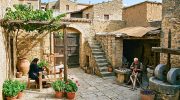
The Maronite community of Cyprus represents one of the island's smallest yet most distinctive religious groups, descended from Arab Christians who fled persecution in modern-day Syria and Lebanon starting in the 8th century. Today approximately 7,500 to 10,000 Maronites live on Cyprus, though their numbers have declined dramatically from an estimated 80,000 in the 13th century when they inhabited 60 villages across the island. Four traditional Maronite villages remain: Kormakitis, Asomatos, Agia Marina, and Karpasha, all located in the Turkish-controlled part of Cyprus. These communities maintain unique cultural practices, including speaking Sanna, a critically endangered Arabic dialect that preserves traces of Aramaic and represents one of the world's rarest languages. Four Waves of Migration from the Levant The Maronite presence in Cyprus developed through four distinct waves of emigration from the Levant between the 7th and 13th centuries. The first wave began around the 8th century when Islamic conquests radiated outward from the Arab Peninsula, prompting many Christians to abandon Syria and Lebanon for safer territories. These early migrants brought with them an Arabic dialect heavily influenced by Aramaic, the language spoken in the region before Arab invasion. In 938, the destruction of St Maron's Monastery in Lebanon triggered a second wave of refugees seeking sanctuary on Cyprus. Saint Maron, a 4th century hermit who became the spiritual father of…

Read more
Morphou Plain

Morphou Plain

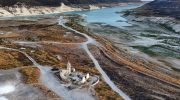
The Morphou Plain spreads across northwestern Cyprus as the island's most fertile agricultural region. The plain covers several hundred square kilometres of exceptionally productive farmland watered by underground aquifers and seasonal streams. The town of Morphou serves as the region's commercial centre with a current population of approximately 18,000 to 24,000 people. shutterstock-com The area produces over half of Cyprus's citrus fruits, primarily oranges, lemons, and grapefruits, along with substantial quantities of apples, vegetables, melons, and strawberries. The distinctive red soil, rich in minerals and organic matter, creates ideal conditions for intensive agriculture. Unlike much of Cyprus, which struggles with water scarcity, the Morphou Plain benefits from abundant groundwater that allows year-round cultivation and supports the island's most productive farming operations. Historical Background The Morphou region has sustained human settlement since at least the Bronze Age, with archaeological evidence suggesting continuous occupation for over 4,000 years. The fertile soil and reliable water supplies attracted early agricultural communities who recognized the land's exceptional productivity. The ancient city-kingdom of Soli developed on the plain's coastal edge, thriving from approximately the 11th century BC until Arab raids destroyed it in the 7th century AD. facebook-com Soli's prosperity derived from two resources: rich copper deposits in the nearby hills and fertile agricultural lands that fed mining communities and produced surplus for export. According to…

Read more