Explore Cyprus with Our Interactive Map

Explore our top stories and discover ideas worth your time.

Saranda Kolones Fortress

Saranda Kolones Fortress

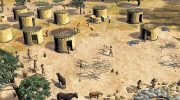
Inside the Paphos Archaeological Park, just north of the old harbor, a pile of broken stones and toppled columns marks where one of Cyprus's most important medieval fortresses once stood. Saranta Kolones, which translates to Forty Columns, served as the main defensive stronghold protecting Paphos during a turbulent period when Arab raids threatened the island. Today, visitors walk among its ruins and discover a fortress that endured multiple rebuilds, witnessed crucial historical events, and met a violent end in one of the worst earthquakes ever to strike Cyprus. Historical Background The fortress was built at the end of the 7th century AD under Byzantine rule. Historical records indicate that Theodore, the brother of Emperor Heraclius I, supervised its construction. At that time, the Arab Caliphate had emerged as a powerful force in the Middle East, and Cyprus found itself in the path of expansion. Arab forces launched raids on the island, making coastal cities particularly vulnerable. Paphos, with its strategic harbor and position on shipping routes, needed strong defenses. The Byzantine builders created a formidable structure. The fortress featured walls three meters thick, substantial enough to resist siege weapons of that era. Four massive corner towers anchored the defenses, with four additional intermediate towers positioned along the connecting walls. A moat surrounded the entire complex, and access was only possible…

Read more
Cyprus Mouflon Wildlife and Habitat

Cyprus Mouflon Wildlife and Habitat

The Cyprus mouflon represents the only wild sheep endemic to Cyprus and the largest wild land mammal on the island. This subspecies stands about one meter tall at the shoulder and exhibits the classic features of mouflon: reddish to dark brown coats with distinctive black dorsal stripes and lighter saddle patches. The name "mouflon" comes from the Corsican words "mufro" for males and "mufra" for females. In Cyprus, locals call this animal "agrino," derived from the Greek word "Αγρινό." Adult males weigh up to 50 kilograms, while females typically reach around 35 kilograms. Males develop spectacular curved horns that grow in nearly complete circles, reaching lengths up to 85 centimeters. Most females do not develop horns, though some carry small versions. The Cyprus mouflon demonstrates island dwarfism, with shoulder heights averaging 15 centimeters less than their closest relatives, the Armenian mouflon. Ancient Arrivals and Near Extinction Archaeological evidence places sheep bones at the Neolithic village of Khirokitia, dating the mouflon's presence on Cyprus to approximately 10,000 years ago. Scientists believe early settlers brought wild sheep from Anatolia or the Levant during the early stages of sheep domestication. These animals later became feral, adapting to the island's mountain environments. Genetic studies show strong phylogenetic relationships between Cyprus and Anatolian mouflons, with origins likely traced to northwest Iran. The mouflon thrived for…

Read more
Eco-Tourism in Cyprus Protected Areas

Eco-Tourism in Cyprus Protected Areas

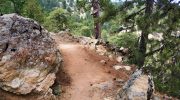
Eco-tourism in Cyprus has emerged as a significant alternative to traditional beach-centered tourism, with the Akamas Peninsula and Troodos National Forest Park serving as the island's two premier protected natural areas. These regions represent Cyprus's commitment to balancing environmental conservation with responsible tourism development. Together, they encompass diverse ecosystems ranging from coastal landscapes to mountain forests, each offering visitors opportunities to experience the island's biodiversity while supporting preservation efforts. Cyprus ranks among the top five European Union countries in terms of land area covered by the Natura 2000 network, with 28.8% of the island designated as protected territory. This extensive network includes 63 marine and terrestrial sites covering approximately 1,789 square kilometers. The Akamas Peninsula and Troodos National Forest Park stand as the largest and most visited of these protected areas, attracting both international travelers and local residents seeking natural experiences. Development of Protected Area Tourism in Cyprus The concept of protected areas in Cyprus developed gradually through the 20th century. Until 2000, the Akamas Peninsula remained under British military use as an exercise and firing range. Following the Treaty of Establishment, which allowed British forces use of the area for up to 70 days annually, the peninsula's ecological value became increasingly recognized. Environmental organizations, including the Green Party of Cyprus, Greenpeace, and Friends of the Earth, began advocating for…

Read more