In Cyprus, the family meal functions as a social infrastructure, keeping relationships, hierarchy, and care active through repeated gatherings around shared dishes. Even as work schedules and screens disrupt weekday routines, families maintain the expectation of eating together, especially on Sundays, because the table remains the simplest way to renew belonging across generations. This article explains how meal timing, shared plates, outdoor spaces, and hospitality habits turn eating into one of Cyprus’s most durable forms of community life.
- More Than Nutrition
- A Shared Culture Across a Divided Island
- Rural Roots and Urban Adjustments
- The Rhythm of the Day at the Table
- Shared Dishes, Shared Responsibility
- Home Dishes That Define Belonging
- The Space Matters as Much as the Food
- Hierarchy, Storytelling, and Respect
- Modern Disruptions, Lasting Expectations
- What Guests Should Know
- The Cypriot Family Meal Endures
More Than Nutrition
A family meal in Cyprus is never just about nourishment. It functions as a social anchor that brings multiple generations into the same physical and emotional space. Grandparents, parents, children, and extended relatives are not occasional guests at the table; they are expected participants. The act of sitting together reinforces hierarchy, responsibility, and care in a way that daily conversation elsewhere does not.
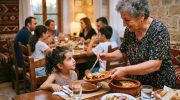
The table becomes a forum where family identity is rehearsed and preserved. Through repetition rather than instruction, younger members learn how respect is shown, how hospitality is practised, and how family roles are understood.
A Shared Culture Across a Divided Island
Despite the political division of Cyprus, the structure of the family meal remains remarkably consistent across communities. Greek Cypriot and Turkish Cypriot households share the same fundamental approach: food is communal, time is flexible, and conversation is central.

Many dishes are identical in preparation even when names differ. Stuffed vine leaves, slow-cooked meats, seasonal vegetables, and shared platters form the backbone of family tables across the island. Differences tend to be religious rather than cultural, such as the absence of pork in Turkish Cypriot homes, yet the rhythm of dining remains shared.
Rural Roots and Urban Adjustments
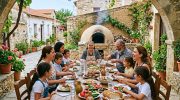
Traditionally, Cypriot meals were shaped by agricultural life. In rural villages, cooking was slow and communal, often centred around outdoor clay ovens and courtyards. Meals followed the rhythm of daylight and labour, with long midday breaks and late evening gatherings.
Urban life has altered these patterns, but not erased them. While work schedules now limit weekday lunches, families adapt by prioritising evening meals or weekend gatherings. The structure survives even when the timing shifts. What matters is not the hour, but the act of eating together.
The Rhythm of the Day at the Table
Climate quietly influences when families gather, shaping meal times around heat, light, and rest rather than clocks. Lunch traditionally stretches into the early afternoon, while dinner often begins later in the evening, especially during summer, when the day softens only after sunset.

Sunday stands apart from the rest of the week. It remains the moment when extended families are expected to reunite around a long, unhurried table. These meals are rarely negotiated or planned in detail. They happen because they always have. Their predictability provides a sense of continuity that few other modern rituals still offer.
Shared Dishes, Shared Responsibility
The structure of the Cypriot meal discourages isolation. Food arrives in shared dishes placed at the centre of the table, inviting movement, exchange, and conversation. Serving one another is not optional. It is an expected gesture of care.
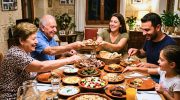
This approach turns eating into a collective act. Passing plates, offering second helpings, and encouraging others to eat more are woven naturally into the flow of the meal. The meze tradition reflects this philosophy clearly. Served gradually, it prevents haste and allows conversation to guide the pace, ensuring that the meal unfolds according to people rather than appetite.
Home Dishes That Define Belonging
Certain dishes carry meaning beyond their ingredients. Slow-roasted meats prepared over hours, baked pasta layered with halloumi, and pastries made for religious holidays function as emotional landmarks within family life.

These foods appear at moments that matter, Sundays, celebrations, and reunions. Their repeated presence across generations turns them into edible memory, connecting present gatherings to past ones through taste and familiarity.
The Space Matters as Much as the Food
During warmer months, family meals often move outdoors to courtyards or shaded verandas. These spaces soften the boundary between private and communal life. The sound and scent of cooking signal that gathering is underway, and it remains culturally acceptable for neighbours or passing relatives to be drawn in.
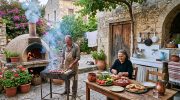
Hospitality in Cyprus is deliberate rather than restrained. Guests are fed generously, not as a display, but as an obligation. Abundance at the table communicates dignity, care, and respect more clearly than words.
Hierarchy, Storytelling, and Respect
The seating arrangement at the table reflects family structure. Elders are served first and often guide conversation, while younger members learn by listening. This order is not enforced through instruction, but through familiarity.
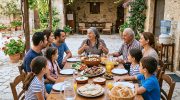
As meals extend, storytelling naturally takes hold. Family history, village life, personal struggles, and shared memories surface without prompting. For many households, the table remains the primary place where history is preserved and passed on.
Modern Disruptions, Lasting Expectations
Modern life has introduced distractions into the dining space. Smartphones, demanding work schedules, and convenience food challenge older patterns. Yet the expectation of togetherness remains strong.

Rather than disappearing, the family meal adapts. Home cooking may be replaced by takeaway on busy days, but families still prioritise eating together whenever possible. The social function of the meal remains intact, even as its form evolves.
What Guests Should Know
Visitors invited to a Cypriot home should be prepared for generosity that leaves little room for refusal. Declining food entirely can be interpreted as discomfort or distance. Accepting small portions and showing appreciation maintains harmony.
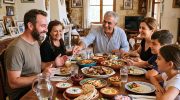
Meals often last longer than expected, shaped by conversation rather than courses. Engagement matters more than formality, and presence is valued above polish.
The Cypriot Family Meal Endures
The family meal in Cyprus survives because it continues to meet needs that modern systems cannot replace. It resolves tension, reinforces identity, and provides continuity in a changing world.

For those seeking to understand Cyprus beyond its beaches and landmarks, the family table offers the clearest insight. Culture here is not displayed or performed. It is lived quietly, repeated patiently, and protected through shared meals that continue, generation after generation.