Local Traditions

Cyprus Family Social Networks

Cyprus Family Social Networks

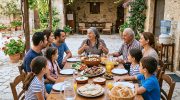
In Cyprus, kinship is a social and economic infrastructure, shaping identity, housing, childcare, business decisions, and the way trust is established in everyday life. Extended families often function across multiple homes, keeping resources close through inheritance expectations, shared labour, and rituals that renew obligation and belonging. This article explains how these networks work across communities and the diaspora, why they remain resilient after modernisation and division, and what they still provide when formal systems fall short. commons-wikimedia-org. Family as the Island’s Social Anchor Cypriot society has long been organised around the household rather than the individual. Historically, survival depended on cooperation between close relatives, particularly in agricultural communities where land, labour, and risk were shared. This produced a culture in…

Read more
Cyprus Sundays: The Weekly Family Reset

Cyprus Sundays: The Weekly Family Reset

In Cyprus, the Sunday family gathering is a weekly social infrastructure, bringing extended relatives together for long meals that renew trust, care, and hierarchy without formal rules. Rooted in older agrarian and Orthodox rhythms, it persists in modern towns and cities because it offers a reliable reset: shared food, flexible time, and conversation that keeps the family network active. This article explains how the ritual works from souvla preparation to coffee and tavli, and why its slow pace remains one of Cyprus’s most durable forms of belonging. quinta-ru A Ritual Designed for Presence The Sunday family gathering is not organised for efficiency or convenience. It exists to preserve connection. In a country shaped by migration, political division, and economic change,…

Read more
Cyprus Evening Life – Social Activities After Sunset

Cyprus Evening Life – Social Activities After Sunset

Cyprus after dark offers a distinctive social scene that differs greatly from typical European nightlife. Rather than rushing between clubs or bars, Cypriots embrace a slower, more communal approach to evening hours. The island's social life centers on conversation, connection, and shared experiences that stretch late into the night. gettyimages-com From traditional coffee shops filled with the click of tavli pieces to seaside promenades where families stroll until midnight, evening activities reflect values of hospitality and togetherness that define Cypriot culture. This relaxed approach to nighttime socializing creates an atmosphere where age, background, and status fade into the background. Historical Context The tradition of evening social activities in Cyprus traces back thousands of years. Ancient Greeks gathered in public spaces…

Read more
Coffee, Conversation, and Morning Interaction in Cyprus

Coffee, Conversation, and Morning Interaction in Cyprus

Cypriots are quite hardworking, but they tend to do most of their work as early in the morning as possible. The morning coffee break follows this early productivity. After completing their first tasks of the day, people pause for what locals call their coffee moment. i-pinimg-com Traditional Cypriot coffee arrives in a small cup with a glass of cold water on a tin tray. This gesture symbolizes hospitality and is seen as a way to cleanse the palate before enjoying the rich flavors of the coffee. The water also helps balance the strong taste of this unfiltered brew. The coffee itself is prepared in a small pot called a briki or mbriki. It is traditionally brewed over a gentle heat…

Read more
Daily Village Life in Cyprus – Community and Support

Daily Village Life in Cyprus – Community and Support

Daily village life in Cyprus revolved around close-knit family networks, communal labor, religious observances, and social gatherings that defined rural existence. Villages functioned as extended families where relatives lived in adjacent compounds, sharing courtyard spaces, agricultural tools, and economic responsibilities across generations. nano-banana The rhythm of days followed agricultural cycles, with sunrise fieldwork interrupted by midday meals and coffee breaks, followed by afternoon labor and evening social gatherings in village squares. Women drew water from communal fountains where they exchanged information while washing clothes and filling vessels, creating female social networks parallel to male coffee shop culture. Children grew up supervised by grandparents, aunts, and neighbors who collectively ensured safety and transmitted traditional knowledge through daily interaction. This interconnected social…

Read more
Cypriot Kinship: The Island’s Social Infrastructure

Cypriot Kinship: The Island’s Social Infrastructure

In Cyprus, extended family networks function as everyday infrastructure, shaping housing choices, childcare, financial support, and even the way people speak to one another. Although household sizes have shrunk and life is more urban, kinship still acts as the island’s most reliable safety net, especially when costs rise or institutions fall short. This article explains how these networks operate across multiple homes, how property and inheritance keep resources inside families, and why grandparents and diaspora ties remain central to modern Cypriot life. nano-banana Family as the Island’s First Safety Net Long before modern welfare systems existed, Cypriot families learned to rely on themselves. The island's history of foreign rule, displacement, and economic uncertainty reinforced a simple reality: security came from…

Read more
Home Life in Cyprus – Family and Cultural Bonds

Home Life in Cyprus – Family and Cultural Bonds

Family stands at the center of Cypriot life, shaping everything from daily routines to major life decisions. Multiple generations often live in close proximity and gather regularly for meals and celebrations. kanikahotels-com The concept of family extends beyond parents and children to include grandparents, aunts, uncles, and cousins who form tight support networks. Home represents more than a dwelling, it serves as the primary social hub where traditions pass between generations and cultural identity remains strong. Historical Roots of Family Structure The importance of family in Cyprus traces back thousands of years through Greek, Roman, and Byzantine civilizations. Ancient Greeks identified themselves first as family members, then by place of origin, and lastly as citizens. This hierarchy persisted through Ottoman…

Read more
Marriage and Birth Traditions of Cyprus

Marriage and Birth Traditions of Cyprus

Marriage and birth stand as the most significant life transitions in traditional Cyprus society, each marked by elaborate rituals that involve entire communities. Wedding customs symbolize separation from childhood families and entry into adult society, while birth traditions welcome new members into both family and village. limassoltourism-com Orthodox Christianity frames these milestones through sacraments of marriage and baptism, but older customs dating to pre-Christian times persist beneath the religious overlay. The preservation and transmission of these customs falls mainly to new couples, their families, musicians who perform traditional songs, and folkloric groups that keep practices alive through demonstration and participation. Engagement and Marriage Preparations The engagement is usually arranged by the families of the bride and groom, who agree on…

Read more
Mountain Traditions As A Living Heritage

Mountain Traditions As A Living Heritage

The Troodos Mountains, covering roughly one-third of Cyprus's land area, preserve traditional ways of life that have largely disappeared from coastal regions. These mountains rise to 1,952 meters at Mount Olympus and shelter approximately 70 villages where customs, crafts, festivals, and daily practices maintain connections to centuries-old heritage. wikimedia-org The difficult terrain that once isolated these communities now protects their cultural distinctiveness, creating living museums where visitors experience authentic Cypriot traditions rather than reconstructed performances for tourists. Village Life and Seasonal Rhythms Mountain villages follow agricultural calendars that structure community life around planting, harvesting, and religious festivals. Cherry season in June brings the Cherry Festival to Pedoulas, where families gather to celebrate summer fruit alongside folkloric entertainment programs. August wine…

Read more