UNESCO World Heritage sites

​​Historic Cyprus Churches in Rural Landscapes

​​Historic Cyprus Churches in Rural Landscapes

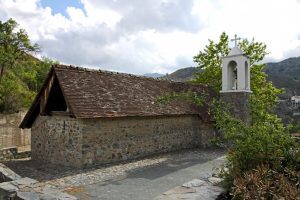
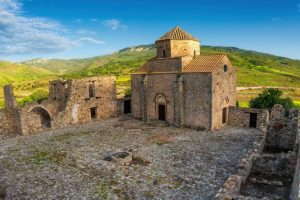
Historic churches scattered across Cyprus’s Troodos Mountains preserve medieval mural painting traditions within modest rural buildings, creating a strong contrast between simple exterior architecture and richly decorated interiors. UNESCO recognized ten of these structures as part of the Painted Churches in the Troodos Region in 1985 and 2001, highlighting their importance as surviving examples of rural architectural and artistic heritage. These buildings range from small village chapels to larger monastic complexes such as the Saint John Lampadistis site. They date from the 11th to the 16th centuries, covering roughly 500 years of artistic development shaped by regional traditions and broader Mediterranean influences, including Byzantine, Frankish, Venetian, and local Cypriot styles. A defining feature of these structures is their adaptation to…

Read more
Agios Nikolaos tis Stegis

Agios Nikolaos tis Stegis

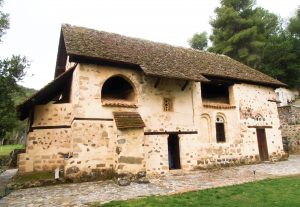
Agios Nikolaos tis Stegis, near Kakopetria in the Solea Valley, is one of Cyprus’s most important painted churches, preserving multiple phases of Byzantine frescoes inside a modest mountain building. Its steep timber roof, added for protection, helped these wall paintings survive centuries of harsh weather and shifting rule. This article explains how the church evolved, what the fresco layers show, and why the site remains a rare visual record of Byzantine life in Cyprus. Agios Nikolaos tis Stegis stands on the western bank of the Karkotis River, near the village of Kakopetria, at an elevation of roughly 700 meters. This mountain setting explains one of the church’s most defining features. Unlike urban Byzantine churches, which display their domes openly, this…

Read more
Choirokoitia Settlement

Choirokoitia Settlement

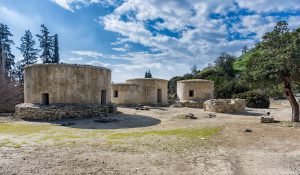
Choirokoitia Settlement is a remarkable Neolithic village on Cyprus's southern coast, dating back to around 7000 BC, where early humans first built permanent homes and formed communities. Recognized as the most important site of its kind in the eastern Mediterranean, it reveals how people shifted from wandering hunters to settled farmers, laying foundations for civilization. This ancient spot whispers stories of innovation and survival, sparking interest in humanity's shared journey toward organized life. turbinatravels-com A Window into Early Human Life Choirokoitia stands as one of the earliest and best-preserved examples of a settled Neolithic community in the region, offering a detailed look at the transition from nomadic existence to village life. Located in the Larnaca District on a hillside overlooking…

Read more
Church of the Transfiguration in Palaichori

Church of the Transfiguration in Palaichori

Church of the Transfiguration in Palaichori is a 16th-century Byzantine chapel in Cyprus's Troodos Mountains, renowned for its post-Byzantine frescoes that illustrate the persistence of Orthodox artistic traditions under foreign rule. Part of the UNESCO-listed Painted Churches, it preserves vivid paintings blending theological narratives with symbolic depth, reflecting medieval devotion in a rural setting. This site captures how faith endured and adapted, offering insights into Cyprus's cultural resilience amid external influences. sobory-ru A Testament to Enduring Faith in the Mountains The Church of the Transfiguration exemplifies the resilience of Byzantine religious architecture in Cyprus's highland regions, dedicated to Christ's Transfiguration - a pivotal event symbolizing divine glory and human potential for spiritual elevation. Situated in Palaichori village at an elevation…

Read more
Paphos Archaeological Park

Paphos Archaeological Park

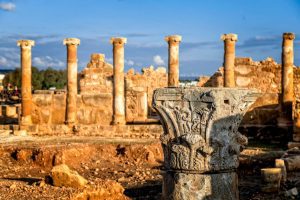
Paphos Archaeological Park, known in antiquity as Nea Paphos, represents one of the most significant archaeological landscapes in the eastern Mediterranean. Established in the late fourth century BCE during the Hellenistic period, the city was deliberately founded as a political and administrative center under the Ptolemaic rulers who controlled Cyprus after the campaigns of Alexander the Great. Its coastal position provided both strategic and economic advantages, linking the island to major maritime routes that connected the Greek world, Egypt, and the Near East. When the Romans annexed Cyprus in 58 BCE, Nea Paphos retained its prominence and became the island’s capital, a role that further strengthened its political, commercial, and cultural influence. The city’s development under successive Hellenistic and Roman…

Read more
Palaepaphos Kouklia

Palaepaphos Kouklia

Kouklia is a village in the Paphos District built over the site of the ancient city of Palaepaphos, mythical birthplace of Aphrodite, which became the centre for her worship in the ancient world. This modest village 16 kilometers east of modern Paphos holds the remains of one of the longest continuously operating religious sanctuaries in human history. From around 1200 BC, Palaepaphos was a major religious centre famous all over Cyprus and throughout the Mediterranean. The city served as both a political capital and a sacred site, where the ancient goddess of fertility transformed over centuries into the Greek deity known as Aphrodite. The Sanctuary of Aphrodite is the most famous of the Ancient Greek Goddess' sanctuaries, and its ancient…

Read more
Monastery of Saint John Lampadistis

Monastery of Saint John Lampadistis

The Monastery of Saint John Lampadistis, located in the Marathasa Valley of the Troodos Mountains near the village of Kalopanayiotis, is one of the most distinctive monuments within the UNESCO World Heritage group known as the Painted Churches of the Troodos Region. Its importance lies not only in its remarkable frescoes but also in its unusual architectural composition. Unlike single-phase churches, this monastic complex combines three interconnected churches built in different periods, all enclosed beneath a later protective roof. This layered structure makes the monastery a rare example of architectural continuity, reflecting the gradual development of religious space in response to changing spiritual, artistic, and community needs. The monastery is dedicated to Saint John Lampadistis, a local Cypriot saint whose…

Read more