Historic churches scattered across Cyprus’s Troodos Mountains preserve medieval mural painting traditions within modest rural buildings, creating a strong contrast between simple exterior architecture and richly decorated interiors. UNESCO recognized ten of these structures as part of the Painted Churches in the Troodos Region in 1985 and 2001, highlighting their importance as surviving examples of rural architectural and artistic heritage.
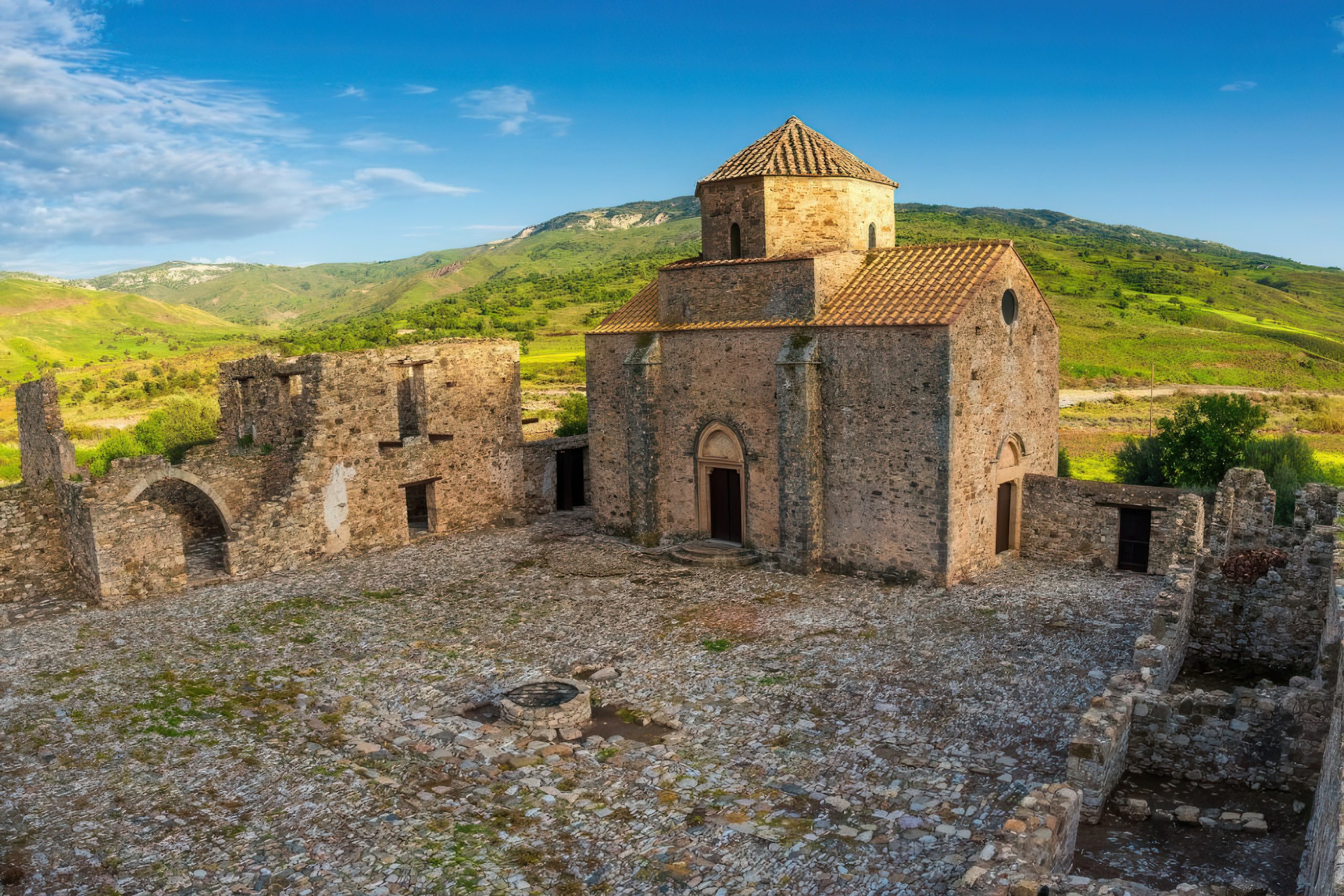
These buildings range from small village chapels to larger monastic complexes such as the Saint John Lampadistis site. They date from the 11th to the 16th centuries, covering roughly 500 years of artistic development shaped by regional traditions and broader Mediterranean influences, including Byzantine, Frankish, Venetian, and local Cypriot styles.
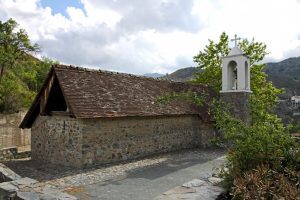
A defining feature of these structures is their adaptation to the mountain environment. Steep wooden roofs covered with locally produced flat tiles protect the buildings from rain and occasional snow. This architectural approach is closely linked to Cyprus’s geography and climate, and it appears consistently across mountain settlements. More than 60 churches across Cyprus preserve medieval wall paintings, but the Troodos cluster represents one of the most concentrated and well-preserved groups in the region.
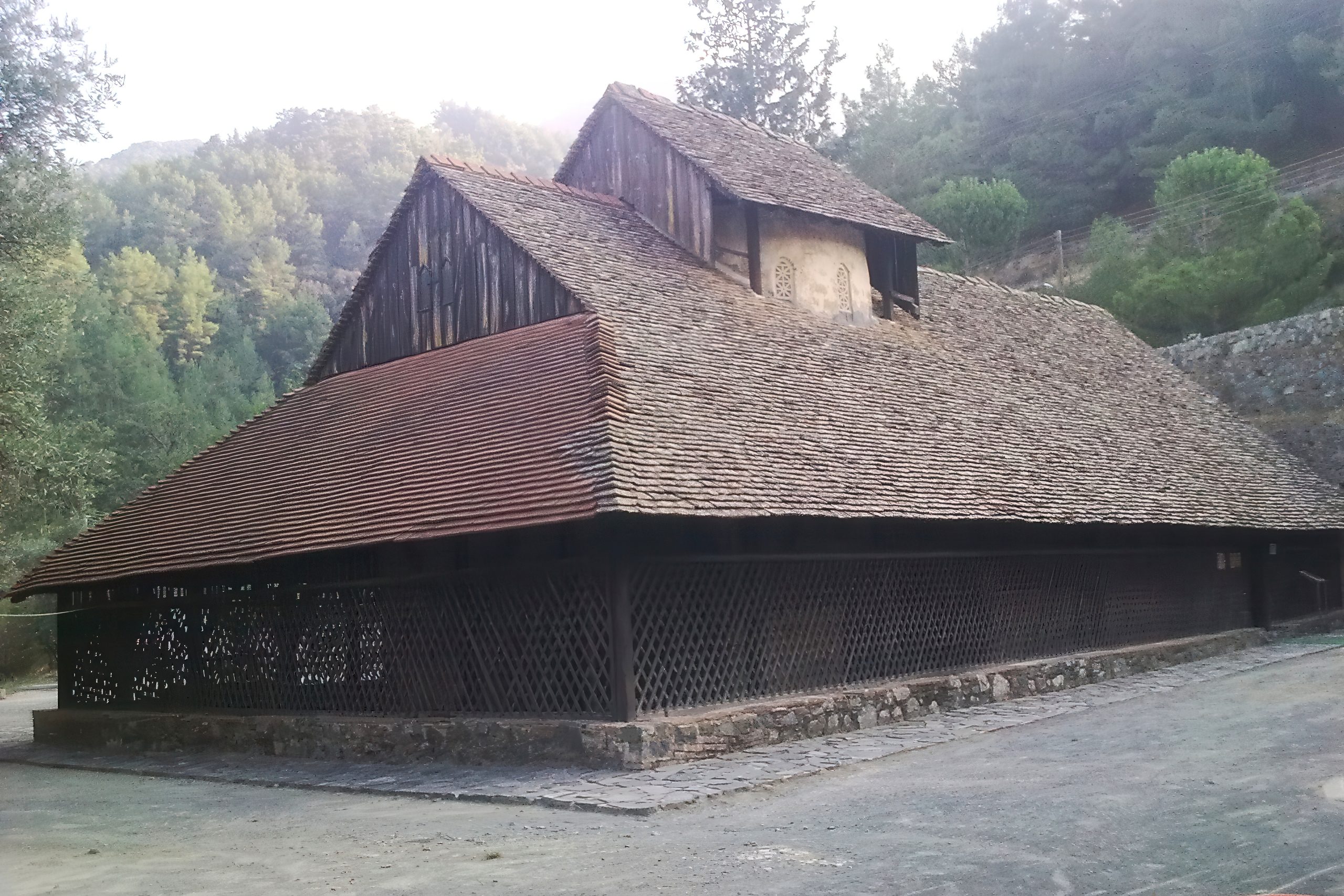
Agios Nikolaos tis Stegis and the Double Roof
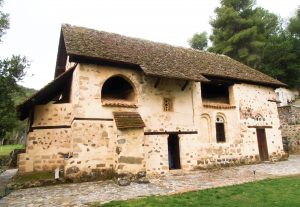
The Church of Saint Nicholas of the Roof in Kakopetria is among the oldest surviving medieval buildings in Cyprus, originally constructed in the 11th century. Its name refers to the protective roof structure added over the original masonry dome, creating a distinctive double-roof system.
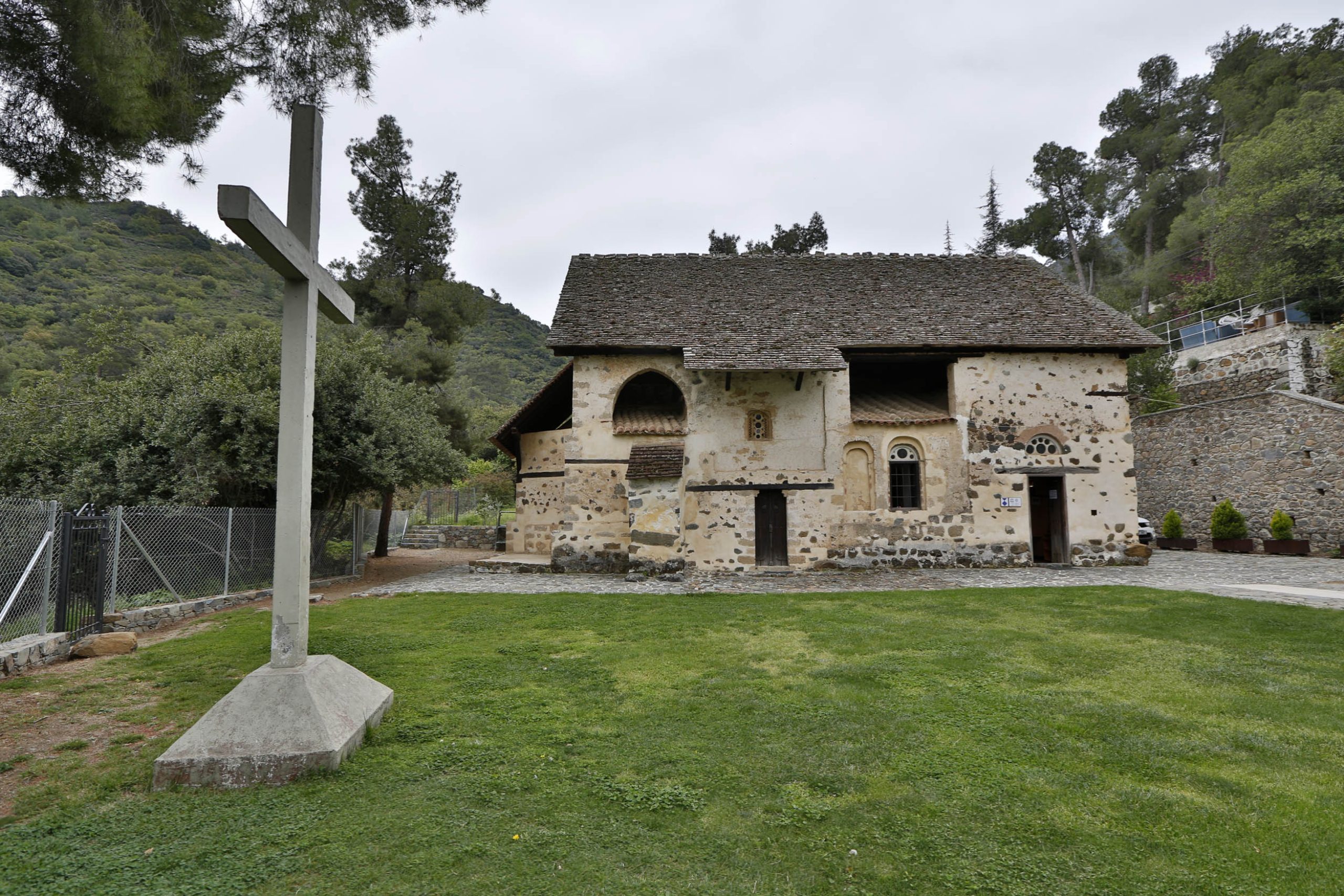
This architectural solution became a defining characteristic of Troodos churches. The external wooden roof shields the inner structure from snow and rain, while the original dome remains intact beneath it. Over time, this adaptation influenced building practices across the mountain region.
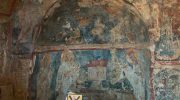
Inside, the church preserves layered mural decoration dating from different centuries, particularly between the 14th and 16th centuries. These successive painting phases reflect long-term use and continued maintenance of the structure across generations.
Located near Kakopetria and surrounded by pine forest, the building appears externally as a simple stone structure with a timber roof. This understated exterior contrasts sharply with the detailed interior decoration, where multiple artistic layers provide a visual record of changing styles and techniques over time. The presence of dated inscriptions makes it an important reference point for understanding regional mural painting chronology.
Panagia Phorviotissa (Asinou)
The church known as Panagia Phorviotissa, commonly referred to as Asinou, is located near Nikitari and was constructed in the early 12th century. Historical accounts link its foundation to a local patron who commissioned the building following a personal loss, a reflection of private patronage common in rural Cyprus during this period.
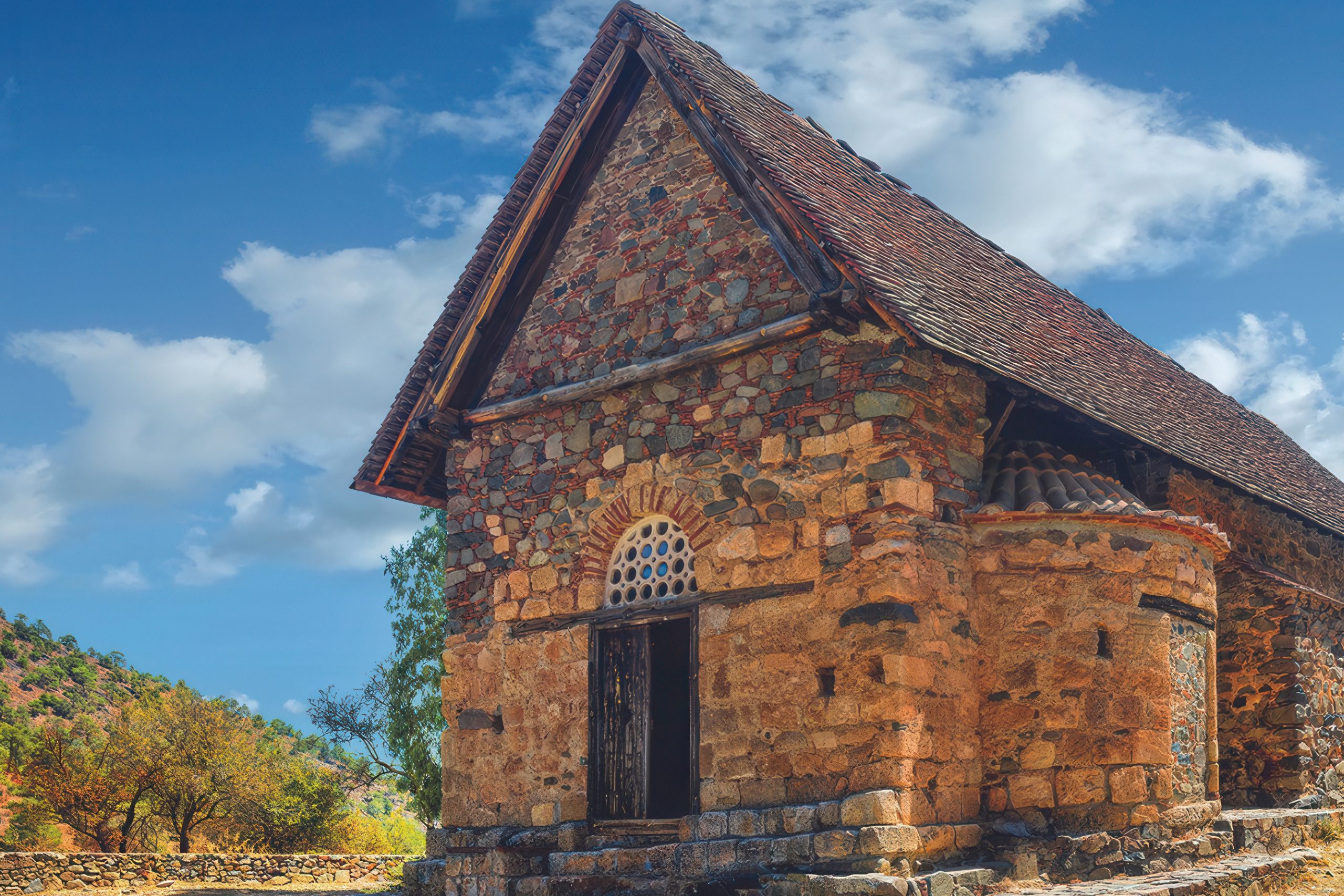
From the outside, the structure appears modest and blends into its natural surroundings. However, the interior contains one of the most complete surviving mural programs in Cyprus, with paintings attributed to highly skilled workshop traditions of the time.
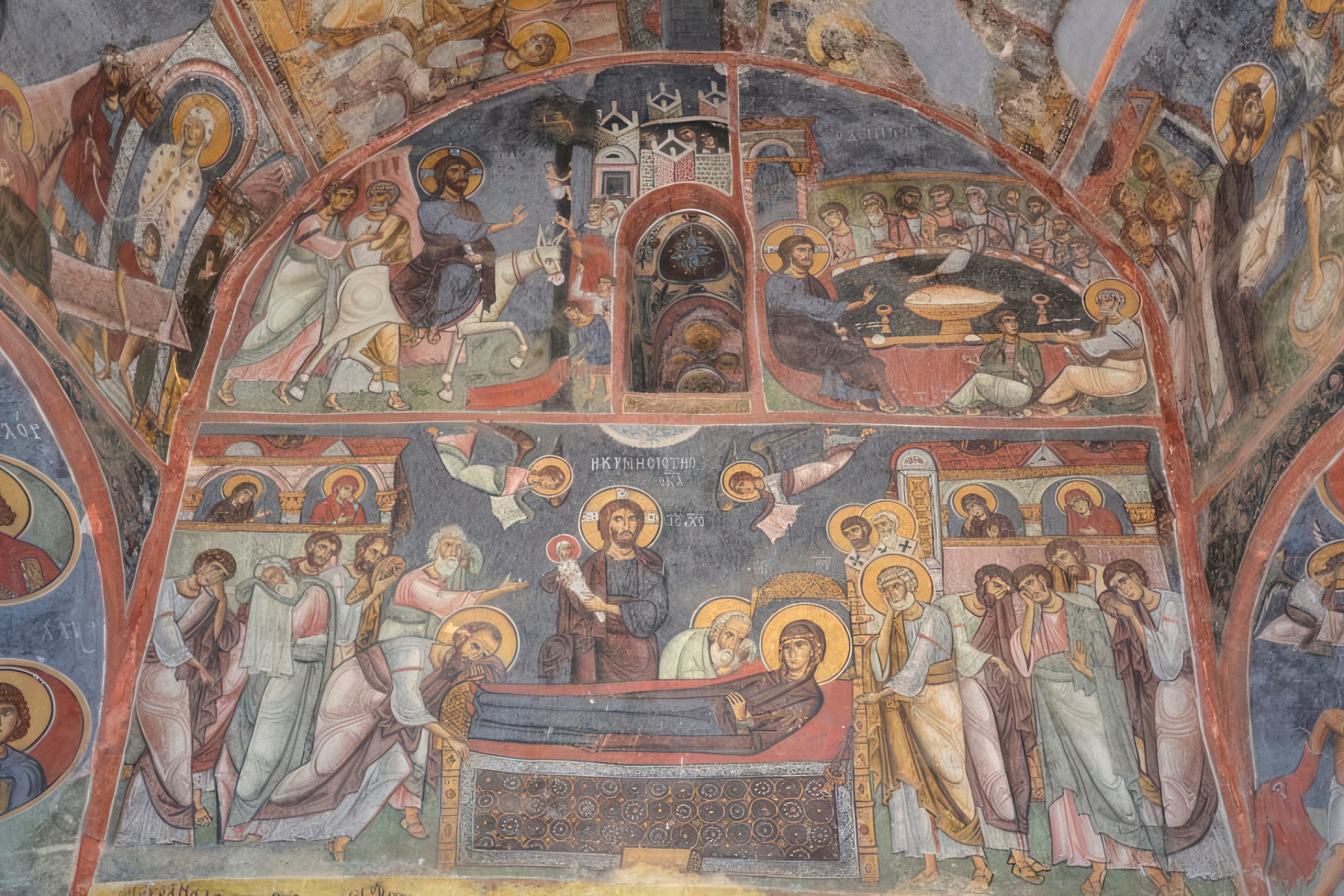
The decoration includes narrative scenes, portrait figures, and ornamental compositions that reflect artistic standards associated with the broader Mediterranean world during the Comnenian period (1081–1185). The church demonstrates how rural buildings could serve as repositories of highly sophisticated artistic production despite their remote locations.
Saint John Lampadistis Monastery Complex
The Saint John Lampadistis Monastery in Kalopanayiotis is a multi-structure complex that combines several interconnected buildings constructed over a long historical period. It represents one of the most architecturally complex sites in the Troodos region.
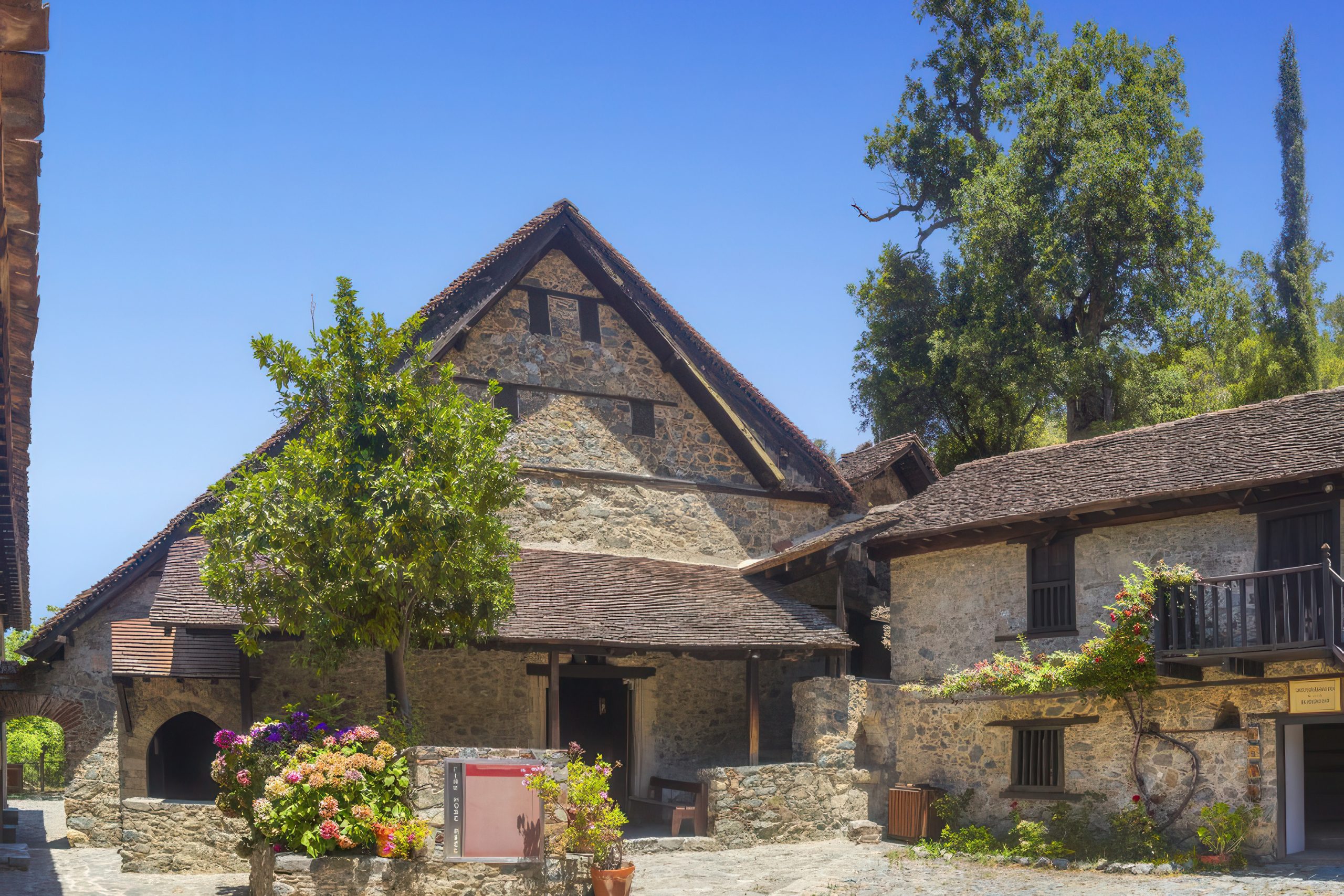
The complex includes multiple chapels built between the 11th and 15th centuries, later unified under a shared roof structure. This layered development reflects continuous use and adaptation over time rather than a single construction phase.
Interior wall paintings span several centuries, with surviving layers from different periods preserved in varying degrees of completeness. Some sections reflect earlier artistic traditions, while others show later stylistic influences introduced during periods of political and cultural change in Cyprus.
A Latin chapel within the complex introduces additional artistic variation, incorporating stylistic elements influenced by Western Mediterranean art traditions. This combination of styles illustrates Cyprus’s position as a crossroads of cultural exchange during the medieval period.
Panagia tou Arakou (Mountain Church Site)
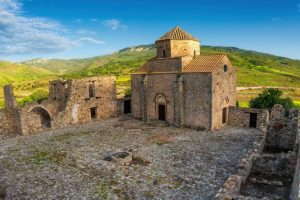
Panagia tou Arakou is located in the Troodos Mountains between Saranti and Lagoudera. Constructed in the 12th century, it is considered one of the best-preserved examples of medieval rural architecture in Cyprus.
The interior preserves an extensive mural program attributed to highly skilled painters of the period. The compositions reflect structured narrative cycles and carefully organized visual systems typical of Middle Byzantine artistic practice.
An inscription within the building provides valuable historical context, linking the structure to broader political developments in the Eastern Mediterranean during the late 12th century. This makes the site important not only for its artistic value but also for its historical documentation of regional transitions.
Church of Timios Stavros (Pelendri)
The structure in Pelendri originated as a 12th-century building with a simple single-aisle design and later expanded into a multi-section structure through successive additions. Each phase of construction contributed to the layered architectural form visible today.
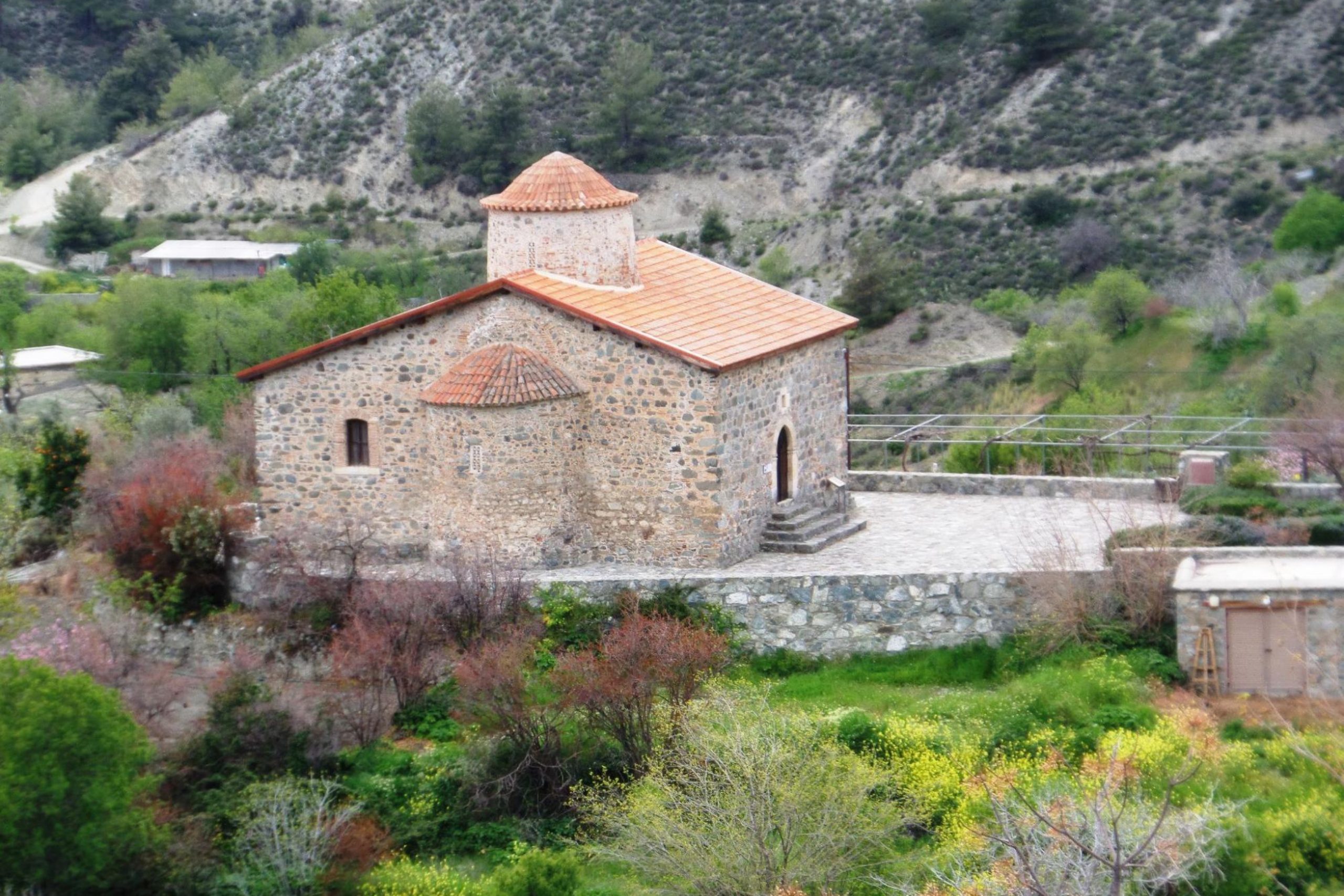
Interior wall paintings span several centuries, reflecting different phases of decoration and restoration. These layers provide insight into how rural buildings evolved over time in response to changing artistic practices and local needs.
The building also reflects patterns of private patronage, where certain areas were historically associated with local elite families. This demonstrates how rural religious structures often functioned as both community spaces and markers of social structure.
Architectural Adaptations in Mountain Cyprus
The churches of the Troodos region share a set of architectural adaptations designed for mountainous conditions. The most distinctive feature is the steep wooden roof, typically constructed from local timber and covered with flat clay tiles.
This design addresses environmental challenges such as heavy rainfall and seasonal snowfall. The steep angle allows precipitation to drain efficiently, while the layered roof structure protects the underlying masonry.
Materials were sourced locally, including Cyprus pine for timber frameworks and clay for tile production. These construction methods created a fully localized building system adapted to regional conditions, combining practicality with long-term durability.
Cultural and Historical Importance
The painted churches of the Troodos Mountains represent a long-standing tradition of rural architectural and artistic development. Their significance lies in the continuity of construction, decoration, and adaptation over several centuries.
They also reflect Cyprus’s historical role as a point of cultural interaction in the Eastern Mediterranean. Architectural and artistic influences from multiple regions can be observed across different phases of development, illustrating how ideas and techniques evolved locally over time.
Today, these structures remain important heritage sites, contributing to historical research, architectural conservation, and cultural tourism in rural Cyprus.