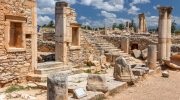
Archaeological Sites and Cities

A Crossroads That Accumulated

A Crossroads That Accumulated

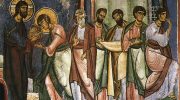
Cyprus is best understood as a layered island, where newcomers rarely erased what came before, and daily life absorbed languages, customs, and beliefs over centuries of close contact. Positioned between Europe, the Levant, and Anatolia, it became a crossroads early through trade, then accumulated Roman, Byzantine, Arab, Latin, Venetian, Ottoman, and British influences without turning into any single one of them. googleapis This article traces how those layers formed, where coexistence was practical rather than ideal, and why "Cypriot" identity still carries many histories at once. Ten Thousand Years of Settlement Human settlement in Cyprus stretches back more than ten thousand years. Long before empires arrived, early communities established farming villages and ritual spaces that tied life closely to land…

Read more
Cyprus Crossroads That Accumulated

Cyprus Crossroads That Accumulated

Cyprus is best understood as a layered island, where newcomers rarely erased what came before, and daily life absorbed languages, customs, and beliefs over centuries of close contact. Positioned between Europe, the Levant, and Anatolia, it became a crossroads early through trade, then accumulated Roman, Byzantine, Arab, Latin, Venetian, Ottoman, and British influences without turning into any single one of them. This article traces how those layers formed, where coexistence was practical rather than ideal, and why "Cypriot" identity still carries many histories at once. istockphoto.com Ten Thousand Years of Settlement Human settlement in Cyprus stretches back more than ten thousand years. Long before empires arrived, early communities established farming villages and ritual spaces that tied life closely to land…

Read more
The Gymnasium of Salamis

The Gymnasium of Salamis

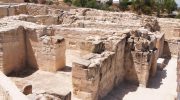
The ancient city of Salamis on Cyprus holds some of the Mediterranean's most remarkable Roman architecture. Among its treasures, the Gymnasium stands out as a testament to how Romans blended physical training, social interaction, and luxury bathing into a single sprawling complex. Located on the eastern coast near modern Famagusta, this site offers visitors a direct connection to daily life in Roman Cyprus. worldhistory-org The Gymnasium traces its roots to the Hellenistic period, when Greek colonists first established athletic training facilities in Salamis. However, the structure visible today belongs to the 2nd century AD, specifically during the reigns of emperors Trajan and Hadrian. The transformation came after a devastating Jewish revolt in 116 AD that left much of Salamis in…

Read more
Roman Paphos Mosaics

Roman Paphos Mosaics

The Roman mosaics of Nea Paphos, especially in the House of Dionysos and the House of Theseus, were designed to do more than decorate elite homes: they signalled status, shaped movement, and communicated authority through myth. In the island’s administrative capital, these floors turned private reception rooms and official spaces into visual statements about leisure, order, and governance. This article explains how the two houses use different mosaic programs, what the imagery was meant to achieve, and why Paphos remains one of the clearest places to read Roman power at ground level. commons.wikimedia-org horosho-tam-ru Nea Paphos, Built for Rule Nea Paphos rose to prominence because of its political role. From the late Hellenistic period onward, the city served as the…

Read more
Vouni Palace Reliefs

Vouni Palace Reliefs

Vouni Palace was a Cypro-Classical hilltop complex built around 500 BC to control coastline movement and project authority over a contested landscape near Soli. Its architectural reliefs and capitals show Persian imperial symbols, including Hathor imagery, rosettes, and royal protection motifs, translated through local limestone carving and later blended with Greek spatial elements as political alignment shifted. This article explains why the site’s position mattered, how decoration was used to regulate experience inside the palace, and what the surviving fragments reveal about Cyprus negotiating empire without simply copying it. google-com A Hilltop Built to Watch Soli Vouni was never meant to be subtle. Rising roughly 250 meters above sea level, the hill offers uninterrupted views across the coast and inland…

Read more
Ancient Amathus

Ancient Amathus

Amathus projected authority through stone: colossal vessels and carved reliefs that required skill, labour coordination, and long-term planning on a civic scale. wikimedia-org These monuments turned ritual spaces into political statements, using weight, repetition, and hybrid symbols to make royal legitimacy feel permanent and divinely protected. This article traces how vessels, reliefs, and funerary sculpture worked together to communicate power at Amathus without relying on lengthy inscriptions. Monumental Scale, Local Identity Located on Cyprus’s southern coast, Amathus developed as one of the island’s most distinctive city-kingdoms during the early first millennium BCE. Unlike other centres that aligned themselves quickly with Greek traditions, Amathus retained a strong indigenous identity, often described as Eteocypriot. This sense of cultural independence was not passive.…

Read more
Amathus Agora

Amathus Agora

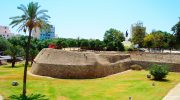
The agora at Amathus stands as one of the most important marketplace ruins in Cyprus. This ancient public square served as the commercial and political heart of a city that thrived for over two thousand years. Located in the lower town of what was once a major Mediterranean trading hub, the agora reveals how Romans organized their public spaces and conducted daily business in this eastern corner of their empire. wikimedia-org Historical Background Amathus was founded around 1100 BC and grew into one of the ancient royal cities of Cyprus. The settlement sat on coastal cliffs about 11 kilometers east of modern Limassol, positioned where a natural harbor allowed ships to dock safely. This strategic location helped Amathus become a…

Read more
Stone Columns Above Cyprus Blue Waters

Stone Columns Above Cyprus Blue Waters

Cyprus coastal monuments showcase classical architecture where ancient stone columns rise against Mediterranean horizons, creating dramatic vistas that combine archaeological significance with natural beauty. The most impressive examples include the Greco-Roman theatre at Kourion perched on coastal cliffs 70 meters above sea level, the Sanctuary of Apollo Hylates with its partially restored temple columns, and the Tombs of the Kings in Paphos featuring underground burial chambers decorated with Doric pillars. Shutterstock-com These structures date primarily from Hellenistic and Roman periods between the 4th century BC and 4th century AD, when Cyprus prospered under successive empires. The architectural elements follow classical Greek orders with refinements from Roman building techniques, creating monuments that have withstood earthquakes, invasions, and two millennia of Mediterranean…

Read more
Vouni Palace in Cyprus

Vouni Palace in Cyprus

Perched on a rocky hilltop 250 meters above the Mediterranean Sea, the ruins of Vouni Palace stand as a remarkable architectural anomaly in ancient Cyprus. This site represents the only known example of Persian palace design not just on the island but throughout the entire eastern Mediterranean, built during one of history's most intense power struggles between two great civilizations. visitnorthcyprus-com Historical Background Around 500 BC, Cyprus found itself caught in the crossfire of the great wars between the Persian Empire and the Greek city-states. The island's ten kingdoms split into opposing camps, with some supporting the Persians and others backing the Greeks. This division led to bitter conflicts across Cyprus, on both land and sea. google-com The ancient city…

Read more