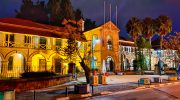
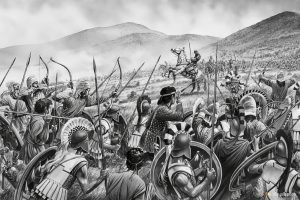
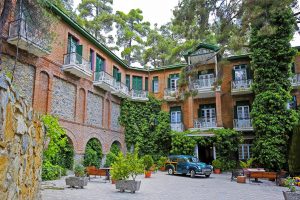
Cyprus stands at the crossroads of three continents, creating an identity forged through centuries of conquest and adaptation. The Mediterranean island has witnessed rule by Egyptians, Phoenicians, Greeks, Romans, Byzantines, Ottomans, and British forces. Each civilization left cultural marks while the native population absorbed and transformed these influences. Today, Cyprus maintains distinct traditions despite modern pressures.
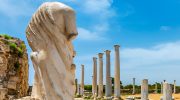
The island’s geographic position made it strategically valuable, attracting empires seeking control of eastern Mediterranean trade routes. This constant cycle of foreign rule created a population skilled at cultural preservation under external pressure. Cypriots developed resilience as a survival mechanism, maintaining core traditions while adapting to successive rulers. The ability to endure without surrendering identity became central to the Cypriot character.
Ancient Foundations Built Over Millennia
Archaeological evidence shows continuous human habitation since the 10th millennium BC. Mycenaean Greeks arrived around the 12th century BCE, establishing city kingdoms like Salamis, Paphos, and Kition. These settlements created foundations for Greek cultural dominance that persisted despite subsequent invasions. The Greek language, Orthodox Christianity, and Hellenic customs became embedded in the population’s identity.
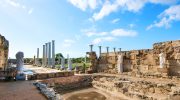
The Byzantine Empire incorporated Cyprus in the 4th century AD, strengthening Christian Orthodox traditions through church construction and monastery establishment. Byzantine artistic developments, including icon painting and mosaic work, created lasting cultural expressions still visible across the island. The Orthodox Church emerged as a powerful institution preserving Greek cultural identity through religious practice and education.
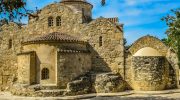
Ottoman conquest in 1571 introduced Islam and Turkish language to the island. The Ottoman period lasted 307 years until British control began in 1878. This extended Turkish presence created a significant Muslim minority, establishing the foundation for later ethnic divisions. Ottoman administrative systems and architectural styles altered urban landscapes, particularly in Nicosia and Famagusta.
Colonial Rule Shaped Modern Political Consciousness
British administration from 1878 to 1960 modernized infrastructure but also intensified ethnic nationalism. The colonial authorities employed separate educational systems for Greek and Turkish communities, with teachers imported from Greece and Turkey respectively. This educational separation reinforced identification with mainland “motherlands” rather than shared Cypriot identity.
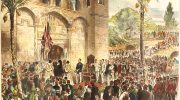
Greek Cypriots increasingly pursued Enosis (union with Greece) through the 1950s, led by Archbishop Makarios III and Colonel George Grivas’s EOKA organization. They launched armed campaigns against British installations starting April 1, 1955. Turkish Cypriots, comprising approximately 18% of the population, opposed Enosis and sought either continued British rule or taksim (partition).
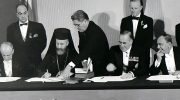
These competing nationalist visions prevented unified independence movements. When Cyprus gained independence in 1960, the constitution created complex power-sharing arrangements that satisfied neither community. The compromise system quickly broke down as both groups continued identifying primarily with Greece or Turkey rather than Cyprus itself.
The 1974 Turkish invasion Changed Everything
Violence erupted between communities in December 1963 when President Makarios proposed 13 constitutional amendments. Turkish Cypriot paramilitaries and Greek Cypriot forces clashed throughout the island, leading to a de facto division, by displacing 25,000-30,000 Cypriots from their homes. British forces and later UN peacekeepers established buffer zones, including a line through Nicosia’s center.
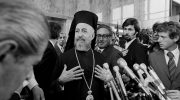
The defining moment came July 15, 1974, when Greek military junta officers staged a coup d’ etat against President Makarios III, installing Nikos Sampson. Turkey responded five days later with military invasion, citing its guarantor role under the 1960 Treaty of Guarantee.
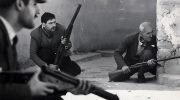
Turkish forces initially secured 3% of the island before expanding control to 37% in a second August offensive. The invasion displaced approximately 170,000 Greek Cypriots (one-third of the Greek Cypriot population) from northern territories where they had constituted 80% of residents.

Over the following year, roughly 50,000 Turkish Cypriots moved from south to north. Both communities fled fearing violence based on recent intercommunal conflicts. The division created Europe’s last divided capital as the Green Line cut through Nicosia.
Two Separate Identities Emerged from Division
Turkish Cypriot administration in the north declared independence in 1983, recognized only by Turkey. The Republic of Cyprus joined the European Union in 2004, though EU law doesn’t apply in the northern territory due to the Turkish occupation. Turkey maintains over 35,000 troops in the north, along with an estimated 160,000 Turkish settlers who arrived after 1974, deliberately altering demographic composition.
Greek Cypriots in the south developed identity tied to European integration, democratic governance, and Orthodox Christianity. Their economy modernized rapidly, becoming a service-based financial center. Greek Cypriots frame themselves as legitimate government representatives facing illegal occupation. Many refugees still hold keys to the occupied homes, symbolizing their determination to eventually return.
Turkish Cypriots in the north created identity separate from the Republic of Cyprus, viewing themselves as an independent state requiring protection from Turkey. Economic development lagged behind the south due to international isolation and lack of recognition. The northern population depends heavily on Turkish financial support and military presence for security. This dependency shaped a distinct political culture focused on maintaining separation.
Cultural Traditions Preserved Through Hardship
Despite division, both communities maintained cultural practices rooted in their respective heritages. Greek Cypriots preserved Orthodox religious festivals including Easter celebrations, Clean Monday traditions, and the Dormition of the Mother of God. The Orthodox Church remained central to community life, operating schools and welfare services. Traditional music featuring bouzouki and laouto accompanies folk dances like syrtos and zeibekiko at celebrations.
Turkish Cypriots maintained Islamic practices and Turkish cultural traditions. Ramadan Bayram (Eid al-Fitr) marked important community gatherings emphasizing charity and family connections. Turkish Cypriot musicians developed contemporary styles blending traditional forms like tekerleme and mani with modern genres. These artistic expressions remain largely untranslated, limiting international awareness.
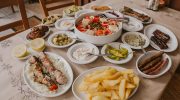
Food culture became a unifying element despite political divisions. Both communities share meze traditions, halloumi cheese production, and Mediterranean cooking techniques. Dishes like souvlaki, moussaka, and various grilled meats appear on both sides with minor variations. Tavernas function as social centers where extended meals facilitate community bonding.
Language Reflects Complex Heritage
Greek dominates the southern Republic, used in education, government, and daily life. The local dialect differs from mainland Greek but remains mutually intelligible. Turkish prevails in the north, though again with dialectical variations from Turkey’s Turkish. English operates as a common language across the island due to British colonial influence and tourism needs.
Younger generations often speak multiple languages fluently. Many Greek Cypriots learn English in school and through European Union connections. Turkish Cypriots increasingly learn English to access international opportunities despite political isolation. This multilingualism enables cross-border communication despite political barriers.
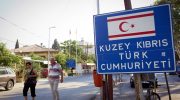
The linguistic landscape reveals identity complexity. Street signs in the south appear in Greek and English. The north uses Turkish with some English in tourist areas. Place names changed significantly after 1974, with Turkish authorities renaming locations in occupied territories. This linguistic transformation aimed at erasing Greek cultural heritage from the northern landscape.
Missing Persons Haunt Both Communities
Over 2,000 people remain unaccounted for from 1974 events and 1960s violence. Over 1,500 are Greek Cypriots, with the remainder Turkish Cypriots. The bi-communal Committee on Missing Persons works to locate and identify remains, returning them to families. Excavations continue across both territories as relatives seek closure decades later.

The missing persons issue symbolizes unresolved trauma affecting both communities. Families unable to properly bury loved ones experience ongoing grief and uncertainty. This shared suffering occasionally creates bridges between communities as relatives from both sides recognize common pain. However, political leaders often exploit missing persons for nationalist messaging rather than healing.
Peace Efforts Face Persistent Obstacles
Numerous reunification attempts failed over five decades. The 2004 Annan Plan proposed a federal structure with Turkish Cypriot and Greek Cypriot constituent states. Turkish Cypriots approved it two-to-one, while Greek Cypriots rejected it three-to-one. The plan would have returned property to over half the displaced Greek Cypriots within 42 months.
Recent negotiations in 2017 and subsequent years broke down over security guarantees, military presence, and property rights. Turkey insists on maintaining troops for Turkish Cypriot protection. Greek Cypriots demand complete demilitarization and Turkish withdrawal. Turkish President Recep Tayyip Erdoğan now advocates for two-state solution, rejected by the international community and Greek Cypriots.
The EU membership of Cyprus complicates negotiations. The occupation of the north creates economic isolation preventing normal development. Turkey’s NATO membership adds geopolitical dimensions as Western powers balance alliance commitments with Cyprus sovereignty concerns.
Modern Life Continues Despite Division
Cypriots on both sides adapted to divided reality. The south prospered as an EU member with robust tourism, financial services, and agricultural sectors. Nicosia and Limassol developed into cosmopolitan cities attracting international residents and businesses. Infrastructure investments created modern amenities matching Western European standards.
The north remains economically dependent on Turkey but maintains distinct character. Kyrenia’s harbor, Famagusta’s medieval walls, and mountain villages preserve historical charm. Turkish Cypriots developed their own cultural institutions, media outlets, and educational systems separate from the south. Despite hardships, communities maintained social cohesion and cultural vitality.
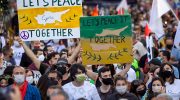
Younger generations increasingly question inherited divisions. Peace culture movements promote cross-border cooperation through arts, poetry, and shared projects. Some checkpoints allow movement between territories, enabling limited contact. These small openings offer hope that future generations might forge shared identity transcending ethnic nationalism.