4. Hellenistic period

How Hellenistic Cyprus Became a Naval Powerhouse

How Hellenistic Cyprus Became a Naval Powerhouse

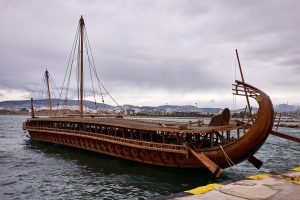
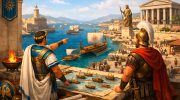
During the Hellenistic age, Cyprus quietly transformed from a collection of local kingdoms into one of the most strategically important naval centers in the Mediterranean. Under centralized rule, the island became a command hub for fleets, shipyards, and sea routes that linked Egypt, the Levant, and the Aegean. This was not accidental power. It was administrative, geographic, and deeply intentional. When the Sea Became the Center of Power Cyprus has always faced outward. Its position at the crossroads of three continents made the sea unavoidable, but during the Hellenistic period, maritime control became the island’s defining function. After the death of Alexander the Great in 323 BCE, his successors fought to control the eastern Mediterranean. Among them, the rulers of…

Read more
Sanctuary of Aphrodite, Palaepaphos

Sanctuary of Aphrodite, Palaepaphos

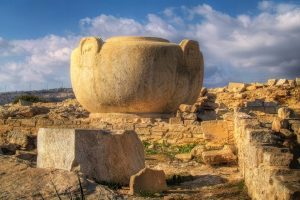
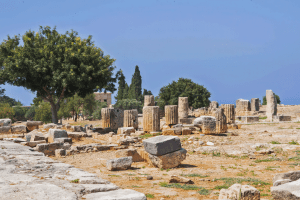
In the village of Kouklia, about 14 kilometers east of Paphos, stand the remains of what was once the most famous shrine dedicated to Aphrodite in the ancient world. For more than 1,600 years, pilgrims traveled from across the Mediterranean to worship at Palaepaphos, the place where the goddess of love was believed to have risen from the sea. Today, the site is a UNESCO World Heritage monument and one of the most important archaeological locations in Cyprus. The Sanctuary of Aphrodite at Palaepaphos was founded around 1200 BC during the Late Bronze Age. It remained in continuous use until 391 AD, when the Roman Emperor Theodosius I banned all pagan religions. Palaepaphos was among the most powerful city-kingdoms of…

Read more
Nea Paphos Harbor

Nea Paphos Harbor

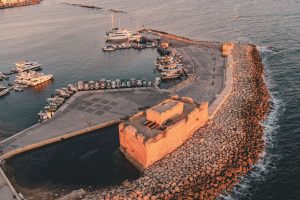
Nea Paphos emerged as one of the most strategically important harbor cities in the ancient Mediterranean. Founded in the late 4th century BC on the southwest coast of Cyprus, this planned city replaced the older settlement of Palaipaphos and quickly became the island's capital. The harbor served dual purposes as both a major naval base and a thriving commercial port, connecting Egypt with the broader Mediterranean world. Today, the archaeological remains spread across 100 hectares near modern Kato Paphos, offering a window into ancient maritime power. Historical Background King Nikokles, the last monarch of Palaipaphos, founded Nea Paphos around 320 BC. After Alexander the Great's death, Cyprus fell under Ptolemaic Egyptian control in 294 BC, where it remained for over…

Read more
Amathus Acropolis Hellenistic Structures

Amathus Acropolis Hellenistic Structures

The acropolis of Amathus stands as evidence of the city's transformation during the Hellenistic period. When the kingdom fell to Ptolemaic rule around 312–311 BC, the focus of urban life shifted from the hilltop to the lower town, but this transition brought new construction that reshaped the ancient fortress into something different. Amathus was one of Cyprus's ancient royal city-kingdoms, established around 1100 BC on the southern coast. The site lies about 11 kilometers east of modern Limassol. For centuries, the acropolis served as both a natural fortress and a religious center, dominated by the sanctuary of Aphrodite. Archaeological evidence shows the city prospered through copper trade and maintained a unique cultural identity that blended Greek, Phoenician, and indigenous Cypriot…

Read more
Marion Polis Chrysochous

Marion Polis Chrysochous

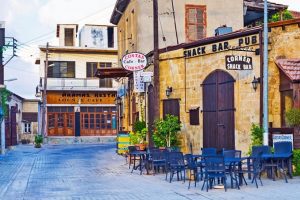
On the northwest coast of Cyprus, the small town of Polis Chrysochous sits on top of two ancient cities. Most people who pass through treat it as a quiet stop on the way to the Akamas Peninsula. Few realise that beneath the modern streets, beneath the cafes and the central square, there are over 3,000 years of history. The town is built directly on the ruins of Marion, one of the ten city-kingdoms of ancient Cyprus, and its later successor, Arsinoe. The name "Chrysochous" itself is a clue. It comes from the Greek word "chrysos," meaning gold. This was not a random choice. It was a city that made its name from the ground beneath it. Historical Background The earliest…

Read more
Kition Phoenician City

Kition Phoenician City

Kition was a city on the southeast coast of Cyprus, where modern Larnaca is today. It was founded in the late 13th century BC during the Late Bronze Age and remained inhabited until the Ptolemaic period. The city had many names: Kittim in the Bible, Kitiya in Phoenician, and Citium in Latin. Kition was an important port, connecting Cyprus with the Aegean, the Levant, and Egypt. The city spread over a large area under modern Larnaca, but only some parts have been dug up. The main archaeological areas are Kathari (Area II), about 500 meters north of Bamboula hill, and Bamboula, about 50 meters north of the Larnaca Archaeological Museum. Excavations here have uncovered temples, city walls, houses, and a…

Read more
Kition Temples Phoenician Hellenistic Period

Kition Temples Phoenician Hellenistic Period

Kition, located beneath modern Larnaca on Cyprus's southeastern coast, served as a major Bronze Age settlement before the Phoenicians arrived. The site contains five successive temples dated from the late 13th to the late 11th century BC, built during the Late Bronze Age when Mycenaean Achaeans inhabited the city. These early temples were connected to copper smelting workshops, revealing an unusual integration of industrial and religious activities. The copper industry was central to Cyprus's prosperity, and scholars believe this placement suggests either worship of a deity related to copper production or a ritual significance attached to metallurgy itself. Around 1000 BC, the religious part of the city was abandoned, though life continued in other areas. This abandonment created a gap…

Read more