3. Ancient city-kingdoms

Marion and Tamassos

Marion and Tamassos

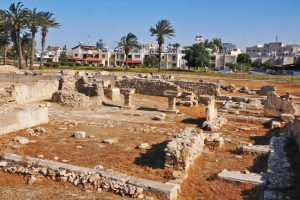
Funerary reliefs in ancient Cyprus were public status tools, not private grief markers, and Marion and Tamassos developed two distinct ways of making rank visible in stone. Marion favoured framed relief panels and inscriptions that anchored individuals within families, while Tamassos emphasised tomb architecture, guardians, and scale to project continuity and authority. This article compares how imagery, materials, and writing systems shaped remembrance in both kingdoms, and what those choices still reveal about power and belief on the island. Two Kingdoms, Two Worlds Although Marion and Tamassos existed on the same island, their landscapes shaped very different societies. Marion, located on the northwestern coast near modern Polis Chrysochous, was outward-facing. Its wealth depended on maritime trade and access to copper…

Read more
Sanctuary of Apollo at Vouni

Sanctuary of Apollo at Vouni

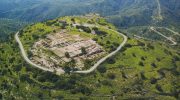
The Sanctuary of Apollo at Vouni embodies the fusion of religious devotion and political authority in ancient Cyprus, where the god of light, prophecy, and healing was venerated within the walls of a grand palace built by a pro-Persian ruler. Located on a hilltop in northwestern Cyprus near the ancient city of Soli, this site dates to the 5th century BC and highlights the island's strategic role in the Persian Empire's influence over the Mediterranean. As part of the Vouni Palace complex, the sanctuary served not only as a spiritual center but also as a symbol of the pro-Persian administration's power, blending local Cypriot traditions with Achaemenid and Hellenic elements. Dedicated to Apollo, the sanctuary facilitated rituals that reinforced loyalty…

Read more
Cyprus Ancient Naval Influence

Cyprus Ancient Naval Influence

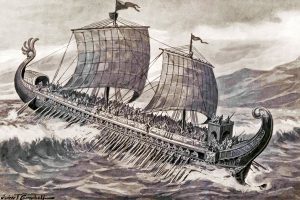
For much of antiquity, Cyprus was less an island on the map and more a working platform of the sea. Positioned between the Aegean, the Levant, and Egypt, it became a testing ground where Phoenician and Greek seafarers refined ships, navigation, and maritime organisation. This article explains how those two cultures approached the sea differently, why Cyprus mattered to both, and how their overlapping naval traditions quietly transformed the island into one of the Mediterranean’s most connected societies. An Island That Made Sense Only from the Water Cyprus’s importance is easiest to understand when viewed from a ship’s deck. Sitting at the eastern edge of the Mediterranean, the island lies directly along the sea lanes linking the Aegean world with…

Read more
Cyprus City Kingdoms

Cyprus City Kingdoms

For over 3,000 years, Cyprus was home to powerful independent city-kingdoms that controlled trade routes, mined copper, and blended Greek, Phoenician, and local cultures into something uniquely Cypriot. These ancient cities left behind spectacular ruins - theaters still hosting performances, mosaic-floored villas, and temple foundations - that tell the story of a small island that punched far above its weight in the ancient world. A Patchwork of Powerful Cities Unlike many ancient lands ruled by a single king or empire, Cyprus developed as a collection of independent city-kingdoms. Each coastal city controlled its surrounding territory, built its own temples and palaces, minted its own coins, and conducted its own diplomacy with the great powers of Egypt, Persia, and Greece. At…

Read more
Western Kingdom of Paphos

Western Kingdom of Paphos

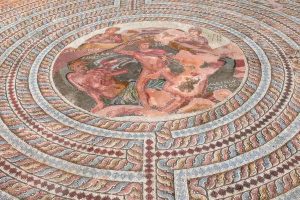
Paphos refers to two distinct but connected ancient cities in southwestern Cyprus. Palaipaphos (Old Paphos), located at modern Kouklia village, was the original seat of the kingdom and the center of Aphrodite worship from the 12th century BC. Nea Paphos (New Paphos), founded around 320-310 BC at the modern coastal city of Paphos, served as the administrative and commercial capital during Hellenistic and Roman periods. The archaeological complex encompasses both sites and was inscribed on the UNESCO World Heritage List in 1980. The Sanctuary of Aphrodite at Palaipaphos dates to Mycenaean times and functioned as one of the most important pilgrimage destinations in the ancient Greek world. The Archaeological Park at Kato Paphos preserves Roman villas with elaborate mosaic floors,…

Read more