5. Roman period

Salamis Marble Portraits

Salamis Marble Portraits

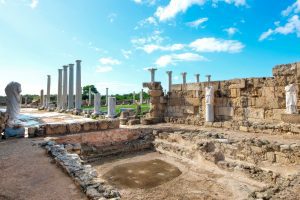
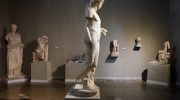
The marble portraits of Roman Salamis turned authority into something citizens met daily, placing emperors, local benefactors, and symbolic figures inside gyms, baths, theatres, and civic halls. Because Cyprus had no native marble, each imported head and statue also signalled access to imperial trade, wealth, and cultural alignment, while local workshops adapted Roman styles through Cypriot hands. This article explains where these portraits stood, how they communicated loyalty and status, and how recutting, earthquakes, and Christian transformation reshaped what survives today. A Roman City Built on Visibility Under Roman rule, Salamis evolved from a Hellenistic centre into a fully Roman metropolis. Its harbour connected Cyprus to trade routes linking Asia Minor, the Levant, and the Aegean, while its public buildings…

Read more

Roman Paphos Odeon

Roman Paphos Odeon

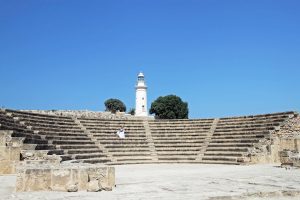
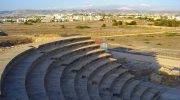
The Ancient Odeon of Paphos stands on the slopes of Fabrica Hill as one of Cyprus's most elegant survivors from Roman times. Built entirely from carefully carved limestone blocks in the 2nd century AD, this semicircular amphitheater today hosts both visitors and live performances in a setting that connects modern audiences with ancient traditions. The Odeon began its life during the Hellenistic period when Paphos served as the capital of Ptolemaic Cyprus. The theater formed part of the Agora complex in the northern center of the ancient city. During the 2nd century AD, the Romans altered and expanded the structure to its present form. The builders integrated the theater into the natural slope of Fabrica Hill, cutting most of the…

Read more
The House of Aion Mosaics

The House of Aion Mosaics

The House of Aion in Kato Paphos preserves a late Roman mosaic program designed to communicate ideas, not just decorate a room, using myth to argue for cosmic order, education, and limits on human ambition. Made in the 4th century AD during the empire’s rapid Christianisation, the floor reads as a coherent statement from a pagan elite defending continuity through refined symbolism rather than confrontation. This article explains where the building sits in ancient Paphos, how the five scenes build one argument, and what the mosaics reveal about power, belief, and artistic change in late antiquity. Paphos, Power, and Maloutena The House of Aion lies in the Maloutena district of ancient Nea Paphos, once the island's administrative and cultural centre…

Read more
Nea Paphos Ancient Capital of Roman Cyprus

Nea Paphos Ancient Capital of Roman Cyprus

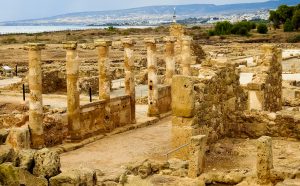
Nea Paphos occupies a coastal plain on the southwestern shore of Cyprus, adjacent to the modern city of Paphos. Founded in the 4th century BC by Nikokles, the last king of nearby Palaipaphos, Nea Pafos then went from strength to strength, particularly under the Ptolemaic kingdom from the 3rd century BC. The city was located on a peninsula surrounded by a natural bay and between the two small hills called Fanari and Fabrika. Nea Paphos was founded at the turn of the 4th and 3rd century BC as an important harbour located on the sea trade route from Rhodes to Alexandria. Thanks to its strategic location, from the 2nd century BC Nea Paphos became the capital of Cyprus and the…

Read more
Roman Road Network

Roman Road Network

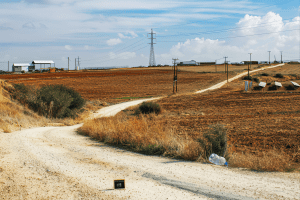
Cyprus already had roads before the Romans arrived. The earliest routes date back to the Bronze Age, and by the end of the Hellenistic period, a road network circled the entire island. These pre-Roman roads connected cities with their surrounding territories and linked major settlements along the coast. However, they were often simple tracks suitable for pedestrians and pack animals rather than the engineered highways Romans built elsewhere in their empire. When Cyprus became a Roman province in 22 BC under Emperor Augustus, the new administration inherited this existing network. The Romans added secondary roads and improved certain routes, but they did not rebuild the entire system to match the standards used in Italy or other provinces. This practical approach…

Read more
Amathus Roman Remains Cyprus Coastal City Life

Amathus Roman Remains Cyprus Coastal City Life

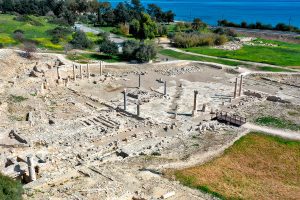
The ruins of Amathus spread across a coastal hillside 11 kilometers east of Limassol, where stone walls and column fragments mark one of Cyprus' oldest city kingdoms. Archaeological evidence shows continuous occupation from 1100 BCE until the 7th century CE, a span of nearly 2,000 years. During the Roman period, Amathus became the capital of one of four administrative regions on Cyprus. The city's importance grew so significant that Romans used the term Amathusia as a general synonym for Cypriot. Today, visitors walk through the remains of public baths built during Emperor Hadrian's time, explore an agora where merchants traded goods from across the Mediterranean, and view foundations of the great Temple of Aphrodite that made this the second most…

Read more
Roman Aqueduct of Salamis

Roman Aqueduct of Salamis

The ancient city of Salamis on Cyprus faced the same problem that confronted many Roman settlements across the Mediterranean. The city needed vast quantities of water to serve its growing population, public baths, and commercial activities, but local sources were not enough. The Romans solved this challenge with one of their most impressive engineering achievements on the island: a 40-kilometer aqueduct that brought fresh water from the springs of Kythrea to the bustling coastal metropolis. Why Salamis Needed an Aqueduct Salamis stood as one of Cyprus's most important cities during Roman times. The city stretched two kilometers along the coastline and reached one kilometer inland. At its peak, between 50,000 and 100,000 people called Salamis home. This large population created…

Read more
Roman Cyprus: Mediterranean Maritime Hub

Roman Cyprus: Mediterranean Maritime Hub

When Cyprus became part of the Roman world, the island did not need to reinvent its relationship with the sea. Instead, Rome refined it. Over centuries, Roman engineers, administrators, and merchants transformed Cyprus into a carefully managed maritime province, one that linked eastern trade routes with the wider Mediterranean through ports, harbors, and logistics designed for permanence rather than improvisation. From Crossroads to System Cyprus had always sat between worlds. Long before Roman rule, ships traveling between the Levant, Egypt, Asia Minor, and the Aegean passed its shores. What changed under Rome was not geography, but organization. The Romans treated the sea as infrastructure. Ports were no longer just safe places to land. They became regulated environments, engineered to control…

Read more