2. Chalcolithic and Bronze Age

Erimi-Pamboula Cyprus

Erimi-Pamboula Cyprus

Erimi-Pamboula sits quietly in southern Cyprus, yet this ancient settlement tells one of the island's most important stories. From 3500 to 2900 BC, this village thrived along the Kouris River, giving its name to an entire culture that shaped Cyprus for over a thousand years. -reddit-com Erimi-Pamboula represents the heart of what scholars call the Chalcolithic period in Cyprus, a time when people first combined stone tools with early metalwork. The settlement stretched across 15 hectares on a low plateau just three miles from the coast, where the Kouris River provided fresh water and access to valuable resources. The village was large enough and influential enough that the entire cultural period became known as the "Erimi culture," a name still…

Read more
Pyla-Kokkinokremos

Pyla-Kokkinokremos

Pyla-Kokkinokremos stands as one of Cyprus's most remarkable archaeological sites, offering a rare snapshot of life during the final decades of the Bronze Age. This fortified settlement, occupied for barely 50 years around 1200 BC, preserves evidence of a multicultural community that thrived briefly before vanishing from history. The site occupies a rocky plateau rising 50 to 63 meters high, located about 10 kilometers east of ancient Kition (modern Larnaca) on Cyprus's southeast coast. The plateau covers approximately seven hectares and sits roughly 800 meters from the current coastline. This naturally defensible position overlooked Larnaka Bay and connected major Bronze Age centers like Kition and Enkomi. The settlement emerged during the Late Cypriot IIC–IIIA period, established at the end of…

Read more
Enkomi Bronze Figurines: Gods of Copper

Enkomi Bronze Figurines: Gods of Copper

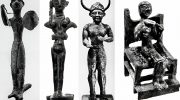
Enkomi’s bronze figurines show how Late Bronze Age Cyprus fused religion with copper production, turning its key resource into divine protection and political legitimacy. The Horned God and the Ingot God were not decorative art but intentional symbols, linking sanctuaries, workshops, and administrative control inside one civic system. This article explains Enkomi’s trade position as Alashiya, what each figure was designed to communicate, and why their burial and survival still shape how we understand “sacred industry” on Cyprus. A City Between Mine and Sea Enkomi rose on a rocky plateau near a sheltered inlet that once opened to the sea. This position allowed it to function as both a port and a processing centre, linking the copper-rich Troodos Mountains to…

Read more
Kamares Ware: Cyprus Joins Bronze Trade

Kamares Ware: Cyprus Joins Bronze Trade

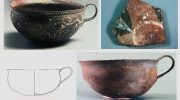
Kamares ware is luxury pottery made in Minoan Crete that reached Cyprus nearly 4,000 years ago, proving the island was already tied into long-distance Mediterranean exchange. Thin “eggshell” vessels and high-control firing techniques turned these cups and jugs into prestige objects, appearing mainly in elite burials and high-status contexts rather than everyday homes. This article explains how Kamares travelled through Cypriot ports, what it signalled about copper-era trade, and how imported styles helped reshape local ceramic traditions over time. cretetravel-com Aegean Luxury Arrives in Cyprus During the early second millennium BCE, Cyprus was not an isolated island on the edge of history. Its copper resources made it valuable to societies that lacked metal of their own, especially Minoan Crete. At…

Read more
Cyprus Metal Crafts Through Ages

Cyprus Metal Crafts Through Ages

Cyprus holds a unique position in metalworking history. The island gave its name to copper itself, with the Latin term "cuprum" deriving from "Cyprus." For over 6,000 years, Cypriot artisans have shaped metals into tools, weapons, jewelry, and decorative objects. The tradition spans from simple Chalcolithic copper tools around 4000 BCE to Byzantine gold treasures and modern handcrafted silver jewelry. This heritage connects ancient mining operations in the Troodos Mountains with contemporary workshops where craftspeople maintain techniques passed down through generations. myfirstticket.com Historical Background The metal story in Cyprus begins during the Chalcolithic period when early settlers discovered native copper deposits. By 3000 BCE, Cypriots were already working copper to create artifacts of high quality that circulated throughout the Mediterranean.…

Read more
Sotira Kaminoudhia

Sotira Kaminoudhia

Sotira Kaminoudhia is an Early Bronze Age settlement and cemetery complex located in the Sotira parish and covering an area of approximately one hectare. The site was excavated by Stuart Swiny of the Cyprus American Archaeological Research Institute between 1978 and 1986 as part of a wider regional survey project. The settlement occupies the lower slopes and flat fields north of Teppes hill, where Porphyrios Dikaios had earlier excavated the well known Neolithic site that gave rise to the term Sotira culture. shutterstock-com The site spans three distinct phases: Philia, dated to approximately 2500 to 2300 BC, Early Cypriot I to II from 2300 to 2100 BC, and Early Cypriot III from 2100 to 2000 BC. The excavated settlement remains…

Read more
Alampra Early Bronze Age Town

Alampra Early Bronze Age Town

Alampra Mouttes stands as one of Cyprus’s most significant Middle Bronze Age settlements. Located in central Cyprus near the modern village of Alampra, this archaeological site provides rare evidence of prehistoric urban life and early copper metallurgy between 1900 and 1650 BC. The excavated remains reveal a substantial community that occupied a strategic position close to copper ore deposits at the foothills of the Troodos Mountains. wikipedia-org The archaeological site occupies the northeast facing flank of a ridge between two hills called Mouttes and Spileos. The settlement consists of multi room rectangular houses built from local limestone and flint, with walls still standing in several areas. During its period of occupation, Alampra functioned as a largely self sufficient agricultural and…

Read more
Ancient Enkomi Cyprus Bronze Age City

Ancient Enkomi Cyprus Bronze Age City

On the eastern coast of Cyprus near today’s Famagusta, Enkomi was one of the most important Bronze Age cities in the Mediterranean. For over 600 years, this walled city controlled much of the region’s copper trade and acted as a key link between the Near East, Egypt, and the Aegean world. visitnorthcyprus-com Enkomi was a major Late Bronze Age settlement, occupied from around 1650 BCE to 1050 BCE. The city grew near a Mediterranean inlet, which has since filled with silt, leaving the ruins several kilometers from the sea. At its height, between 1340 and 1200 BCE, Enkomi was one of Cyprus’s main centers for copper production and export. Historical Background Enkomi was first settled in the Middle Bronze Age,…

Read more
Maa-Palaiokastro

Maa-Palaiokastro

Maa-Palaiokastro is an important site in Cyprus’s history. This Late Bronze Age settlement on the western coast near modern Paphos shows the arrival of Mycenaean Greeks to the island around 1200 BC. Built on a small peninsula and surrounded by strong walls, the site shows how Greek culture began to influence Cyprus during a period of major changes across the eastern Mediterranean. pafos region facebook The name "Palaiokastro" means "old castle" in Greek, referring to the large fortification walls that were still visible long after people left the settlement. The site includes the ruins of a small but strategically important community from the late 13th to mid-12th century BC, along with an underground museum built in 1996. The settlement sits…

Read more