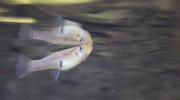
If you have ever sat at a taverna beside the sea in Cyprus and ordered the fish of the day, there is a very good chance that what arrived on your plate – whole, glistening, fragrant with lemon and olive oil – was a Λαβράκι, the lavraki.
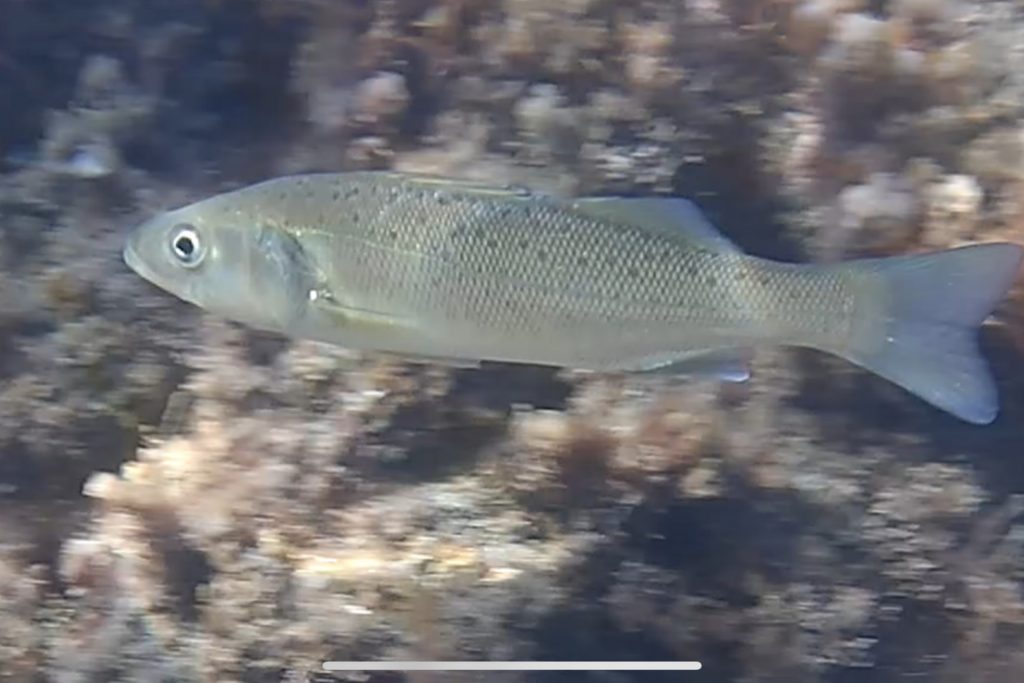
It is one of the most beloved and recognisable fish in the entire Mediterranean world. But behind this elegant creature’s simple appearance lies a remarkable story – one of ancient seas, modern science, and an island that has made this fish its own.
A Fish of Many Names, One Identity
The European seabass (Dicentrarchus labrax) belongs to the family Moronidae, a small and exclusive group known as the temperate basses – a family of just six species found across the temperate waters of the Northern Hemisphere. Think of them as the refined aristocrats of the fish world: not flashy like a tuna, not humble like a sardine, but quietly distinguished and exceptionally good at what they do.
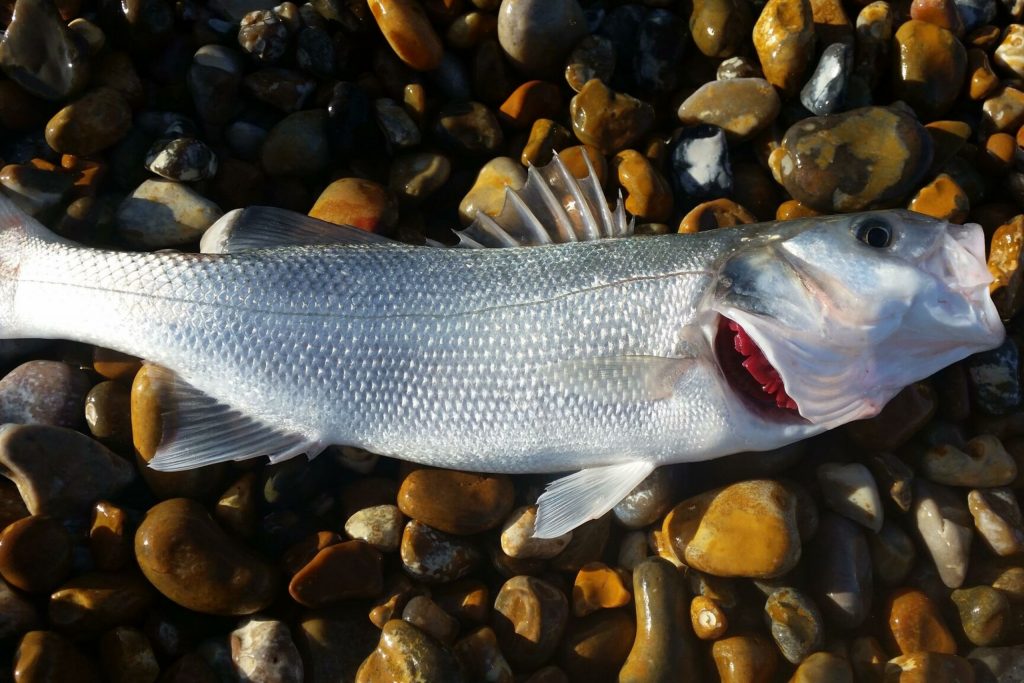
In Cyprus and across the Greek-speaking world, this fish is universally known as lavraki – λαβράκι – a name that carries warmth, familiarity, and a hint of culinary expectation. Elsewhere in Europe it wears many costumes: branzino in Italy, lubina in Spain, loup de mer (wolf of the sea) in France, levrek in Turkey. Each name reflects a different cultural relationship with the same magnificent animal. In Cyprus, it is simply lavraki – and that is enough.
Ancient Waters, Ancient Fish
The seabass has been swimming in Mediterranean waters since long before humans thought to give it a name. It is a species tied to the very geology of the sea it inhabits – a sea that formed as the ancient Tethys Ocean gradually closed, reshaping the continents and creating the warm, enclosed basin we know today.
The European seabass was first formally described in 1758 by the Swedish zoologist Carl Linnaeus in his landmark work Systema Naturae, where he named it Perca labrax. The name evolved over centuries of scientific revision, with the name Dicentrarchus labrax finally settling into accepted use in 1987. Even the scientific name carries an ancient echo: Dicentrarchus comes from the Greek words di (two), kentron (sting), and archos (anus) – a reference to the two spines near the fish’s rear fin, a detail that only a naturalist could love.
Ancient Greeks and Romans certainly knew this fish well. It appeared in the markets of Athens and Alexandria, was prized at Roman banquets, and has been referenced in texts on Mediterranean cuisine going back more than two thousand years. Cyprus, sitting at the crossroads of trade routes between Greece, the Levant, and Egypt, was no stranger to this prized catch.
Silver Sides and a Sharp Mind
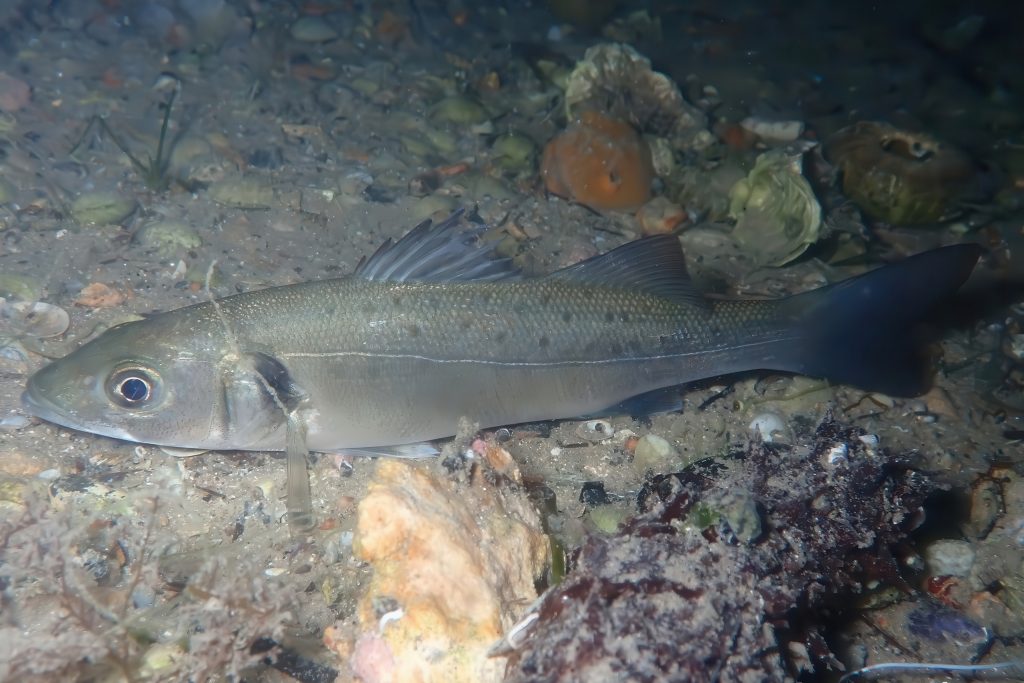
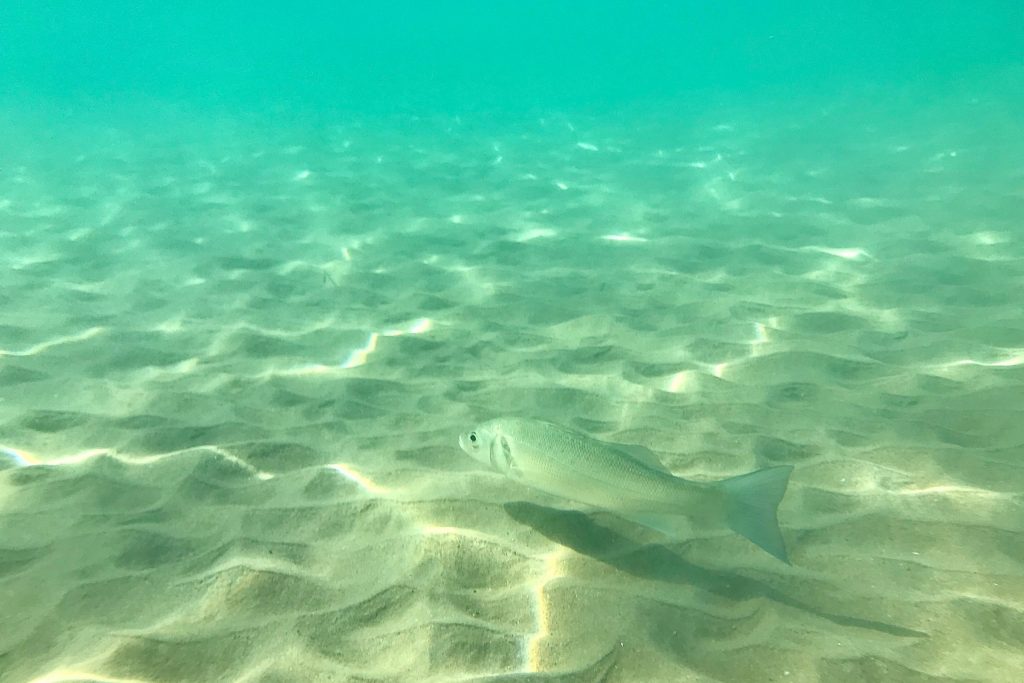
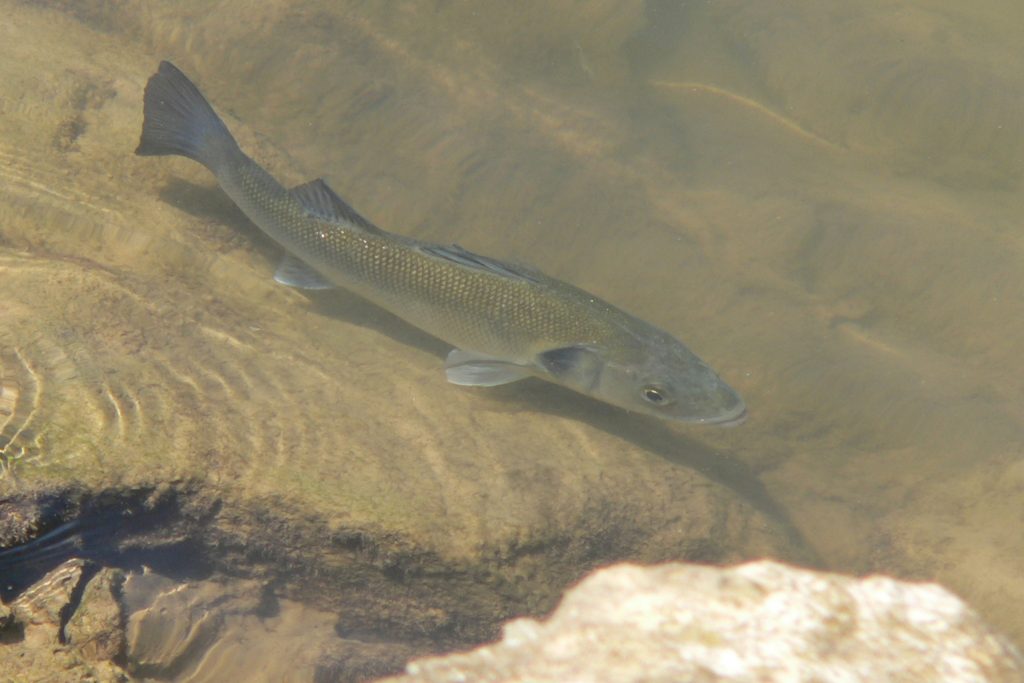
At first glance, the lavraki appears elegantly simple. It has silver sides and a white belly. Juvenile fish maintain black spots on the back and sides, a feature that can create confusion with the related Dicentrarchus punctatus. Its operculum – the bony plate covering the gills – is serrated and spined.
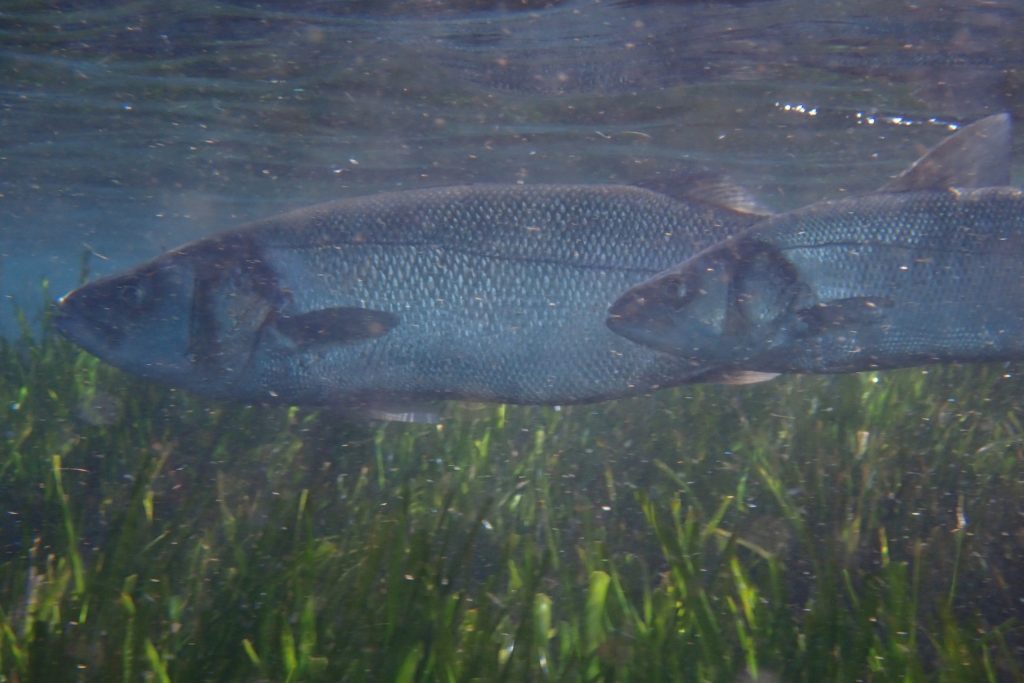
It can reach over 103 cm in length and up to 12 kg in weight, though the most common size encountered is around 50 cm. It lives primarily in the ocean but shows remarkable adaptability, moving into estuaries, lagoons, and even the mouths of rivers during warmer months. It is a predator – fast, intelligent, and acutely aware of its surroundings. Anglers who target it speak of the lavraki with something approaching respect, describing it as clever, cautious, and difficult to fool.
Greek journalists actually use the word lavraki to refer to a high-value exclusive news story – a cultural nod to the perceived luck required to catch one. That metaphor says a great deal about how this fish is perceived: rare enough to feel like a prize, but common enough to feature on every taverna menu.
Five Things That May Surprise You
- The name is very literally anatomical. The genus Dicentrarchus translates from Greek as “two-spiked anus fish.” Linnaeus was nothing if not precise.
- It can live for up to 30 years. Wild seabass are slow-growing and long-lived, which makes overfishing a genuine concern. A large wild specimen on a Cypriot reef may well be older than the teenager who spots it while snorkelling.
- There are two genetically distinct populations. One population is found in the northeast Atlantic Ocean, and the second lives in the western Mediterranean Sea. The fish you encounter in Cyprus belongs to a lineage shaped by millions of years of separation.
- Escaped farm fish have been found in Cypriot waters. A scientific study confirmed that farmed seabass that escape from aquaculture cages can survive in the wild off Cyprus – raising questions about their genetic impact on local wild populations.
- The seabass was one of the first fish farmed commercially in Europe, after salmon. That experiment began in earnest in the 1980s and transformed the European seafood industry entirely.
From the Cage to the Kitchen – Aquaculture and Cyprus
The European seabass is considered the most important fish currently cultured in the Mediterranean. That is not a small claim – it sits alongside centuries of Mediterranean fishing tradition, and it reflects just how comprehensively this fish has moved from the wild sea into managed farms.
According to FAO data, marine aquaculture production in the Mediterranean and Black Sea has doubled between 2013 and 2023, rising from around 470,000 tonnes to approximately 940,000 tonnes, with European seabass accounting for nearly 278,500 tonnes – around 34.5 percent of all marine finfish production.
Cyprus is a participant in this story. Along with Albania, France, Italy and Slovenia, Cyprus contributes to a combined cage production of over 17,000 tonnes, with Cyprus alone producing 5,628 tonnes of marine cage-farmed fish in 2023. Along many of Cyprus’s coastlines – particularly around the Limassol and Paphos districts – the circular or square frames of offshore fish cages are a visible part of the seascape. These are not industrial eyesores but working farms, tethered in clean, well-oxygenated open water, producing the lavraki that fills the island’s fish markets and restaurant menus.
On Cyprus, almost all of the lavraki offered for sale will have come from commercial fish farms. The wild fish still exists in Cypriot waters – divers occasionally encounter solitary individuals around rocky outcrops and reefs – but wild-caught lavraki is genuinely rare. What you eat at the taverna is a farmed fish, raised from a fingerling to a table-sized portion of around 400–600 grams in roughly 18–24 months under careful management.
The farming process begins in hatcheries, where fertilised eggs are incubated and the tiny larvae are fed live microscopic organisms before graduating to pellet feed. The young fish are then transferred to offshore cages, where they grow in natural seawater, exposed to real currents, real temperatures, and real seasons. The result is a fish that, while farmed, retains much of the texture and flavour that made wild lavraki so celebrated in the first place.
Here is where something genuinely special about Cyprus comes into play. The waters surrounding the island are among the most oligotrophic in the entire Mediterranean — meaning they are exceptionally clear, low in nutrients, and naturally poor in the kind of bacteria and pathogens that cause disease in densely farmed fish elsewhere. This low abundance of pathogens minimises losses to disease, and as a direct consequence, fish farming in Cyprus’s waters produces antibiotic-free seafood. There is no need for routine antibiotic treatments when the sea itself is clean enough to keep the fish healthy. Cyprus’s farms are located in open sea with clear waters all year round, offering fresh fish free from antibiotics and medicine — a distinction that is increasingly valued by health-conscious consumers worldwide, and one that Cyprus’s aquaculture producers are rightly proud of.
The Lavraki in Cypriot Life Today
Walk into any fish market in Limassol, Larnaca, or Nicosia, and the lavraki is almost always present – silver-bright, fresh, and priced as a premium product. It is not the cheapest fish on the slab, but it is far from the most expensive. It occupies a comfortable middle ground: a special meal that does not require a special occasion.
At Cypriot fish tavernas, lavraki is most commonly served whole, simply grilled over charcoal or in the oven with lemon, olive oil, fresh herbs, and perhaps a scattering of capers. The flesh is white, moist, and delicately sweet – not oily, not dry, but precisely balanced. It is a fish that respects good cooking without demanding it.
Beyond the plate, the lavraki holds a modest but real place in Cyprus’s coastal economy. Aquaculture in Cyprus represents both employment and export potential, and the seabass – alongside the gilthead seabream (Sparus aurata, known as tsipoura in Greek) – is at the heart of that production. As the FAO has noted, the region’s heavy reliance on these two finfish species underscores the need for broadening the production base – a challenge that Cyprus’s fish farming sector is beginning to address through species diversification.
Encountering the Lavraki in the Wild
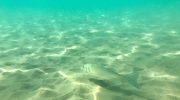
For those who want to do more than eat this fish – who want to see it in its natural world – Cyprus offers real opportunities. Recreational divers exploring the rocky reef systems around Cape Greco, the Zenobia wreck near Larnaca, or the rock formations off Paphos sometimes encounter solitary lavraki hovering in deeper water or patrolling reef edges. They are not easy to approach – cautious, quick to retreat, and most active at dawn and dusk.
Spearfishers and recreational anglers also target lavraki along the island’s coastline, though strict regulations govern what can be taken and in what size. The minimum legal size for harvesting is enforced to protect younger fish from being removed before they have had a chance to reproduce.
The best chance of encountering one in the wild is simply to spend time in the water – at a rocky headland, near a harbour wall, or around an underwater structure where prey fish gather. Patient observation, rather than active pursuit, is what this fish rewards.
Worth Knowing, Worth Protecting
The lavraki is more than a meal. It is a thread that connects Cyprus to the wider Mediterranean world – to ancient fishing traditions, to the modern science of aquaculture, and to the ongoing conversation about how we feed ourselves sustainably from the sea. It is a fish that has adapted to human pressure partly because humans have learned to farm it, but also because the wild animal remains adaptable, resilient, and present in the waters around this island.
Cyprus’s relationship with the sea is as old as the island itself, and the lavraki sits comfortably within that long story. The next time it appears on your table – whole, fragrant, simply cooked – it is worth pausing for a moment to consider the remarkable journey it represents: from Linnaeus’s specimen jars in 1758, to the offshore cages visible from Limassol’s seafront, to the plate in front of you. That is a story worth savouring, one careful bite at a time.