Omodos is a historic mountain village in Cyprus’s Troodos range, known for its Byzantine monastery, traditional architecture, and wine-making heritage. Located 42 kilometers northwest of Limassol at an elevation of 800 meters, the village lies within the Krasochoria district, the traditional wine-producing region of Cyprus. Its location in this wine heartland has shaped the local economy and identity for centuries.
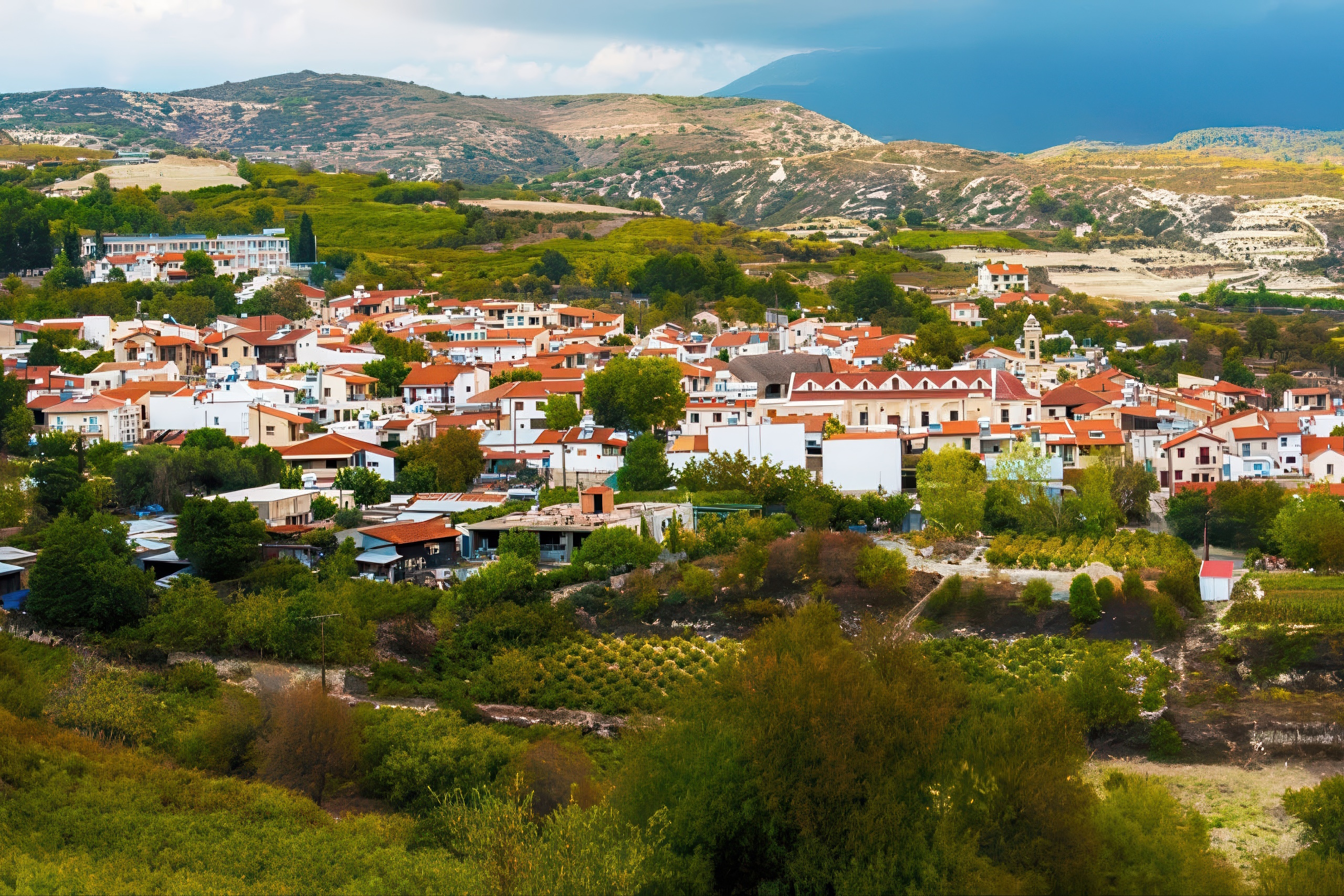
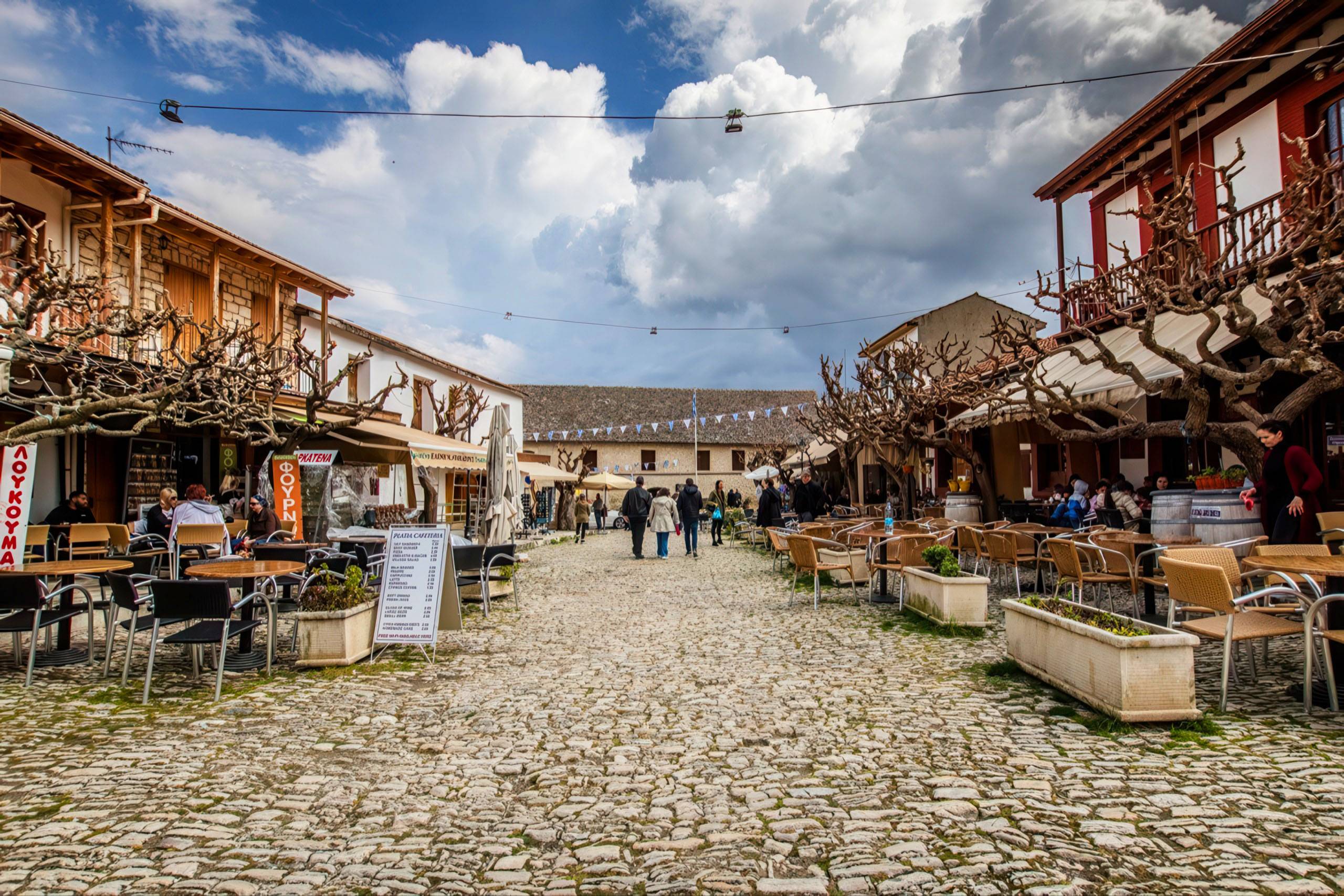
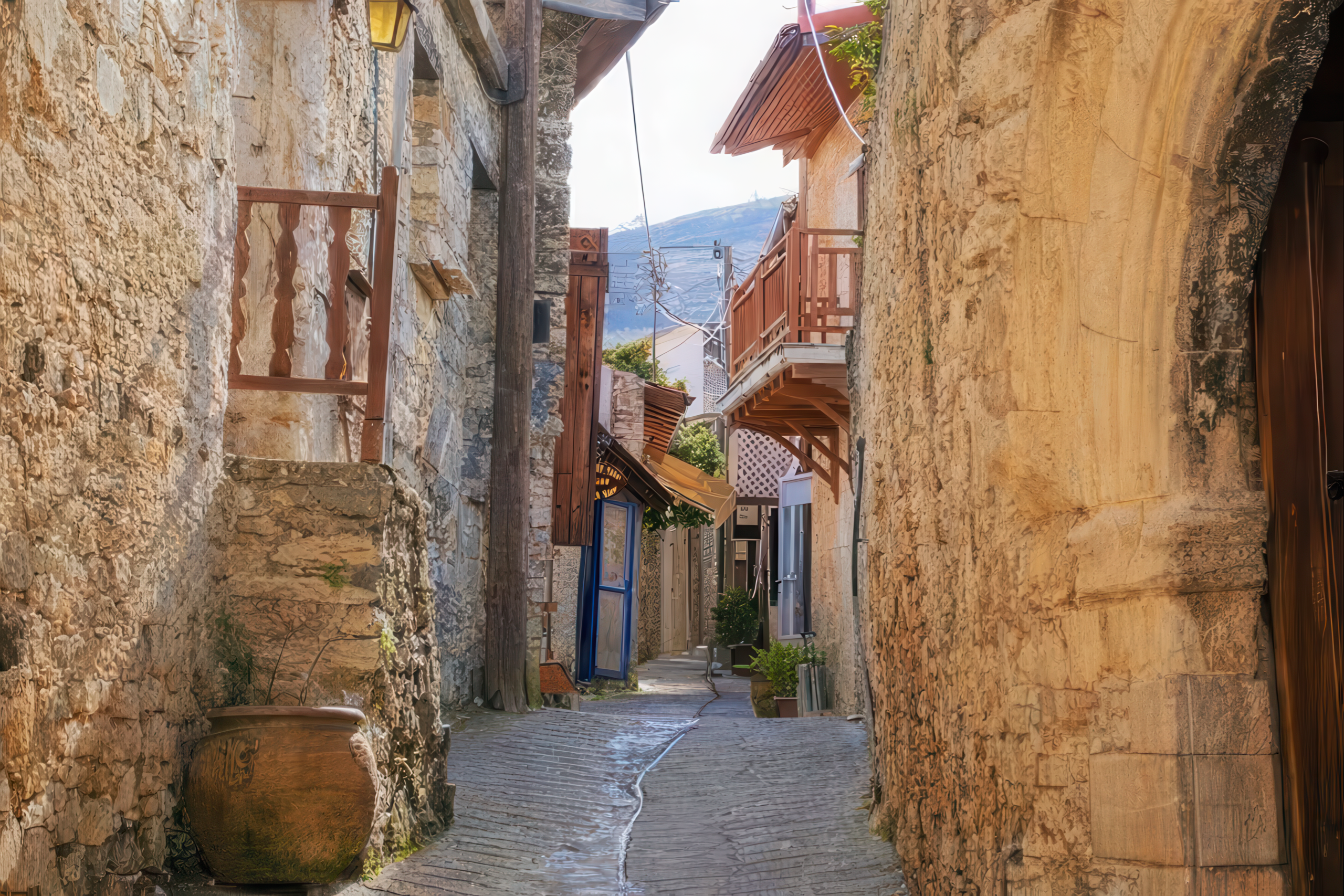
The village centers around a large cobblestone square, possibly the largest in Cyprus at 3,000 square meters, dating back to 1910. Stone houses with red-tiled roofs, wooden balconies, and flower-filled courtyards line narrow streets that wind through the settlement. The architecture reflects a careful balance between preservation and modern use, with many traditional homes now serving as guesthouses, wine cellars, and small museums.
Historical Foundation
Local tradition states that the village grew around a discovery made by residents of the nearby settlements of Ano and Kato Koupetra. Historical narratives describe how a wooden cross was found within a small cave on the hillside. A chapel was eventually constructed over this site to house the artifact, providing a focal point for the community and serving as the architectural foundation for what would later become the Monastery of the Cross.
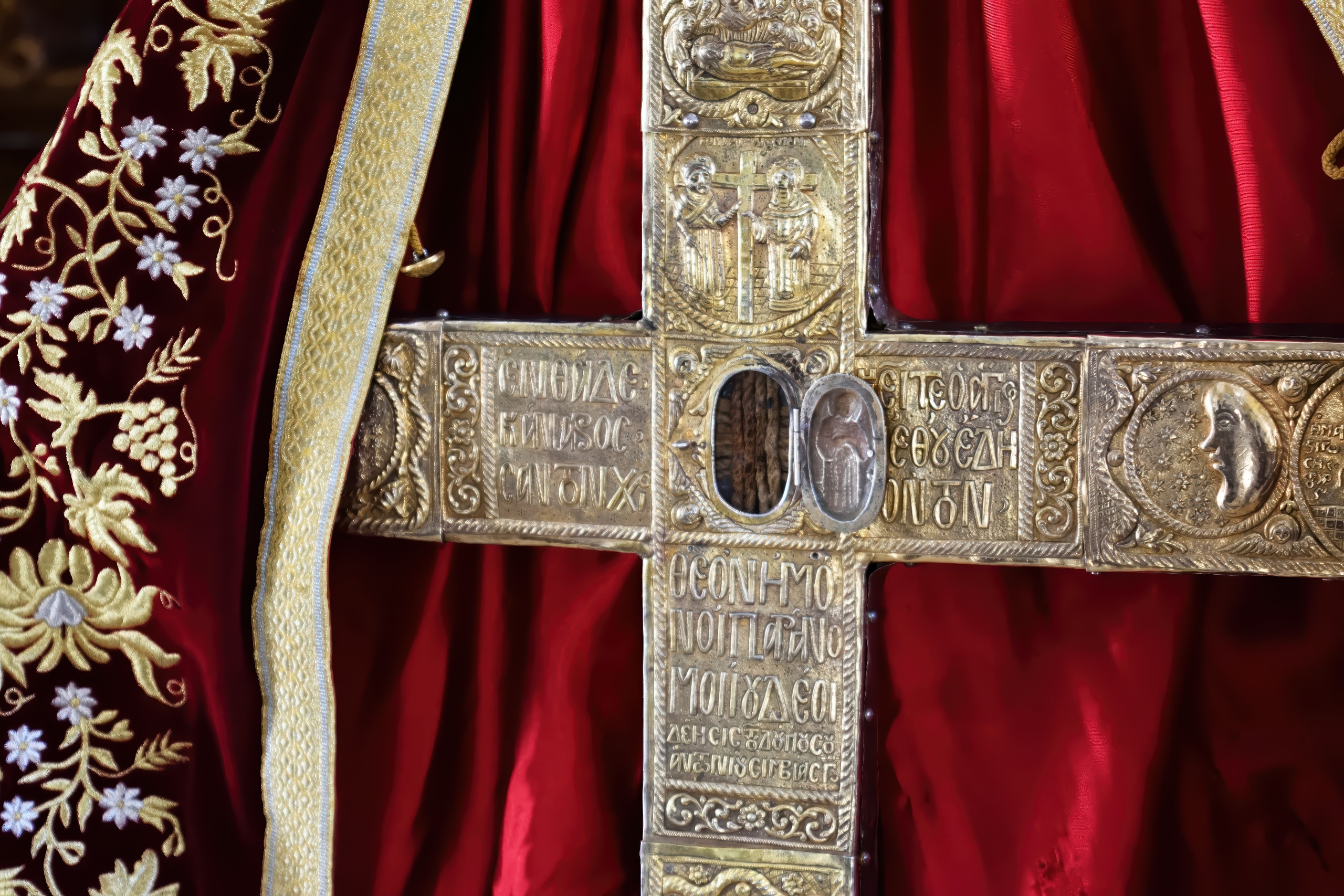
The monastery is considered one of the oldest in Cyprus, with historical records suggesting it was established during the early Byzantine period. Chroniclers like Neofytos Rodinos and the traveler Barsky noted that the site became a repository for significant artifacts attributed to the 4th-century journey of Helena, the mother of Constantine. These items, including a fragment of rope and wood, established the monastery as a major destination for travelers and scholars of the medieval era, significantly increasing the village’s regional prominence.
The village of Omodos likely developed toward the end of the Byzantine period, taking shape around the monastery after the abandonment of the Koupetra settlements. The monastery endured the challenging centuries of Ottoman rule and even secured immunity and asylum from the Sultan around 1700. In 1917, the monastery’s property was transferred to the residents of Omodos, and a few years later the building was converted into a parish church.
The Monastery of the Holy Cross
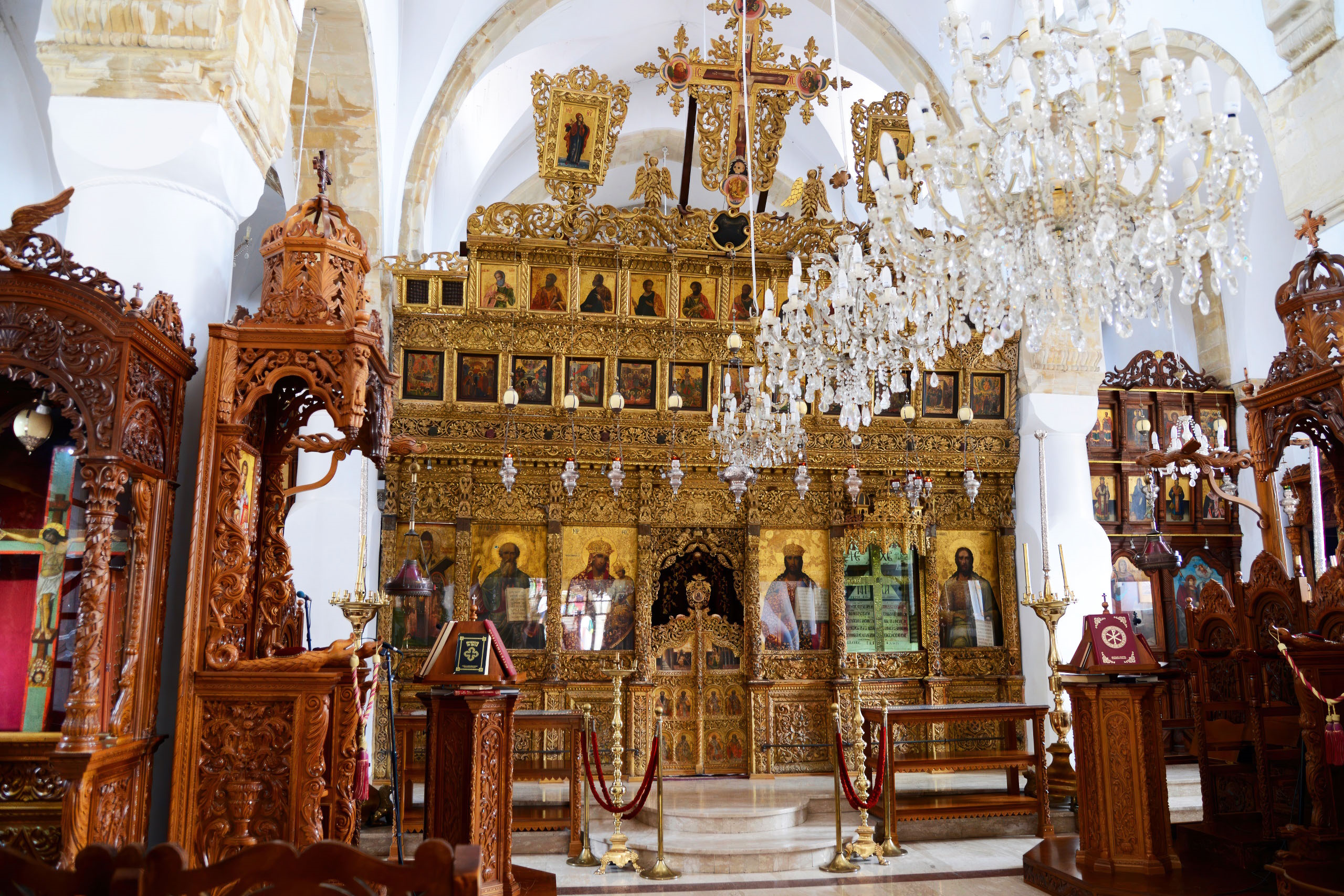
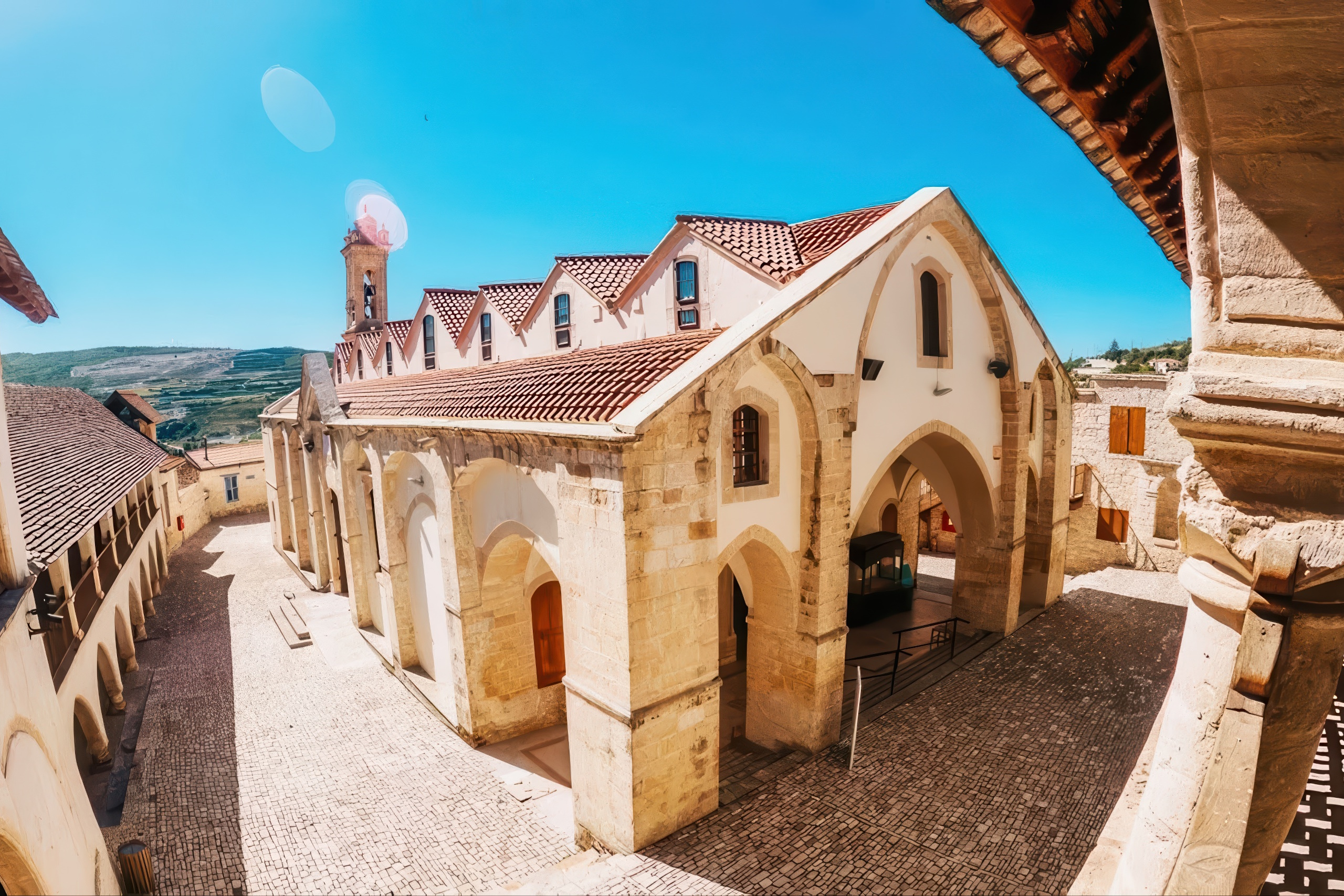
The monastery complex dominates the center of the village, with a stone facade and a massive vaulted entrance that creates an imposing presence. The entrance features heavy double latches that once served as protection against attacks during Ottoman rule. Inside, the complex includes stone built cells, cellars, and guest houses arranged on ground and first floors. All structures face a central courtyard at whose center stands the church.
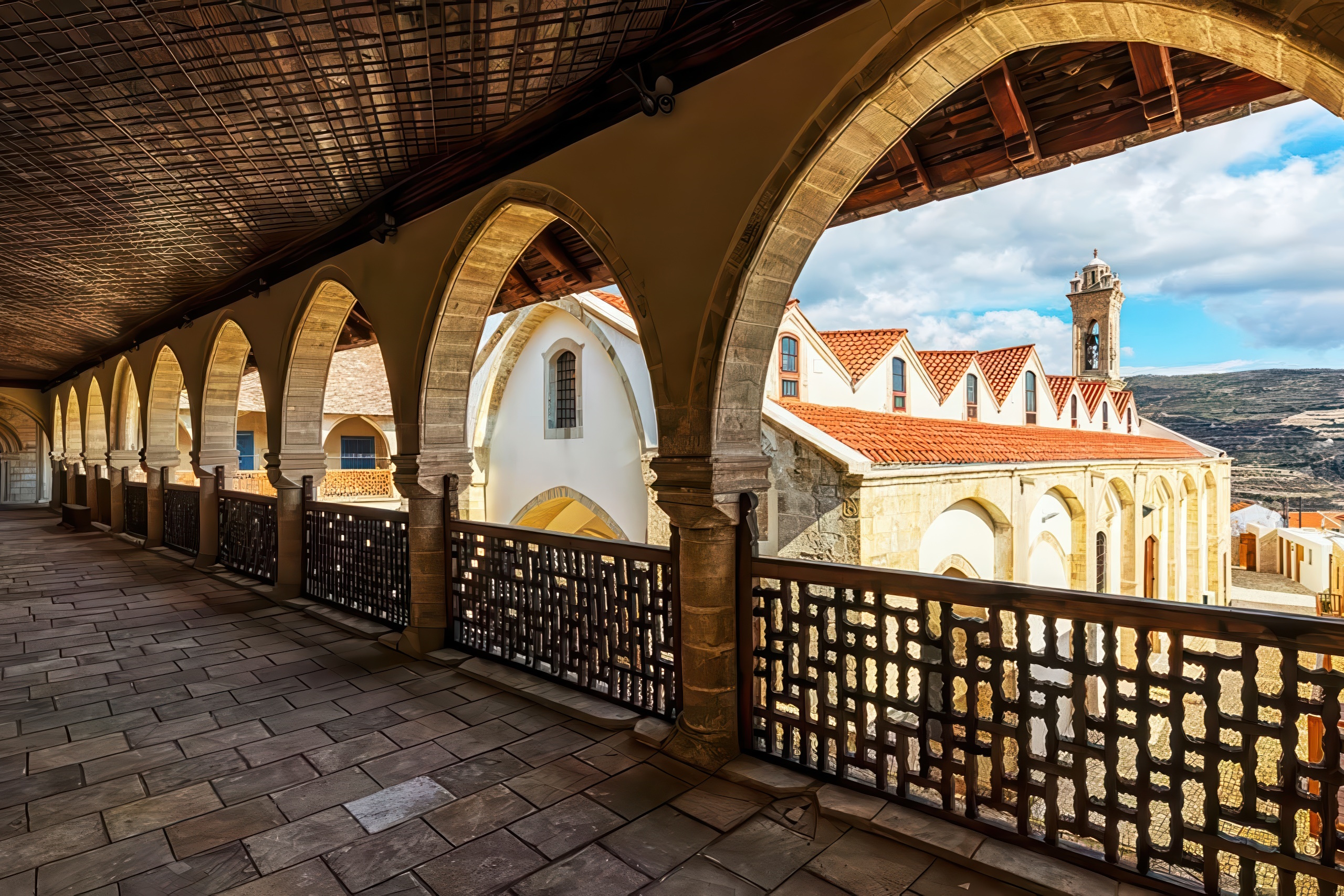
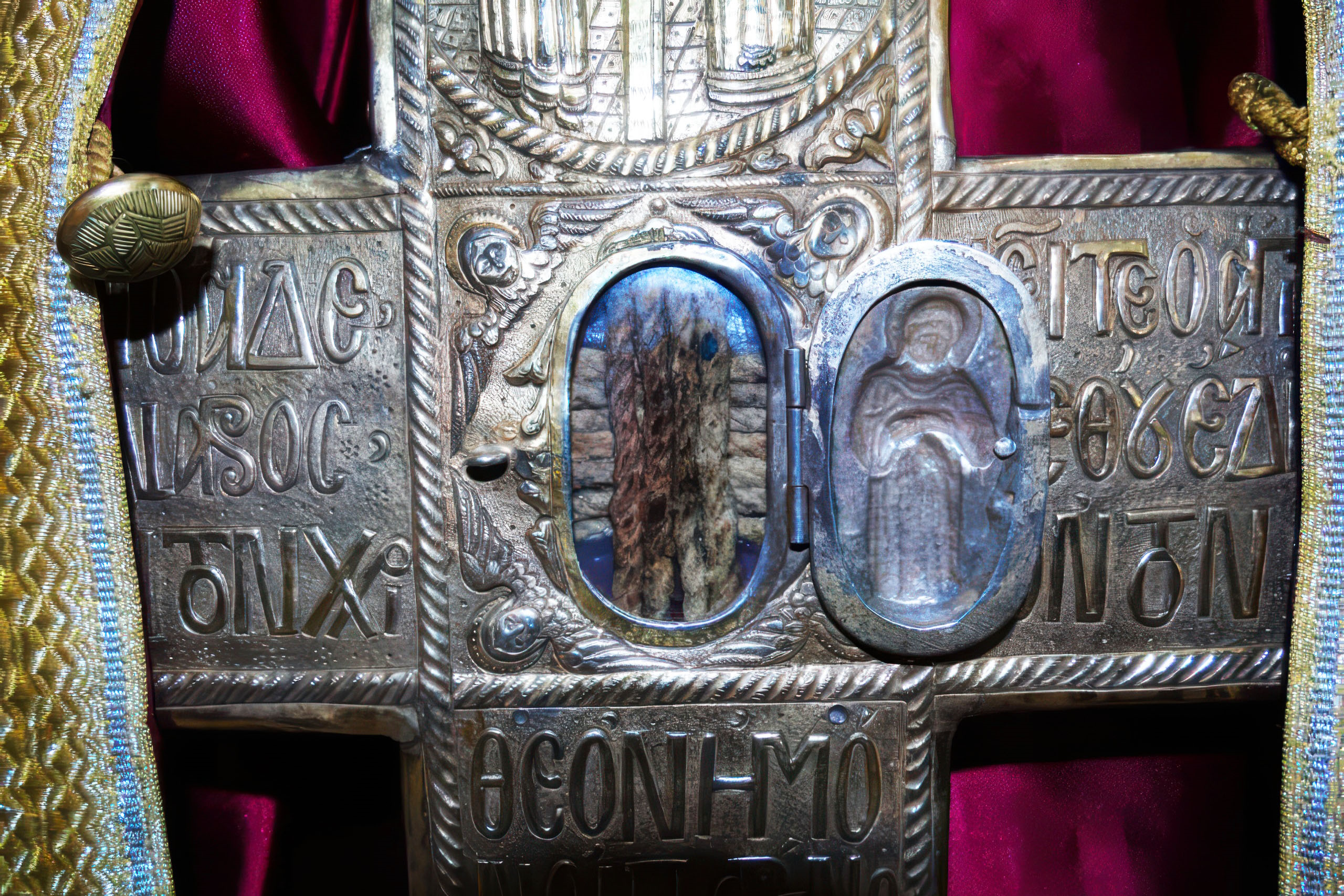
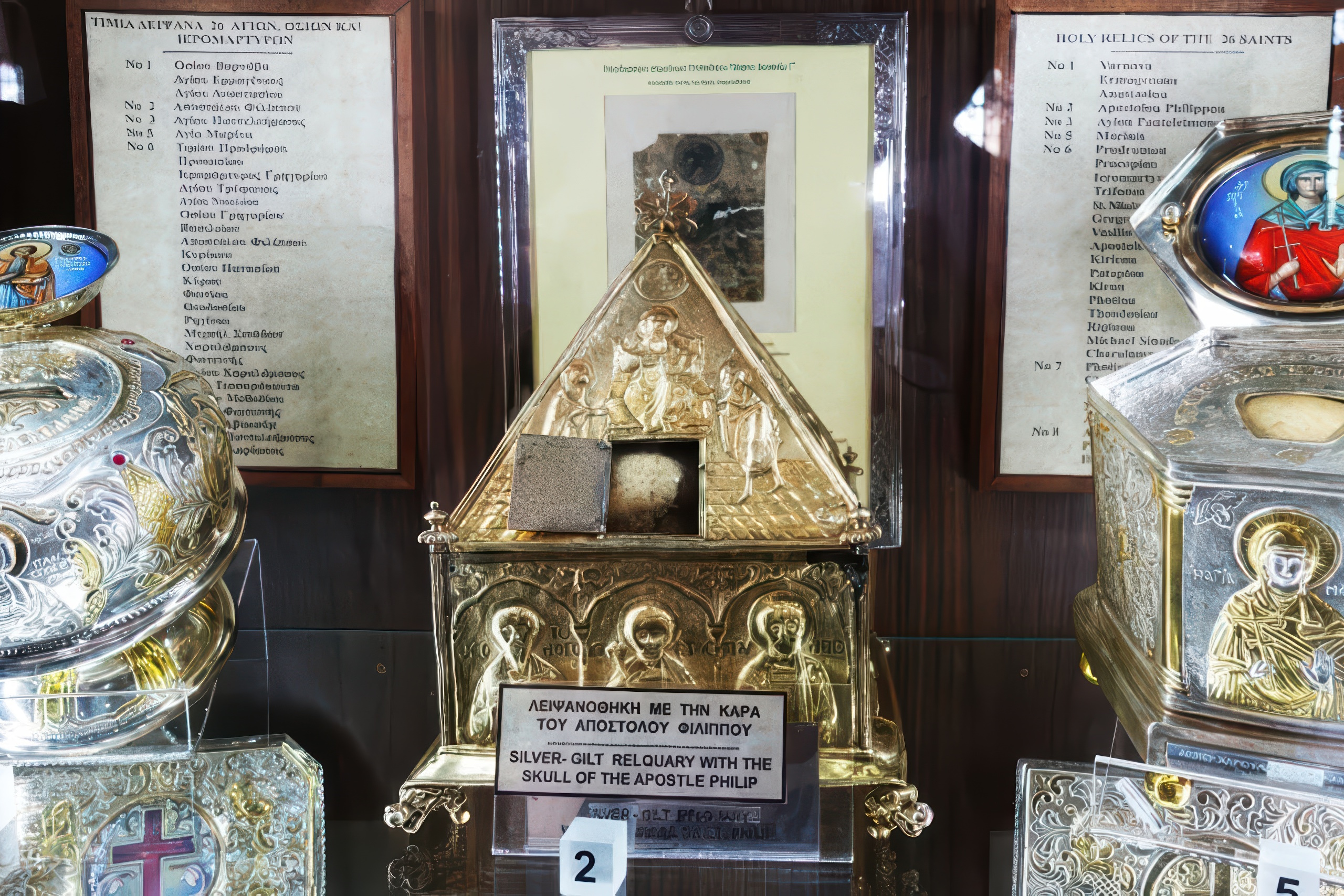
The monastery complex houses several artifacts of historical and artistic interest. These include a large cross containing an ancient fragment of rope known as Agios Kannavos, and a gold-and-silver pyramid-shaped case housing a relic attributed to the 1st century. The case is notable for bearing the administrative seals of Byzantine emperors Theodosius the Great and Heraclius. These objects have a documented history of travel, moving from Constantinople to Paphos before being brought to Omodos in the late 18th century for preservation.
The monastery experienced major renovations during the early nineteenth century. In 1816, construction added the west wing and part of the north wing. The gold iconostasis followed in 1817, although the most remarkable examples of woodcarving appear on the ceiling and on the Throne of the Cross that covers the east wall. The bell installed during this period became the first to ring in Cyprus under Ottoman rule. Further renovation work in 1850 extended both sides of the complex and produced the monastery’s present layout.
Today, the monastery complex contains several museums. The Museum of Byzantine Icons presents preserved liturgical objects, frescoes, and icons. The Folkloric Art Museum exhibits traditional lace making, with particular focus on the pipilla style that gained recognition among European aristocracy. A picture gallery displays works by Cypriot artists.
The Independence Struggle Museum
The monastery contains Cyprus’s first museum dedicated to the 1955–1959 struggle for independence. Created on October 28, 1960, by local residents, it documents Omodos’s participation in the EOKA (National Organization of Cypriot Fighters) campaign against British colonial rule.
The village played an active role in this struggle. Grigoris Afxentiou, one of EOKA’s leaders, instructed local residents Aristos and Maroulla Theodorou to create a hideout in their home. On January 21, 1957, security forces discovered and raided the hideout after receiving intelligence, capturing the fighters inside.
The museum displays personal items, uniforms, documents, and photographs of fallen fighters. It preserves the memory of a period when Omodos residents faced arrests, imprisonment, and other consequences for their participation in the independence movement. The museum underwent renovation and relocation to a different monastery hall in July 1999, funded by the Historical Memory Council of the EOKA Struggle and the Church Committee.
Wine Heritage and Commandaria
Omodos stands at the center of Cyprus’s wine tradition, particularly the production of Commandaria, recognized as the world’s oldest named wine still in production. Wine-making in Cyprus dates back to 800 BC, and Commandaria has maintained continuous production since ancient times.
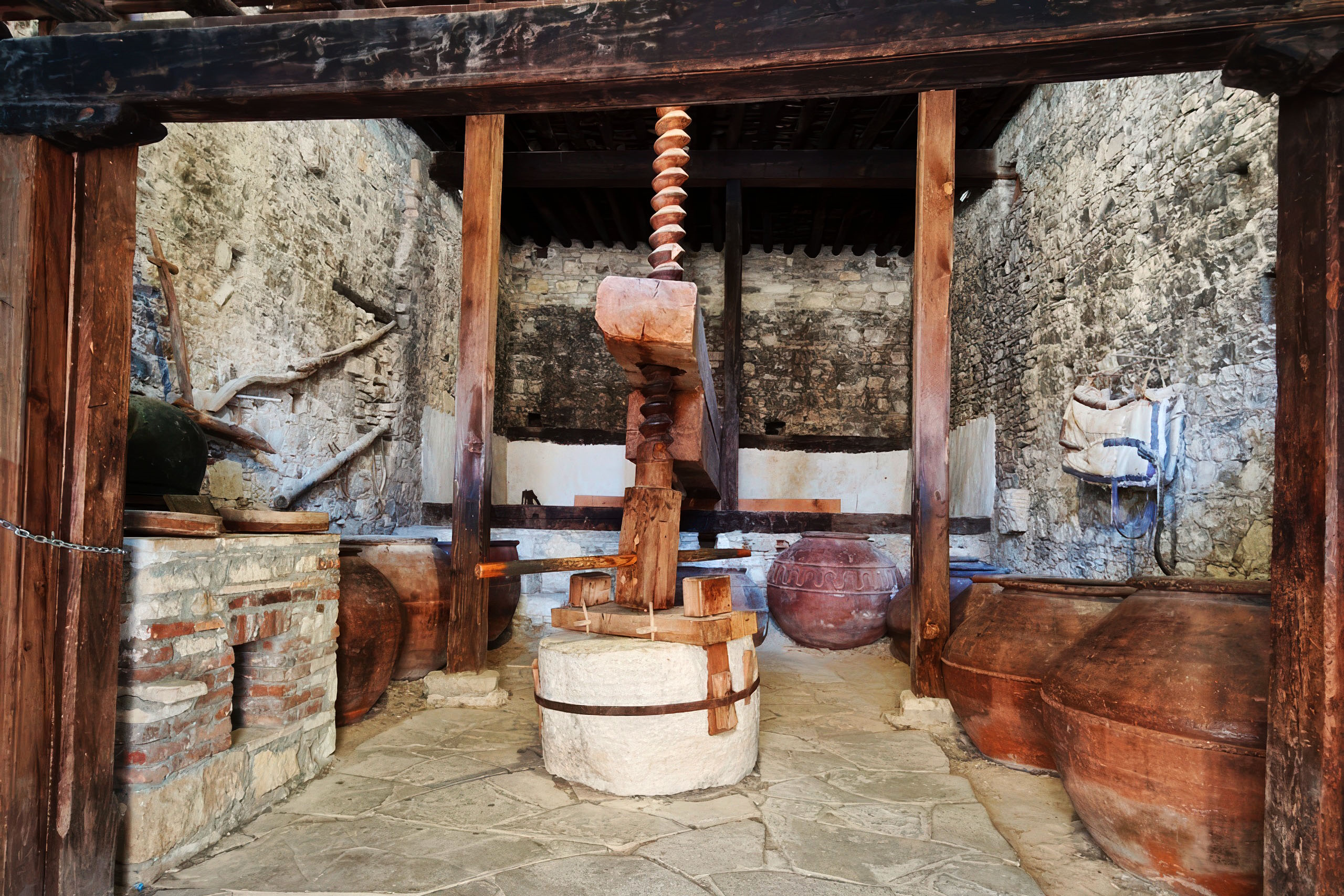
The wine gained its name during the Crusades. After King Richard the Lionheart captured Cyprus in 1191, he held his wedding on the island and reportedly served the local wine, calling it “the wine of kings and the king of wines.” When Richard sold Cyprus to the Knights Templar, they established their Grand Command headquarters in Kolossi and began large-scale production, naming the wine after their Commandaria region.
Traditional Crafts and Culture
Beyond wine, Omodos preserves other traditional crafts that remain part of daily life. The village is especially known for lace making, with the fine pipilla style standing out as the most famous. The Cyprus Handicraft Services created a Centre for the Preservation of Omodos lace to record this craft and teach it to younger generations. Women still sit outside their homes and inside workshops to make lace, continuing a tradition passed from mothers to daughters over many generations.
Local shops sell handmade goods such as honey, carob syrup, olive oil, candles, herbs, and traditional sweets like shoushoukos, a chewy sweet made from grape must and nuts. The village also maintains a donkey farm to protect this native animal. Visitors can see the donkeys in their natural surroundings on the nearby hillsides.
A Living Cultural Center
Omodos has managed to protect its traditions while welcoming modern tourism. Traditional stone houses now operate as small guesthouses while keeping their original character. The village functions as both a living community and a cultural destination, with about 270 permanent residents supported by tourism, wine production, and traditional crafts.
The village offers visitors a comprehensive look at Cyprus’s viticultural heritage, medieval architecture, and traditional mountain life. Its location makes it an ideal destination for those traveling from Limassol, Paphos, or Nicosia. The high elevation provides a cooler climate, making it a popular cultural retreat during the summer months.
Omodos represents an important part of Cyprus cultural heritage. It preserves traditions in wine production, religious life, and local crafts while adjusting to modern needs. The monastery, museums, and stone architecture create clear links to Byzantine, Crusader, Ottoman, and modern Cypriot history, making the village an important place for understanding the island past and its living traditions.