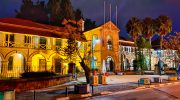
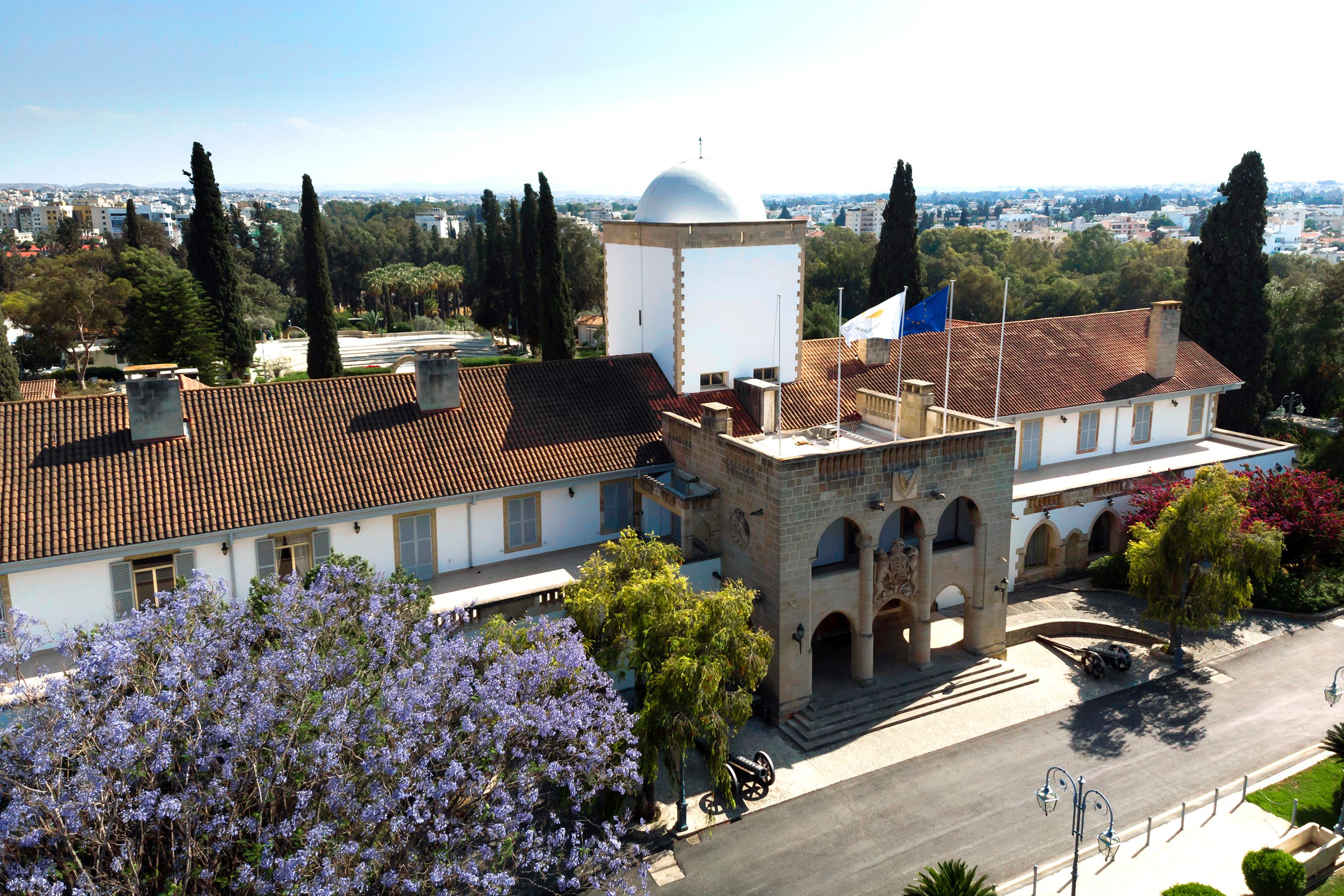
The Former Government House in Nicosia stands as a tangible reminder of British rule in Cyprus. Constructed during the colonial period, it served as the administrative center of British governance on the island. The building symbolized centralized control, colonial administration, and imperial authority during that era. While its function has changed over time, it continues to carry significant political and historical importance. Today, the building remains closely linked to state authority and modern governance.
Historical Background
British administration in Cyprus began in 1878, when the island came under British control while remaining formally part of the Ottoman Empire. Cyprus was later annexed by Britain in 1914 and officially became a Crown Colony in 1925. During this period, British authorities worked to establish permanent administrative structures that reflected imperial governance and order.
The Government House was constructed between 1933 and 1937 on the site of earlier Lusignan and Venetian fortifications, near the Cephane, or Quirini Bastion, of the Venetian walls. The location was chosen deliberately, placing colonial authority at the historic heart of Nicosia and asserting dominance over previous layers of rule.
The building served as the residence of the British Governor and the administrative headquarters of the colonial government. Major political decisions, official ceremonies, and colonial policies were conducted here. It remained in use until British rule ended in 1960, when Cyprus gained independence.
After independence, the building became the Presidential Palace of the Republic of Cyprus. It continues to serve as the official residence and workplace of the President, maintaining its role as a centre of state authority.
Architectural Design
The building reflects British colonial architectural principles rather than local Cypriot traditions. It was designed to project stability, order, and authority. The structure combines elements of neoclassical design with restrained colonial styling.
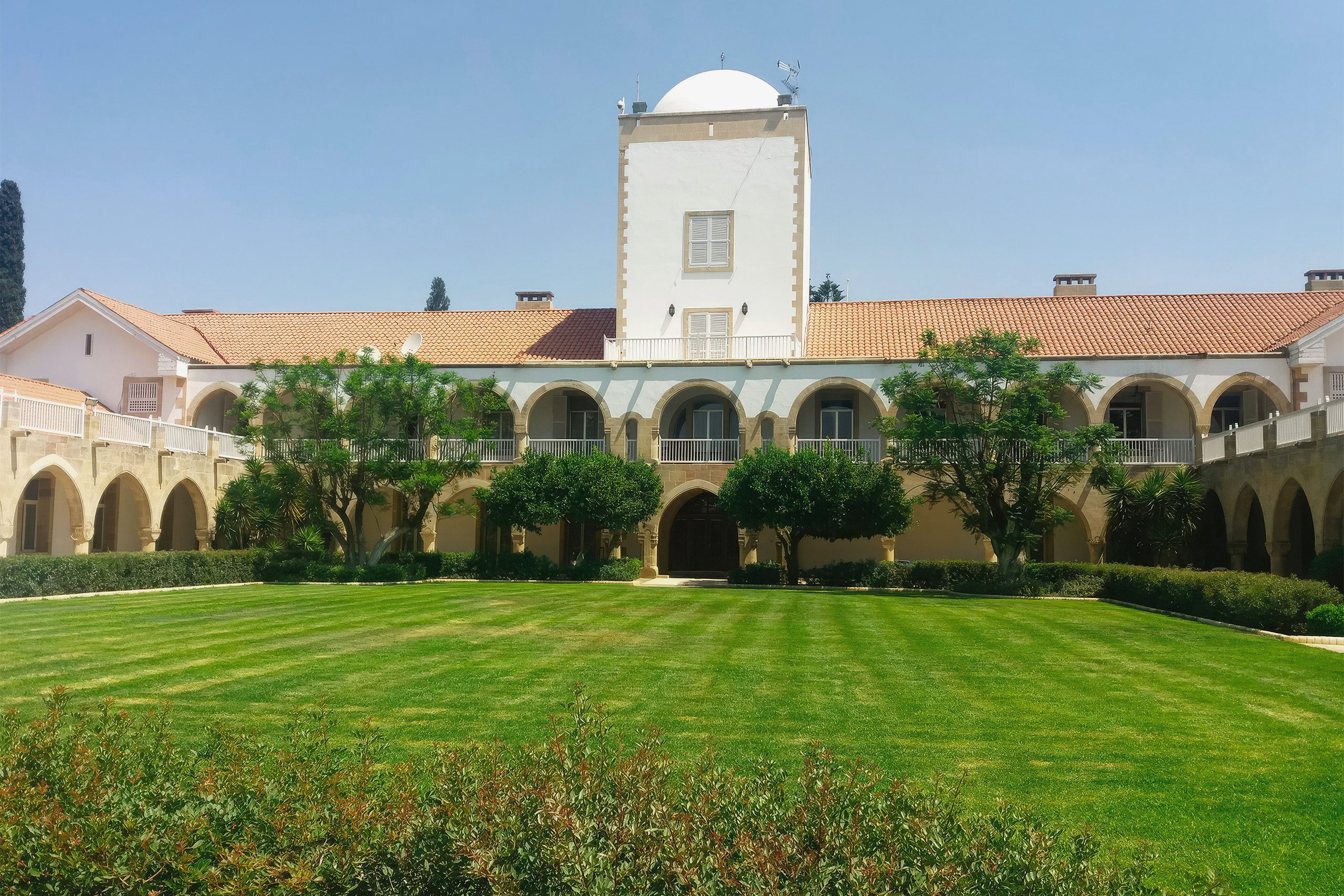
The exterior is symmetrical and formal, with clean lines and a balanced layout. The use of local stone helps the building blend visually with its surroundings, while the scale and layout clearly distinguish it as a seat of power rather than a residential villa.
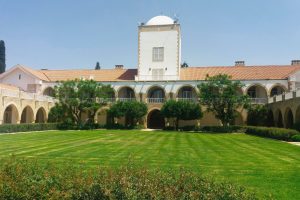
The palace complex includes landscaped gardens, ceremonial courtyards, and controlled access points. These features reinforced the separation between rulers and the general population during the colonial period. Internally, the building was designed to host official meetings, receptions, and administrative work rather than private domestic life.
The placement near the Venetian walls further added symbolic weight. It connected British authority with earlier ruling powers while also asserting continuity of centralized control over the island.
Function and Symbolism
During British rule, the Government House represented the highest level of colonial authority in Cyprus. It was where laws were approved, officials appointed, and imperial policies carried out. The Governor acted as the direct representative of the British Crown.
The building also symbolized British dominance. Its size, guarded grounds, and formal design reflected the colonial hierarchy and highlighted the distance between rulers and the local population.
After independence, the building’s symbolism changed but remained significant. It came to represent centralized power under Cypriot leadership. The transition from colonial Government House to Presidential Palace marked a political shift while preserving the building’s role as a centre of authority.
Facts
- The Former Government House was built near the Cephane or Quirini Bastion, part of Nicosia’s Venetian fortifications.
- The building replaced earlier administrative structures that were considered inadequate for long-term colonial governance.
- It has served continuously as a seat of executive power since its completion, first under British rule and later under the Republic of Cyprus.
- The surrounding gardens were designed for official ceremonies rather than public use.
- Despite political changes, the building’s external appearance has remained largely unchanged.
Distinctive Architectural Features
The Palace has some very interesting features. The British coat of arms sits above the entrance, and four gargoyles with human heads show the British general foreman, the head mason, the head carpenter, and an unknown worker. These human-headed gargoyles are unusual and give the building a personal touch by showing the people who helped build it.
Above these are four more gargoyles showing typical Cypriot animals: the ox, donkey, camel, and sheep. These animals connect the building to daily life and farming on the island, making the Palace feel a little less strict and formal.
The British coat of arms above the entrance stayed in place after Cyprus became independent and can still be seen today. Keeping it shows how Cyprus preserves old buildings and history, even if it comes from the time of British rule.
The Palace Today
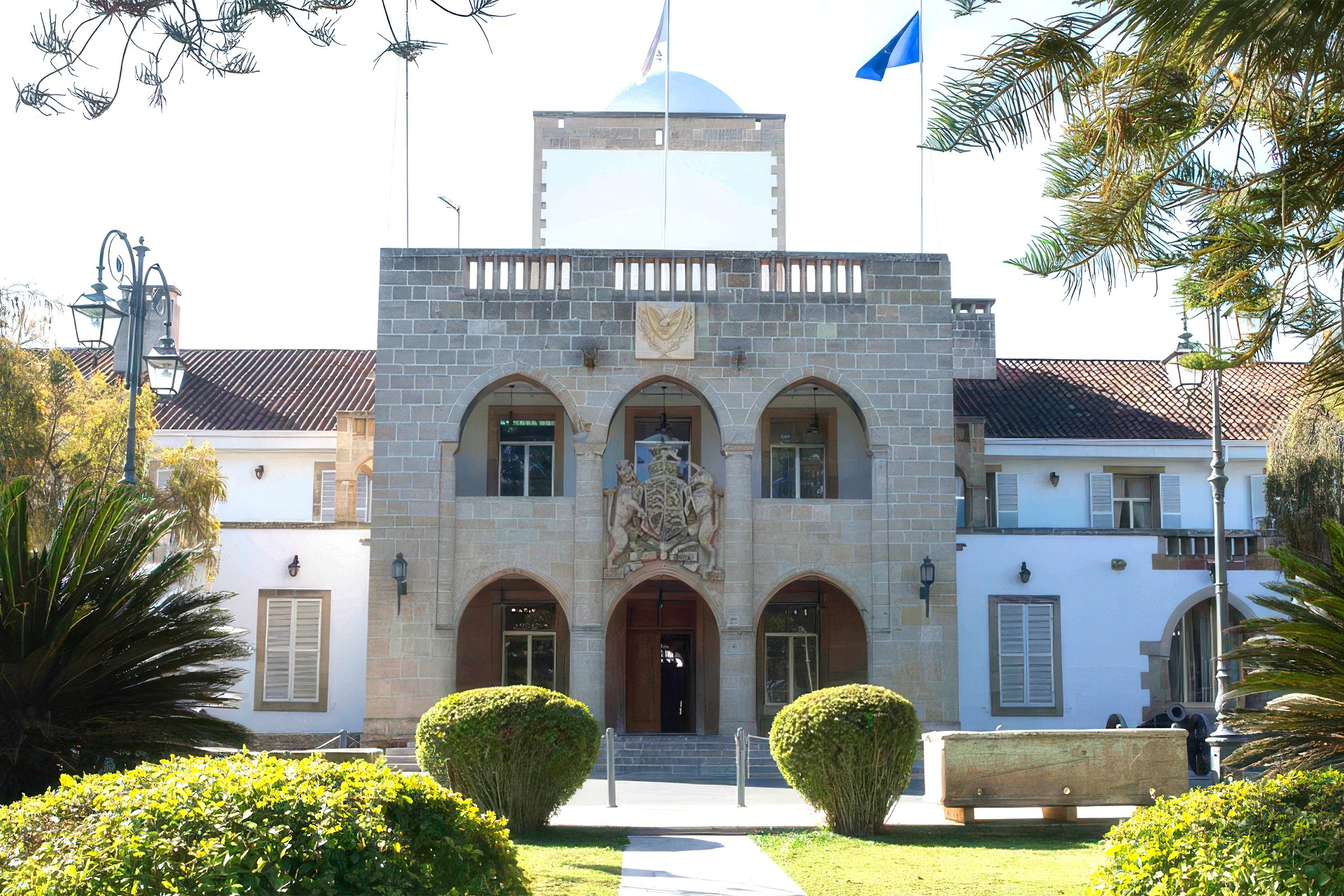
The Presidential Palace still serves as the official home and workplace of Cyprus’s president. It is used for diplomatic meetings, state ceremonies, and official events. The pine trees around the palace, planted during British rule, have grown into a large forest that adds security and a natural setting to the building.
The palace grounds are usually not open to the public, since it is an active government building and the president’s home. However, the building can still be seen from nearby areas and remains a well-known landmark in Nicosia.
The British architectural features, including the coat of arms above the entrance, have been kept as part of the palace. Instead of removing these reminders of British rule, Cyprus preserves them to show the island’s long and complex history, recognizing that the building has importance beyond any one political period.
Visiting or Experiencing the Site
The Former Government House is not open to the public, as it remains an active government building. Visitors cannot enter the grounds or interior spaces.
However, the exterior can be viewed from surrounding areas of Nicosia. The building’s location near the Venetian walls allows visitors to understand its strategic placement within the city.
Those interested in colonial history, architecture, or modern Cypriot politics can gain context by viewing the site alongside nearby historic landmarks.
Historical Legacy
The Former Government House in Nicosia is more than an administrative building. It represents a key chapter in Cyprus’s modern history, marking the transition from colonial rule to independence. Its continued use as a centre of executive power highlights how physical structures can carry authority across political eras.
As part of Nicosia’s historical landscape, it remains an important symbol of governance, continuity, and the complex legacy of British rule in Cyprus.