All Articles

Ancient Tamassos

Ancient Tamassos

About 21 kilometres southwest of Nicosia, near the village of Politiko, lies one of ancient Cyprus's most significant city-kingdoms: Tamassos. It was not a coastal city with a grand harbour or a sprawling palace complex. It was something different. Tamassos was an inland powerhouse, built almost entirely around one thing: copper. For centuries, this city sat on some of the richest copper deposits in the eastern Mediterranean, and that single resource shaped everything about it, from its economy to its politics, from its wealth to its eventual decline. Historical Background The land around Tamassos has been occupied since the Chalcolithic period, thousands of years before the city itself took shape. Small farming villages dotted the area well into the Early…

Read more
Ancient Kourion in Cyprus

Ancient Kourion in Cyprus

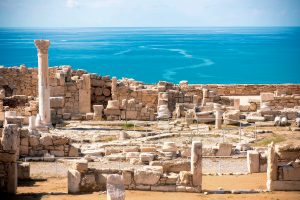
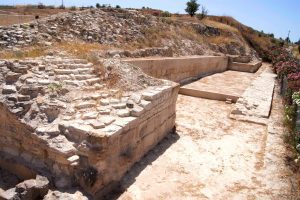
Ancient Kourion sits on a limestone cliff nearly 100 meters high along the southwestern coast of Cyprus, overlooking Episkopi Bay. The site was first inhabited during Neolithic times, with the earliest evidence dating back to 4,500 to 3,900 BC, but the town itself was founded in the 13th century BC by the Argives. The city-kingdom was built on the hills of the area and overlooked and controlled the fertile valley of the river Kouris. Archaeological finds suggest that Kourion was associated with the Greek legend of Argos of Peloponnese, and its inhabitants believed they were descendants of Argean immigrants. The site stands as one of Cyprus's most impressive archaeological areas, preserving remains that span from the Bronze Age through the…

Read more
Ancient Idalion Dali

Ancient Idalion Dali

Idalion was an ancient city in Cyprus, in modern Dali, Nicosia District. The city was founded on the copper trade in the 3rd millennium BC. Located in the fertile Gialias valley between two hills, this powerful kingdom left behind one of the most important historical documents in ancient Cyprus, a bronze tablet that recorded a social welfare system 2,500 years old. The ancient city was located in the fertile Gialias valley and flourished there as an economic centre due to its location close to the mines in the eastern foothills of the Troodos Mountains and its proximity to the cities and ports on the south and east coast.Idalion prospered and became so wealthy that it was listed as the first…

Read more
Ancient Amathus, Cyprus

Ancient Amathus, Cyprus

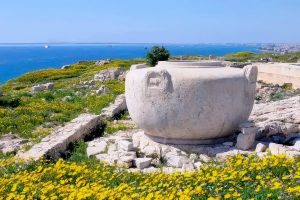
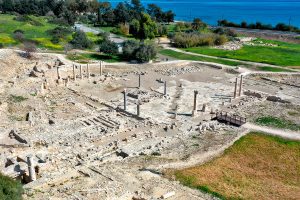
Amathus is one of the oldest royal cities on the island of Cyprus. Situated on the southern coast, just 11 kilometers east of modern Limassol, it sits among sandy hills and coastal cliffs overlooking the Mediterranean Sea. The city dates back to around 1100 BC, making it over three thousand years old. For centuries, it was one of the most powerful and wealthy kingdoms on the island. Today, its ruins tell a story of trade, religion, myth, and survival that stretches across dozens of generations. Historical Background The first people to settle in Amathus were the Eteocypriots, an indigenous group who lived on Cyprus before both the Greeks and the Phoenicians arrived. They chose a rocky coastal hill for a…

Read more
Amathus Roman Remains Cyprus Coastal City Life

Amathus Roman Remains Cyprus Coastal City Life

The ruins of Amathus spread across a coastal hillside 11 kilometers east of Limassol, where stone walls and column fragments mark one of Cyprus' oldest city kingdoms. Archaeological evidence shows continuous occupation from 1100 BCE until the 7th century CE, a span of nearly 2,000 years. During the Roman period, Amathus became the capital of one of four administrative regions on Cyprus. The city's importance grew so significant that Romans used the term Amathusia as a general synonym for Cypriot. Today, visitors walk through the remains of public baths built during Emperor Hadrian's time, explore an agora where merchants traded goods from across the Mediterranean, and view foundations of the great Temple of Aphrodite that made this the second most…

Read more
Monastery of Saint John Lampadistis

Monastery of Saint John Lampadistis

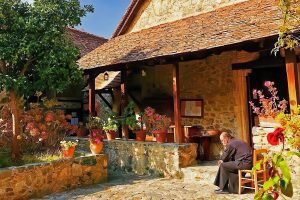
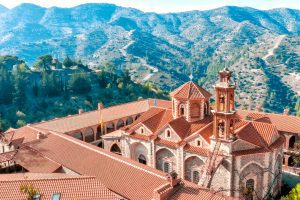
The Monastery of Saint John Lampadistis, located in the Marathasa Valley of the Troodos Mountains near the village of Kalopanayiotis, is one of the most distinctive monuments within the UNESCO World Heritage group known as the Painted Churches of the Troodos Region. Its importance lies not only in its remarkable frescoes but also in its unusual architectural composition. Unlike single-phase churches, this monastic complex combines three interconnected churches built in different periods, all enclosed beneath a later protective roof. This layered structure makes the monastery a rare example of architectural continuity, reflecting the gradual development of religious space in response to changing spiritual, artistic, and community needs. The monastery is dedicated to Saint John Lampadistis, a local Cypriot saint whose…

Read more
Quiet Coast & Natural Beauty

Quiet Coast & Natural Beauty

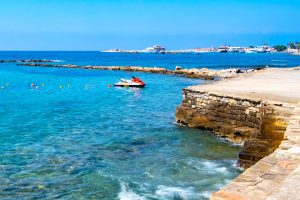
Alykes Beach is a quiet coastal area located near the town of Neapolis in the Famagusta district of southeastern Cyprus. The beach stretches approximately 400 meters along the Mediterranean coast, positioned about 1.8 kilometers from the center of Neapolis. Unlike the busier tourist beaches found in major resort areas, Alykes maintains a more tranquil atmosphere that appeals to visitors seeking a relaxed seaside experience. The beach consists of small coves covered with sand, with portions privately owned by local beach resorts while maintaining a spacious public access area. Development of the Coastal Area The Neapolis area developed gradually as a coastal settlement, with the beach remaining relatively undeveloped compared to major tourist zones in Cyprus. The name Alykes likely refers…

Read more
Ottoman Era Mosques Urban Architecture

Ottoman Era Mosques Urban Architecture

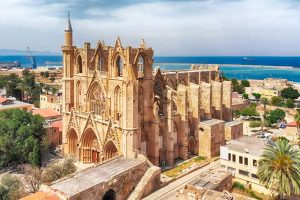
Ottoman architecture in Cyprus refers to the Islamic buildings and urban structures constructed or adapted during Ottoman rule from 1571 to 1878. This three century period significantly reshaped the physical appearance of Cypriot cities, especially Nicosia and Famagusta. The Ottomans introduced architectural forms developed in Istanbul and Anatolia, including domed mosques, hans or caravanserais, hammams or bathhouses, covered markets, and medrese schools. Unlike other Ottoman territories where Islamic architecture replaced earlier structures, Cyprus presented a distinct situation. The Ottomans inherited large scale Gothic buildings from the Lusignan and Venetian periods, particularly cathedrals that were too monumental to demolish. Instead of destroying these structures, Ottoman authorities converted them for Islamic use through the addition of minarets, the removal of Christian imagery,…

Read more
Omodos Medieval Architecture

Omodos Medieval Architecture

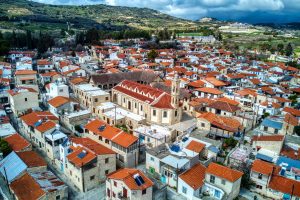
Omodos is a mountain village in the Limassol district of Cyprus, located 42 kilometers northwest of the city at an elevation of 810 meters. The village sits in the heart of the Krasochoria region, a wine-producing area in the Troodos foothills. The village square, covering 3,000 square meters and dating to 1910, stands as one of the largest in Cyprus. The architectural character of Omodos creates what many describe as a living museum, where centuries of building traditions remain visible in everyday structures. This preservation has made the village a protected heritage site and a key destination for those interested in traditional Cypriot architecture. Historical Background The village likely came into existence at the end of the Byzantine period, sometime…

Read more