Omodos is a mountain village in the Limassol district of Cyprus, located 42 kilometers northwest of the city at an elevation of 810 meters. The village sits in the heart of the Krasochoria region, a wine-producing area in the Troodos foothills.
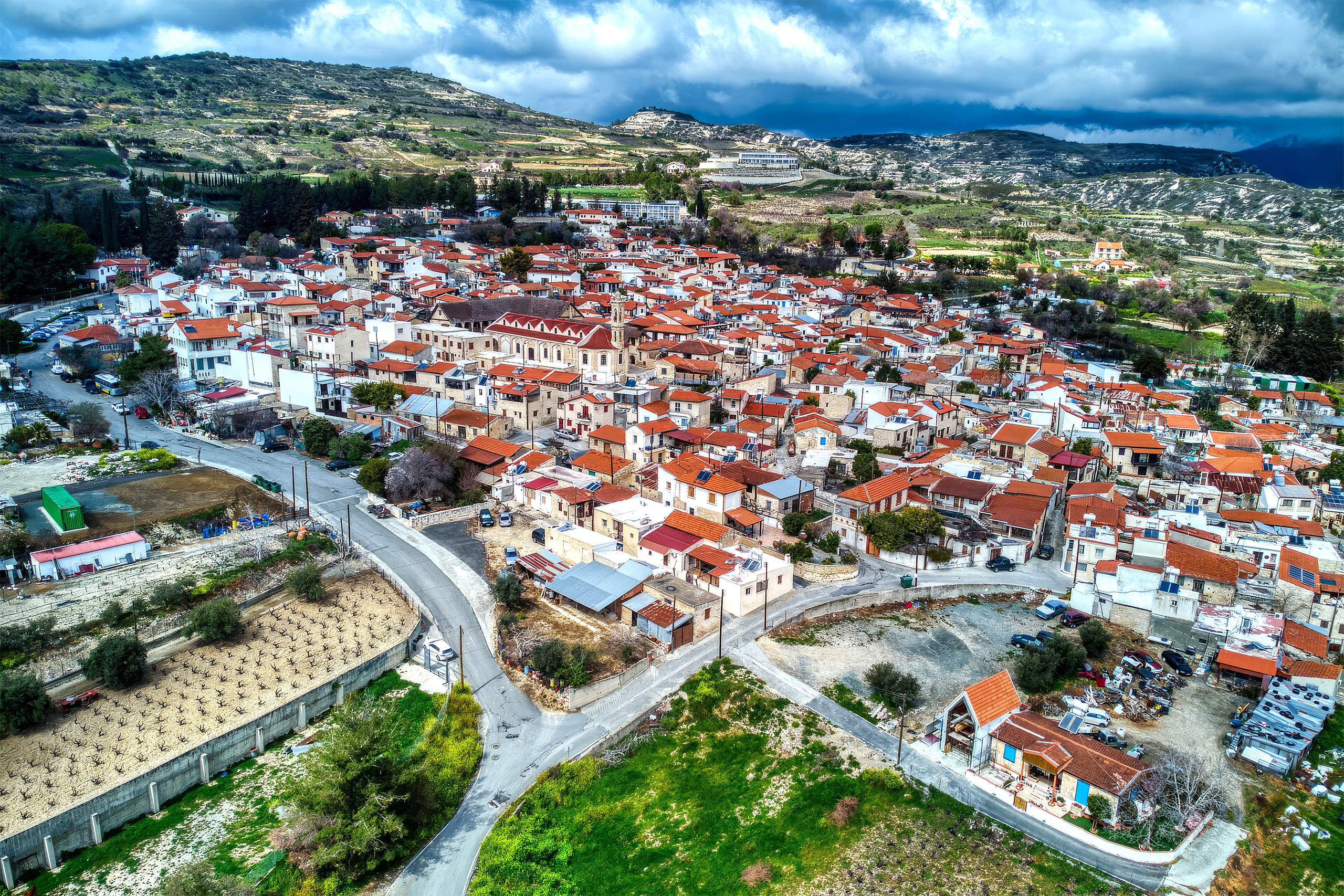
The village square, covering 3,000 square meters and dating to 1910, stands as one of the largest in Cyprus. The architectural character of Omodos creates what many describe as a living museum, where centuries of building traditions remain visible in everyday structures.
This preservation has made the village a protected heritage site and a key destination for those interested in traditional Cypriot architecture.
- Historical Background
- Traditional Building Methods and Materials
- Distinctive Architectural Elements
- Unique Details Worth Noticing
- Influence of Mediterranean Building Traditions
- Modern Preservation and Continued Relevance
- Experiencing the Architecture Today
- What Makes the Monastery Special Today
- An Architectural Testament to Cypriot Heritage
Historical Background
The village likely came into existence at the end of the Byzantine period, sometime around the 12th or 13th century. According to historical records, two earlier settlements called Pano Koupetra and Kato Koupetra existed on the east bank of the Cha-potami river.
After these settlements dissolved, residents established a new community around the Monastery of the Holy Cross, creating what became modern Omodos. Historical tradition claims that Isaac Comnenos, the Byzantine despot of Cyprus from 1185 to 1191, took refuge in Koupetra after his defeat by the English King Richard the Lionheart, confirming that settlements existed in this area by 1191.
Medieval records document the village during the Frankish period when Cyprus was under Lusignan rule. The medieval chronicler Leondios Machairas reported that King Jacob I of Cyprus granted Omodos to the nobleman Jean de Brie around 1382. Old maps from various periods show the village marked as Homodos, Homocios, and finally Omodos.
The village name may derive from the Cypriot word “modos” which means to take your time or act carefully. This etymology connects to a local legend about residents from Koupetra who observed a mysterious light on the opposite mountain and had to carefully cut through thick prickly bushes, telling each other “me to modo sou” (take your time) until they discovered a cave containing a wooden cross.
Traditional Building Methods and Materials
The architecture of Omodos reflects construction techniques passed down through generations. Houses are built primarily from local limestone quarried from the surrounding hills.
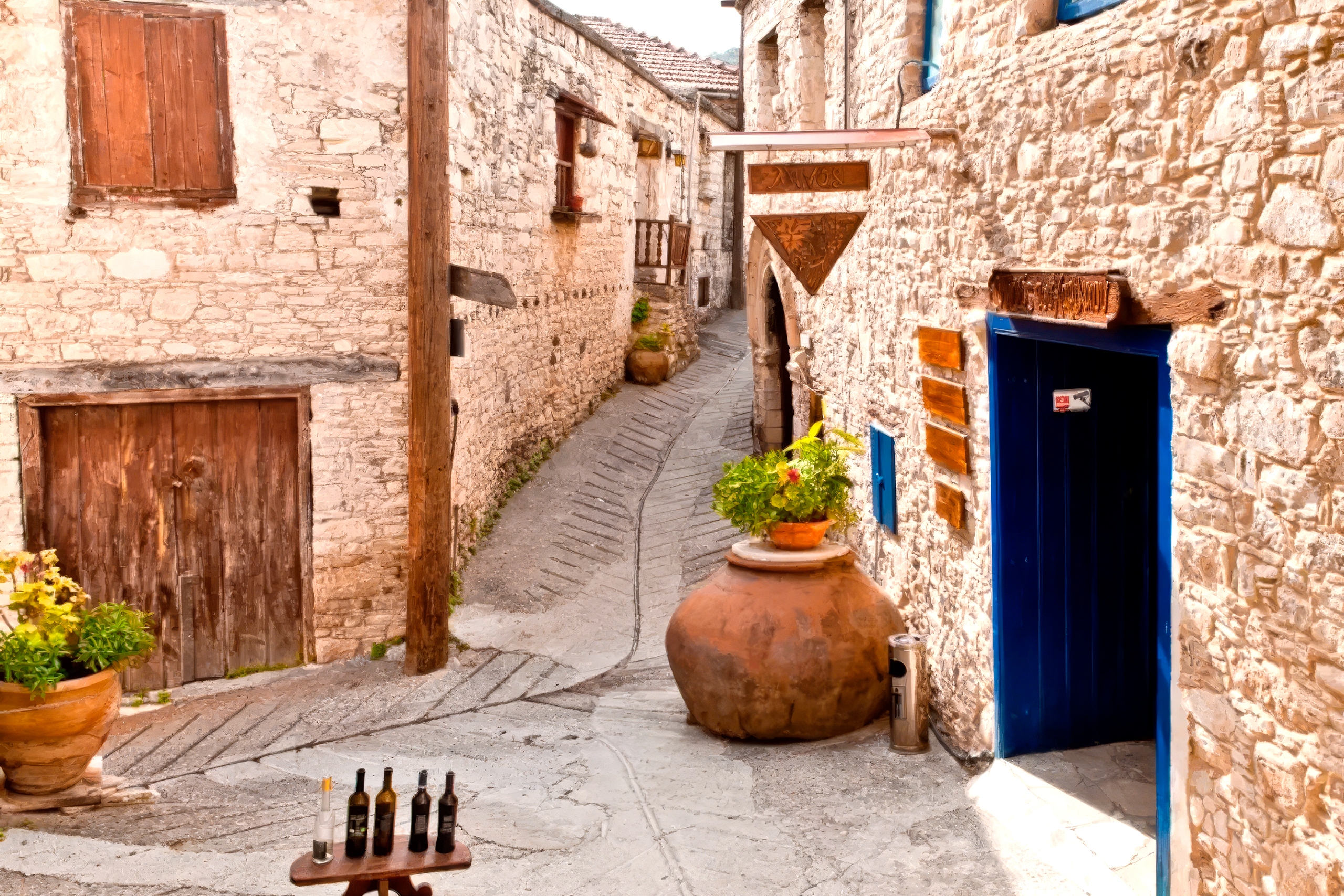
This stone creates the characteristic white and pale gold appearance that defines the village. The traditional building method involves cutting and shaping stones by hand, then fitting them together with minimal mortar. Walls reach substantial thickness, sometimes 60 centimeters or more.
Roofs feature either red clay tiles or flat terraces, both common in rural Cypriot architecture. The tile roofs use a system of wooden beams and supports covered with curved terracotta tiles that channel rainwater away from the structure. Flat roof terraces, constructed with stone slabs or packed earth over wooden beams, served practical purposes as spaces for drying fruits, grains, and grape products.
Houses typically include upper stories accessed by external stone staircases. Wooden balconies project from these upper levels, supported by wooden or stone brackets. The balconies feature carved wooden railings and decorative details that showcase local craftsmanship.
Distinctive Architectural Elements
Several architectural features appear consistently throughout Omodos. Paved courtyards form the center of each family compound, enclosed by walls and buildings. These courtyards contain large earthenware jars called pitharia, used historically for storing wine, olive oil, and other provisions.
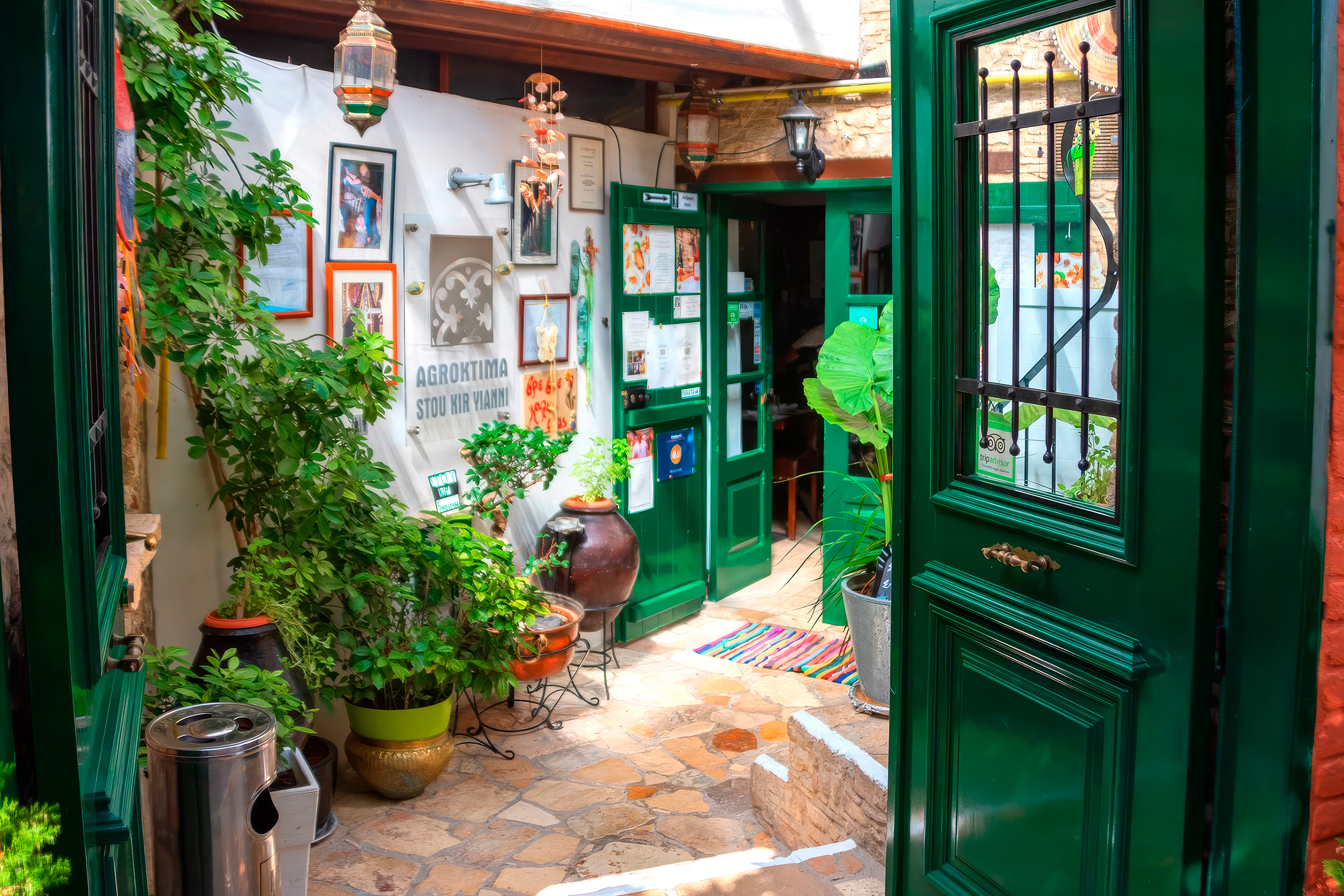
Wooden doors, often made from cypress or pine, display intricate carvings and metal hinges forged by local blacksmiths. Gateways feature decorative stone arches with various carved patterns, each family adding their own design elements.
Interior rooms called kamaras feature stone arches that support the ceiling and upper floor. Traditional houses included four such arched rooms arranged around the courtyard. Storage rooms called kellari remain naturally cool year-round due to their stone construction and strategic positioning.
These spaces preserved food, wine, and olive oil before modern refrigeration. Another structure called the stavlos housed chickens and livestock. Windows are relatively small by modern standards, fitted with wooden shutters that fold back against the walls. This design protected against intense summer sun while allowing ventilation.
Unique Details Worth Noticing
The central square of Omodos contains several notable architectural features. Stone paving covers the entire 3,000-square-meter area, laid in traditional patterns. Tall sycamore trees provide shade, planted specifically to create comfortable outdoor space.
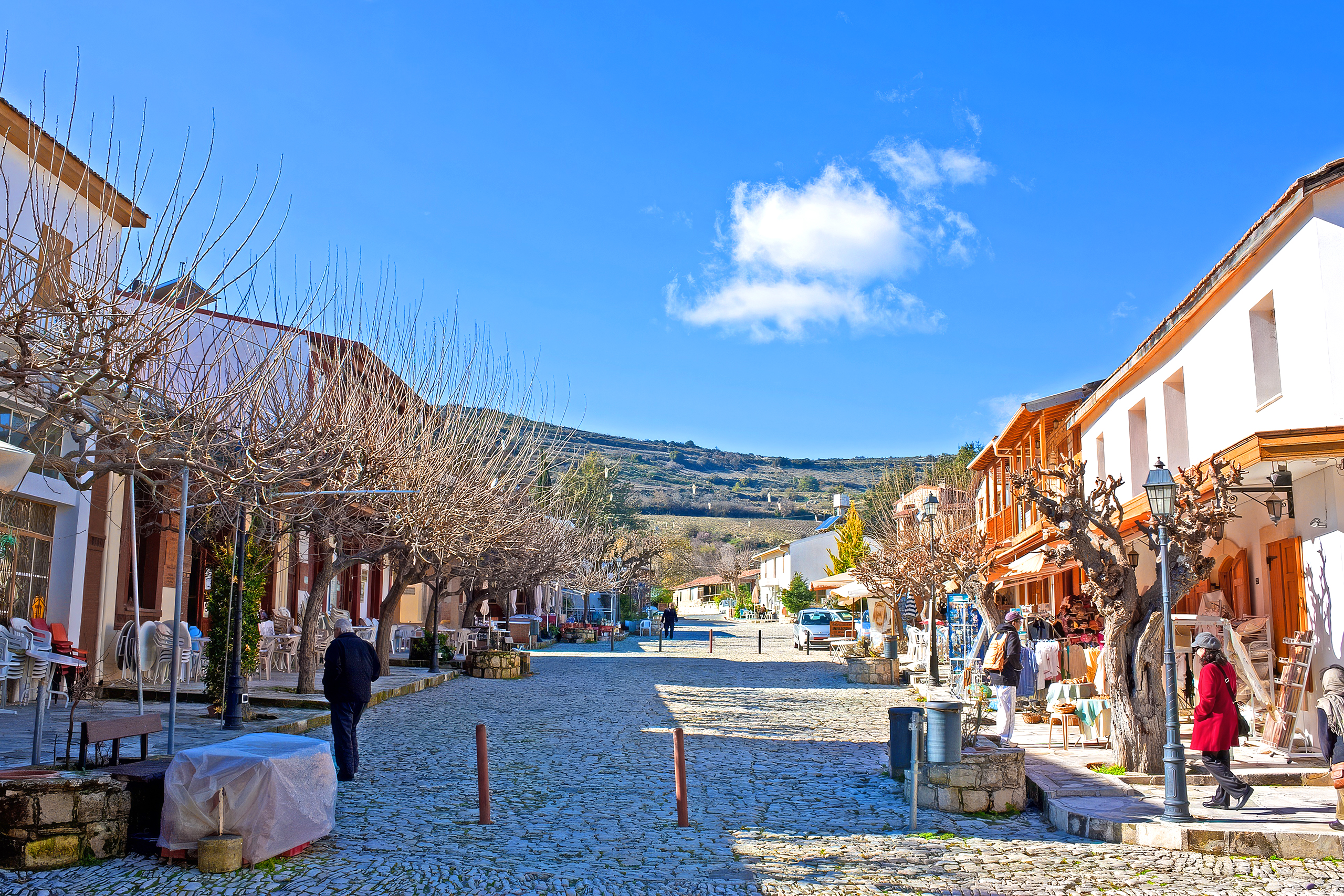
The square is surrounded by two-story buildings with continuous covered walkways at ground level. These arcades protect shops and cafes from weather while maintaining visual continuity. A medieval wine press, housed in a narrow stone-built room near the monastery, demonstrates the centuries-old tradition of wine production. The press mechanism, carved from local limestone, shows the sophisticated understanding of leverage and pressure that medieval craftspeople possessed.
Houses feature elongated rooms that extend the depth of the building, creating flexible space for different family activities. Small niches built into stone walls served as storage for lamps, religious icons, and household items. External stone benches positioned beside doorways provided places for residents to sit during evening hours.
Many houses preserve traditional bread ovens built into kitchen walls, with domed structures made from clay and stone. Water wells, excavated deep into the ground, supplied household water before modern piping systems.
Influence of Mediterranean Building Traditions
The architecture of Omodos shows influences from various periods of Cyprus history. Byzantine building traditions appear in the use of stone vaulting and compact floor plans centered on courtyards. Venetian rule from 1489 to 1570 introduced certain decorative elements, particularly in carved stonework around doorways and windows. Ottoman period architecture, spanning from 1571 to 1878, contributed the concept of separate women’s quarters in larger houses and specific decorative motifs in metalwork.
The village layout follows organic medieval patterns rather than planned grid systems. Streets wind between buildings, creating irregular public spaces and private corners. This arrangement provided defensive advantages during unsettled periods, as the maze of passages confused outsiders.
The positioning of houses creates microclimates, with buildings shading streets during the hottest parts of the day. Grape vines grow over many walkways, providing additional cooling through transpiration. The architectural harmony results not from formal planning but from generations of builders using similar materials, techniques, and responding to the same environmental conditions.
Modern Preservation and Continued Relevance
Omodos received official designation as a protected heritage village from Cyprus authorities, establishing regulations that govern new construction and renovations. These rules require property owners to use traditional materials, particularly local limestone, when building or renovating.
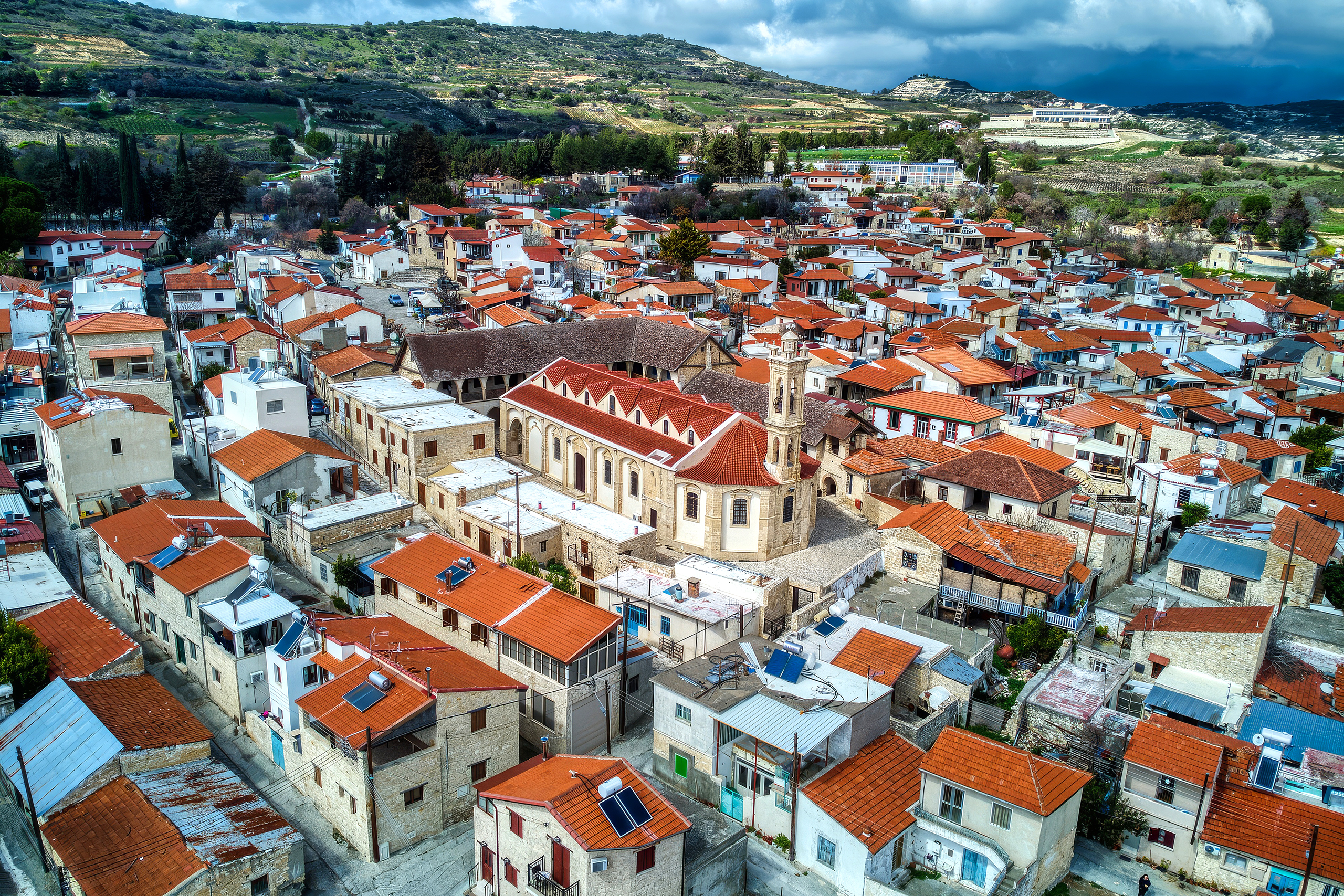
Modern amenities like electricity and plumbing must be installed without disrupting the historic character of buildings. This preservation approach has prevented the architectural degradation that affected many rural villages during the 20th century.
Many traditional houses have been converted to boutique guesthouses, allowing visitors to experience authentic village architecture while providing economic sustainability for the community. These conversions maintain original features like stone walls, wooden ceilings, and paved courtyards while adding modern bathrooms and kitchens.
Several private residences operate as museums, displaying traditional furniture, tools, and household items in their original architectural context. The Centre for the Preservation of Narrow-Knit Lacing, located within the monastery complex, occupies a traditional building that demonstrates how historic structures can serve contemporary cultural purposes.
Experiencing the Architecture Today
Visitors can explore Omodos freely, walking the cobblestone streets and observing architectural details. The village remains a living community rather than a museum, with residents continuing to use traditional buildings for daily life.
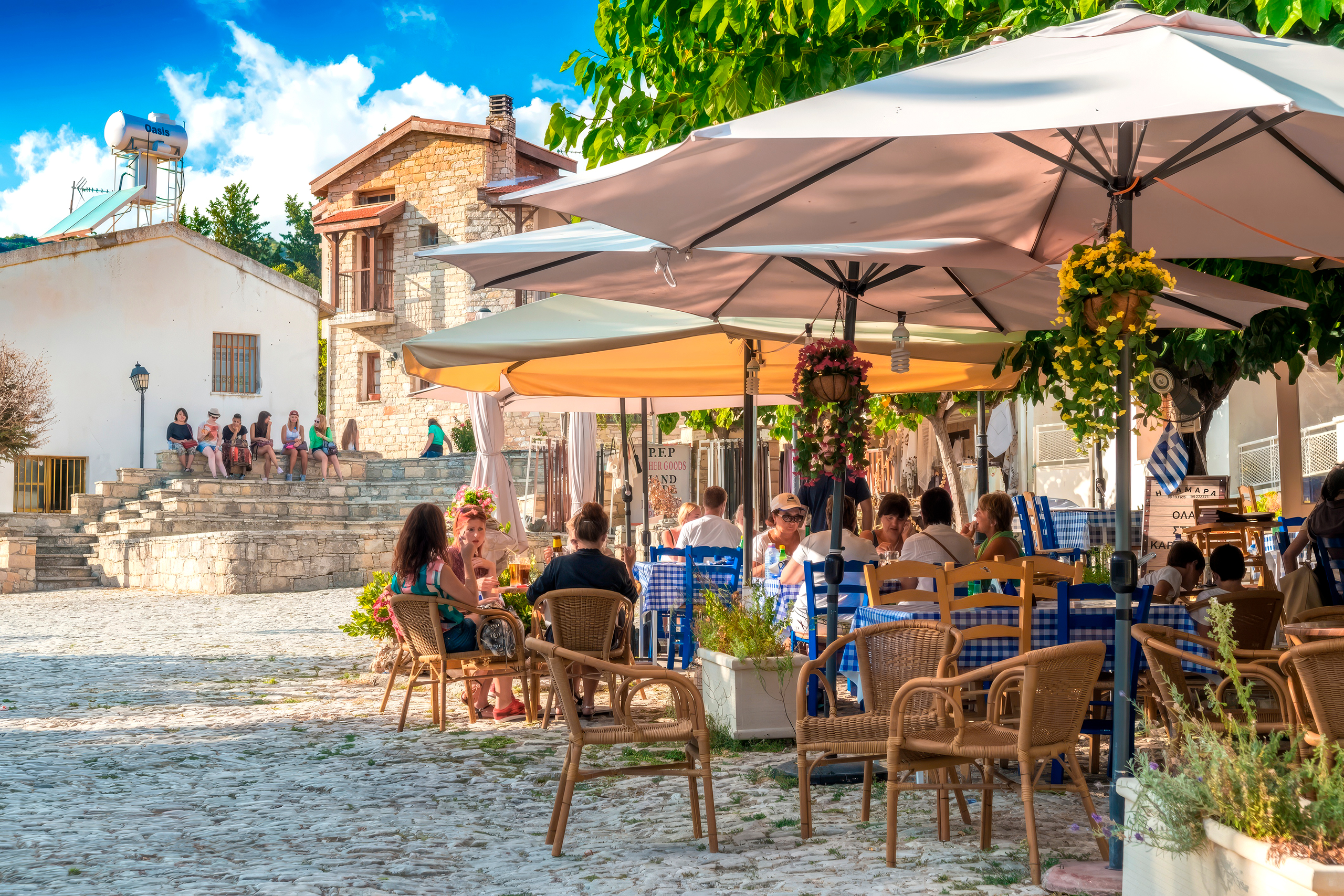
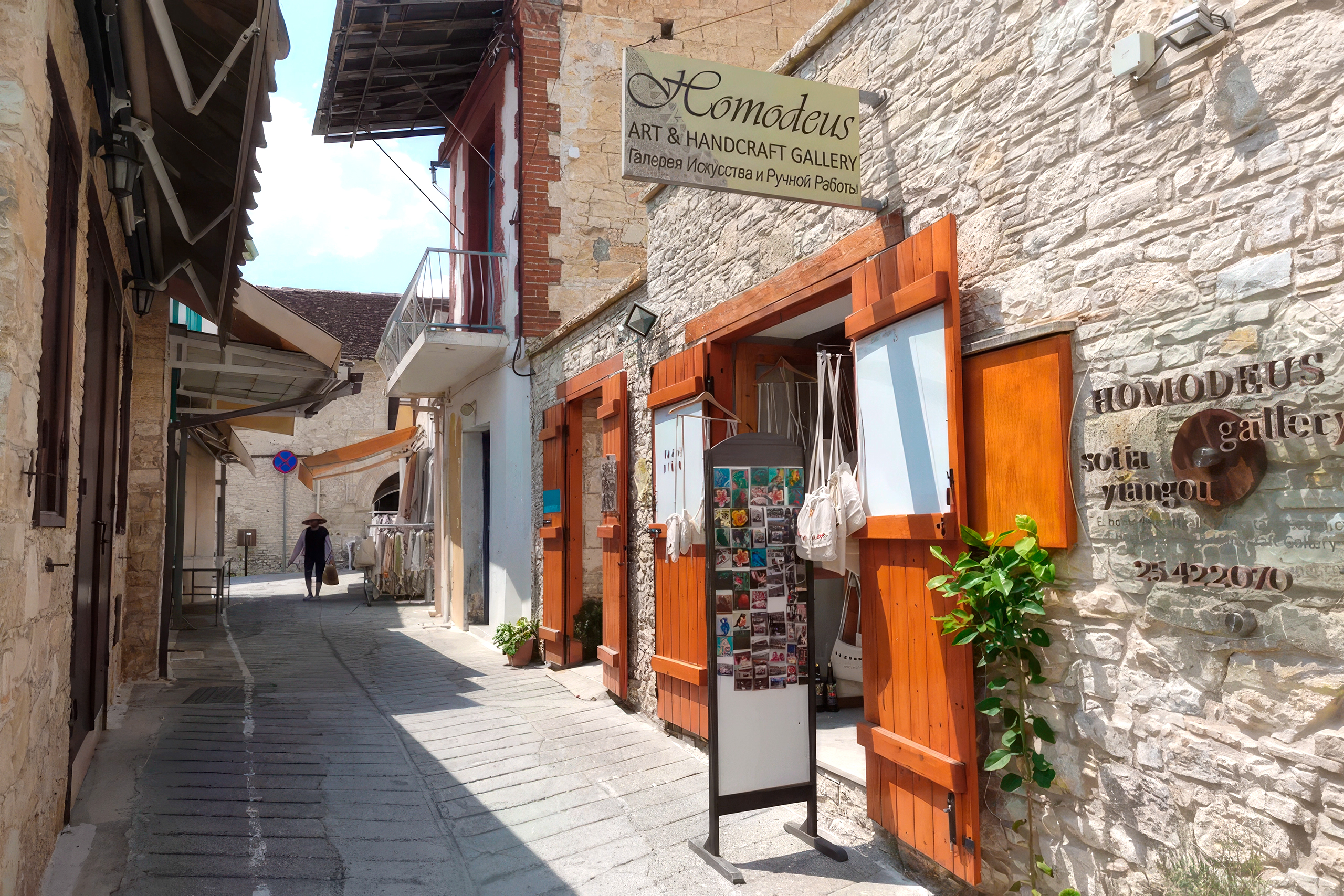
Traditional craft workshops operate in historic buildings where artisans practice lace-making, woodworking, and other skills. Local tavernas occupy stone houses with original architectural features, providing opportunities to experience the interiors while sampling regional cuisine.
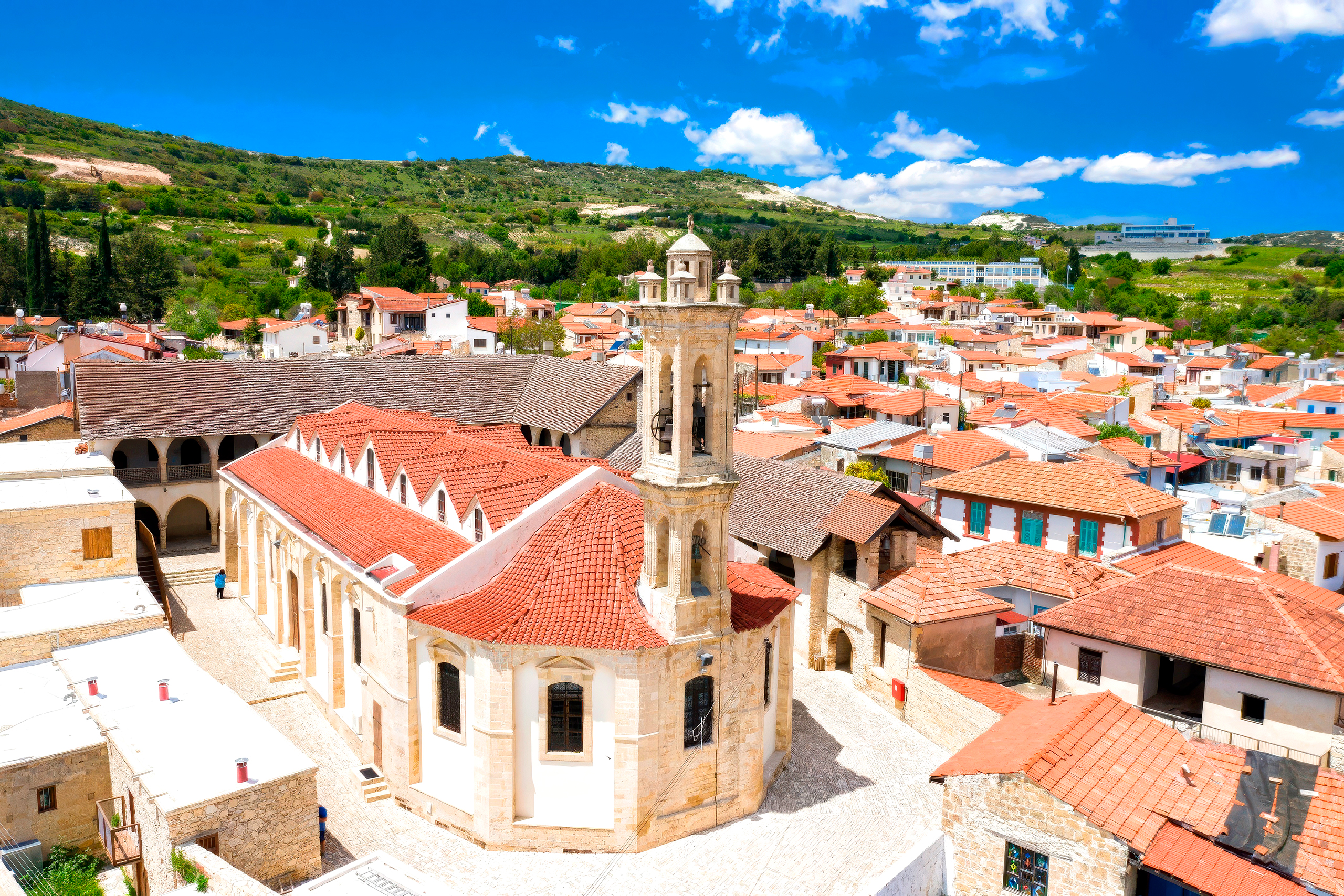
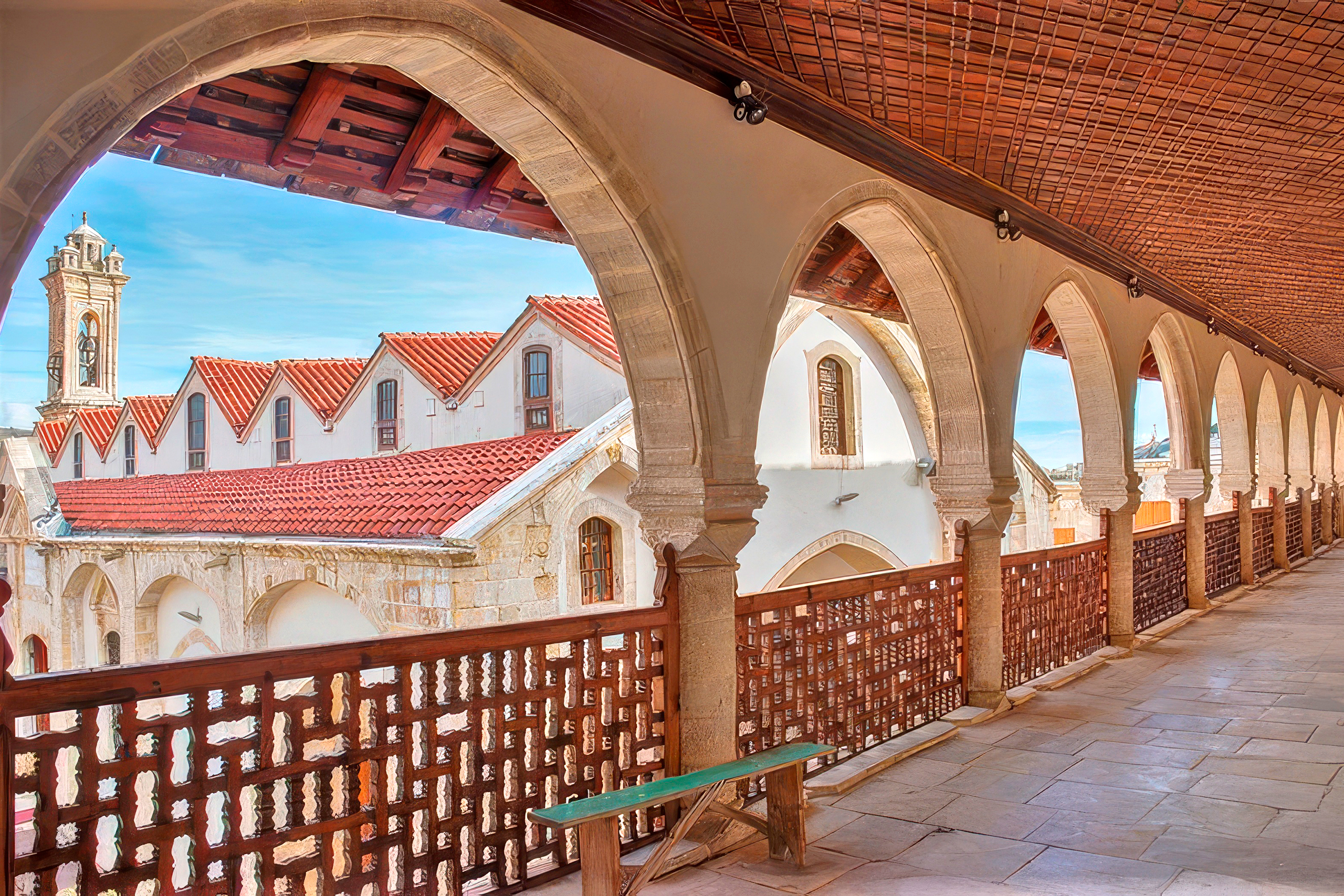
The Monastery of the Holy Cross, at the village center, represents the most significant medieval structure. The complex includes the church, monks’ cells, storage rooms, and ceremonial spaces, all constructed using traditional techniques. The 19th-century gilded iconostasis inside the church demonstrates sophisticated wood carving, while stone archways and vaulted ceilings show masonry skills.
Walking tours through the village allow close examination of construction details, from stone joints to wooden joinery. Photography is permitted throughout the public areas, making Omodos popular with architectural enthusiasts and historians.
What Makes the Monastery Special Today
The current church was built in 1858 and represents a typical three-aisled basilica. Major renovations took place between 1816 and 1850, giving the monastery its present form. In 1817, craftspeople installed the golden iconostasis. The wooden ceiling and the Throne of the Cross on the east wall showcase exceptional woodcarving. The bell installed during this renovation was the first bell to ring in Cyprus during Ottoman rule.
The monastery now houses seven museums. The Museum of Byzantine Icons displays religious art spanning centuries. The Folkloric Art Museum preserves traditional crafts. The first Museum of the 1955-1959 Struggle for Independence was established here, documenting Cyprus’s fight for freedom. A picture gallery shows works by 40 Cypriot artists. The lace museum celebrates the village’s embroidery tradition.
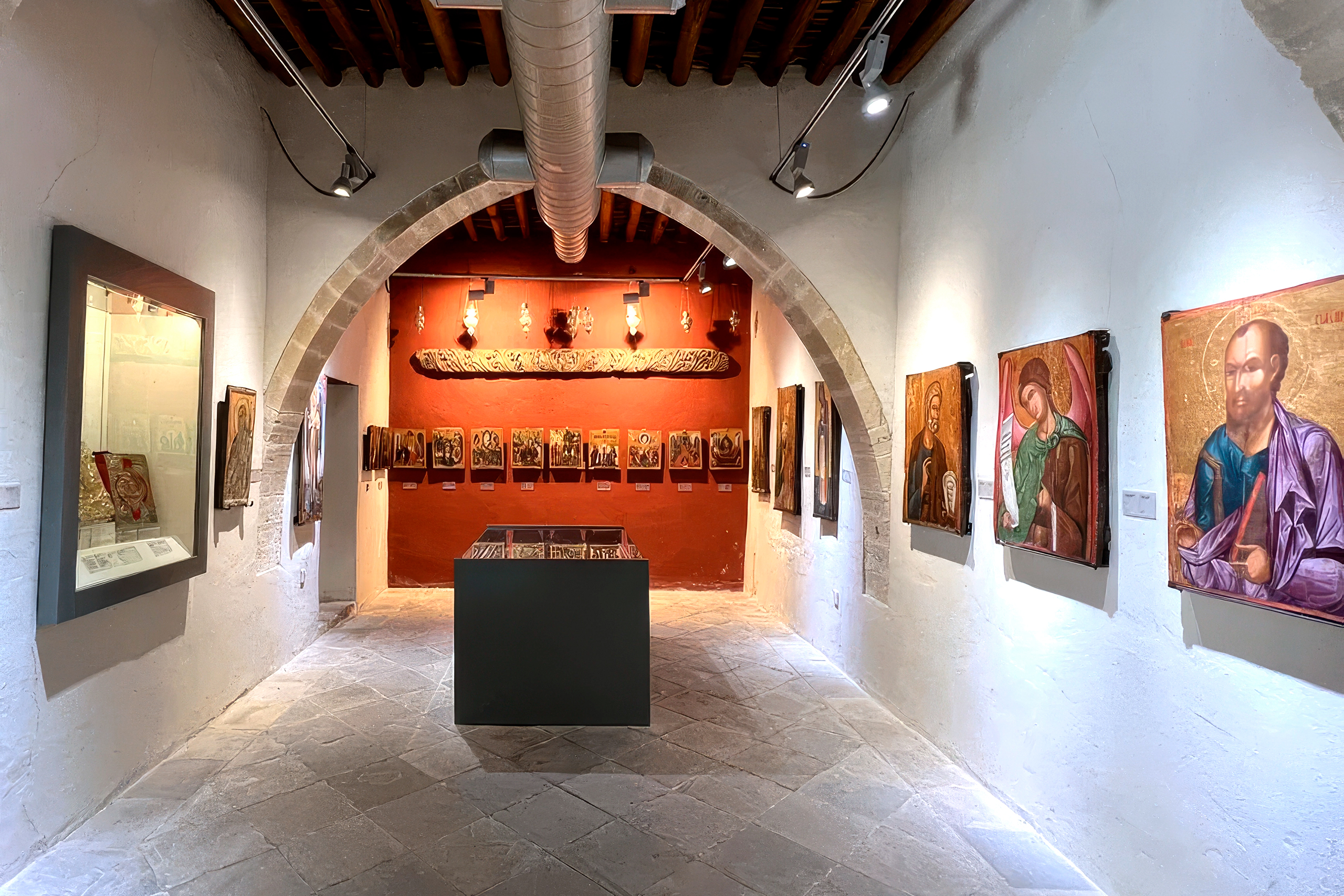
The monastery keeps several sacred relics. Beyond the fragments brought by Saint Helena, it houses the skull of Apostle Philip in a gold and silver case shaped like a pyramid. The monastery also preserves the Cross of Anogyra, an ancient cross transferred from another medieval monastery for safekeeping during troubled times.
An Architectural Testament to Cypriot Heritage
Omodos stands as one of the most complete examples of traditional Cypriot village architecture still in active use. The buildings document centuries of construction methods, showing how local materials and climatic conditions shaped distinctive architectural forms. The village demonstrates how medieval settlement patterns and building techniques remained viable through successive historical periods.
For anyone studying Mediterranean architecture, vernacular building traditions, or the relationship between environment and construction, Omodos provides invaluable physical evidence. The village proves that traditional architecture can meet contemporary needs while preserving cultural identity.
Its stone streets, arched doorways, and sunlit courtyards continue to fulfill the same functions they served centuries ago, connecting modern Cyprus to its medieval past through structures that still stand solid and beautiful.