All Articles

Papoutsa Peak Cyprus Eco Trails

Papoutsa Peak Cyprus Eco Trails

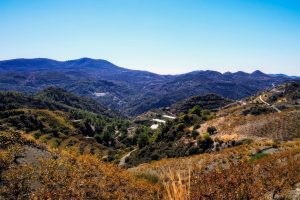
Papoutsa Peak stands at 1,554 metres in the eastern Troodos Mountains, surrounded by one of Cyprus's most important forest reserves. The forests are part of the Adelfoi Forest system, a vast protected area recognized within the Troodos Geopark for its ecological significance. The peak sits between Mount Olympus to the west and Madari to the north, creating a corridor of protected wilderness that covers over 120 square kilometres. Unlike more accessible Troodos peaks with developed facilities, Papoutsa maintains a wilder character with fewer visitors and more pristine ecosystems. The mountain lies within the Papoutsa and Adelfoi Forests mentioned by the Troodos Geopark as among the island's most noteworthy woodland areas. These forests protect crucial habitat for species found nowhere else…

Read more
Panagia Chrysopolitissa Basilica

Panagia Chrysopolitissa Basilica

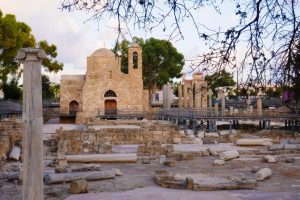
The Chrysopolitissa Basilica is a major archaeological complex in Kato Paphos that reflects the architectural and urban development of Cyprus from the late Roman period through the medieval and early Ottoman eras. The site preserves the remains of a large 4th-century basilica, considered one of the most extensive early monumental structures uncovered on the island, along with later additions from Byzantine, Frankish, and Venetian periods. Today, the area functions as an open-air archaeological site where visitors can observe layered construction phases spanning over a millennium of Cypriot history. Historical Background Archaeological and historical sources confirm that Cyprus was an important Roman provincial center during the early centuries AD. Paphos, in particular, served as a key administrative and cultural hub in…

Read more
Panigyria Cyprus Village Saint Summer Celebration

Panigyria Cyprus Village Saint Summer Celebration

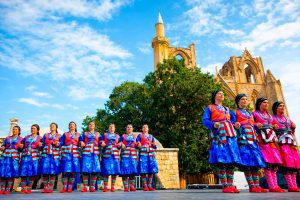
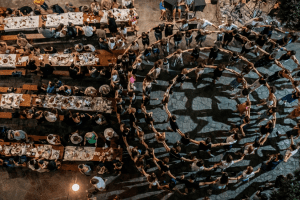
In Cyprus, a panigyri is not simply a festival marked on a calendar. It is a moment when a village gathers itself fully, reconnecting faith, memory, and everyday life into a shared experience. Held in honor of a patron saint, panigyria transforms religious observance into a living social ritual, where prayer flows naturally into food, music, dance, and reunion. These evenings are not for spectacle or tourism. They exist because the community expects them to exist, and because participation itself keeps them alive. To arrive at a panigyri is to step into a rhythm that has been repeated for generations. The setting may vary from village to village, shaped by geography and custom, but the feeling remains familiar. It is…

Read more
Panagia Angeloktisti Church Kiti

Panagia Angeloktisti Church Kiti

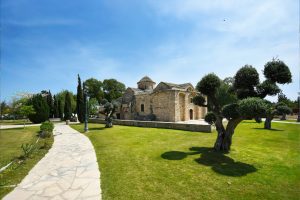
Panagia Angeloktisti Church stands in the village of Kiti, roughly 12 kilometers southwest of Larnaca. The church dates to the 11th century and was built over the ruins of a 5th century early Christian basilica. The name Angeloktisti translates to "Built by Angels" in Greek. The original apse of the basilica survived along with one of the finest pieces of Byzantine art on the island, a rare 6th century mosaic of the Virgin Mary and Child between the Archangels Michael and Gabriel. This stone church preserves multiple layers of Cyprus's religious history, from early Christian times through Byzantine and Frankish periods. The building serves as an active place of worship while housing artistic treasures that connect directly to the Byzantine…

Read more
Nicosia Central Prison

Nicosia Central Prison

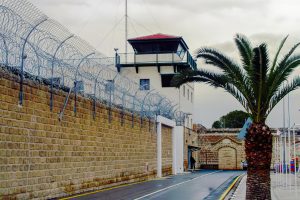
Nicosia Central Prison stands as a poignant symbol of Cyprus's colonial past and the island's struggle for independence, evolving from a British-built facility for maintaining order to a site of resistance and remembrance. Constructed in the late 19th century under British rule, this prison in the heart of Nicosia served as the primary detention center for criminals, dissidents, and political prisoners, reflecting the empire's efforts to control a strategically vital Mediterranean outpost. Later, during the mid-20th century Cyprus Emergency, it became synonymous with the anti-colonial fight led by EOKA fighters, who faced imprisonment, torture, and execution within its walls. As the only operational prison in the Republic of Cyprus today, parts of it have been preserved as a museum honoring…

Read more
Nissi Beach

Nissi Beach

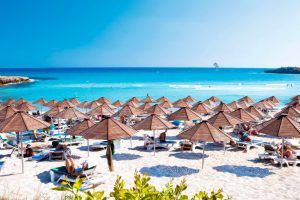
The Nissi beach stretches 500 meters along a crescent-shaped bay on the eastern coast of Cyprus, approximately three kilometers from Ayia Napa town center in the Famagusta district. The bay's distinctive feature is the small island, or "nissi" in Greek, positioned about 50 meters offshore. The water depth remains shallow throughout the bay, typically staying below waist level even 100 meters from shore, making the entire area accessible for wading and safe for families with children. The beach actually consists of two connected sections. The main stretch near the islet attracts larger crowds and hosts most water sports activities and beach bars. A second, smaller, quieter section extends to the west, providing more relaxed conditions for visitors seeking less activity.…

Read more
Palaepaphos Kouklia

Palaepaphos Kouklia

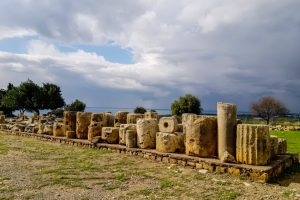
Kouklia is a village in the Paphos District built over the site of the ancient city of Palaepaphos, mythical birthplace of Aphrodite, which became the centre for her worship in the ancient world. This modest village 16 kilometers east of modern Paphos holds the remains of one of the longest continuously operating religious sanctuaries in human history. From around 1200 BC, Palaepaphos was a major religious centre famous all over Cyprus and throughout the Mediterranean. The city served as both a political capital and a sacred site, where the ancient goddess of fertility transformed over centuries into the Greek deity known as Aphrodite. The Sanctuary of Aphrodite is the most famous of the Ancient Greek Goddess' sanctuaries, and its ancient…

Read more
Cyprus International Music Festivals

Cyprus International Music Festivals

Cyprus hosts a small but distinctive network of international music festivals that unfold across ancient theatres, medieval abbeys, and open Mediterranean landscapes. Rather than existing as isolated events, these festivals reflect how the island uses music to connect heritage, geography, and contemporary cultural life. This article explains how Cyprus’s major international music festivals developed, why their venues matter as much as the performances, and how they continue to shape the island’s cultural identity today. Music Festivals as Cultural Bridges Cyprus sits at the crossroads of Europe, the Middle East, and the Eastern Mediterranean, and its music festivals mirror that position. From classical chamber concerts to jazz, opera, and cross-genre experimentation, festival programming is deliberately international in scope. Rather than focusing…

Read more
Cape Greco Sea Cliffs And Caves

Cape Greco Sea Cliffs And Caves

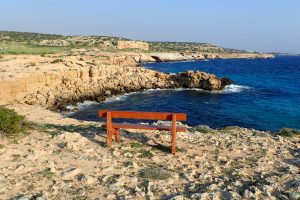
Cape Greco rises from the Mediterranean Sea at Cyprus's southeastern tip, where limestone cliffs drop sharply into turquoise waters, and erosion has carved spectacular sea caves that extend up to 80 metres into solid rock. Cape Greco, also known as Capo Greco or Kavo Greko, forms a rocky peninsula jutting into the Mediterranean between the resort towns of Ayia Napa and Protaras. The headland marks the easternmost point of both the Republic of Cyprus and the European Union, excluding outlying territories. The area covers 385 hectares protected as National Forest Park under the Cyprus Forestry Department since 1993, with additional recognition as part of the Natura 2000 network for its European ecological significance. Historical Background The limestone cliffs at Cape…

Read more