All Articles

Best Villages to Visit in Cyprus

Best Villages to Visit in Cyprus

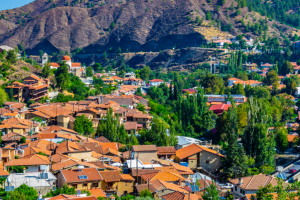
Cyprus villages offer something that coastal resorts cannot provide: the authentic rhythm of island life unchanged over centuries. Stone houses, narrow cobbled streets, old churches, local tavernas, and village squares where elderly men sip coffee define these settlements. Most sit within the Troodos mountain range or on its foothills, where cooler temperatures and fertile land shaped communities for millennia. Unlike sanitized tourist attractions, these villages remain lived in places where generations of the same families have stayed. Each settlement carries its own character, from lace making Lefkara to wine country Omodos to the perfectly preserved ghost village of Fikardou. A visit to even one of these places reveals more about Cyprus than a week spent on any beach. Lefkara and…

Read more
Best Cities to Live in Cyprus

Best Cities to Live in Cyprus

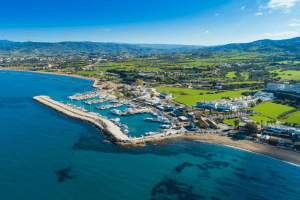
Cyprus attracts thousands of foreign residents each year with its Mediterranean climate, safety, and reasonable living costs. The island offers three major cities that appeal to different lifestyles and budgets. Choosing between Nicosia, Limassol, and Paphos depends on whether business opportunities, beaches, or affordability take priority. Each city provides distinct advantages that match specific needs and preferences. Limassol Where Business Meets the Beach Limassol operates as Cyprus's economic powerhouse and financial center. The city draws professionals, entrepreneurs, and digital nomads with its modern marina, international businesses, and vibrant nightlife. Seafront promenades, coworking spaces, international schools, and cultural festivals create a cosmopolitan atmosphere unmatched elsewhere on the island. Monthly living expenses total €1,800 to €2,200 for single residents including rent, rising…

Read more
Best Cities in Cyprus For Retirees

Best Cities in Cyprus For Retirees

Cyprus has become one of Europe's most attractive retirement destinations, drawing more than 100,000 foreign retirees to its shores. The Mediterranean island offers a combination of year-round sunshine, affordable living costs, excellent healthcare, and favorable tax benefits. With over 320 sunny days annually, temperatures rarely dropping below 10°C in winter, and summers averaging 30-35°C, the climate alone makes Cyprus appealing. The island's strategic location between three continents, two international airports, and widespread English usage create an environment where retirees can maintain connections with loved ones while enjoying a relaxed Mediterranean lifestyle. A Mediterranean Haven for International Retirees Cyprus began attracting international retirees in significant numbers after introducing specialized visa programs in 2007. The island's appeal extends beyond weather and beaches.…

Read more
Arabahmet Mosque (Nicosia)

Arabahmet Mosque (Nicosia)

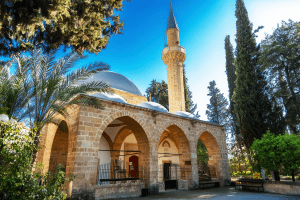
Arabahmet Mosque is a 16th-century Ottoman mosque located in the Arab Ahmet Quarter of Nicosia. Built in the late 1500s shortly after the Ottoman conquest of Cyprus in 1571, the mosque was named after Arab Ahmet Pasha, one of the commanders who led the Ottoman army during the invasion. He also served as Governor General of Rhodes. The mosque is the only one in Cyprus to feature typical Turkish-style domes. A large central dome about 6 meters across covers the main prayer hall, three smaller domes protect the entrance porch, and four more tiny domes sit at the building's corners. This design follows the classical Anatolian style of placing a dome on a square building. Historical Background Arab Ahmet Pasha…

Read more
Ancient Ledra Early History of Nicosia

Ancient Ledra Early History of Nicosia

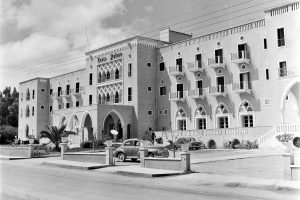
Ancient Ledra was a city-kingdom in the center of Cyprus where modern Nicosia stands today. It was established around 1050 BC and it became one of ten Cypriot kingdoms by the 7th century BC. Unlike coastal kingdoms that thrived on maritime trade, Ledra developed as an agricultural settlement in the fertile Mesaoria Plain. By Hellenistic times, it had dwindled to a small village before transforming into the capital city that continues to this day. Archaeological remains from ancient Ledra have been found in several areas around modern Nicosia. The Bronze Age settlement was located on Leontari hill, approximately 6.5 kilometers southeast of the historical city center. This platform measures about 200 by 300 meters and includes a small cemetery. Historical…

Read more
Ancient Soli A Hellenistic Coastal City

Ancient Soli A Hellenistic Coastal City

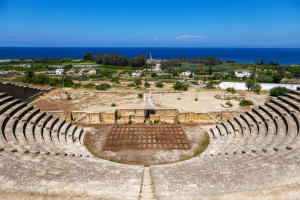
Soli was one of the ten ancient city kingdoms that ruled Cyprus from the 6th century BC until the Roman conquest. The city occupied an ideal location beside the Kambos River on Morphou Bay, with an acropolis on high ground and a lower town next to the harbor. Rich copper deposits lay just south of the city, good water flowed from nearby sources, and fertile soil stretched across the plains. These advantages made Soli prosperous for over a thousand years until Arab raiders destroyed it in the 7th century AD. Historical Background Several legends explain how Soli got its name. One Greek story claims the mythical Athenian hero Acamas founded the city after the Trojan War, accompanied by Phalerus. Another…

Read more
Aphrodite Nature Trail

Aphrodite Nature Trail

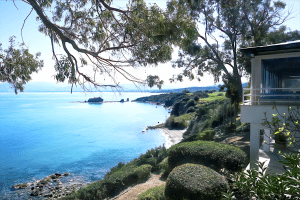
The Aphrodite Nature Trail cuts through the Akamas Peninsula, one of the last untouched wildernesses in Cyprus. This 7.5-kilometer circular route starts at the legendary Baths of Aphrodite and climbs to viewpoints where the entire northwest coast unfolds below. The path combines mythology with genuine ecological significance, passing through an area that hosts 39 of Cyprus's 141 endemic plant species and serves as protected habitat for endangered sea turtles. The route reaches a maximum elevation of 370 meters at Moutti tis Sotiras, a rocky plateau that offers panoramic views across Chrysochou Bay to Cape Arnaoutis. Despite covering 7.5 kilometers, the trail maintains a moderate difficulty level, with most elevation gain concentrated in the middle section. Walking time ranges from 3…

Read more
Paphos Archaeological Park

Paphos Archaeological Park

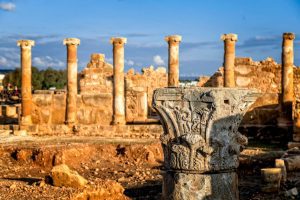
Paphos Archaeological Park, known in antiquity as Nea Paphos, represents one of the most significant archaeological landscapes in the eastern Mediterranean. Established in the late fourth century BCE during the Hellenistic period, the city was deliberately founded as a political and administrative center under the Ptolemaic rulers who controlled Cyprus after the campaigns of Alexander the Great. Its coastal position provided both strategic and economic advantages, linking the island to major maritime routes that connected the Greek world, Egypt, and the Near East. When the Romans annexed Cyprus in 58 BCE, Nea Paphos retained its prominence and became the island’s capital, a role that further strengthened its political, commercial, and cultural influence. The city’s development under successive Hellenistic and Roman…

Read more
Paphos Forest Nature Reserve – Endemic Wildlife

Paphos Forest Nature Reserve – Endemic Wildlife

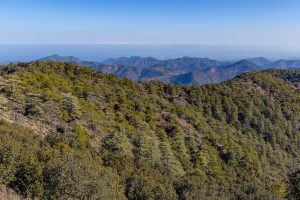
Paphos Forest Nature Reserve stands as one of the largest and most ecologically significant protected areas in Cyprus. Spanning approximately 620 square kilometers across the northwestern Troodos Mountains, this vast wilderness represents the island's most extensive continuous forest ecosystem. The reserve gained official protected status through a series of conservation measures beginning in 1938, when the government recognized the urgent need to preserve the habitat of the endangered Cyprus mouflon. Today, the forest functions as a critical biodiversity hotspot, home to dozens of endemic species found nowhere else on Earth. The landscape ranges from dense pine forests and ancient cedar groves to golden oak woodlands and riparian vegetation along mountain streams. This diversity of habitats supports an exceptional variety of…

Read more