All Articles

Artisanal and Industrial Fishing

Artisanal and Industrial Fishing

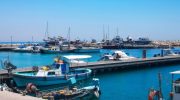
Fishing in Cyprus exists in two distinct worlds. Small boats with weathered wood head out at dawn from coastal shelters, while larger vessels equipped with modern technology venture into deeper waters. The Cypriot fishing fleet comprised 858 vessels in 2019, representing a sector that contributes around 0.8% to GDP but holds significant importance in coastal communities.  This industry balances traditional methods passed down through generations with contemporary commercial operations. Over 300 types of fish have been found in the sea around Cyprus, yet the eastern Mediterranean's warm, nutrient-poor waters present unique challenges for fishers. The Three Faces of Cyprus Fishing Today There are three fishing segments in Cyprus: the trawler sector, both inland fishing (2 trawlers) and high sea trawlers…

Read more
Amathus Acropolis Hellenistic Structures

Amathus Acropolis Hellenistic Structures

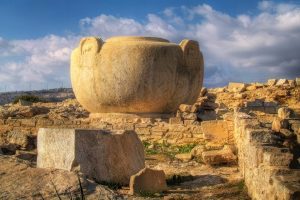
The acropolis of Amathus stands as evidence of the city's transformation during the Hellenistic period. When the kingdom fell to Ptolemaic rule around 312–311 BC, the focus of urban life shifted from the hilltop to the lower town, but this transition brought new construction that reshaped the ancient fortress into something different. Amathus was one of Cyprus's ancient royal city-kingdoms, established around 1100 BC on the southern coast. The site lies about 11 kilometers east of modern Limassol. For centuries, the acropolis served as both a natural fortress and a religious center, dominated by the sanctuary of Aphrodite. Archaeological evidence shows the city prospered through copper trade and maintained a unique cultural identity that blended Greek, Phoenician, and indigenous Cypriot…

Read more
Following Seasons of the Sea Cyprus Fishing

Following Seasons of the Sea Cyprus Fishing

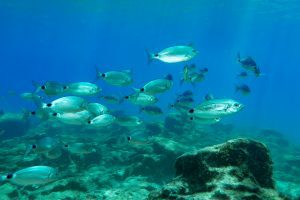
Fishing in Cyprus has never been a matter of going out to sea and taking whatever is available. For centuries, coastal communities shaped their lives around the rhythms of the Mediterranean, fishing when conditions allowed, resting when they did not, and adjusting methods as fish moved, spawned, or disappeared. These seasonal patterns were not written rules but accumulated knowledge, refined through observation and necessity. Understanding traditional fishing in Cyprus means understanding how people learned to work with the sea rather than against it. A Relationship Built on Timing The Mediterranean is not a uniform or endlessly predictable environment. Around Cyprus, subtle seasonal changes in temperature, light, and currents strongly influence where fish gather and how active they become. Traditional fishers…

Read more
Adaptation Imported Artistic Techniques

Adaptation Imported Artistic Techniques

Adaptation of Imported Artistic Techniques in ancient Cyprus involved incorporating styles from regions such as Greece, Egypt, and the Near East, then modifying them to align with local beliefs and values. Rather than exact replication, Cypriot artists infused these elements with distinctive island characteristics, resulting in art that felt authentically Cypriot - unique and rich in significance. This process of selective adaptation transformed external influences into innovative expressions, illustrating how an island on the periphery of empires developed a vibrant creative identity. A Creative Synthesis at a Mediterranean Crossroads Cypriot art emerged from the island's position as a nexus of cultural exchange, where imported techniques underwent transformation to reflect indigenous perspectives. External styles arrived through trade, migration, and conquest, but…

Read more
Church of Panagia Podithou

Church of Panagia Podithou

The Church of Panagia Podithou, located near the village of Galata in the Troodos Mountains of Cyprus, is one of the monuments included in the UNESCO World Heritage group known as the Painted Churches of the Troodos Region. Built in 1502, during the period of Venetian rule over Cyprus, the church represents a distinctive moment in the island’s artistic history when Byzantine traditions interacted with Western Renaissance influences. While the building maintains the architectural form typical of Cypriot mountain churches, its wall paintings reveal stylistic changes that reflect exposure to Italian artistic trends. The church stands as a visual document of cultural exchange in the eastern Mediterranean at a time when political authority had shifted but Orthodox religious identity remained…

Read more
Church of Panagia tou Araka

Church of Panagia tou Araka

The Church of Panagia tou Araka, located near the village of Lagoudera in the Troodos Mountains of Cyprus, is one of the most celebrated monuments within the UNESCO World Heritage group known as the Painted Churches of the Troodos Region. Built in the late 12th century, the church stands as a remarkable testament to the artistic and spiritual vitality of Cyprus during the Middle Byzantine period. Its significance lies primarily in its interior decoration, which preserves some of the finest examples of Comnenian art an artistic style associated with the reign of the Comnenian dynasty in Byzantium and closely linked to the cultural life of Constantinople. At a Glance Location: Lagoudera village, Pitsilia region, Troodos MountainsDate of frescoes: 1192Artist: Theodore…

Read more
Church of Panagia tou Moutoulla

Church of Panagia tou Moutoulla

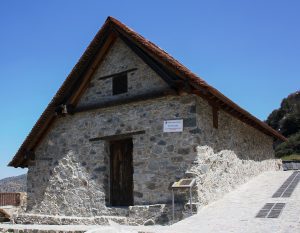
The Church of Panagia tou Moutoulla, located in the village of Moutoullas in the Marathasa Valley of the Troodos Mountains, holds a special place among the Painted Churches of Cyprus recognized by UNESCO. Built in 1280, according to an inscription preserved within the building, the church represents the earliest securely dated example of the steep-pitched wooden roof style that became characteristic of mountain churches in Cyprus. Its importance lies not only in its artistic decoration but also in its architectural form, which demonstrates how local communities adapted Byzantine religious architecture to the demanding climatic conditions of the highlands. This combination of artistic heritage and environmental adaptation makes the church a key monument for understanding the development of medieval Cypriot ecclesiastical…

Read more
Church of Timios Stavros in Pelendri

Church of Timios Stavros in Pelendri

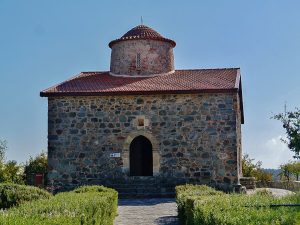
Church of Timios Stavros in Pelendri is a 12th-century Byzantine chapel in Cyprus's Troodos Mountains that evolved into a multi-part complex, famed for its Palaiologan frescoes blending spiritual depth with artistic refinement. Part of the UNESCO-listed Painted Churches, it showcases the island's medieval religious heritage through layered architecture and vivid paintings. This site captures how faith adapted over time, offering insights into Cyprus's enduring spiritual traditions. An Evolving Byzantine Chapel in the Mountains Timios Stavros exemplifies the organic development of Byzantine religious architecture in Cyprus, starting as a modest single-aisled chapel and expanding into a domed, multi-section structure that reflects centuries of theological and cultural shifts. Dedicated to the Holy Cross, a symbol central to Orthodox Christianity representing salvation and…

Read more
Ancient Enkomi Cyprus Bronze Age City

Ancient Enkomi Cyprus Bronze Age City

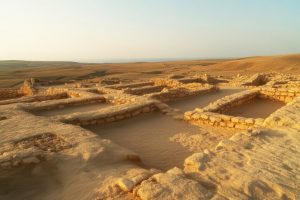
On the eastern coast of Cyprus near today’s Famagusta, Enkomi was one of the most important Bronze Age cities in the Mediterranean. For over 600 years, this walled city controlled much of the region’s copper trade and acted as a key link between the Near East, Egypt, and the Aegean world. Enkomi was a major Late Bronze Age settlement, occupied from around 1650 BCE to 1050 BCE. The city grew near a Mediterranean inlet, which has since filled with silt, leaving the ruins several kilometers from the sea. At its height, between 1340 and 1200 BCE, Enkomi was one of Cyprus’s main centers for copper production and export. Historical Background Enkomi was first settled in the Middle Bronze Age, around…

Read more