All Articles

St. Sophia Cathedral Gothic Landmark Cyprus

St. Sophia Cathedral Gothic Landmark Cyprus

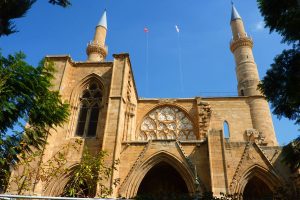
In the center of North Nicosia stands the largest Gothic building in Cyprus. Originally a cathedral, it was later turned into a mosque but still keeps its French Gothic style. Over 800 years, the building has seen coronations, earthquakes, sieges, and the rise and fall of kingdoms, making it one of the most important historic sites on the island. St. Sophia Cathedral, now called Selimiye Mosque, was built in the 13th century. It was converted into a mosque in 1570 after the Ottoman conquest of Cyprus. The building measures 66 by 21 meters inside and can hold about 2,500 worshippers. It was the coronation church for the Lusignan kings of Cyprus and later for the titular kings of Jerusalem and…

Read more

Pyrgos Mavroraki Sacred Site

Pyrgos Mavroraki Sacred Site

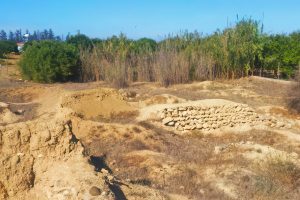
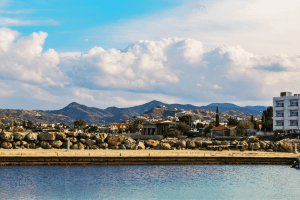
Pyrgos-Mavroraki is an Early to Middle Bronze Age settlement on the southern coast of Cyprus near modern Limassol. Excavations began in the early 2000s by the Italian Archaeological Mission of ITABC-CNR. Radiocarbon dating shows copper smelting started here as early as 4229–3960 BC during the Chalcolithic period. Even older copper slag from 8631–8291 BC was found, possibly from accidental metal use while making lime. This makes Pyrgos one of the earliest places for metal work in the Mediterranean. The settlement was on the slope of a small hill in a valley crossed by a stream. It sat on rocks with copper and had easy access to nearby mines at Mavrovouni and other sites. People lived there continuously from the 9th…

Read more
Cyprus Olympic Museum Nicosia

Cyprus Olympic Museum Nicosia

The Cyprus Olympic Museum preserves the athletic heritage of the island. It exhibits 400 artifacts that document Cyprus's participation in the Olympic Games and international sporting competitions since 1980. The museum occupies all three floors of the Olympic House, the headquarters of the Cyprus Olympic Committee, located at 21 Amfipoleos Street in Nicosia. The Olympic House opened on September 16, 2006, in a ceremony attended by President Tassos Papadopoulos and International Olympic Committee President Jacques Rogge. The three-story building covers 7,500 square meters and cost 5.63 million Cyprus pounds to construct. The Cyprus Olympic Museum began operations in 2012, six years after the building's inauguration. The facility houses almost every sporting federation on the island, including sports not on the…

Read more
Cyprus Folk Art Museum

Cyprus Folk Art Museum

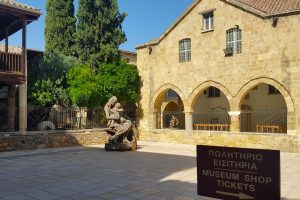
The Cyprus Folk Art Museum preserves the island's traditional crafts in a building that once housed archbishops and witnessed moments that changed Cypriot history. The museum occupies the Old Archbishopric building on Archbishop Kyprianos Square in central Nicosia. This location places it beside St. John's Cathedral, the Byzantine Museum, the National Struggle Museum, and the current Archbishop's Palace. The building itself dates to the 15th century and features Gothic architecture with later additions. In the 13th century, the area was controlled by French rulers and served as a monastery for the Benedictine order. Later, the Order of St. John erected a church dedicated to their patron saint on the grounds. In 1218, Hugo I was buried in this church. When…

Read more
Cyprus Motor Museum

Cyprus Motor Museum

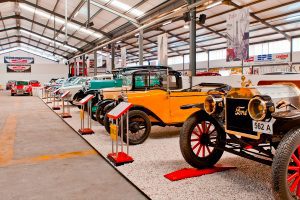
The Cyprus Historic and Classic Motor Museum houses over 240 vintage vehicles in Limassol and stands as the only automotive museum in Cyprus. This collection spans more than a century of motoring history and includes some of the rarest automobiles in the world. Dimi Mavropoulos founded the museum in February 2014 after years of planning. He was born in Limassol in 1949. Mavropoulos became one of Cyprus's most successful rally drivers. By age 20, he had already won numerous local races. He moved to London in 1969 to establish the European office for his family's fruit export business, and during his 30 years there, he competed in 382 rallies across Europe while continuing to race in Cyprus. His racing record…

Read more
Buffavento Castle Cyprus

Buffavento Castle Cyprus

Buffavento Castle stands at 960 meters above sea level in the Kyrenia mountain range of Cyprus. This medieval fortress is the highest and least preserved of three Byzantine strongholds built along the mountains. The name comes from Italian and means "Defier of the Winds," a fitting description for a castle constantly exposed to mountain winds at this elevation. The castle sits between St. Hilarion Castle to the west and Kantara Castle to the east, forming a defensive line across the Kyrenia Mountains. All three castles are visible from each other, allowing them to pass signals and warnings. Buffavento guarded the mountain passage from Kythrea to the north coast, controlling movement between the coastal plain and the interior. The location provides…

Read more
Vouni Necropolis

Vouni Necropolis

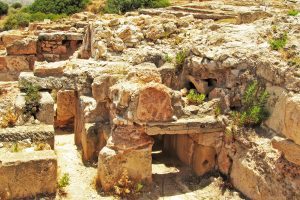
On gentle slopes near the medieval abbey of Bellapais in the Turkish-occupied part of Cyprus sits an extensive Bronze Age cemetery known to the world almost exclusively through its dead. The Vounous necropolis contains 164 rock-cut chamber tombs that served an unknown settlement for nearly five centuries, from approximately 2500 to 2000 BCE, preserving one of the finest collections of prehistoric pottery ever discovered on the island. Vounous presents archaeologists with an unusual challenge. Despite extensive searches that began in the 1930s and continue sporadically today, the settlement that used this cemetery has never been located. The site sits somewhere between the villages of Ozanköy and Çatalköy in the Kyrenia region, but the homes, workshops, and temples of the people…

Read more
Toumba tou Skourou

Toumba tou Skourou

Near the town of Morphou in northwestern Cyprus, an artificial hill once rose from the fertile plain where the Ovgos River flows toward the sea. For over 600 years during the Bronze Age, this spot was home to potters who made beautiful ceramics, copper workers who processed metal from nearby mines, and families who buried their dead in tombs cut into the rock. Bulldozers destroyed much of the site before archaeologists could study it, but what they found in three short years changed how we understand Bronze Age Cyprus. Historical Background Toumba tou Skourou was a Late Bronze Age settlement and cemetery located 4 kilometers from central Morphou on Cyprus's northwestern coast. The name means "Mound of Darkness" in Greek,…

Read more
Cyprus Venetian Fortifications

Cyprus Venetian Fortifications

The Venetian fortifications of Cyprus represent some of the most impressive defensive structures built during the Renaissance period. Between 1489 and 1571, the Republic of Venice controlled Cyprus and invested heavily in fortifying three major cities: Nicosia, Famagusta, and Kyrenia. These fortifications were designed to protect the island from Ottoman invasion using the latest military engineering techniques of the 16th century. The walls featured pentagonal bastions, thick earthwork ramparts, and deep moats, all adapted for the age of gunpowder artillery. Despite their sophisticated design, these fortifications faced their ultimate test in 1570 when Ottoman forces invaded Cyprus. The siege of Famagusta in particular demonstrated both the strength of Venetian military architecture and the determination of defenders who held out for…

Read more