All Articles

Cyprus Holy Site Pilgrimages

Cyprus Holy Site Pilgrimages

Cyprus has been a destination for pilgrimage and cultural travel for more than 1,700 years. The island holds a distinctive place in Mediterranean history due to its early adoption of Christianity during the Roman period and its later development into an important center of Byzantine religious administration and art. Across the island, dozens of monasteries, churches, and heritage sites are distributed from coastal cities to mountainous regions. These locations preserve artifacts, architectural structures, icons, and long-standing traditions that reflect the development of religious life in Cyprus from late antiquity through the Byzantine and post-Byzantine periods. Visitors from different regions, including Eastern Europe and the Mediterranean, have historically traveled to these sites for cultural interest, historical study, and religious observance. Religious…

Read more

Piracy and Naval Conflict in Cyprus

Piracy and Naval Conflict in Cyprus

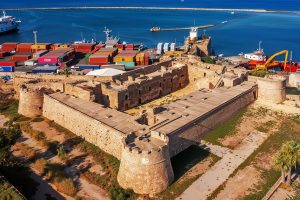
For centuries, Cyprus lived with a constant awareness of the sea. Its position at the crossroads of Europe, the Middle East, and North Africa brought trade, wealth, and cultural exchange, but it also exposed the island to piracy and naval warfare. Ships on the horizon were never neutral. They could mean commerce and connection, or sudden violence and loss. Over time, this uncertainty shaped how Cyprus was built, governed, and defended. Piracy and naval conflict were not interruptions to Cypriot history. They were defining forces. An Island That Could Not Be Ignored Cyprus sits directly along major east–west Mediterranean sea routes. Any ship moving between the Aegean, the Levant, and Egypt passed close to its shores. This made the island…

Read more
Traditional Shoemaking and Village Footwear

Traditional Shoemaking and Village Footwear

Traditional Shoemaking (Tsamika & Village Footwear) in Cyprus involves handmade leather footwear designed for agricultural and pastoral life, reflecting craftsmanship shaped by the island's environment. Tsamika, a type of sturdy boot, and other village shoes use local materials like goat hide for durability, with simple stitches and soles suited to rocky terrain. This tradition preserves ancient skills, where functionality meets cultural symbolism, offering a glimpse into how rural Cypriots adapted to their landscape through practical art. A Timeless Craft of Leather and Land Traditional shoemaking in Cyprus embodies a practical artistry where leather is shaped into footwear that supports the demands of farming and herding. Tsamika boots, with their high ankles and thick soles, and village shoes like low-cut "podinia"…

Read more
Traditional Songs of Cyprus

Traditional Songs of Cyprus

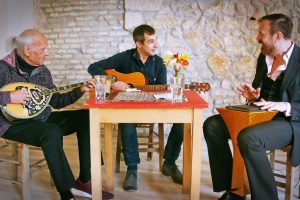
Traditional songs in Cyprus are not preserved in glass cases or frozen in formal performances. They live in memory, in village squares, in family celebrations, and in quiet moments where voices carry stories across generations. Long before recordings and concert halls, music on the island existed as a shared language, passed from person to person, shaped by experience, and reshaped by time. To listen to these songs is to hear how ordinary Cypriots worked, loved, struggled, and remembered. Cyprus, as an island at the crossroads of continents, has always absorbed influences without losing its own identity. Its traditional music reflects centuries of encounters, migrations, and coexistence. Yet beneath the layers of history, the songs remain deeply rooted in everyday life.…

Read more
Trahanas Preserving In Cyprus

Trahanas Preserving In Cyprus

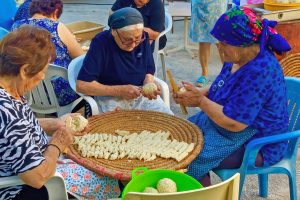
Trahanas is not a soup in the usual sense. It is a solution shaped by necessity. Long before refrigeration, electricity, or supermarkets, Cypriot households needed a way to preserve the abundance of summer milk and turn it into nourishment for the colder, damp months that followed. Trahanas emerged as a practical answer to this challenge, turning perishable ingredients into a stable, nourishing reserve. Tangy, filling, and deeply comforting, trahanas sits at the centre of Cyprus’s food memory not because it is impressive, but because it worked when it mattered most. To eat trahanas is to taste the logic of survival shaped by land, climate, and patience. A Food Designed to Last, Not Impress At its core, trahanas is made from…

Read more
Trooditissa Monastery

Trooditissa Monastery

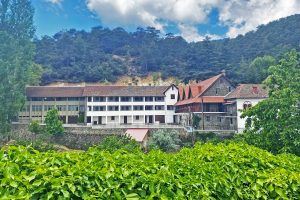
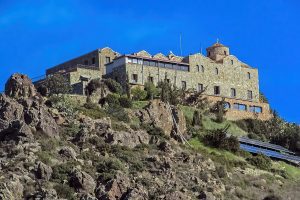
Trooditissa Monastery is a historic monastic site located on the southern slopes of the Troodos Mountains at an altitude of around 1,300 meters. It lies near the village of Platres and is surrounded by dense pine forests. The monastery is officially known as Panagia Trooditissa, a name that reflects its geographical setting within the Troodos mountain range. Historical references place the origins of the monastery around the late 10th century, shortly after the Byzantine iconoclasm period. While the present buildings are later reconstructions, the site is recognized for its long-standing monastic presence and its role in the religious and cultural landscape of Cyprus. Historical Background During the 8th and 9th centuries, the Byzantine Empire experienced a period in which religious…

Read more
Troodos Hill Stations Platres and Square

Troodos Hill Stations Platres and Square

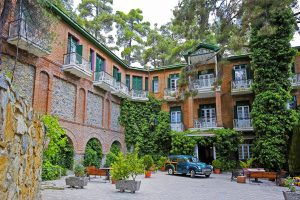
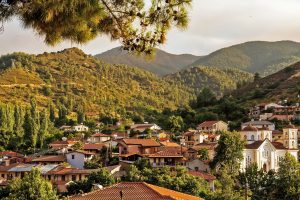
The Troodos Hill Stations refer to two main areas in the Troodos Mountains where the British colonial administration established summer retreats. Platres, located at an altitude of 1,100 meters on the southern slopes, became the premier mountain resort with luxury hotels, villas, and tree-lined walks. Troodos Square, situated near Mount Olympus at approximately 1,700 meters, served as the administrative center where the British governor relocated his entire government during the hot summer months. Together, these hill stations formed a unique mountain retreat system that shaped Cyprus tourism for over a century. Historical Background When Lieutenant-General Sir Garnet Wolseley arrived in Larnaca on July 22, 1878, as the island's first High Commissioner, he immediately recognized a serious problem. British troops stationed…

Read more
Troodos Mineral Springs

Troodos Mineral Springs

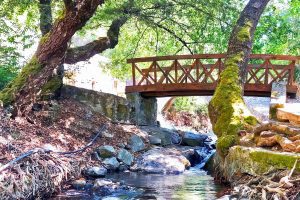
Deep in the Troodos Mountains, sulfur-rich waters rise from ancient rock, just as they have for thousands of years. These mineral springs have drawn healers, pilgrims, and travelers since antiquity. The most famous flows in Kalopanayiotis village, where thermal waters meet the Setrachos River beside a centuries-old Venetian bridge. Mineral springs produce water containing dissolved substances that alter its taste and give it therapeutic value. Salts, sulfur compounds, and gases dissolve into the water during its underground passage. The springs in Cyprus are particularly rich in sulfur, with additional minerals including magnesium and calcium. Water temperature at these springs varies from pleasantly warm to quite hot. The therapeutic minerals become concentrated as groundwater moves through rock formations deep underground. When…

Read more
Troodos Mountains Biodiversity and Climate Core

Troodos Mountains Biodiversity and Climate Core

The Troodos Mountains rise from the heart of Cyprus as the island’s highest mountain system, with Mount Olympus reaching 1,952 meters above sea level. More than a scenic landscape, this mountain range forms the ecological and climatic core of the island. Its slopes regulate water supply, shape weather patterns, and support an extraordinary concentration of life found nowhere else in the Mediterranean. What makes Troodos truly exceptional is its geological origin. The mountains expose one of the most complete sections of ancient oceanic crust ever discovered on land, creating conditions that shaped a unique and fragile ecosystem over millions of years. Historical Background The Troodos Mountains formed approximately 92 million years ago at the bottom of the ancient Tethys Ocean,…

Read more