All Articles

Teucer and Salamis Legends Cyprus

Teucer and Salamis Legends Cyprus

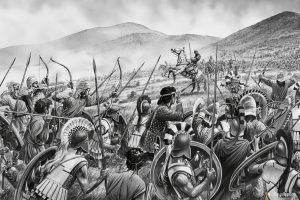
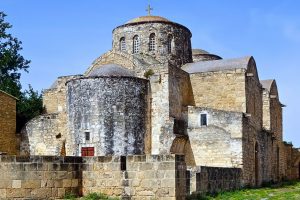
The legend of Teucer and the founding of Salamis stands as one of Cyprus's most enduring foundation myths. This tale connects the island to the world of Greek epic poetry and the aftermath of the Trojan War. Teucer, a legendary archer and warrior, supposedly established the city of Salamis on Cyprus's eastern coast around 1200 BC. The story interweaves tragedy, exile, and renewal. According to ancient sources, Teucer arrived on Cyprus after being banished from his homeland by his father. He brought with him followers from Greece and founded a new city bearing his homeland's name. This myth shaped Salamis's identity for over a millennium and influenced how ancient Cypriots understood their Greek cultural connections. Whether based on historical events…

Read more
Cape Greco National Forest Park

Cape Greco National Forest Park

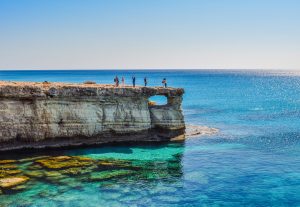
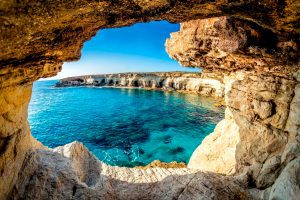
Cape Greco National Forest Park occupies 385 hectares on a rocky promontory at the southeastern tip of Cyprus, nestled between the resorts of Ayia Napa and Protaras. The park was designated as a National Forest Park in 1993 to protect this area of unspoiled natural beauty. The broader Natura 2000 site encompasses 1,876 hectares, including 915 hectares of terrestrial area and 961 hectares of marine zones. The dramatic limestone cliffs rise 30 feet above turquoise Mediterranean waters, creating spectacular coastal scenery. Sea caves carved by thousands of years of wave action punctuate the coastline, while natural rock arches frame views of the endless blue horizon. The park combines hiking trails, cycling paths, endemic plant species, and coastal beauty in a…

Read more
Famagusta Martinengo Bastion

Famagusta Martinengo Bastion

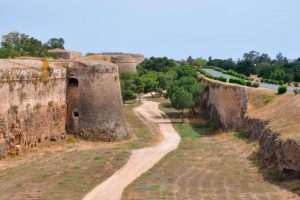
In the northwest corner of Famagusta's historic walled city stands one of the Mediterranean's most impressive examples of Renaissance military architecture. The Martinengo Bastion, also known as Tophane, represents a turning point in defensive technology and remains a testament to 16th-century engineering brilliance. When the Republic of Venice took control of Cyprus in 1489, military engineers quickly recognized a serious problem. The existing fortifications throughout the island were outdated and vulnerable to modern artillery. Medieval walls, built tall and thin to defend against siege towers and scaling ladders, could not withstand the devastating impact of cannon fire. Famagusta presented a particular challenge. As Cyprus's main port and commercial hub, the city required strong defenses. Yet its northwest corner remained especially…

Read more
Cyprus War Resistance Stories

Cyprus War Resistance Stories

Cyprus has witnessed countless conflicts throughout its 10,000 years of human habitation. The island's position at the crossroads of three continents made it a prize worth fighting for, and its people developed a long tradition of resistance against foreign rule. From ancient sieges to modern independence struggles, Cyprus has been repeatedly conquered, defended, and fought over by armies ranging from Persian emperors to British colonial forces. These conflicts left deep marks on the landscape and shaped the national character of both Greek and Turkish Cypriots who call the island home. Historical Background Cyprus experienced its first major conflicts during the ancient period when Persian forces conquered the island's city kingdoms in the 6th century BC. The Greek population survived Persian…

Read more
Apokries Carnival Cyprus

Apokries Carnival Cyprus

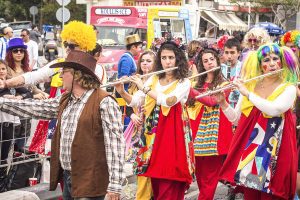
pokries represents the Cypriot version of carnival, celebrated in the weeks leading up to Orthodox Lent. The name derives from the Greek words apochi and kreas, meaning abstinence and meat, marking the final period when meat consumption is permitted before the 40-day fasting period. This tradition combines ancient pagan festivals honoring Dionysus with Christian calendar observances, creating a uniquely Cypriot celebration focused on feasting, costumed revelry, and satirical humor. While Limassol hosts the island's largest organized carnival, Apokries customs persist across Cyprus in villages and towns through family gatherings, traditional games, masked performances, and community meals. The festival serves multiple purposes, providing a release valve for social tensions through humor, strengthening community bonds through shared celebration, and preparing participants psychologically…

Read more
Football and Sports Culture in Cyprus

Football and Sports Culture in Cyprus

Football dominates the sporting landscape of Cyprus, but the island nation embraces a diverse athletic culture that extends far beyond the pitch. From passionate club rivalries to individual Olympic achievements, sports unite communities across this Mediterranean island of 1.14 million residents. The British introduced football to Cyprus in the early 20th century, and locals embraced it with enthusiasm. By September 1934, the Cyprus Football Association was formed to regulate what had become the island's favorite sport. The organization joined FIFA in 1948 and UEFA in 1962, officially connecting Cypriot football to the international stage. The Cypriot First Division serves as the top tier of the country's football league system, with 14 teams currently competing in the 2025-26 season. Teams play…

Read more
Cavo Greco Sunrise Viewpoint, Cyprus

Cavo Greco Sunrise Viewpoint, Cyprus

The Cavo Greco sunrise viewpoint sits at the southeastern edge of Cyprus, positioned at 95 meters above sea level on a small limestone mountain within Cape Greco National Forest Park. This protected area spans 385 hectares between the resort towns of Ayia Napa and Protaras. The viewpoint marks the easternmost point of both the Republic of Cyprus and the European Union, offering unobstructed panoramas of the Mediterranean Sea, Famagusta Bay, and the surrounding coastline. Visitors come here primarily for the spectacular sunrise displays that occur daily, with the sun rising directly from the sea in vibrant colors that illuminate the limestone cliffs and turquoise waters below. Historical Background The limestone cliffs and formations seen today were created through a combination…

Read more
Cyprus Beaches And Water Sports

Cyprus Beaches And Water Sports

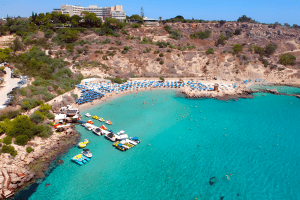
Cyprus ranks as the third largest island in the Mediterranean and boasts some of Europe's finest coastal areas, with 60 beaches marked with the Blue Flag, an international award in the field of ecology and environmental protection given to beaches and marinas. In practice this means incredibly clean beaches and crystal clear water. The eastern coast stands particularly renowned for its fantastic assortment of beaches considered by many to be the best on the entire island, with Ayia Napa and Protaras regions lined by glorious stretches of golden sand. The island's beaches offer something for everyone, from lively party atmospheres to secluded family-friendly coves, all benefiting from Cyprus's 340 days of sunshine annually and sea temperatures reaching 27 degrees Celsius…

Read more
Daily Life in Cyprus

Daily Life in Cyprus

Cyprus life revolves around the Mediterranean Sea and the simple pleasure of walking. The island's 650 kilometers of coastline and 326 days of annual sunshine create perfect conditions for daily seaside visits that locals consider essential rather than optional. Walking serves multiple purposes in Cypriot culture, from exercise and social connection to mental relaxation and community participation. The coastal promenades and beaches function as outdoor living rooms where families gather, friends meet, and strangers become acquaintances through repeated casual encounters. The History of Coastal Walking Traditions The tradition of evening coastal walks, known as the volta, traces back to ancient Greek and Roman practices of gathering in public spaces. During Byzantine times, promenades along harbor areas served as meeting points…

Read more