The bus network in Cyprus operates under a divided structure with four main companies managing different districts. Cyprus Public Transport handles Nicosia and Larnaca districts, EMEL serves Limassol, OSYPA operates in Paphos, and OSEA covers the Famagusta District, including Ayia Napa and Protaras. This fragmentation dates to government restructuring in 2010 that replaced smaller private operators with district-based companies.
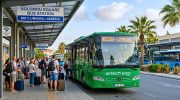
A separate intercity bus company connects all major cities under one operation. This unified approach to long-distance travel makes planning intercity journeys simpler than navigating local urban routes across different operators. All intercity routes use modern, air-conditioned coaches equipped with WiFi and USB charging ports.
The system receives government oversight through the Department of Road Transport, which awards concession contracts to operators. Each company maintains its own website, mobile apps, and fare structures, though standardization efforts have brought more consistency in recent years.
Intercity Routes and Their Schedules
Popular intercity routes run between Cyprus’s main cities multiple times daily. The Nicosia to Limassol route operates frequently with departures roughly every hour during peak times. Nicosia to Larnaca sees similar frequency, with buses running from 6:00 a.m. until late evening. These core routes accommodate the heaviest commuter demand.

The Limassol to Paphos corridor offers extensive service with 14 departures daily starting at 8:00 a.m. and running until 7:30 p.m. This reflects the tourist traffic between these coastal cities. Buses connect Larnaca Airport to Nicosia approximately every 90 minutes during daytime hours, providing crucial airport access for the capital.
Less popular routes see reduced service. Nicosia to Paphos and Larnaca to Paphos operate just 2 to 4 times daily, making them impractical for regular commuters. Tourist destinations like Ayia Napa receive increased service during summer months, with some routes running until 4:00 a.m. to accommodate nightlife crowds.
Journey times vary based on route and stops. Nicosia to Limassol takes approximately 60 minutes under normal conditions, while Larnaca to Nicosia requires about 50 minutes. The Paphos to Limassol route covers 66 kilometers in roughly 70 minutes when traffic flows smoothly.
Affordable Fares with Simple Pricing
Intercity bus fares remain remarkably affordable compared to private car costs. A one-way ticket ranges from 5 euros for shorter routes like Nicosia to Larnaca up to 8 euros for longer journeys such as Nicosia to Paphos. Return tickets offer slight discounts over purchasing two single fares separately.
Weekly and monthly passes provide better value for regular commuters. A monthly intercity pass costs significantly less than fuel and maintenance expenses for equivalent car travel. The passes work on all intercity routes, allowing unlimited transfers between cities.
Urban bus fares follow consistent pricing across all districts as of 2025. A single daytime trip costs 2.40 euros, while night service after 9:00 p.m. increases to 4 euros. Daily tickets offering unlimited rides within one district cost 6.50 euros. Weekly non-personalized tickets run 35 euros.

Children under six and military personnel showing identification travel free. Students pay 10 euros monthly for unlimited access to all routes including school, urban, and night buses. These concessions make public transport accessible to budget-conscious families.
Motion Card System Simplifies Payment
The Motion card system launched to standardize fare payment across Cyprus buses. These electronic cards function as digital wallets, allowing passengers to board without exact change. Cards can be topped up online through the JCC Smart platform or at designated sales points.
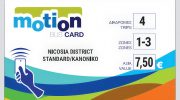
Personalized Motion cards remain strictly individual and cannot be transferred to other users. Multi-trip tickets loaded with 4, 8, 10, 20, or 40 single journeys offer convenience for regular riders. However, one-way tickets purchased on the bus do not allow transfers, limiting flexibility for journeys requiring multiple connections.
The integration improved passenger experience by eliminating the need to carry exact change for each trip. Contactless payment options have expanded on newer buses, though cash remains necessary on some routes where technology implementation lags.
Urban Networks Vary by City Quality
Nicosia operates the most extensive urban network with frequent service during peak times. Bus terminals at Solomos Square, Markario, The General Hospital, Arediou, Tempria, and Alambra serve as major hubs. Routes connect the old town to new city areas, shopping centers, museums, and government offices.
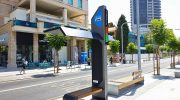
Cyprus Public Transport modernized Nicosia’s system in 2022, renumbering routes and upgrading 4,962 bus stops while creating 2,015 new ones. The improvements included state-of-the-art location tracking that allows passengers to see real-time bus positions. Electronic signage inside buses displays upcoming stops, reducing confusion for unfamiliar riders.
Limassol benefits from one of the island’s best bus networks. EMEL operates frequent coastal routes from the Le Meridien Hotel near Amathus ruins through the new harbor to My Mall shopping center. This service provides convenient beach access and connects to historical sites like Kourion Amphitheatre, Kolossi Castle, and Limassol Castle.
Night buses run until 11:00 p.m. to 3:35 a.m. on Fridays, Saturdays, and public holidays in Limassol. Tourist areas see extended hours during summer peak season, with some routes continuing until midnight. Terminals at Lenitiou, Municipal Market, My Mall, and Lambrou Porfira distribute passenger flow across the city.
Airport Connections Serve Travelers
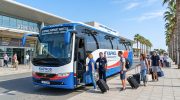
Larnaca Airport connects to Nicosia through the Kapnos Airport Shuttle. Departures coordinate with flight arrival times, though advance booking through their website guarantees seats during busy periods. The journey takes approximately 100 minutes and costs 16 euros for adults, with children traveling free as of January 2025.
The shuttle also serves Larnaca city center, stopping at Finikoudes Beach where passengers can transfer to intercity buses heading to other cities. This connection point allows travelers to reach any major destination without renting cars.
Paphos Airport offers direct bus service to Limassol operated by Limassol Airport Express. The 45-minute journey runs 3 to 5 times daily depending on season. Adult tickets cost 9 euros one-way or 13 euros return, with children paying 4 euros. Reduced frequency makes this less convenient than the Larnaca shuttle.
Why Buses Struggle Against Cars

Despite modernization efforts, buses carry only 3% of journeys in Greater Nicosia. Several factors explain this low adoption. Infrequent service outside peak hours makes buses impractical for flexible schedules. Waiting 30 to 60 minutes between buses in 35-degree heat discourages ridership.
Limited integration between operators complicates cross-district travel. A journey from Paphos to Ayia Napa might require separate tickets for OSYPA urban service, intercity bus, and OSEA local service. This fragmentation adds cost and complexity compared to driving directly.
Route coverage gaps force many residents to drive at least partway. Someone living 10 minutes by car from the nearest bus stop will likely drive the entire journey rather than walk in heat. The lack of first-mile and last-mile solutions limits bus viability for suburban residents.
Evening and weekend service reductions make buses unsuitable for social activities, shift work, or flexible employment. Many routes stop by 7:00 p.m. outside tourist areas, eliminating public transport as an option for dinner, entertainment, or night shifts.
Future Integration Plans Target 2025
The government’s integrated transport initiative aims to transform Cyprus’s fragmented bus system into a unified network by late 2025. Plans include expanded routes targeting high-density corridors and underserved suburbs. The goal involves shifting 20% of peak-time car trips to public transport through improved service and reliability.
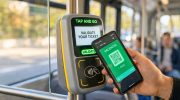
Unified payment cards valid across all operators would eliminate the need for separate tickets on multi-leg journeys. Real-time information systems accessible through apps and digital displays would reduce wait time uncertainty. These changes mirror successful systems in larger European cities.
Electric and low-emission buses will gradually replace older diesel fleets. This transition supports Cyprus’s climate commitments while reducing operating costs over the long term. Modern vehicles with air conditioning, comfortable seating, and accessibility features make buses more appealing to choice riders who own cars.
The success of these reforms will determine whether Cyprus can reduce its extreme car dependency. While buses currently serve primarily budget-conscious residents and tourists, comprehensive improvements could make public transport a genuine alternative for middle-class commuters choosing between driving and transit.