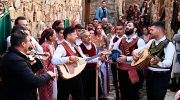
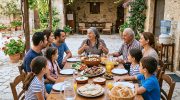
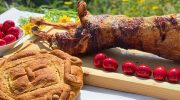
Marriage and birth stand as the most significant life transitions in traditional Cyprus society, each marked by elaborate rituals that involve entire communities. Wedding customs symbolize separation from childhood families and entry into adult society, while birth traditions welcome new members into both family and village.
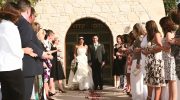
Orthodox Christianity frames these milestones through sacraments of marriage and baptism, but older customs dating to pre-Christian times persist beneath the religious overlay. The preservation and transmission of these customs falls mainly to new couples, their families, musicians who perform traditional songs, and folkloric groups that keep practices alive through demonstration and participation.
Engagement and Marriage Preparations
The engagement is usually arranged by the families of the bride and groom, who agree on the dowry, the wedding date, and other details. The groom’s family visits the bride’s family with gifts such as jewelry, clothes, and money. The bride and groom exchange rings and wear them on their right hands until the wedding day. In earlier times, marriages in Cyprus used to be arranged through the services of matchmakers known as proxenitra who facilitated negotiations between families.
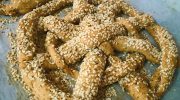
Upon engagement, the groom’s family accepts the task of making traditional sesame-coated breads called glistarkes that the bride’s family hands out as wedding invitations. These round breads carry symbolic meaning related to fertility and abundance. The ceremonial bread making requires skill and time, representing the family’s commitment to honoring the marriage properly.
Wedding preparations traditionally lasted three days with specific parts and rituals assigned to each. The first day was Oi Paramoni, the second O Gammos, and the third O Antigammo. Modern celebrations compress these into shorter periods but maintain key customs. The celebration takes up most of the day, lasting from morning to morning and incorporating music, lively dancing, and abundance of delicious food.
Pre-Wedding Rituals at Both Homes
The night before the wedding, elaborate rituals occur separately at the bride’s and groom’s childhood homes. These customs symbolize separation of the couple from their families and from their social position as less than full adults. The rituals include shaving of the groom, dancing of the wedding clothes, dressing of the bride and groom, the zosimon ritual, and the kapnisman ritual for the evil eye.
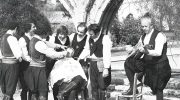
The shaving of the groom takes place at his childhood home usually on the eve of the wedding day. The groom’s best man or koumbaros shaves his face with a razor while friends and relatives sing traditional songs and tease him. The shaving symbolizes his transition from boyhood to manhood and readiness to take on his new role as husband. A professional barber shaves the groom while the best man holds the towel and helps. Gathered relatives, friends, and guests gift the barber and musicians by placing money in a plate in front of them.
The dancing of the wedding clothes occurs at both homes. Wedding garments are placed in a basket and blessed by a priest crossing them three times with a censer and blowing incense in crucifix shape. Afterwards, accompanied by violins and songs, three women and three men dance with the clothes. More dancers may participate as long as their number remains odd. Each dancer makes the sign of the cross before picking up the basket to dance.

The zosimon ritual involves tying and untying a red kerchief around the waist and head of both bride and groom three times. For the bride, the red scarf symbolizes virginity, while for the groom it represents fertility. The kapnisman ritual protects against the evil eye. Olive leaves blessed by the priest are ignited and the smoke is waved around the bride and groom crosswise three times, with the number three symbolizing the Holy Trinity.
Specially linked with village weddings in the Paphos district is the custom of preparing resi, a mixture of meat and wheat. Resi is made from coarsely ground wheat boiled in meat broth through time-consuming preparation carried out as ritual. Fellow villagers help wash and beat the wheat while violin plays from the moment the procedure begins.
The Orthodox Church Ceremony
The wedding ceremony is set in the church where a priest officiates the vows exchanged between bride and groom. The couple walks up the aisle together with both sets of parents standing beside them throughout. The stefana, ceremonial crowns or headbands, are placed on their heads. Traditionally made from lemon leaves, olive branches, vines, or more elaborate materials like gold and jewels, the stefana symbolize God’s blessings.
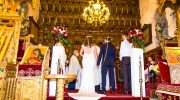
A ribbon binds the two crowns together, representing the lasting union between bride and groom. This ribbon must be kept intact for a lifetime. The marriage crowns are extremely important to the couple who often save them and place them on display in their new home, and may even be buried in them.
Wearing the stefana, the couple exchanges wedding rings three times before placing them on the fourth finger of each other’s right hand to recognize that God’s right hand is the hand that blesses. During the ceremony, the priest serves the couple prosfora, ceremonial bread, and koumandaria, red Cypriot wine, three times, symbolizing the wedding at Cana where Christ blessed marriage.
The Dance of Isaiah follows, with the priest leading them three times around the table that holds the Gospel and Cross. The best man and chief bridesmaid walk behind ensuring the stefana remain in place.
Birth and Baptism Customs
Children are typically named after the patron saint of their region, with the eldest son often named after his paternal grandfather and the eldest daughter after her paternal grandmother. Because of this tradition, cousins often share the same name. The baby is never called by his or her name before baptism, which typically occurs within the first year of life though timing varies by family preference.
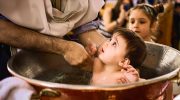
Orthodox baptism combines two sacraments: baptism itself through triple immersion in holy water and chrismation through anointing with holy oil. The godparent holds significant responsibilities, preparing the baptismal dowry including a large candle, baptismal clothes, towels, sheets to wrap the baby, a baptismal cross for the child, and small crosses called martirika for all who witness the sacrament.
During baptism, the godparent with the baby in their arms stands at the baptismal font and repeats whatever the priest instructs. The priest takes the child and immerses him three times. Then the priest cuts the child’s hair crosswise on each side of the head, cutting small strands that symbolize obedience to the Lord. Cropped hair is a sacrifice the child makes to God for giving new spiritual life.
Just as a mother physically nourishes her newborn infant with milk, so too the grace of God offers as spiritual food Holy Communion to its newest member just born through baptism. For at least the next three Sundays after baptism, the godparent takes the child to church to receive further Holy Communions