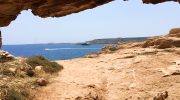
The Kakkaristra-Apalos Trail is an exceptional, lesser-known hiking route located just on the outskirts of Nicosia, within the Latsia region of Cyprus. Famously known for its exposed geological formations and rich marine paleontology, it provides hikers with a direct glimpse of how Cyprus emerged from the sea millions of years ago.
Each section of the track reveals a new perspective of the deep ravines and the smooth white cliffs. The path follows the natural flow of the watercourse to offer a steady pace for the hiker. It represents a perfect harmony of scientific value and quiet beauty for every visitor.
Trail Overview
- Location: Latsia, Nicosia
- Distance: 3.1 miles (5 km)
- Route Type: Circular (Loop) trail
- Difficulty: Easy
- Elevation Gain: 256 to 295 feet (78 to 90 meters)
- Duration: 45 Minutes
- Best Time to Visit: January – April
- Terrain: Narrow paths, dirt tracks, and small climbs
Starting Point & Navigation Details
Trailhead and Starting Point Location
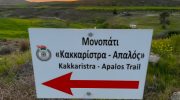
The trailhead sits directly southwest of Nicosia within the boundaries of Latsia. The most reliable reference point for parking and departure is the Cyprus Pedagogical Institute. Once you arrive, there is a clear informational trailhead kiosk provided by the Latsia Municipality that details the route mapping, trail guidelines, and native biodiversity.
Trail Navigation Details
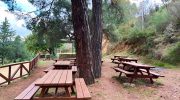
The initial portion of the hike runs parallel to the impressive Kakkaristra Gorge. This stretch features high safety fencing installed by the local municipality to protect visitors from the edge and prevent the degradation of the fragile geological landscape. Wooden benches and signs identifying specific plant species are located along this first segment.
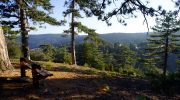
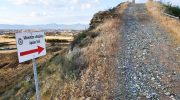
The path splits for the second half of the journey. Hikers can either continue on a linear dirt road heading towards the neighboring town of Tseri, or turn uphill to climb the distinct Apalos Hill. Choosing the Apalos Hill loop brings you to a small panoramic summit point adorned with a resting bench and a Greek flag. The sweeping 360-degree views from the top encompass the surrounding agricultural plains and the greater Nicosia urban sprawl.
Paleontological Heritage of Kakkaristra Gorge
The defining scientific feature of the trail is the dense concentration of ancient marine fossils embedded directly in the vertical walls of the gorge. The fossilized seabed is an irreplaceable record of the geological history of the region. These layers contain millions of intact bivalve and mollusk fossils, primarily Ostrea edulis and Balanus tintinnabulum, dating back nearly two million years to the Pleistocene epoch when the island of Cyprus initially emerged from the Mediterranean Sea.
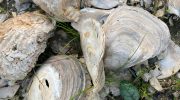
Due to the extreme historical and geological significance of these formations, the Kakkaristra Gorge is heavily protected. The removal, extraction, or damage of any fossil specimens along the trail or from the rock walls is strictly prohibited by law to preserve the site for global geological research.
Terrain and Seasonal Conditions
The ground underfoot shifts between hard-packed clay, loose limestone gravel, and wide dirt roads. Because the trail runs through an open, low-lying plain with almost no high tree canopy, hikers are fully exposed to the elements.
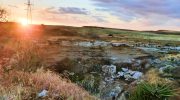
Visiting during the peak summer months can be challenging due to the intense Mediterranean sun. The ideal season to visit is between late January and April. Following winter rains, the surrounding hillsides turn bright green and wild almond trees come into bloom. Hikers visiting in winter should prepare for slick clay mud on the descending paths.
Botanical Highlights and Wildlife
Despite its proximity to the city, the open plains and protected gorge terrain host a typical Mediterranean lowland ecosystem. Small identification plates along the first part of the trail help visitors study the local flora as they walk.
Flora and Plant Life
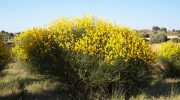
The vegetation along the trail is primarily composed of maquis and phrygana (shrubland) species that have adapted to the dry conditions of the Nicosia plains.
- Wild Herbs: Hikers will pass aromatic shrubs such as wild thyme (Thymus capitatus), spiny burnet (Sarcopoterium spinosum), and wild rosemary.
- Trees and Shrubbery: Scattered wild olive trees (Olea europaea), carob trees (Ceratonia siliqua), and mastic bushes (Pistacia lentiscus) line the edge of the gorge. During the early spring months of February and March, wild almond trees (Prunus dulcis) produce bright pink and white blossoms across the slopes.
- Wildflowers: Following the winter rains, the open ground is covered by seasonal wildflowers, including the turban buttercup (Ranunculus asiaticus), wild mustard, and various native grasses.
Wildlife and Avian Sightings
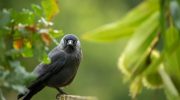
The open fields and sheltered gorge walls provide a quiet habitat for several resident and migratory species.
- Avian Life: The trail is excellent for low-altitude birdwatching. You will frequently spot the endemic Cyprus warbler (Curruca melanothorax) darting through the low bushes. Crested larks (Galerida cristata) are also common across the open tracks, while kestrels (Falco tinnunculus) can often be seen hovering above the plains searching for prey.
- Reptiles and Mammals: On sunny spring days, the endemic Cyprus lizard (Phoenicolacerta troodica) can be seen basking on the exposed rocks. Small mammals like the European hare (Lepus europaeus) and the local red fox (Vulpes vulpes indutus) are present in the area, though they generally avoid the trails during the busiest daylight hours.
Essential Safety Recommendations
Because the trail runs near open terrain, high winds are common along the crest of Apalos Hill. You should secure all loose clothing and hats before hiking to the viewpoint.
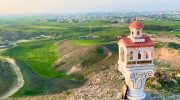
At the westernmost end of the extended linear route near the border of the Tseri region, the trail passes near a local shooting school. To ensure absolute safety, hikers should remain on the clearly marked pathways and avoid wandering off the signposted loop. Standard athletic footwear or trail-running shoes are more than sufficient for the gentle terrain.