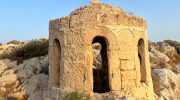
The “Saint Barnabas Gospels” refer to a tradition that helped secure the Church of Cyprus’s independence after a late fifth-century discovery near Salamis, where a Gospel of Matthew was said to rest on Saint Barnabas’s chest. Presented to Emperor Zeno, the manuscript functioned as proof of apostolic origin and was used to confirm Cyprus’s autocephaly in a jurisdictional dispute. This article explains the discovery story, why the original book matters even though it is lost, and how later Cypriot Gospel manuscripts carried the same claim through art, script, and ritual display.
A Fifth-Century Power Dispute
In the late fifth century, Cyprus stood at the centre of a quiet but serious dispute. Powerful church authorities on the mainland sought control over the island’s Christian community, challenging its claim to independence.
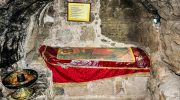
According to tradition, Archbishop Anthemios was guided by a vision to the burial place of Saint Barnabas, near Salamis. When the tomb was opened, the saint’s remains were found holding a copy of the Gospel of Matthew. The discovery was not treated as symbolic. It was evidence.
The manuscript was carried to Constantinople and presented to Emperor Zeno. By accepting it, the emperor confirmed that the Church of Cyprus had apostolic origins of its own and therefore did not answer to any external patriarch. From that moment on, Cyprus’s religious independence was secured.
Anthemios and the Tomb Vision
Despite the name, there is no single book today known as the Saint Barnabas Gospel.
The original manuscript discovered in the tomb has been lost, most likely during the upheavals that later struck Constantinople. What survives instead is something just as important. It is a manuscript tradition shaped by memory, authority, and deliberate continuity.
From the eleventh century onward, Cypriot monasteries produced Gospel books that consciously echoed the significance of the original discovery. These manuscripts were copied, illuminated, and preserved within an island context that understood books as more than liturgical tools. In many cases, inscriptions linked them directly to churches dedicated to Saint Barnabas, turning each Gospel into a quiet reaffirmation of Cyprus’s apostolic claim. Rather than replacing the lost original, these books extended its meaning across generations.
Why Cypriot Gospel Books Look Different
The Gospel manuscripts associated with the Saint Barnabas tradition are visually distinctive once their purpose is understood.
Cypriot scribes developed a confident and rhythmically balanced script, often described by scholars as an “epsilon style,” in which letterforms appear weighty and deliberate. This was paired with decorative headpieces, controlled use of gold leaf, and strong colour contrasts that gave the books a sense of gravity and presence.
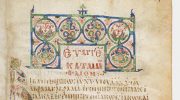
These were not modest objects made only for private reading. They were designed to be seen, handled, and displayed within a ritual setting. Every visual choice reinforced authority, stability, and continuity. In an island that had once needed proof of its legitimacy, these books quietly embodied it.
When Scripture Became Political Language
The power of the Saint Barnabas Gospels lies in how openly religious objects were used to resolve political reality.
The Gospel placed on the saint’s chest did not end a theological argument. It ended a jurisdictional struggle. In doing so, it transformed scripture into legal testimony. From that point forward, books were no longer neutral carriers of faith. They were instruments of recognition.
This helps explain why later Cypriot monasteries invested such care and expense in Gospel production. Creating a finely made manuscript was not an act of excess. It was an act of continuity. Each book affirmed that Cyprus belonged to an apostolic tradition rooted in its own soil, not borrowed or granted from elsewhere.
Tracing the Legacy Across the Island
The legacy of the Saint Barnabas Gospels can still be followed physically across Cyprus today.
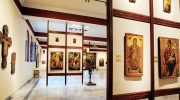
In Nicosia, the Byzantine Museum preserves icons, manuscripts, and ecclesiastical objects that share the same visual language developed through the Saint Barnabas tradition. These works reveal how manuscript art influenced wider religious aesthetics on the island.
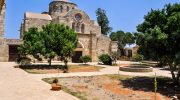
Near Famagusta, the Monastery of Saint Barnabas stands close to the location of the original tomb. Although the monastery now functions primarily as a museum, the tomb itself remains accessible. It offers a rare, tangible connection to the moment when Cyprus’s ecclesiastical identity was formally secured.
Beyond the island, manuscripts linked to this tradition are held in major collections, including the British Library. Their presence abroad reflects the historical circulation of Cypriot religious culture and the high value once placed on its manuscript production.
Clearing Up a Common Misunderstanding
The Saint Barnabas Gospels are sometimes confused with the so-called “Gospel of Barnabas,” a much later and unrelated text that emerged in Western Europe.
The Cypriot tradition is firmly rooted in canonical scripture, Byzantine manuscript culture, and a documented historical event. Keeping this distinction clear is essential for understanding the true significance of the Saint Barnabas legacy and avoiding modern misconceptions.
What This Story Still Proves
The story of the Saint Barnabas Gospels matters because it shows how identity can be defended without force.
Cyprus secured its place within the Christian world through memory, narrative, and the written word. A single manuscript discovered in a tomb became the foundation for centuries of artistic production and institutional independence.
These books remind us that power does not always announce itself loudly. Sometimes it is written carefully, preserved patiently, and passed forward page by page. To understand the Saint Barnabas Gospels is to understand how Cyprus learned to protect itself through faith, culture, and continuity rather than conquest.