Ayios Ioannis Lampadistis in Kalopanayiotis is a rare monastery complex where three connected chapels preserve nearly a thousand years of Cypriot worship and wall painting within one enclosed interior. A single timber roof, built for the Troodos climate, protected multiple fresco phases and allowed Byzantine, local devotional, and Western-influenced imagery to survive side by side. This article explains how the complex grew, what each chapel contributes, and why Lampadistis remains one of Cyprus’s clearest records of faith evolving without erasing its past.
Built by Layers, Not Plans
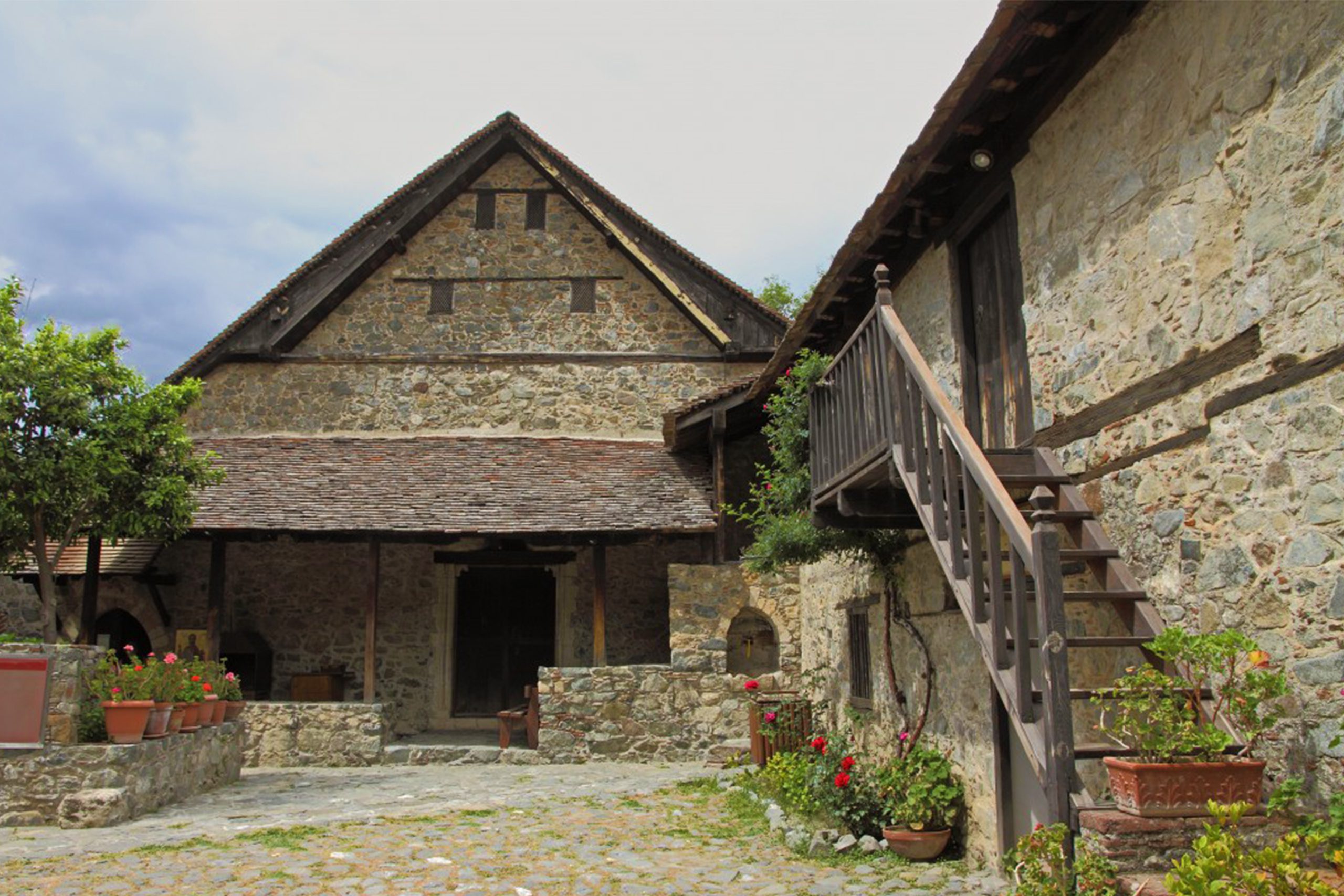
The Lampadistis complex was never planned as a unified structure. Instead, it grew organically as needs changed, saints were venerated, and political realities shifted.
The earliest building, the Church of Saint Herakleidios, dates to the 11th century and follows the classic Byzantine cross-in-square plan. In the 12th century, a second chapel was added to house the tomb of the local saint John Lampadistis, transforming the site into a place of pilgrimage. A third space, now known as the Latin Chapel, was built during Venetian rule in the late 15th century to accommodate Western Christian worship.
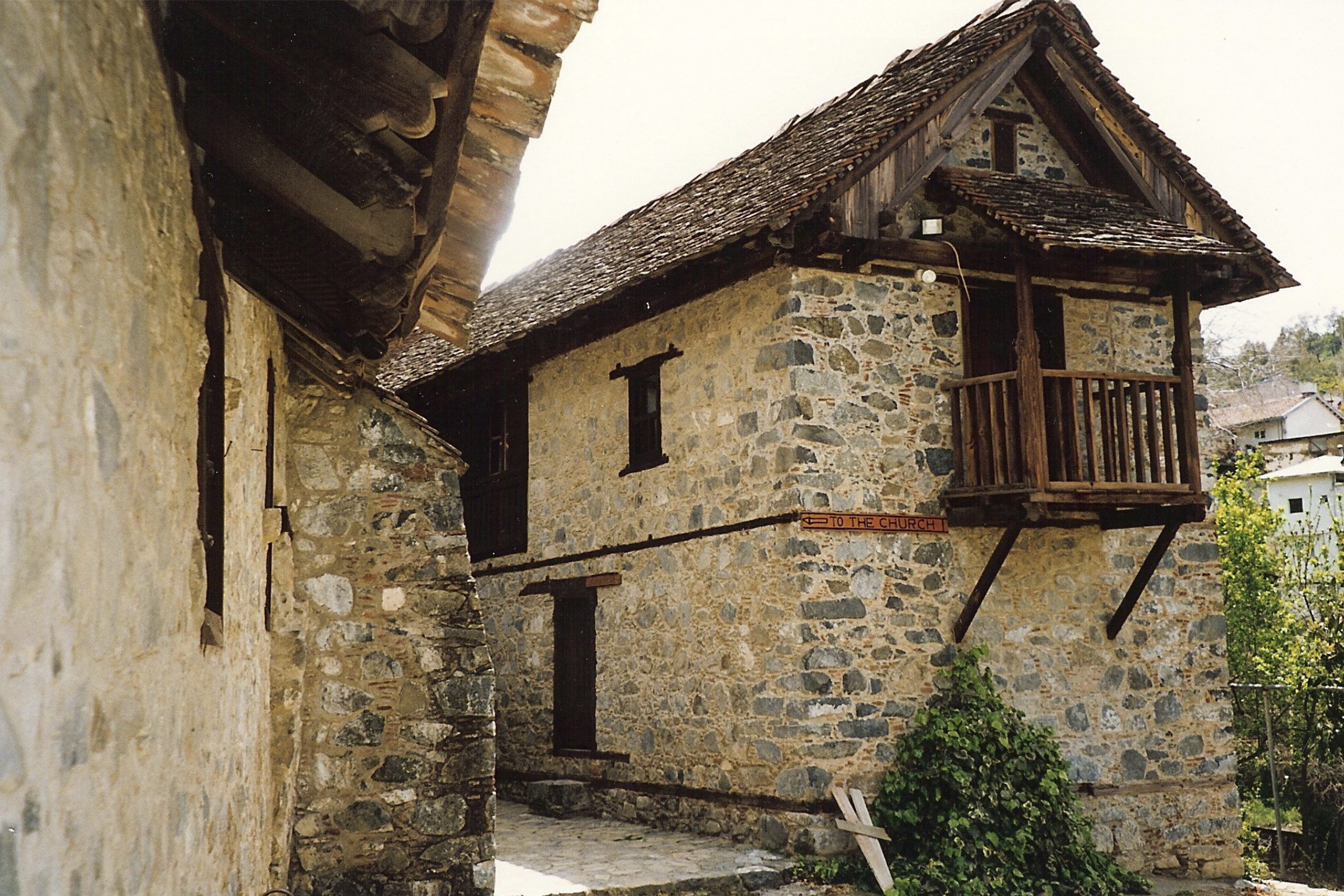
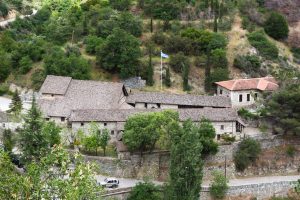
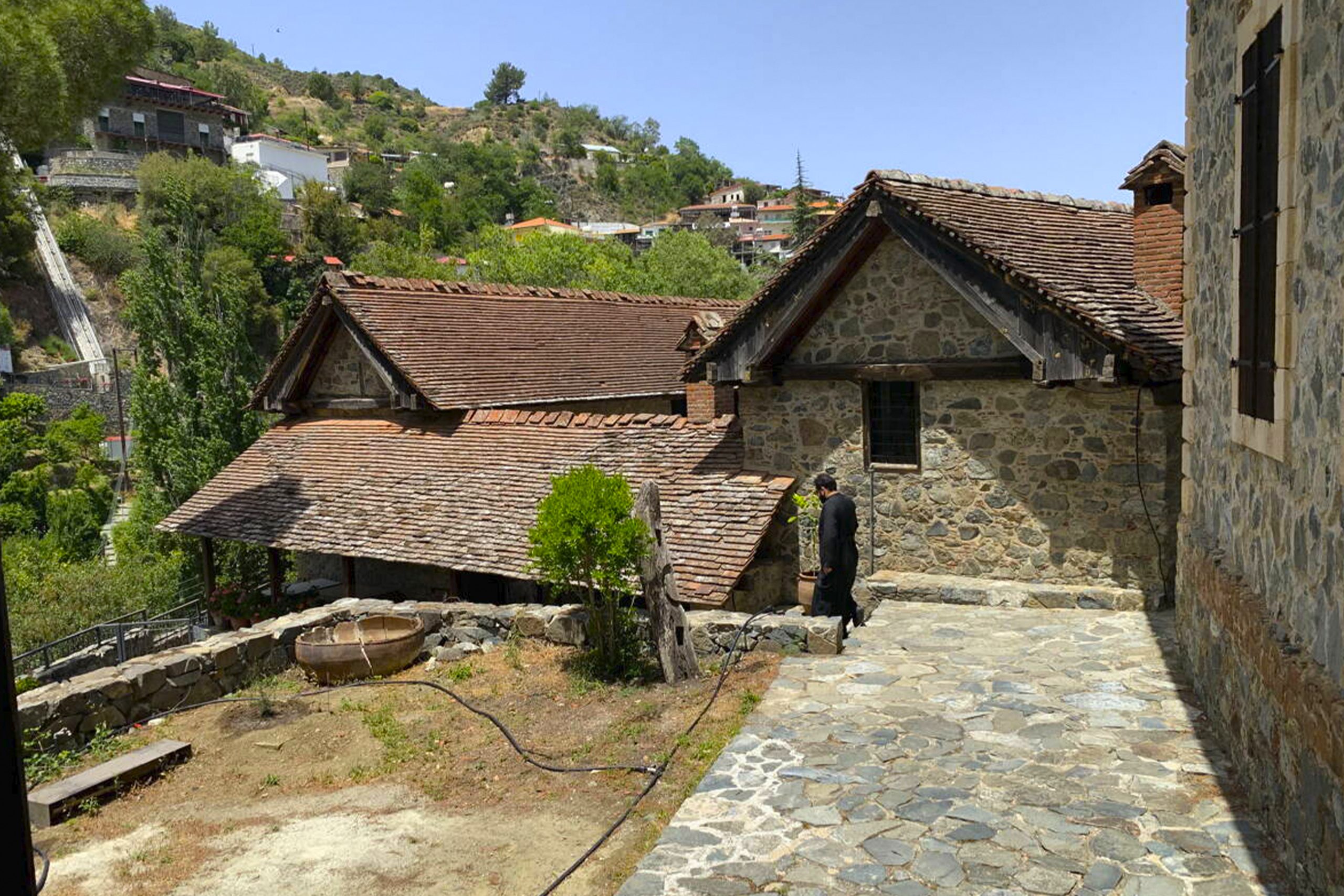
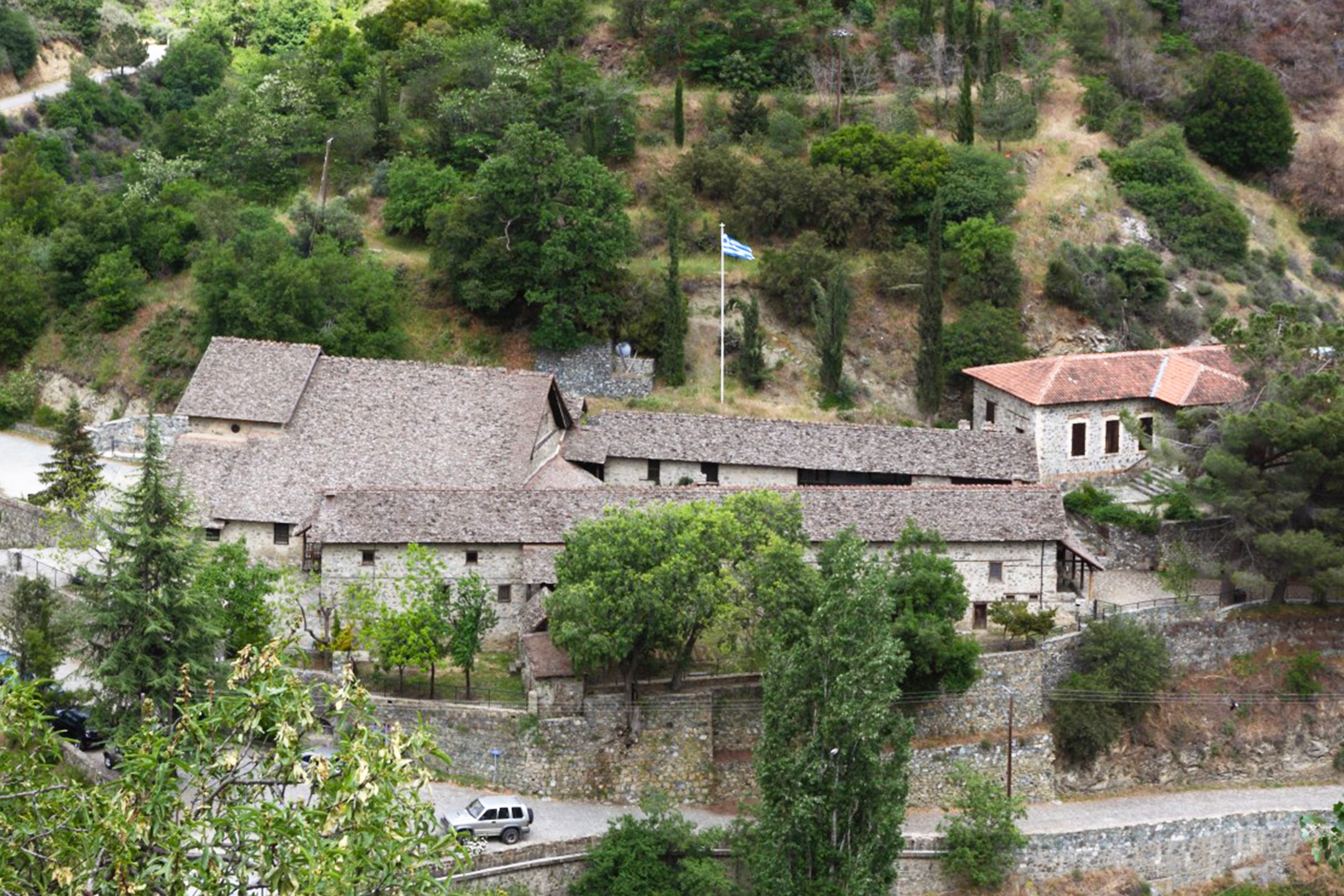
What makes Lampadistis unusual is that these separate buildings were eventually unified beneath a single, oversized wooden roof. This practical solution protected the interiors from the harsh mountain climate, but it also created a rare architectural experience: three eras of worship enclosed within one sheltering form.
The Roof That Saved the Paint
The vast timber roof is not just a visual feature. It is the reason the monastery still exists in its current state.
In the Troodos Mountains, heavy rain and winter snow would have gradually destroyed exposed domes and vaults. By enclosing the chapels under one roof, the community preserved fragile wall paintings that might otherwise have been lost. This protective structure turned the complex into a kind of time capsule, allowing frescoes from different centuries to survive side by side.
Without this roof, Lampadistis would likely be another partially ruined mountain church. Because of it, the site became one of the most complete visual records of Byzantine and post-Byzantine painting in Cyprus.
Three Chapels, Three Worlds of Belief
Moving through the monastery today feels less like entering a single sacred space and more like stepping through successive layers of religious history. Each chapel reflects a different understanding of faith, shaped by its time and community.
The Church of Saint Herakleidios represents the disciplined visual language of middle Byzantine art. Figures are frontal and restrained, arranged to express theological hierarchy rather than human emotion. Scenes such as the Raising of Lazarus and depictions of Christ Pantocrator emphasise divine order, stability, and cosmic authority.
The Chapel of Saint John Lampadistis marks a shift in focus from universal theology to local devotion. Built to honour a saint associated with healing and endurance, this space became the spiritual heart of the complex. The saint’s reliquary remains here, surrounded by inscriptions left by generations of pilgrims who believed in his intercessory power. These marks are not decorative. They are evidence of lived faith accumulating over centuries.
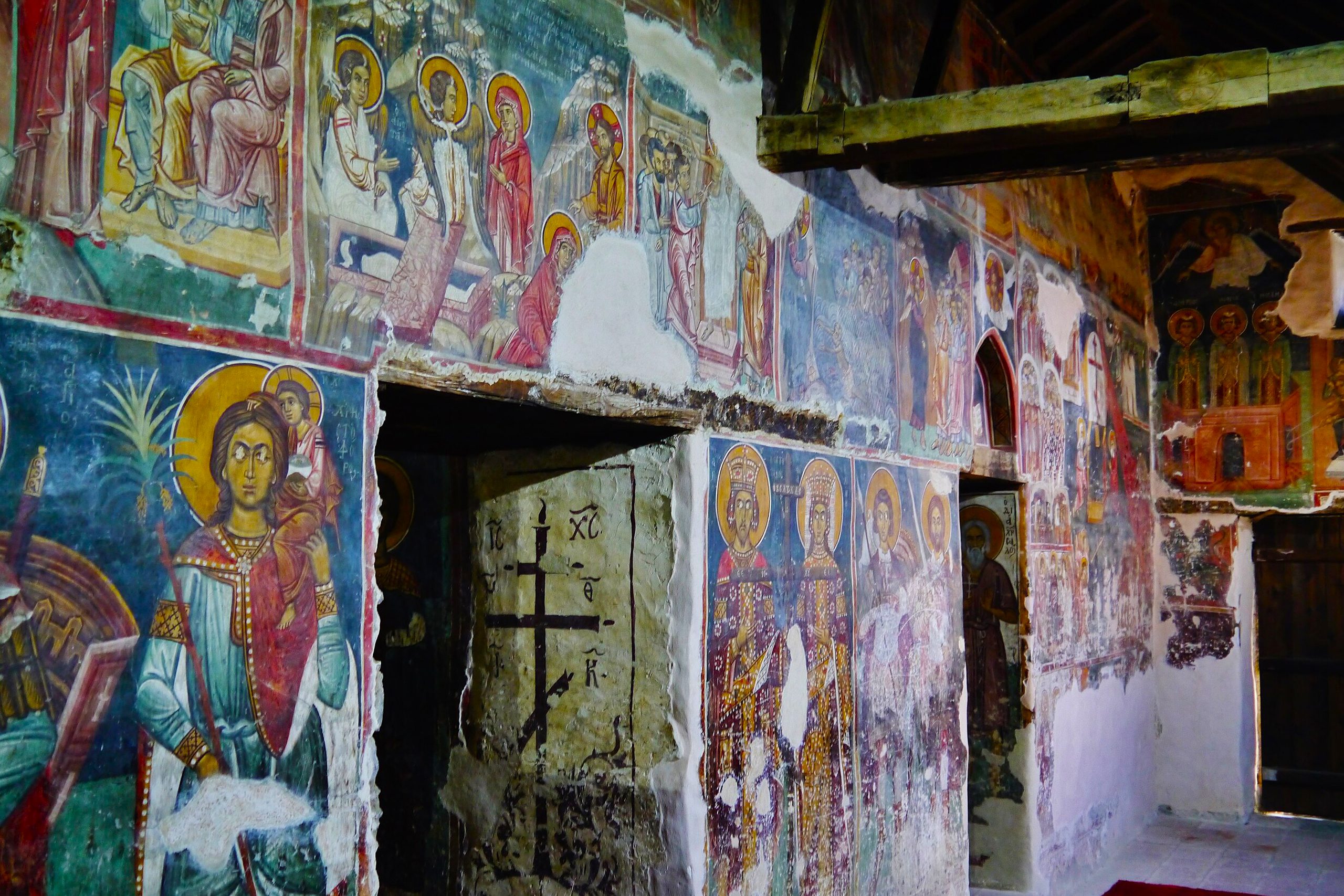
The Latin Chapel introduces yet another visual register. Painted during Venetian rule, its frescoes reveal Western artistic influence through softer facial modelling, narrative movement, and early attempts at spatial depth. Rather than replacing Orthodox imagery, these paintings coexist with it, preserving a rare visual record of religious overlap rather than conflict.
Fresco Layers That Track Change
The frescoes of Lampadistis are compelling not because they achieve artistic perfection, but because they record transformation.
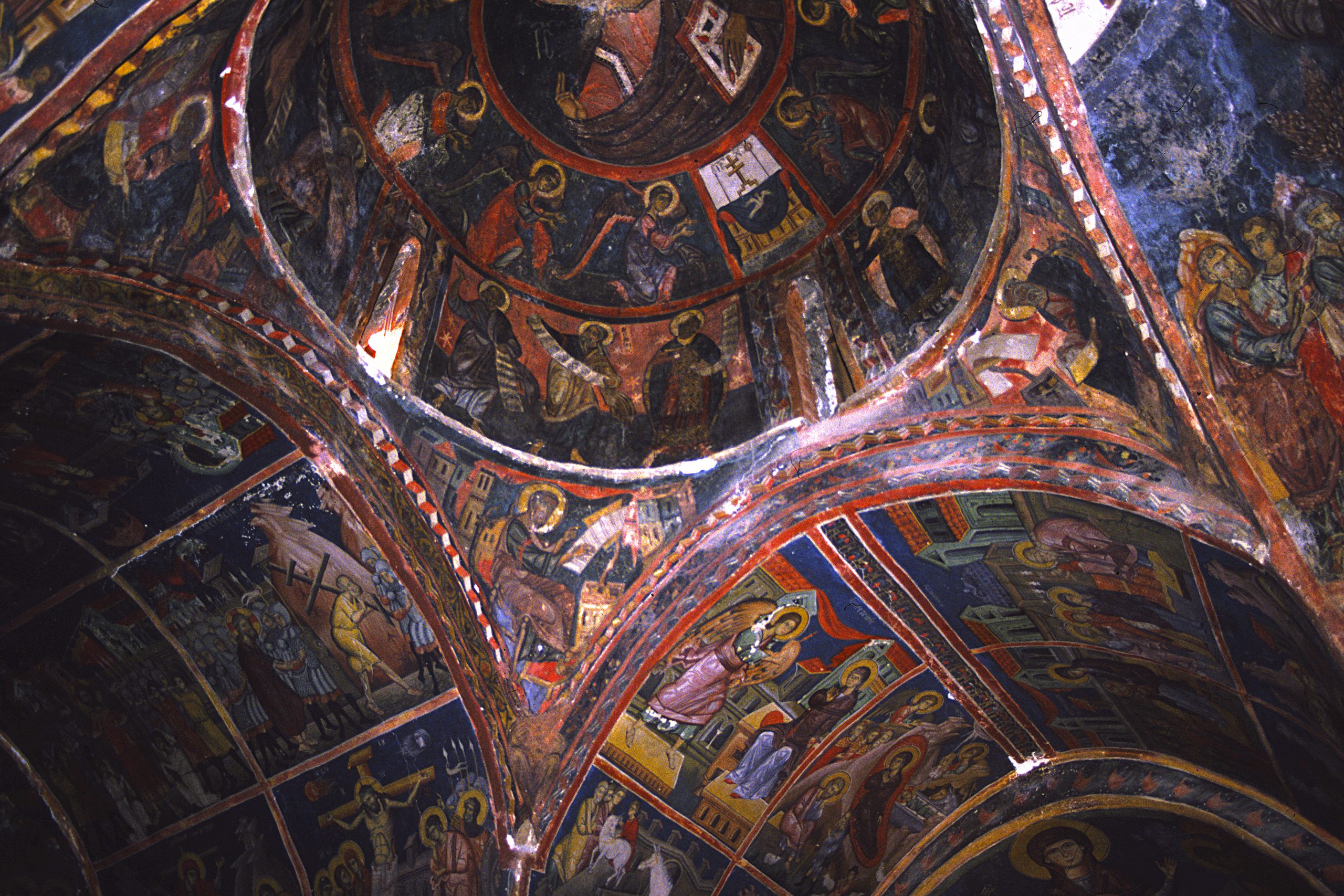
Across the walls, visitors can trace how Cypriot painters absorbed new influences while maintaining Orthodox conventions. Early compositions are rigid and symbolic. Later scenes introduce gesture, emotion, and a growing interest in physical space. These shifts reflect changing devotional priorities as much as artistic trends.
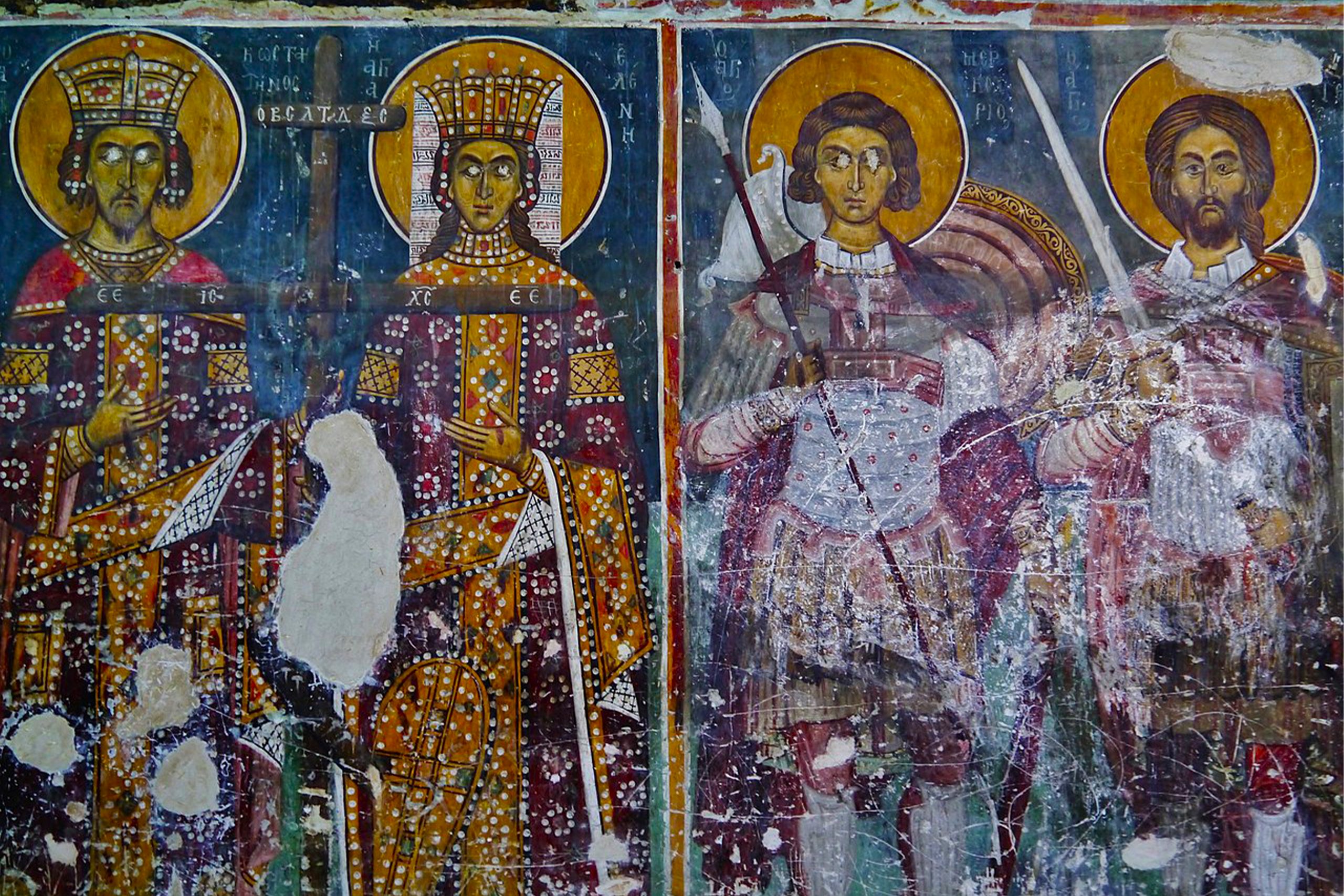
Among the most significant images is the Holy Mandylion, the miraculous imprint of Christ’s face. Its presence speaks to long-standing theological debates about images, authenticity, and divine presence. Elsewhere, miracle scenes painted in more accessible areas of the monastery address the needs of pilgrims seeking healing rather than abstract doctrine.
Together, the frescoes function as a visual archive, documenting how faith was practised, interpreted, and expressed during periods of political change and cultural exchange.
Who Was Saint John Lampadistis?
Saint John Lampadistis was neither a bishop nor an imperial figure. His significance lies in his local life and the endurance associated with it.
According to tradition, he was blinded at a young age after refusing an arranged marriage so that he could dedicate himself fully to God. He spent his final years in the Marathasa Valley, where he gained a reputation for healing the sick and comforting those believed to be possessed. His tomb quickly became a place of pilgrimage, drawing visitors from across the island.
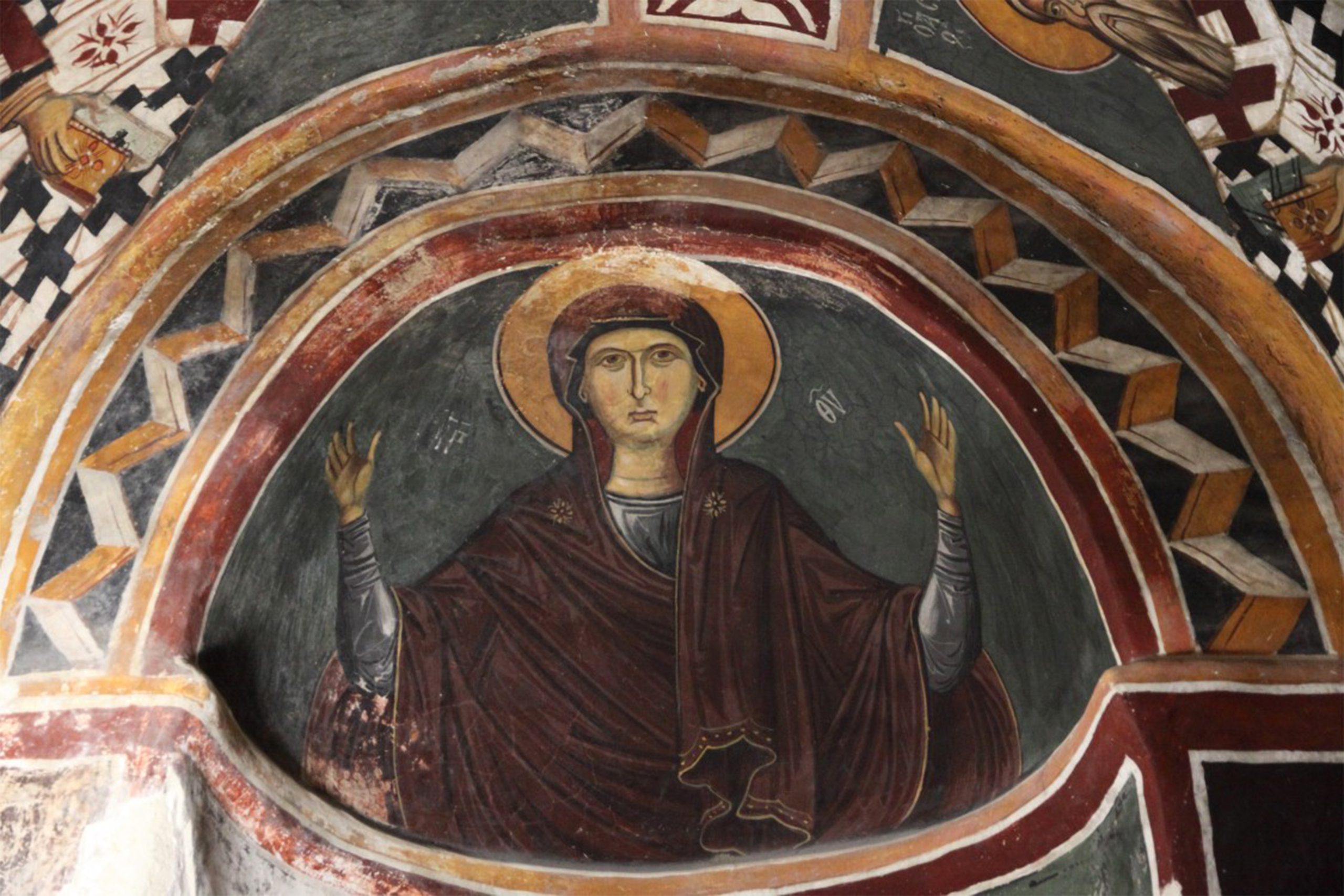
The name “Lampadistis,” often translated as “the Illuminator,” reflects both his place of origin and the belief that spiritual light emanated from his life and grave. Inscriptions around his reliquary include prayers written in Turkish using Greek letters, offering quiet testimony to the island’s layered linguistic and religious past.
Pilgrims Shaped the Complex
Unlike prominent urban monasteries supported by state or ecclesiastical authority, Lampadistis depended on the steady presence of pilgrims. Its surrounding structures, including storage rooms and olive presses, reveal a community shaped by self-sufficiency and agricultural rhythm.
Travellers moving through the Troodos Mountains stopped here not for spectacle, but for relief, healing, and prayer. This continuous movement explains why the monastery expanded gradually and why its decoration focuses so heavily on intercession and everyday concerns.
Lampadistis was never designed to impress. Its strength lies in its accumulation of belief over time.
Visiting Lampadistis Today
Today, the monastery forms part of the UNESCO-listed Painted Churches of the Troodos Region. Visitors reach the site through Kalopanayiotis village, crossing the Setrachos River before entering the complex.
Photography inside is prohibited to protect the fragile frescoes, encouraging slower and more attentive observation. Nearby, the Byzantine Museum displays icons and liturgical objects recovered from the region, many of which were hidden during periods of unrest.
Early morning visits offer the most contemplative experience, particularly outside the summer season. Spring and autumn provide the best balance of light, temperature, and atmosphere.
What Lampadistis Reveals
Ayios Ioannis Lampadistis matters because it demonstrates how sacred spaces evolve without losing their core purpose. Rather than freezing belief into a single moment, the monastery absorbed change while preserving memory.
Under one roof, Byzantine discipline, local devotion, Western influence, and lived pilgrimage coexist. Few places in Cyprus present this continuity with such clarity.
Lampadistis is not a monument built for grandeur. It is a place shaped by use, faith, and time, quietly preserving how generations understood the sacred in a changing world.