Explore Cyprus with Our Interactive Map

Explore our top stories and discover ideas worth your time.

Vertical Cyprus Rising Landscapes

Vertical Cyprus Rising Landscapes

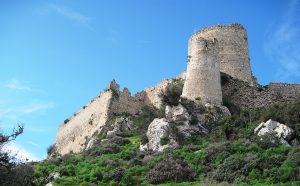
Most visitors meet Cyprus at sea level, through beaches and coastal towns. But the island's character is shaped just as much by what rises behind it. From volcanic peaks and forested ridges to monastery balconies and fire lookout stations, Cyprus's high ground offers a different kind of understanding. These elevated viewpoints are not simply scenic stops. They explain how the island was formed, how people survived, and how geography quietly directed history, belief, and daily life. This is Cyprus seen vertically, where altitude changes perspective. An island lifted from the sea Cyprus’s mountainous backbone exists because the island itself was pushed upward from the ancient Tethys Ocean. The Troodos Mountains are one of the world’s most complete examples of exposed oceanic crust, known as an ophiolite. What was once seabed now reaches nearly 2,000 metres above sea level, creating an interior landscape that feels unexpectedly vast for an island. This geological lift matters visually. Dark volcanic rock, steep valleys, and broad domed summits give the highlands a sense of scale that contrasts sharply with the coast. From many viewpoints, you can see both shores of Cyprus on a clear day, a reminder of how compact yet varied the island really is. The calm authority of the Troodos peaks At the centre of this vertical world stands Mount Olympus (Chionistra), the…

Read more
Ledra Palace Hotel Nicosia

Ledra Palace Hotel Nicosia

The Ledra Palace Hotel stands in central Nicosia, caught between past glory and present division. Once the capital's most glamorous hotel, it now sits in the UN buffer zone that splits Cyprus in two. The Ledra Palace Hotel occupies a unique position in Cyprus's modern history. Built as a luxury establishment in the late 1940s, it served as the island's social center for Greek, Turkish, British, and Armenian elites. Today the building remains frozen in the Green Line buffer zone, its facade scarred by bullets and mortar craters from the 1974 conflict. The hotel has transformed from a place of celebration to a symbol of division, yet it continues to serve as neutral ground where both communities meet. Historical Background Three businessmen conceived the Ledra Palace in 1947 when tourism on Cyprus was just beginning. George Skyrianides, already owner of the luxurious Forest Park Hotel in Platres, partnered with Nicosia's Vice Mayor George Poulias and Egyptian businessman Dimitrios Zerbinis. Together they formed Cyprus Hotels Limited with the goal of creating the island's finest accommodation. The hotel was designed by German Jewish architect Benjamin Günsberg, who also created the Curium Palace in Limassol. Construction took two years and costs far exceeded the original budget, reaching approximately £240,000 Cyprus pounds. The hotel opened on October 8, 1949, with British Governor Sir Andrew…

Read more
Transportation and Mobility in Cyprus

Transportation and Mobility in Cyprus

Cyprus holds one of the highest car ownership rates in the world with 742 cars per 1,000 people according to International Road Federation figures from 2007. Private car ownership in the country ranks as the fifth highest per capita globally. With more than 658 automobiles per 1,000 people in recent years, Cyprus relies heavily on private vehicles for daily mobility. Only 3 percent of journeys in the Greater Nicosia urban region are made by public transportation, while cycling remains even less common at 2 percent. This dominance of private vehicles creates traffic congestion in major cities, particularly during peak hours, while contributing to air pollution and urban sprawl. The Road Network and Driving Conditions From the 12,118 kilometers of roads in the areas controlled by the Republic of Cyprus, 7,850 kilometers were paved while 4,268 kilometers remained unpaved as of 2006. The island boasts the highest number of motorways per capita in the EU as of 2025, with major routes linking key cities including Limassol, Larnaca, Nicosia, Paphos, and Ayia Napa. One significant advantage for travelers is the absence of toll roads in Cyprus, making exploration of the island more accessible and cost-effective. As a legacy of British rule, Cyprus is one of only three EU nations where vehicles drive on the left. Road signs appear in both English and…

Read more