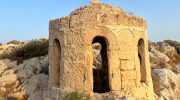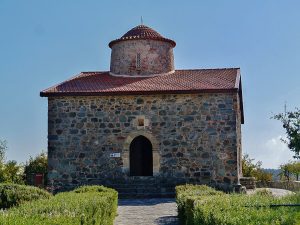
Church of Timios Stavros in Pelendri is a 12th-century Byzantine chapel in Cyprus’s Troodos Mountains that evolved into a multi-part complex, famed for its Palaiologan frescoes blending spiritual depth with artistic refinement. Part of the UNESCO-listed Painted Churches, it showcases the island’s medieval religious heritage through layered architecture and vivid paintings. This site captures how faith adapted over time, offering insights into Cyprus’s enduring spiritual traditions.
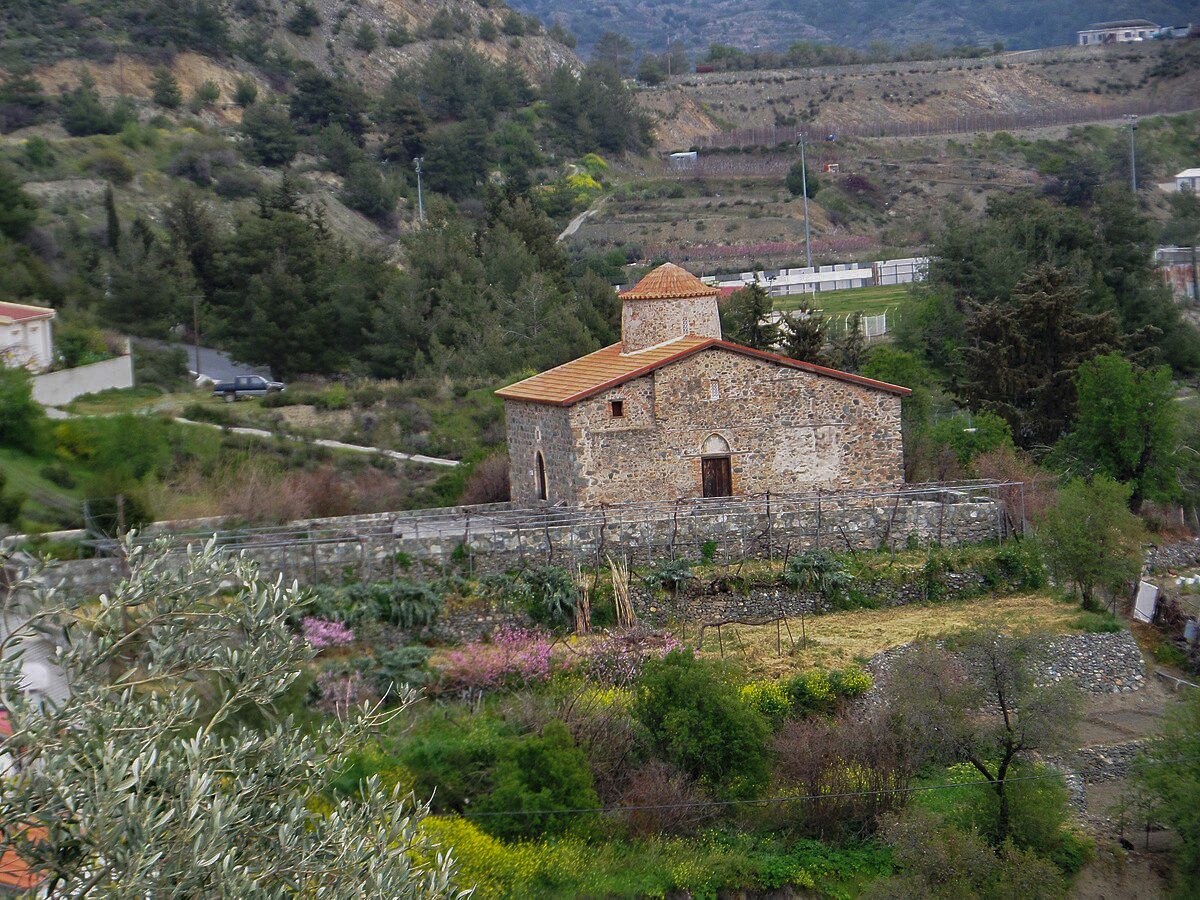
An Evolving Byzantine Chapel in the Mountains
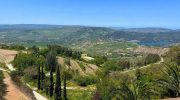
Timios Stavros exemplifies the organic development of Byzantine religious architecture in Cyprus, starting as a modest single-aisled chapel and expanding into a domed, multi-section structure that reflects centuries of theological and cultural shifts. Dedicated to the Holy Cross, a symbol central to Orthodox Christianity representing salvation and divine power, the church served as a spiritual focal point for mountain communities. Its location in the lush Marathasa Valley, surrounded by pine forests and terraced fields, underscores the Troodos region’s role as a refuge for monastic and village life, where sacred spaces blended seamlessly with the natural environment. The site’s evolution mirrors broader patterns in Cypriot ecclesiastical building, where practicality met piety, creating resilient havens amid the island’s turbulent history of invasions, earthquakes, and political changes.
The church’s design emphasizes functionality suited to the high-altitude climate, with thick stone walls sourced from local quarries to withstand heavy rains and snows. Measuring approximately 15 meters in length and 8 meters in width, the interior space feels intimate yet expansive due to its high dome and added narthex, allowing for communal gatherings during feasts or inclement weather. This architectural adaptability highlights how Cypriot builders responded to environmental demands while incorporating symbolic elements, such as the cross-shaped plan that reinforces the dedication to the Holy Cross. As one of the ten Painted Churches inscribed on UNESCO’s World Heritage List in 1985, Timios Stavros contributes to the collective narrative of Cyprus’s Byzantine legacy, illustrating how rural sites preserved artistic traditions that urban centers like Constantinople influenced but could not fully replicate due to local constraints and creativity.
From Simple Origins to Layered Growth
The chapel’s foundational phase dates to the mid-12th century, during the Comnenian era of the Byzantine Empire, a period of cultural revival following the iconoclastic controversies of the 8th and 9th centuries. Archaeological surveys and inscriptions within the church indicate it began as a basic single-aisled basilica, likely constructed by local patrons or monks seeking solitude in the Troodos, away from the coastal threats of Arab raids and Seljuk incursions. The name “Timios Stavros” – meaning “Holy Cross” – ties to the veneration of cross relics, a widespread practice in Byzantium where fragments of the True Cross were believed to hold miraculous powers, including healing and protection against evil.
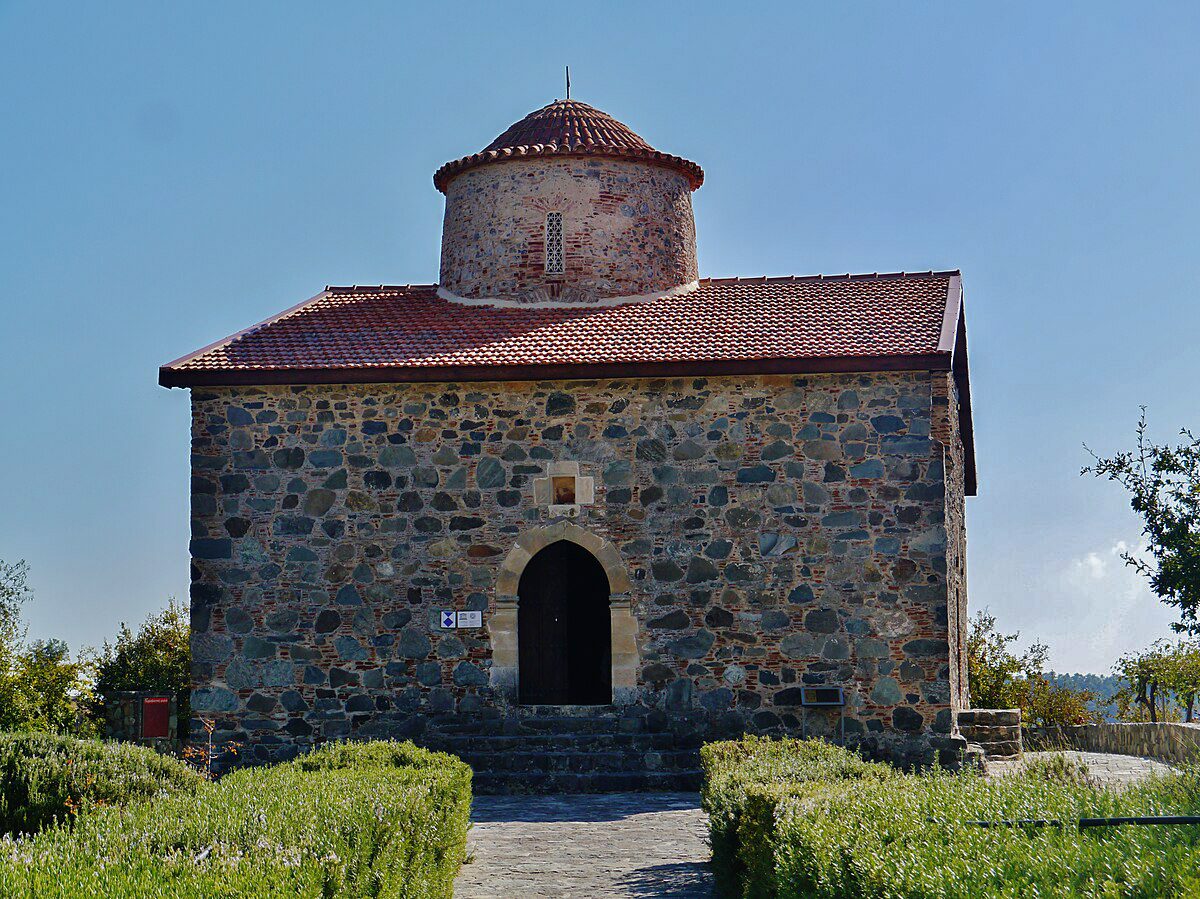
By the 14th century, under the Lusignan Kingdom (1192-1489), expansions added a narthex for preparatory rituals and a dome for symbolic elevation toward heaven, aligning with the Palaiologan Renaissance. This late Byzantine artistic movement, named after the Palaiologos dynasty that reclaimed Constantinople in 1261, emphasized emotional expression and narrative detail in religious art, influenced by a resurgence in humanistic elements within Orthodox theology. Ottoman rule from 1571 brought minor modifications, such as reinforced roofing to handle increased snowfall, but the core remained Orthodox, resisting conversion pressures through its remote location.
Restorations since the 1970s, led by the Department of Antiquities and international teams, have peeled back layers of plaster to reveal fresco timelines, confirming the site’s phased growth. Dendrochronology on timber beams and radiocarbon dating of pigments have provided precise timelines, showing how each addition responded to seismic activity – common in Cyprus – or community needs, like larger spaces for pilgrimages during feast days. UNESCO’s 1985 inscription recognized not only its artistic value but also its representation of Cyprus’s role as a peripheral guardian of Byzantine culture, where isolation preserved traditions lost elsewhere after the 1453 fall of Constantinople.
A Structure of Growth and Grace
The church’s current form includes a multi-aisled interior with a central dome supported by arches, allowing light to filter through small windows and illuminate the frescoes. The stone facade, built from local gray limestone, blends with the surrounding cliffs, while the pitched tile roof – typical of Troodos adaptations – sheds rain and snow effectively. Inside, the space divides into the naos (main area) for worshippers, the bema (sanctuary) for clergy, and the narthex for preparation, creating a progression that mirrors spiritual journeys from earthly to divine.
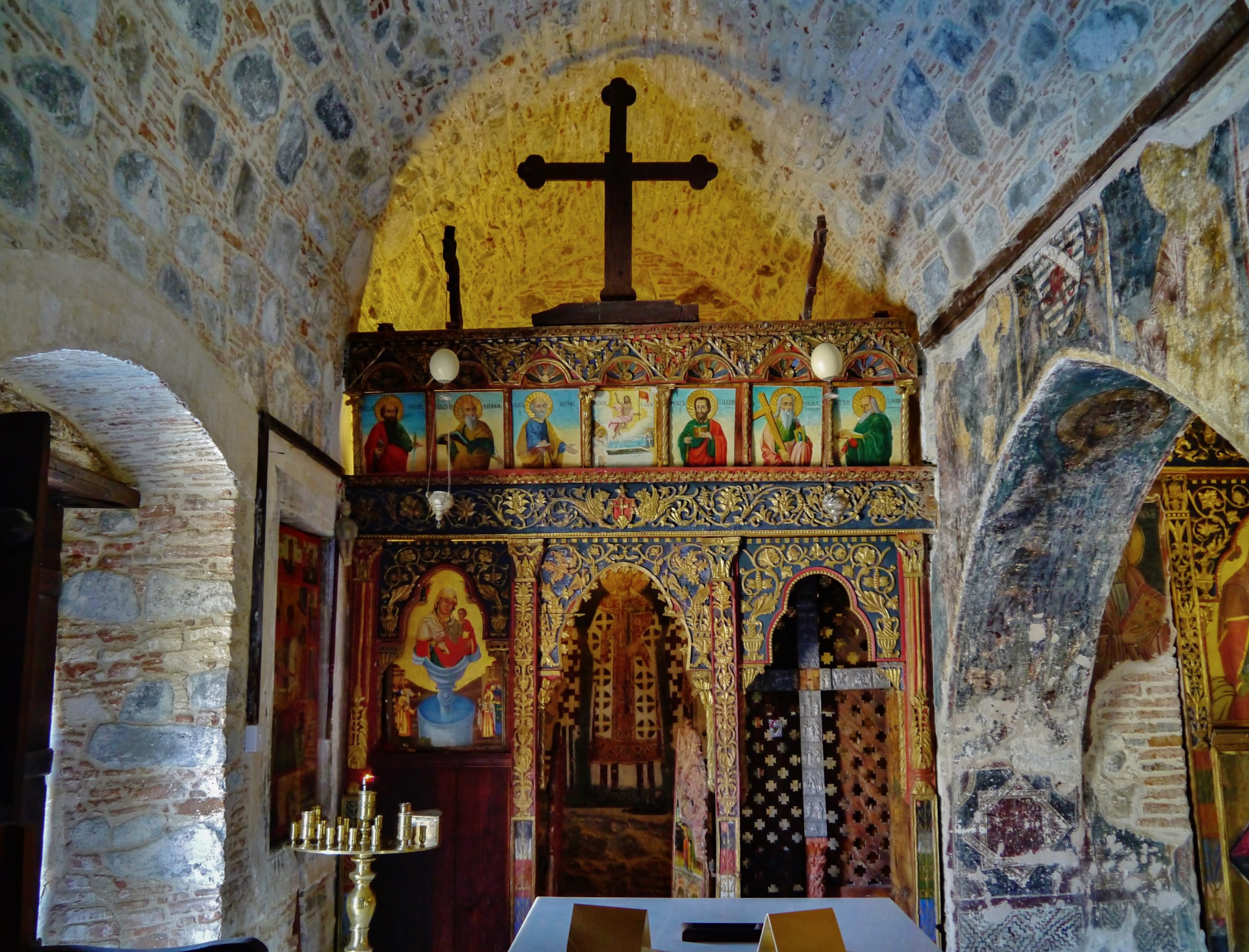
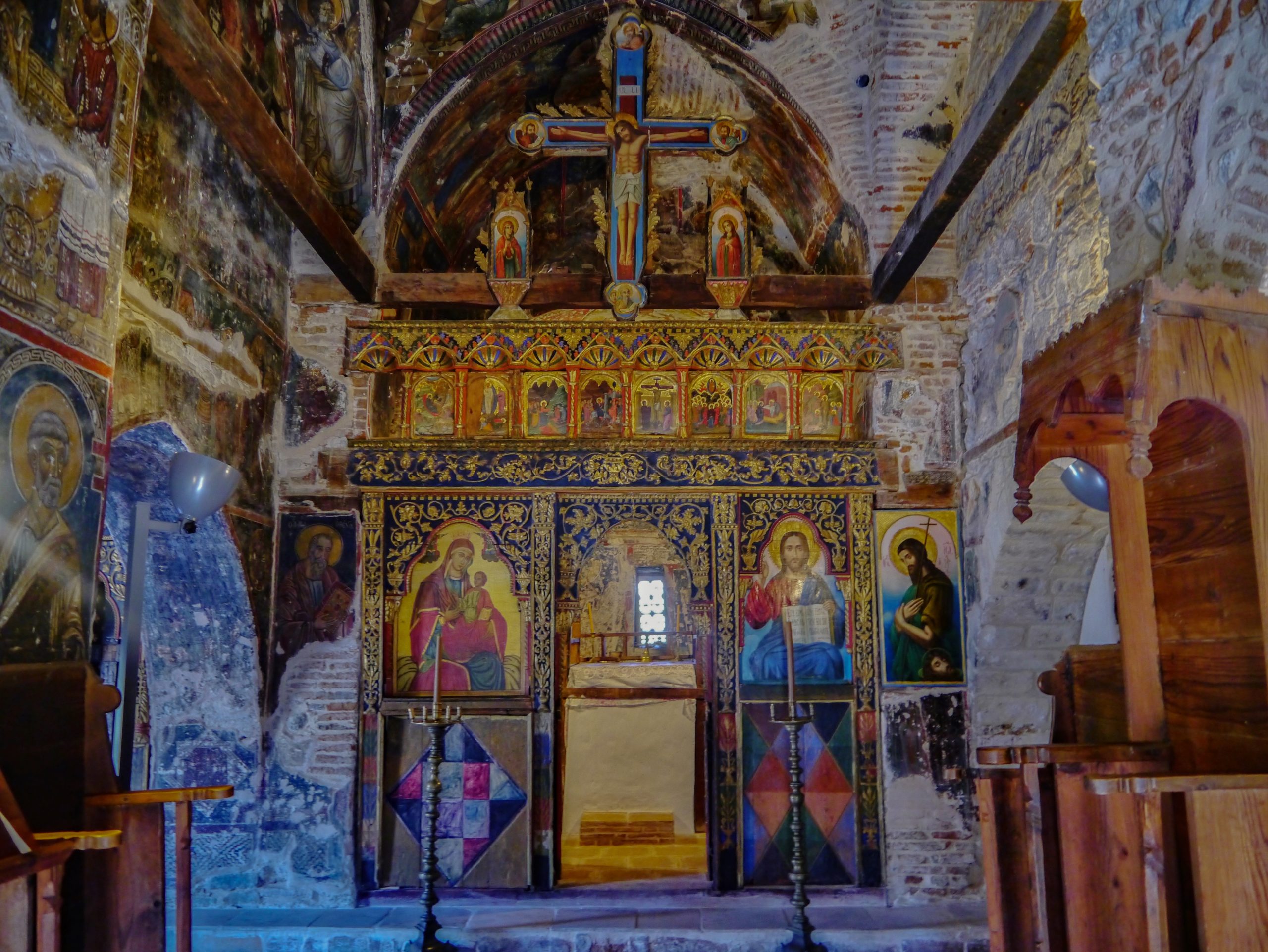
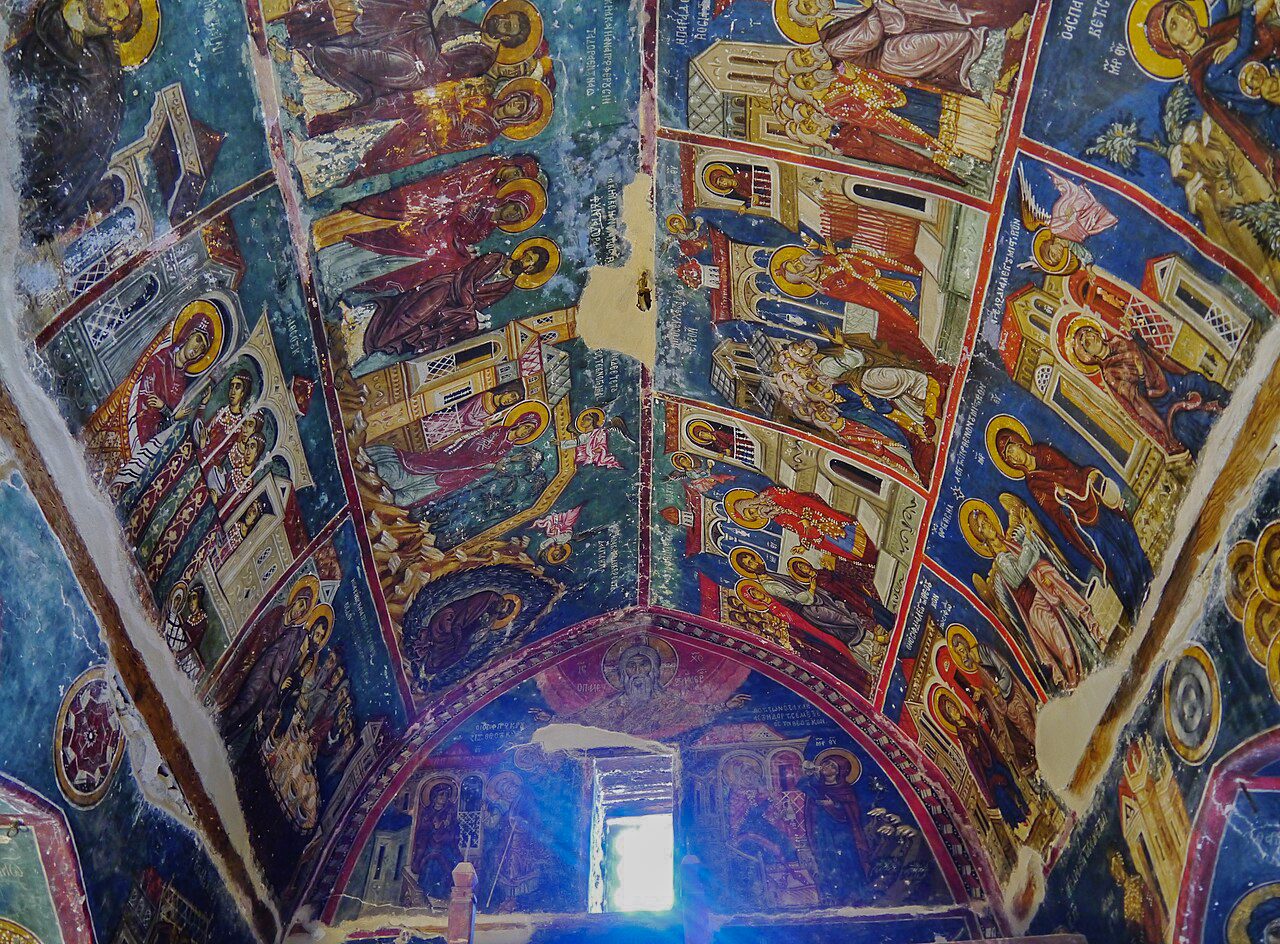
The frescoes, primarily from the 14th century Palaiologan phase, cover walls and ceilings in a cycle of over 50 scenes, using mineral pigments like ochre for earth tones and lapis lazuli for blues, imported via Venetian trade. Biblical narratives unfold in sequence: the Annunciation, Nativity, Crucifixion, and Resurrection, with saints like Demetrios (protector of warriors) and George (dragon-slayer) added for local appeal. Earlier 12th-century layers beneath, revealed through careful removal of overpaint, show stricter, more iconic styles with gold halos symbolizing holiness. This layering not only saves space but also creates a visual history, where fading older art was refreshed to keep theological messages vibrant for illiterate congregations.
Acoustic properties from the dome enhance chants, a feature common in Byzantine design to make services immersive. The Holy Cross icon, often the focal point during September’s Exaltation feast, would have been paraded, linking architecture to living rituals. Overall, the structure’s growth from a 6-meter chapel to its current form illustrates adaptive ingenuity, where each addition addressed practical needs like shelter while deepening symbolic resonance.
Notable Details That Captivate
The frescoes feature a vivid Dormition of the Virgin with emotional apostles, rare for its humanistic touches in a rural setting, possibly influenced by Italian artists during Lusignan times. A donor inscription names a priest Theodoros and his family, dressed in mixed Byzantine-Frankish garb, providing rare insights into 14th-century social blending. The dome’s interior shows a Pantocrator Christ with local star patterns, tying heavenly order to Cypriot night skies. Folklore claims the church housed a cross relic that “wept” during droughts, drawing villagers for rain prayers, a tradition echoed in artifacts like votive crosses found in nearby digs.
Unraveling Deeper Layers of Theology
The art serves as a theological compendium, with cycles illustrating Orthodox doctrines on incarnation and redemption, emphasizing the Cross as a bridge between human suffering and divine grace. Palaiologan elements from Constantinople introduce fluid drapery and expressive faces, conveying emotion to engage worshippers, but Cypriot adaptations add rustic details like local flora in borders, grounding imperial theology in island life. The architectural expansions symbolize faith’s progression – from simple chapel (earthly humility) to domed nave (heavenly aspiration) – mirroring beliefs in spiritual ascent amid worldly trials. This fusion positions Cyprus as a Byzantine outpost, where Eastern traditions met Western touches like Gothic arches, creating spaces for intimate contemplation and communal rites.
Excavations around the church have uncovered burial sites with symbolic grave goods, suggesting it served as a pilgrimage spot for healing or protection, tying art to practical devotion. Influences from the Palaiologan Renaissance, a response to Byzantine recovery post-Crusades, brought humanistic trends that softened earlier iconoclasm’s rigidity, allowing for more narrative freedom in rural churches like this one.
Resonance in Modern Cyprus
Timios Stavros connects to Cyprus’s contemporary heritage, inspiring preservation efforts in the Troodos amid rising tourism and climate impacts like increased flooding. As part of the Painted Churches, it attracts those tracing Byzantine roots, fostering cultural pride in a diverse society. Modern architects reference its layered expansions in sustainable designs for mountain homes, while artists incorporate fresco motifs in works exploring resilience and faith. Festivals in Pelendri recreate medieval processions with cross icons, blending historical symbolism with community events, sustaining traditions of adaptation in daily life.
Opportunities for Exploration
The church in Pelendri village opens daily from 9 AM to 4 PM in winter and until 6 PM in summer, with free entry though donations support maintenance. Paths from the road lead through orchards, and signs explain the frescoes. Guided tours via the Department of Antiquities cost €10-15, providing context on restorations and theology. Spring brings blooming settings that enhance the visit, pairing well with hikes or other Painted Churches like Asinou. Accessibility involves steps to the interior, with quiet observation recommended to preserve the atmosphere.
A Chapel of Timeless Evolution
Church of Timios Stavros matters as a showcase of architectural and artistic growth, where its expansion and Palaiologan frescoes capture Cyprus’s medieval theology in a mountain context. This site embodies the island’s essence: a haven where faith adapted to time’s flow, inspiring across ages. Its preservation links to broader traditions, reminding of how layered art shaped spiritual understanding. In a dynamic world, it offers a serene example of enduring harmony.