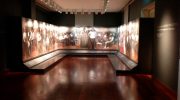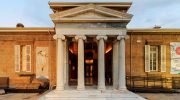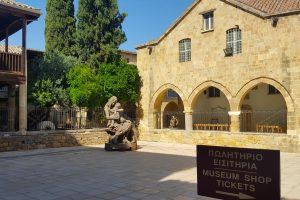
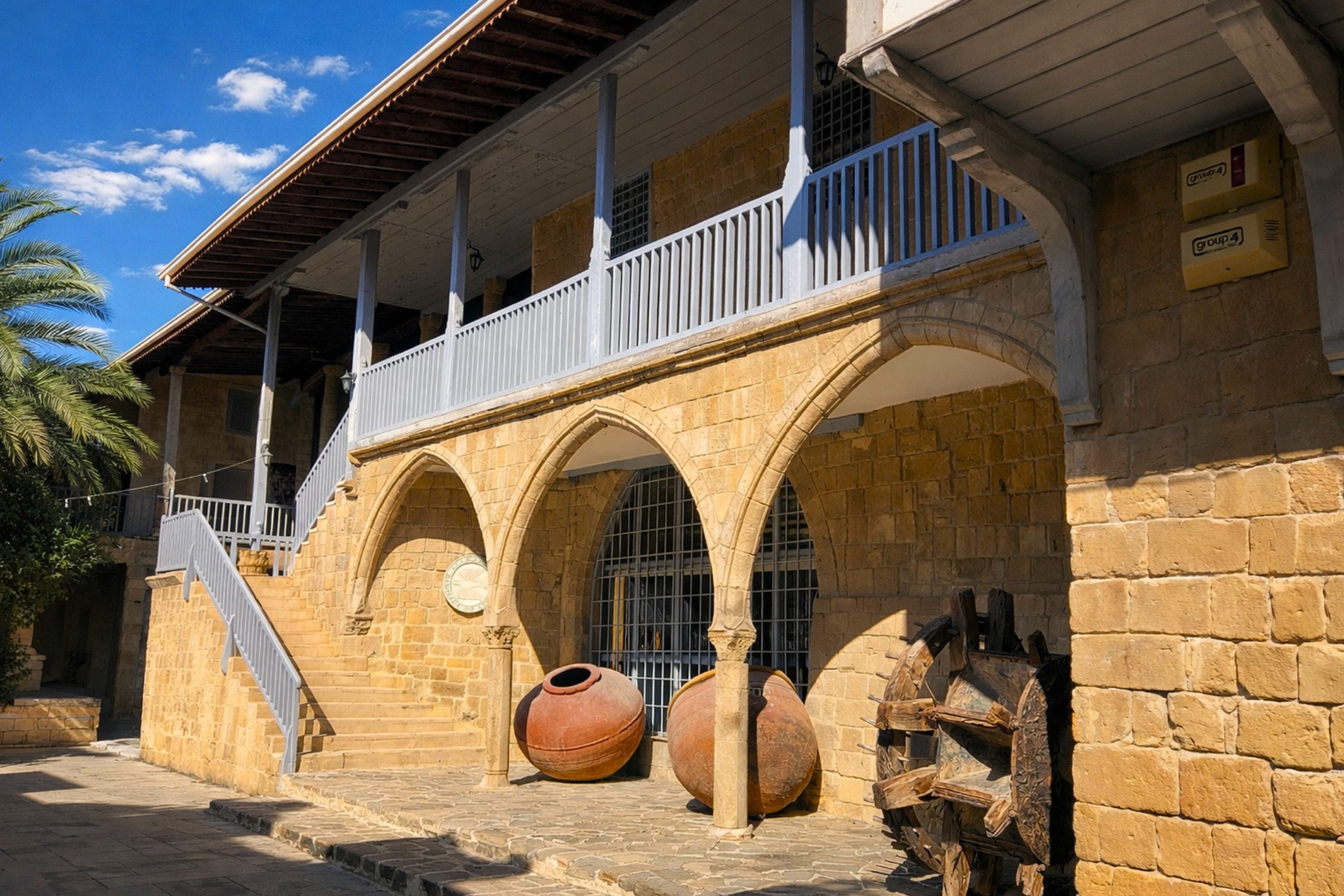
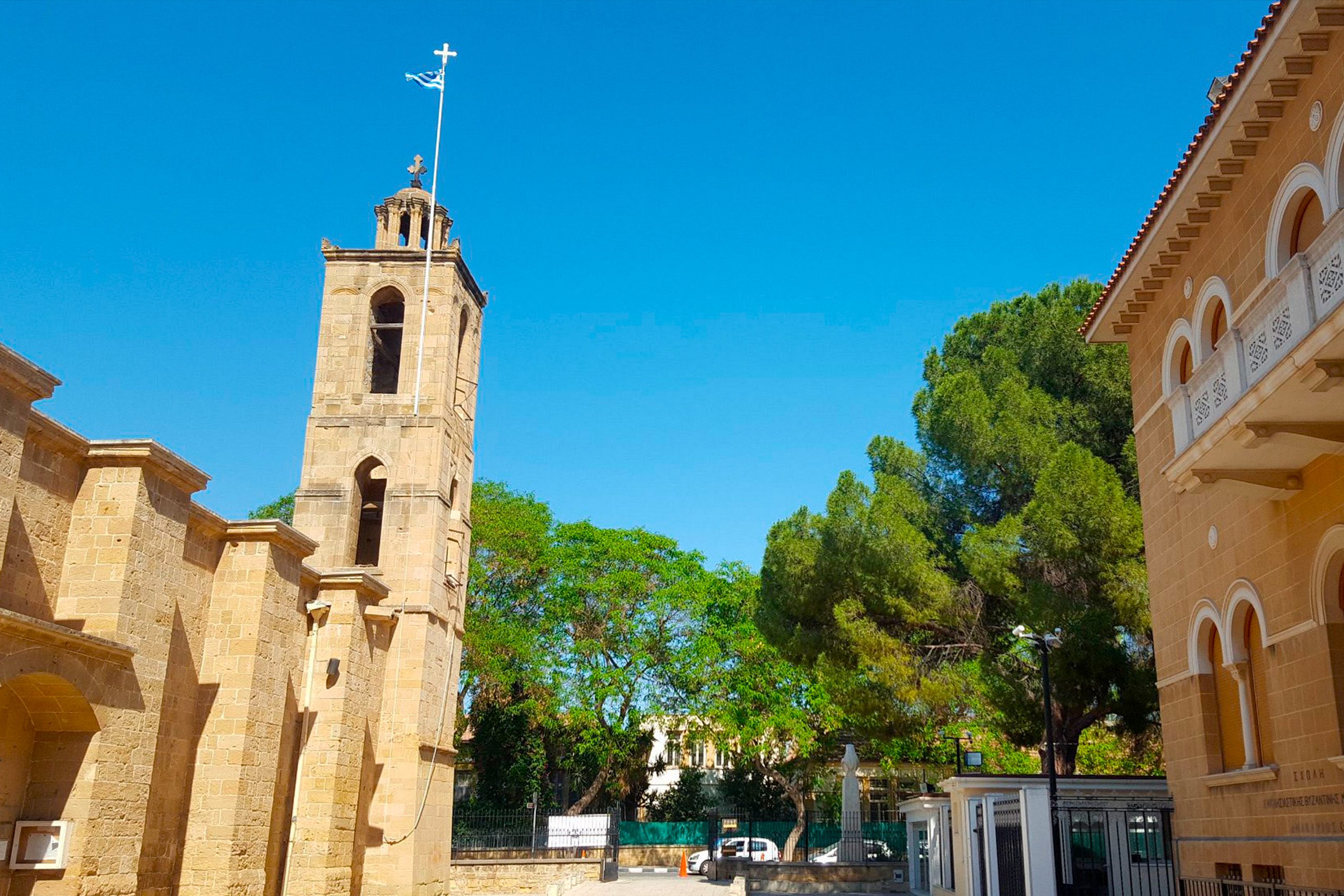
The Cyprus Folk Art Museum preserves the island’s traditional crafts in a building that once housed archbishops and witnessed moments that changed Cypriot history. The museum occupies the Old Archbishopric building on Archbishop Kyprianos Square in central Nicosia. This location places it beside St. John’s Cathedral, the Byzantine Museum, the National Struggle Museum, and the current Archbishop’s Palace.
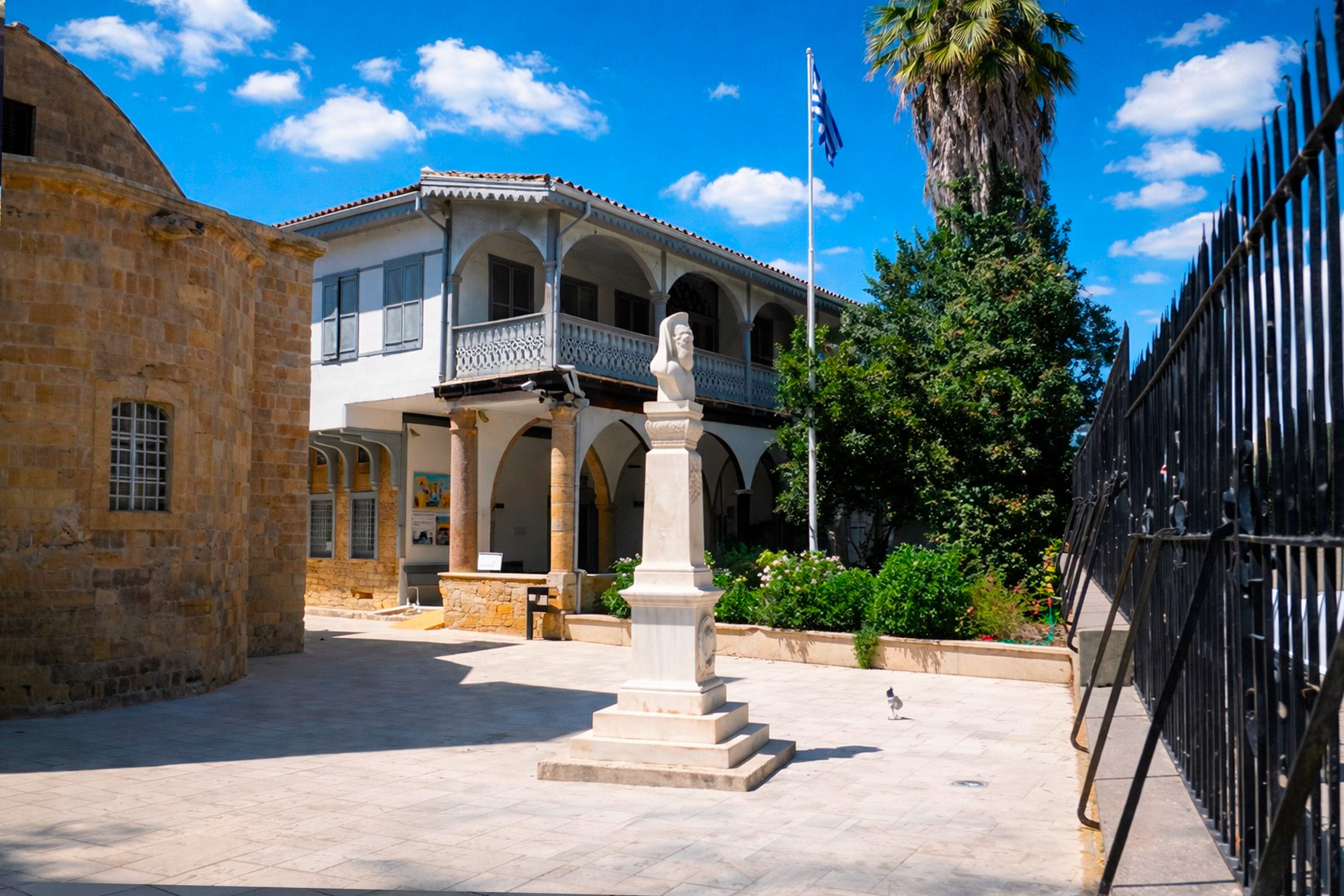
The building itself dates to the 15th century and features Gothic architecture with later additions. In the 13th century, the area was controlled by French rulers and served as a monastery for the Benedictine order. Later, the Order of St. John erected a church dedicated to their patron saint on the grounds. In 1218, Hugo I was buried in this church. When the Ottoman period ended in 1878, the Greek Orthodox Church took over the premises.
Historical Background
The Society of Cypriot Studies founded the museum in 1937. A group of pioneering scholars led by Constantinos Spyridakis established the society in 1936 with the goal of collecting and preserving Cypriot folk art. Adamantios Diamantis, a painter and art teacher who had studied at the Royal College of Art in London alongside Henry Moore and Barbara Hepworth, became the first director when the museum opened.
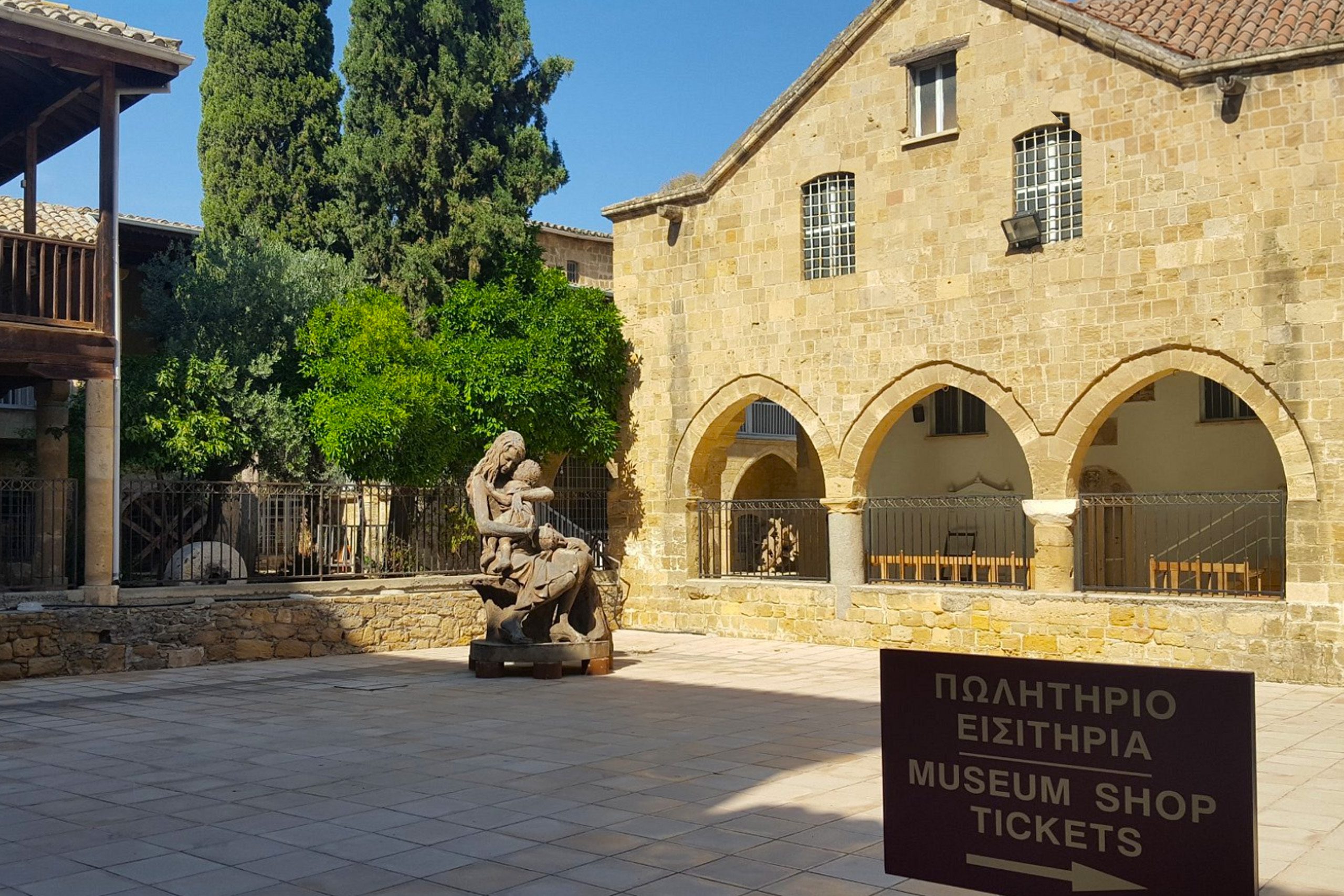
The Society approached Archbishop Makarios III in the early 1960s after the seat of the Archbishop moved to a new palace in 1961. The Archbishop generously offered the entire Old Archbishopric to the Society for its activities. Between 1962 and 1964, the Society carried out extensive reconstruction of the building at great expense, with assistance from Makarios III.
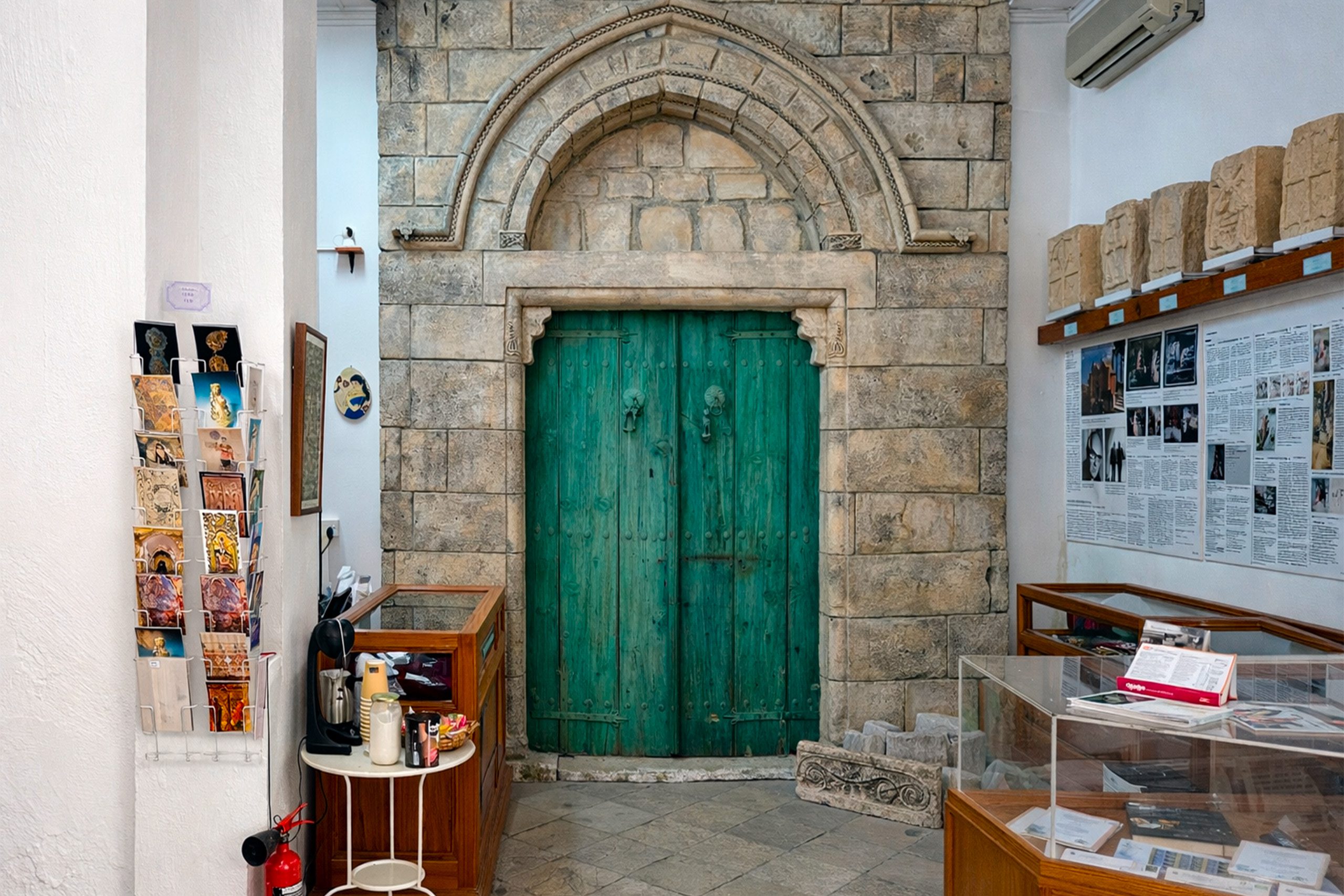
The building required major work. The Society discovered a 16th century fresco depicting the Annunciation during renovations. This fresco, painted in the Italo-Byzantine style, features a richly decorated Gothic arch. The Society and the Department of Antiquities worked together to conserve it. The museum officially opened on the site in 1964.
Objects That Tell Stories
The collection now includes over 5,000 catalogued items. Most pieces date from the 19th and early 20th centuries, though some pottery extends back to the Neolithic period. The collection has grown through donations and purchases, often acquired directly from villagers who owned the items.
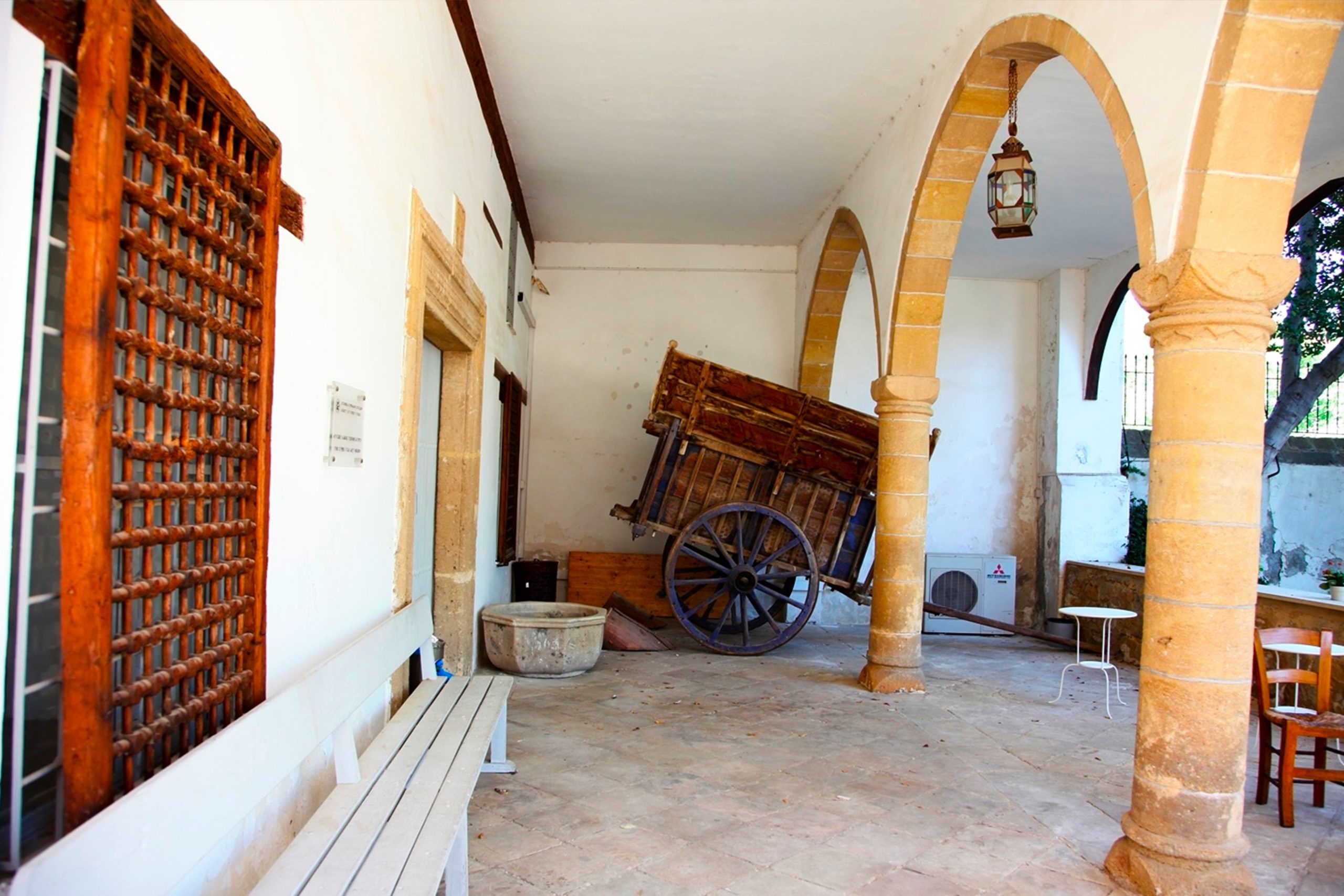
The museum displays traditional Cypriot costumes that show the distinctive dress of different regions and social classes. The embroidery collection features detailed needlework patterns passed down through generations. Lace pieces demonstrate the skill required to create these delicate decorations. The woodcarving section includes intricately carved dowry chests that families would fill with linens and household items for newly married couples.
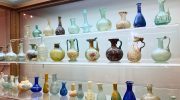
The pottery collection spans thousands of years and shows how Cypriot ceramics evolved from ancient times through the modern period. The metalwork exhibits include both decorative and functional pieces, from ornate silver objects to everyday copper vessels. The basketry section displays items woven from local reeds and grasses for carrying produce, storing grain, and household use.
Agricultural tools show how farmers worked the land before mechanization. Weaving instruments, including looms and shuttles, demonstrate how people produced textiles at home. Folk paintings capture scenes of rural life and religious subjects in a naive style that reflects local artistic traditions rather than formal training.
The Door That Inspired a Poem
The most famous item in the collection is the 19th century door from St. Mamas Church in Morphou. The wooden door features a carved owl. This door inspired George Seferis, the Greek poet who won the Nobel Prize for Literature in 1963, to write a poem titled “Little things of Cyprus.”
Seferis first visited Cyprus in 1953 while serving as a diplomat. The island reminded him of his childhood home in Smyrna, which he had lost when his family fled to Greece in 1922. Cyprus became deeply meaningful to him. He visited three times between 1953 and 1955, often accompanied by his friend Adamantios Diamantis, the museum director.
During these visits, Seferis explored the island and wrote Logbook III, originally titled “Cyprus, where it was ordained for me.” The collection of poems expresses his feeling that Cyprus offered a kind of homecoming. Seferis dedicated “Little things of Cyprus” to Diamantis, his friend and guide. The poem mentions the owl on the church door that now resides in the museum.
Important Collections
The museum holds significant collections of silver and gold work donated by various institutions. The occupied Monastery of Apostle Andreas contributed pieces before 1974. Maria Eleutheriou-Gaffiero donated her personal collection, as did G. Filis. These collections include religious vessels, jewelry, and decorative objects that show the high level of metalworking skill on the island.
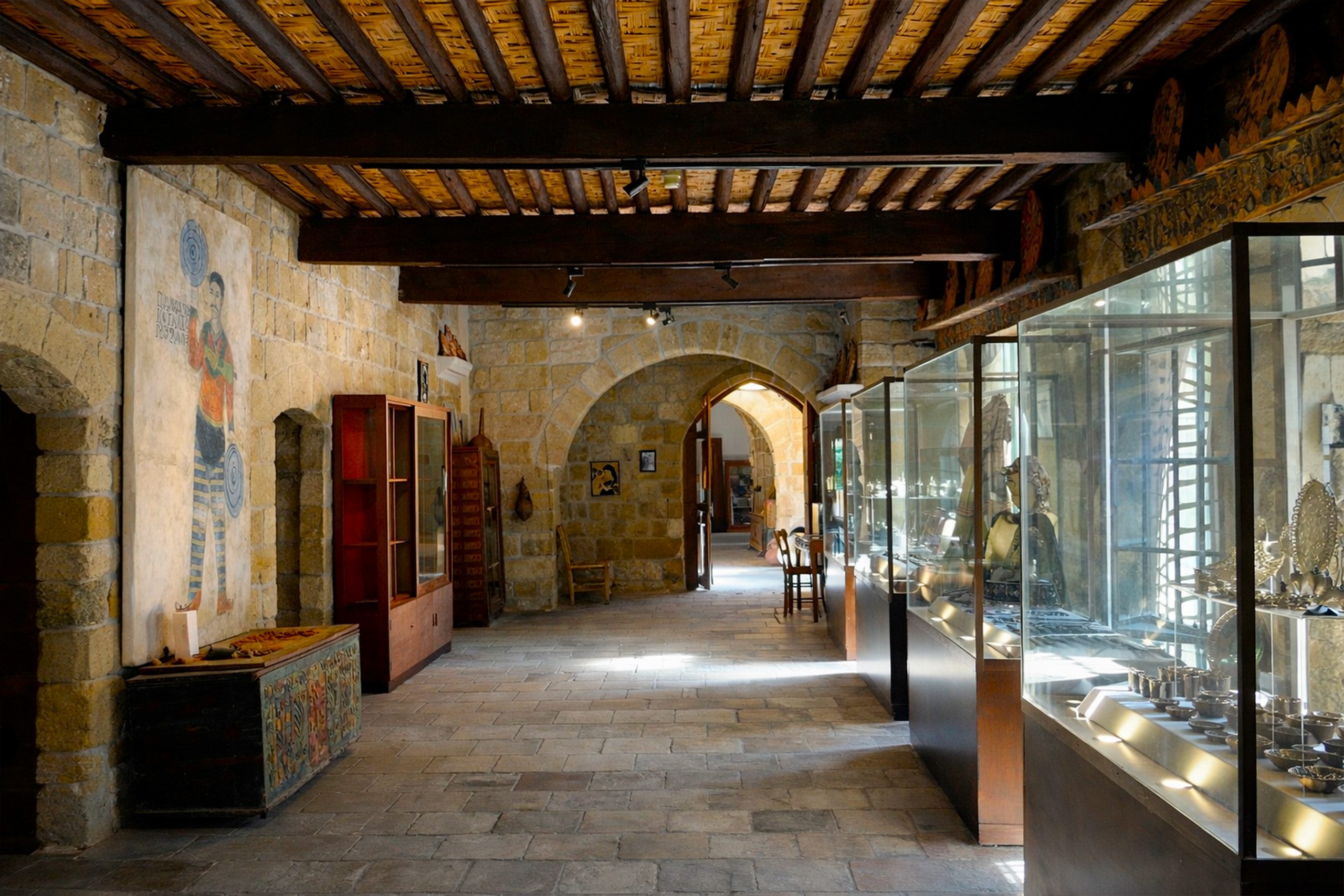
Many items in the museum come from the occupied areas of Cyprus. When Turkish forces invaded in 1974 and occupied the northern part of the island, these objects became some of the few remaining examples of folk art from those regions. The museum thus preserves cultural heritage that might otherwise have been lost or destroyed.
Worth Knowing Facts
The museum offers workshops for both children and adults. During school holidays, children can learn traditional crafts. Adults can attend courses such as “Introduction to the Conservation of Museum Objects.” Educational programs are available for school groups, and guided tours can be arranged in advance.
The museum organizes seminars, symposia, and lectures on topics related to Cypriot folk art and cultural heritage. These events help keep traditional knowledge alive and connect modern Cypriots to their cultural roots.
Temporary exhibitions feature the work of contemporary local artists and craftspeople. These shows provide a platform for modern artisans and help demonstrate that traditional crafts remain living practices rather than museum pieces. The museum gift shop sells handmade traditional crafts including woven bookmarks, key rings, figurines, and jewelry inspired by traditional designs.
What It Means Today
The Cyprus Folk Art Museum serves as more than a collection of old objects. It preserves skills and knowledge that might otherwise disappear. The items show how people lived before mass production, when most households made their own textiles, grew their own food, and crafted their own tools.
The museum demonstrates the diversity within Cypriot culture. Different villages developed distinct embroidery patterns, pottery styles, and weaving techniques. The costumes show regional variations in dress. The collection proves that Cyprus had a rich material culture that expressed local identity and creativity.
For Cypriots whose families came from the occupied north, the museum holds special meaning. Many of the objects come from villages and towns they can no longer freely visit. The museum keeps alive the memory of communities that were disrupted in 1974. Seeing these items helps maintain connections to places that remain divided.
Visiting the Museum
The museum is located at Archbishop Kyprianos Square, easily reached on foot from central Nicosia. From Eleftheria Square, walk east toward the square. Pass the Bank of Cyprus headquarters and continue straight. The museum sits on the right in the Old Archbishopric Palace beside St. John’s Cathedral.
Opening hours are Tuesday through Friday from 9:30 AM to 4:00 PM, and Saturday from 9:00 AM to 1:00 PM. The museum closes on Sundays, Mondays, and public holidays. Admission costs 2 euros, with a reduced rate of 1 euro for students and seniors.
The museum is relatively small compared to major archaeological museums. Most visitors spend 45 minutes to an hour viewing the collections. The compact size works in its favor. The museum does not overwhelm visitors with too many objects. Each room contains carefully selected pieces that represent different aspects of traditional life.
Photography is generally permitted. The museum staff can provide information about specific items. Although the building is historic, it has been adapted to serve museum purposes. However, visitors should be aware that as a 15th century structure, not all areas may be easily accessible.
Why This Collection Matters
The Cyprus Folk Art Museum matters because it preserves knowledge about how people actually lived. History books record wars, leaders, and major events. Museums of this type show daily life. They answer questions about what people wore, how they decorated their homes, what tools they used, and how they expressed creativity within their communities.
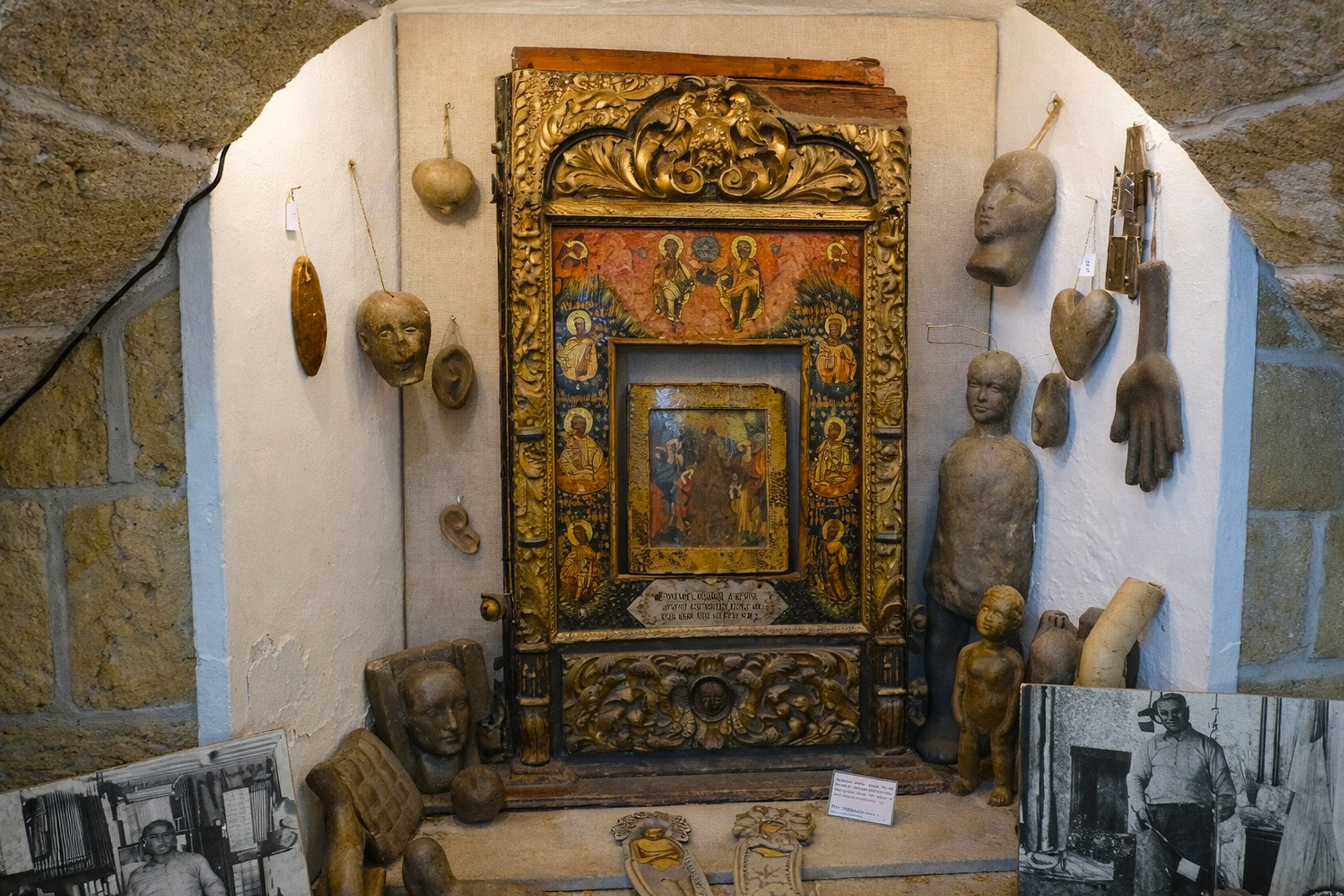
The collection demonstrates that folk art deserves the same respect as fine art. The embroiderers who created elaborate patterns, the woodcarvers who decorated dowry chests, and the potters who shaped vessels were artists. They worked within traditions but also showed individual skill and innovation. Their work was functional but also beautiful.