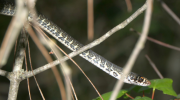
Hidden among the pine-covered mountains of Cyprus lives one of Europe’s rarest snakes. The Cyprus Whip Snake (Hierophis cypriensis) is a true island endemic, found nowhere else on Earth.
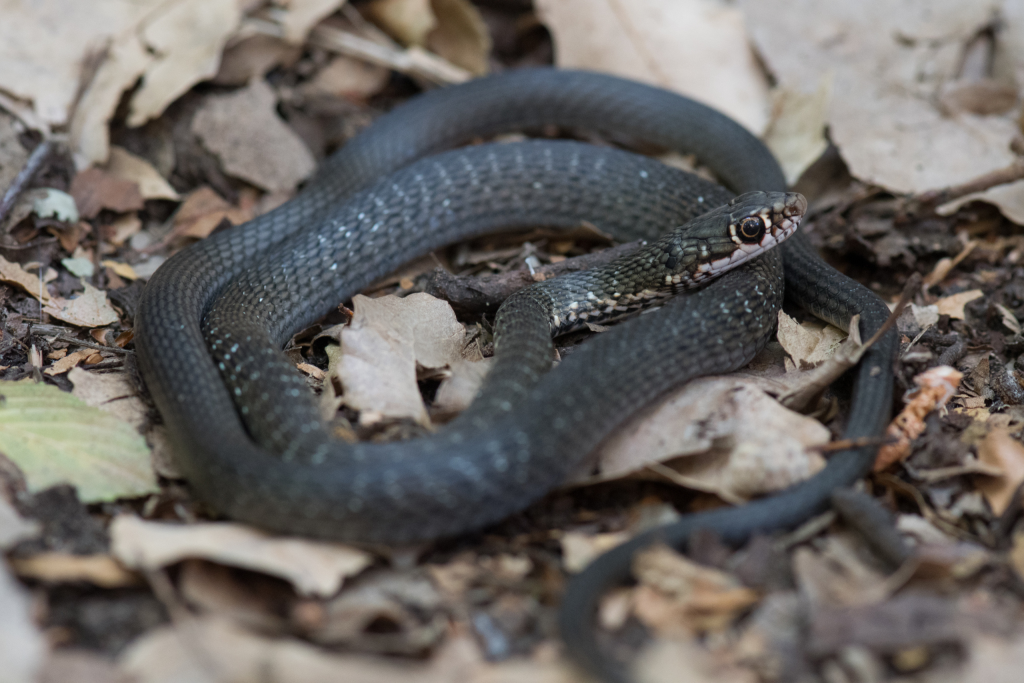
Most visitors to Cyprus come searching for beaches, ancient ruins, or mountain villages. Few realise that deep within the forests of Troodos survives a reptile found in no other country, a species that has quietly evolved alongside the island’s landscapes for thousands of years. Seeing one in the wild is considered a special event even by experienced naturalists.
Meet the Island’s Fastest Snake
The Cyprus Whip Snake belongs to a group of active hunters known as whip snakes. Unlike vipers, which rely on ambush and camouflage, whip snakes spend much of their time actively searching for prey.
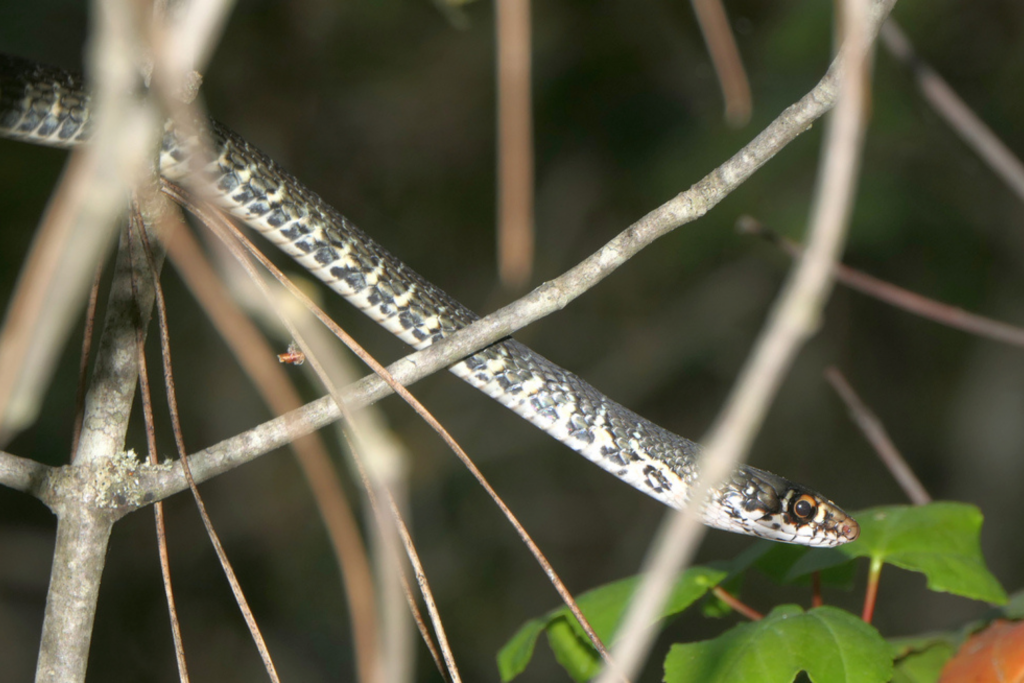
It is a slender, elegant snake with large eyes and excellent eyesight. Adults typically reach around one metre in length, although some individuals can grow larger.
The species is completely harmless to humans. It possesses no dangerous venom and relies on speed, agility, and sharp senses to survive. When disturbed, it almost always chooses escape over confrontation.
An Ancient Island Story
Cyprus has been isolated from the mainland for millions of years. Over that time, several animals and plants evolved into unique island forms.
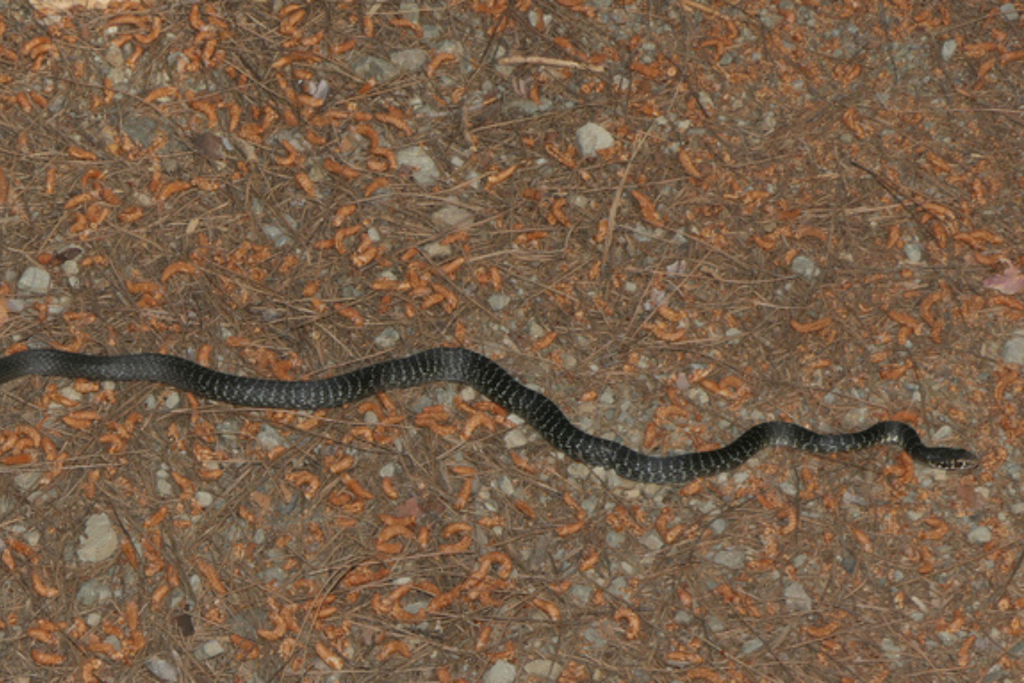
The Cyprus Whip Snake is one of these evolutionary treasures. Scientists believe its ancestors arrived from nearby Anatolia long ago, probably during periods when sea levels were lower and the geography of the eastern Mediterranean was very different. Once isolated on Cyprus, the population gradually evolved into a distinct species.
The snake was only formally described by science in 1985. Before then, it had been confused with other Mediterranean whip snakes. Its late discovery demonstrates how much of Cyprus’s wildlife remained unexplored well into modern times.
Built for a Life on the Move
Unlike the heavy-bodied Cyprus Viper, the Cyprus Whip Snake is built for movement.
Its body is long and slim, allowing it to pass quickly through shrubs, grasses, and rocky slopes. Its large eyes reveal an animal that relies heavily on vision while hunting.
Colouration varies between individuals but generally consists of shades of olive-brown, grey-brown, or earthy tones that blend perfectly with forest floors and rocky mountain habitats.
The snake is active during daylight and often spends time moving between patches of suitable habitat in search of food.
Life Between Forest and Water
One of the most interesting discoveries about the Cyprus Whip Snake is its strong association with water.
Although Cyprus is famous for its dry summers, this snake is often found near streams, seasonal rivers, springs, reservoirs, and damp valleys. Habitat studies identified proximity to water as one of the most important factors determining suitable habitat.
The species is most commonly associated with the Troodos Mountains, where pine forests, oak stands, rocky slopes, and watercourses create a diverse landscape rich in prey. Preferred habitats include Mediterranean pine forests, oak woodlands, scrub vegetation, and areas close to freshwater.
This combination of forest cover and water may explain why the species remained hidden from scientists for so long.
Curious Facts About the Cyprus Whip Snake
- It lives nowhere else – The entire world population exists on Cyprus.
- It was discovered surprisingly recently – The species was formally described only in 1985.
- It is one of Europe’s rarest snakes – Even professional herpetologists can spend years without encountering one.
- Water matters – Unlike many Mediterranean snakes, it often occurs near streams, reservoirs, and damp mountain valleys.
- It is a hunter of hunters – Its diet includes lizards, frogs, small mammals, insects, and even other snakes.
- It helps maintain ecological balance – By controlling populations of small vertebrates, it plays an important role in mountain ecosystems.
A Difficult Life in a Changing Landscape
Being an island endemic has advantages, but it also creates vulnerabilities.
Because the Cyprus Whip Snake occupies only a relatively small part of the island, local problems can have major consequences for the entire species.
Researchers identify habitat fragmentation, drought, climate change, road mortality, habitat loss, and deliberate killing by people as some of the most important threats.
Climate change may be particularly important because the species depends on habitats that retain moisture during the long Mediterranean summer.
Conservation studies show that maintaining connections between suitable habitats is essential. Forests of Paphos, Troodos, and Adelfoi appear to act as key corridors that allow movement between populations.
Why It Matters Today
The Cyprus Whip Snake has become one of the flagship species for reptile conservation on the island.
Its presence indicates healthy mountain ecosystems with functioning food webs, intact vegetation, and reliable water sources.
Protecting the snake also protects forests, streams, amphibians, birds, insects, and countless other organisms that share the same habitats.
In many ways, conserving Hierophis cypriensis means conserving the ecological heart of the Troodos Mountains themselves.
Searching for a Ghost
For anyone hoping to see a Cyprus Whip Snake, patience is essential.
Most observations come from the Troodos massif, especially in areas where pine forest, rocky ground, and freshwater sources occur together. The species has been recorded from roughly 400 to 1900 metres above sea level.
Spring is usually the best season for observations, when temperatures are mild and reptiles become more active.
Even then, sightings remain rare. The snake’s excellent camouflage and secretive behaviour allow it to disappear almost instantly into surrounding vegetation. For many wildlife enthusiasts, spotting one is the reptile equivalent of finding buried treasure.
A Symbol of Wild Cyprus
The Cyprus Whip Snake is not the largest snake on the island, nor the most famous. Yet it may be the most uniquely Cypriot.
Found nowhere else on Earth, it represents the remarkable evolutionary story of an island that has been separated from surrounding lands for millennia. Hidden among mountain forests and stream valleys, it survives as a living reminder that Cyprus still holds secrets waiting to be discovered.
And perhaps that is why this rare snake deserves our attention: protecting it means protecting a small piece of the island’s natural heritage that exists nowhere else in the world.