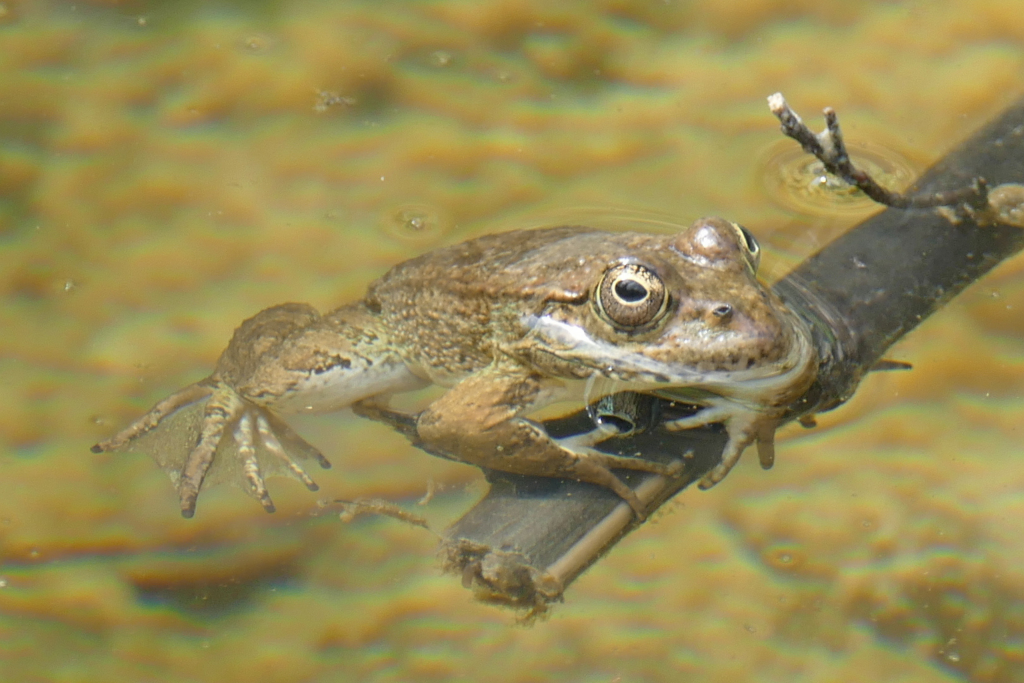
In the quiet wetlands and hidden garden pools of Cyprus lives one of the island’s most familiar yet often overlooked amphibians — the Cyprus water frog, Pelophylax cypriensis. At first glance it may seem like just another green frog among many, but its story reaches deep into the island’s evolutionary past, human history, and even modern ecological debates.
To listen carefully to its night-time calls is to hear a small but important voice of Cyprus’ living landscapes.
A Voice from the Water’s Edge
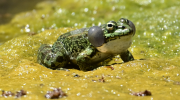
The Cyprus water frog is a medium-to-large aquatic frog belonging to the broader group of European “water frogs” in the genus Pelophylax. It is most often encountered in still or slow-moving freshwater — ponds, reservoirs, irrigation canals, and marsh edges.
Unlike the secretive tree frogs or the more terrestrial toads, this species is deeply tied to water. It rarely strays far from it, and its life is written almost entirely on the surface tension of Cyprus’ freshwater habitats.
Where It Fits in Nature’s Story
Across Europe, the genus Pelophylax represents a surprisingly complex evolutionary puzzle, containing species that can hybridise, exchange genes, and form long-lived mixed populations. Within this group, Pelophylax cypriensis is considered an island endemic lineage, shaped by isolation in the eastern Mediterranean.
Recent genetic studies show that Cyprus water frogs are part of a broader Pelophylax radiation that stretches from Europe into Anatolia and the Near East. Interestingly, research has also revealed that some populations on Cyprus carry traces of Anatolian relatives, suggesting human-mediated introductions in the past — possibly through ancient trade routes or the movement of fish stock for aquaculture.
So while the species feels uniquely Cypriot today, its ancestry is a layered story of isolation, contact, and occasional biological “crossings of paths.”
A Natural History Written in Water
The Cyprus water frog belongs to a group known for their smooth skin, strong hind legs, and powerful swimming ability. Adults are typically green to olive-brown, often with darker mottling that helps them blend into aquatic vegetation.
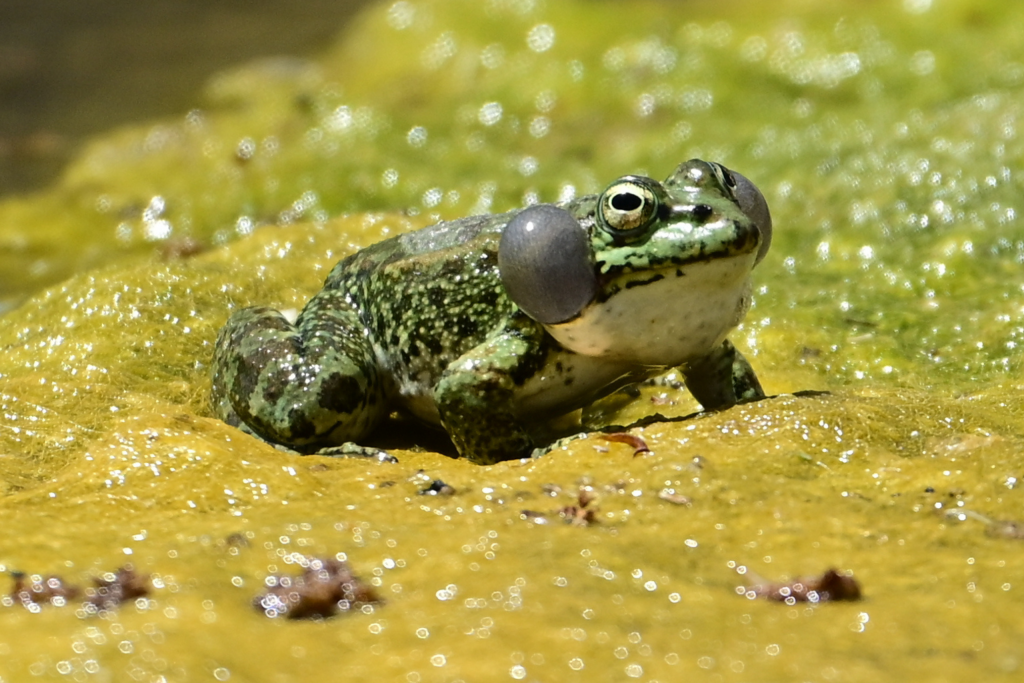
Males are the vocal ones. On warm spring and summer nights, they produce a rhythmic chorus — a low, repetitive “croak-croak” that travels across water surfaces like sound drifting on glass. These calls are not just background noise; they are territorial signals and courtship invitations.
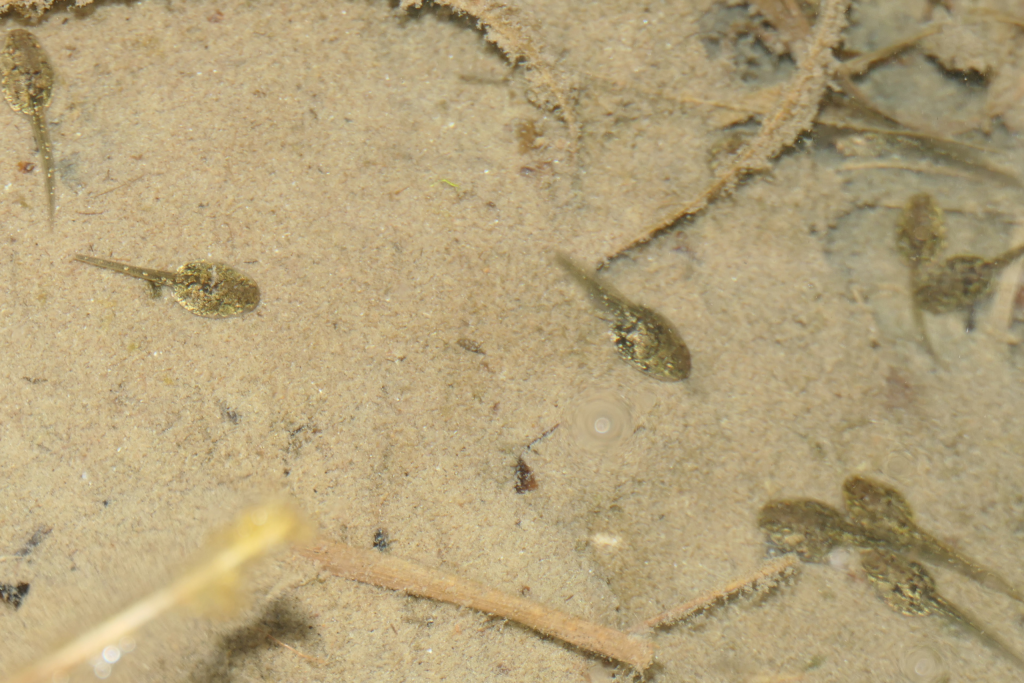
Tadpoles develop slowly in warm shallows, feeding on algae and plant material before transforming into agile young frogs ready for a fully aquatic life.
Small Wonders from the Wetlands
There is more to this frog than meets the eye:
- It is an excellent jumper, capable of leaping many times its body length to escape predators.
- Its skin can absorb oxygen, allowing it to remain submerged for long periods.
- Males often form “chorus groups,” synchronising calls that can be heard hundreds of meters away.
- Some populations are influenced by hybridisation processes common in the Pelophylax group, making their genetics unusually dynamic for amphibians.
These frogs are also indicators of freshwater health — when their populations decline, it often signals changes in water quality or habitat loss.
A Complicated Genetic Heritage
One of the most fascinating aspects of Pelophylax cypriensis is its relationship with other water frogs in the region. Genetic research has shown that certain individuals on Cyprus carry mitochondrial or nuclear DNA typical of Anatolian water frogs, suggesting occasional introgression events.
In simple terms, the species is not entirely genetically “sealed off.” Instead, it reflects a broader Mediterranean pattern where frogs, fish introductions, and human movement have occasionally blended populations that would otherwise remain separate.
This does not erase its identity as a Cypriot endemic — rather, it highlights how island ecosystems are never completely isolated from the wider world.
Still Present in Modern Cyprus
Today, the Cyprus water frog can still be found in suitable freshwater habitats across the island, although its distribution is patchy. Reservoirs, irrigation networks, and protected wetlands often serve as refuges.
It plays a quiet but important ecological role: controlling insect populations, forming part of food webs, and acting as prey for birds, snakes, and fish.
However, it also faces pressures — habitat modification, water extraction, pollution, and competition with introduced species can all affect local populations.
Where to Experience It
If you stand near a still pond in spring twilight — especially in rural or agricultural landscapes — you may hear it before you see it. The sound usually comes first: a soft, repetitive chorus rising as temperatures fall.
Best places to encounter it include:
- Irrigation ponds and reservoirs
- Marshy edges of wetlands
- Slow canals and agricultural water systems
Patience is key. These frogs are shy, and they often remain hidden among reeds, revealing themselves only as ripples or sudden jumps into the water.
A Living Thread in Cyprus’ Wetlands
The Cyprus water frog is not a dramatic or rare “flagship” species, but it is deeply embedded in the island’s living fabric. It connects ancient biogeography, modern human influence, and everyday wetland ecology into one continuous story.
To notice it is to notice Cyprus itself in miniature, an island where water, land, and history are always quietly intertwined.