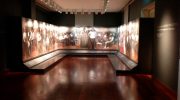
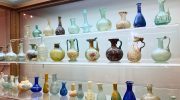
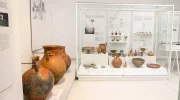
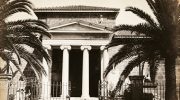
The Cyprus Museum stands on Museum Street in central Nicosia as the oldest and largest archaeological museum in Cyprus. Founded in 1882 during British occupation, the museum houses the most extensive collection of Cypriot antiquities in the world. The institution displays only artifacts discovered on the island, creating a focused narrative of Cyprus’s archaeological heritage from the Neolithic period through the Roman era.
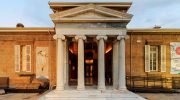
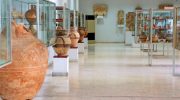
The museum building itself carries historical importance, with construction commencing in 1908 and completing in 1924 when Cyprus remained a British colony. Extensions added in 1961 created additional galleries, storerooms, and offices that surround a central square area housing auxiliary offices, a library, and laboratories for preserving and studying items. Fourteen display halls follow chronological and thematic succession, though the collection has far outgrown existing capacity with only a small fraction on display at any time.
How a petition saved Cyprus’s heritage
The museum was founded following a petition delivered to British authorities by a delegation headed by religious leaders of both Christian and Muslim populations. The catalyst for this action was several illicit excavations and the smuggling of antiquities off the island during the early British period.
Cypriots recognized that their archaeological heritage was disappearing to foreign museums and private collections, prompting joint action across religious communities. The British administration agreed to establish a central repository for island discoveries, creating the legal framework for archaeological protection. The first organized catalogue was compiled and published in 1899 by Sir John Myres and Max Ohnefalsch Richter. Soon after inception, the museum started receiving items from numerous excavations run mainly by British and European expeditions.
The Swedish Cyprus Expedition between 1927 and 1931 under professor Einar Gjerstad greatly augmented collections through first large scale systematic excavations. The museum’s history thus parallels the development of modern archaeology and the Department of Antiquities in Cyprus.
Star pieces that define the collection
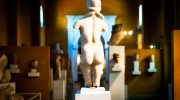
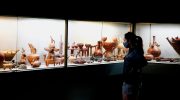
The famous Aphrodite of Soloi ranks as the museum’s most prominent artifact, a marble statue of the goddess of love and beauty dating to the 1st century BC. This sculpture exemplifies the synthesis of Greek artistic traditions with local Cypriot sensibilities. The cross shaped idol from the Chalcolithic period represents some of the earliest religious expression on the island. Early Bronze Age pottery from Vouni demonstrates sophisticated ceramic techniques developed thousands of years ago.
Late Bronze Age golden jewelry from Egkomi showcases the wealth and craftsmanship of ancient Cypriot kingdoms. The bronze statue of Roman Emperor Septimius Severus illustrates Cyprus’s integration into the Roman Empire. Magnificent finds from the royal tombs of Salamis include a bed decorated with pieces of ivory and colored glass, two thrones, and a bronze cauldron supported on an iron tripod and decorated with four busts of sirens and eight griffins. The Treasury of Agia Erimi contains hundreds of terracotta figurines that resemble a small terracotta army.
Recent decentralization spreads treasures across Cyprus
Recent years have seen progressive decentralization of museum collections, with most finds from current excavations deposited in local district museums. The Limassol Archaeological Museum showcases artifacts from that region spanning 9,000 years. The Kourion Archaeological Museum occupies the former residence of George McFadden who led University of Pennsylvania excavations between 1934 and 1953.
The Larnaca District Archaeological Museum contains discoveries from the ancient city kingdom of Kition and major Neolithic settlements of Choirokitia and Tenta Kalavasos. The Local Museum of Ancient Idalion established in 2007 showcases historical discoveries from the Dali region and serves as a visitor center for the nearby archaeological site. This decentralization allows regional museums to develop specialized collections while reducing pressure on the central Nicosia facility. However, it also means visitors seeking comprehensive overview of Cypriot archaeology must still visit the Cyprus Museum.
The challenge of limited space
The museum collection has far outgrown the capacity of existing buildings. Several ongoing excavations and constant new finds exacerbate storage problems. The issue of relocation to more spacious premises has been raised repeatedly, but a suitable site has yet to be decided. Suggestions include redeveloping the nearby and now demolished building of the Nicosia Old General Hospital.
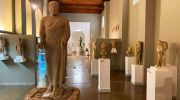
The current building, while historic and centrally located, lacks space for proper display of the full collection and modern amenities expected by contemporary museum visitors. Temperature and humidity control systems require upgrades to meet international conservation standards. The library and research facilities need expansion to serve the growing community of scholars studying Cypriot archaeology. Despite these limitations, the museum continues acquiring new material from excavations and maintaining its role as the primary repository for island discoveries.
A free museum in the heart of the capital
The Cyprus Museum offers free admission, making it accessible to all visitors regardless of budget. The museum is located near Paphos Gate in the Venetian city walls, easily accessible on foot from other central Nicosia attractions. The museum operates Monday through Sunday from 10:00 to 19:00. Audio guides are available though some reviewers note missing tracks or incomplete information.
A museum shop offers limited selection of souvenirs and books, especially in languages other than Greek, though purchases support the institution. A cafe in the museum’s garden provides a pleasant space for relaxation between viewing halls. The staff is generally described as pleasant and helpful. Visitors typically spend about one hour exploring the main exhibits, though those with deeper interest in archaeology can easily extend their visit to two or three hours.

Comfortable footwear is recommended as visitors walk through several exhibition rooms. The museum can get crowded during peak tourist season but often remains relatively empty during off season, allowing for relaxed exploration.
Why this museum matters to Cyprus
The Cyprus Museum anchors the island’s claim to an ancient civilization that participated in broader Mediterranean cultural networks while maintaining distinct Cypriot character. The collections demonstrate that Cyprus was never isolated but rather served as a crossroads where Egyptian, Greek, Roman, and Near Eastern influences merged. The museum preserves tangible evidence of kingdoms, trade networks, religious practices, and artistic achievements that might otherwise exist only in ancient texts.
For understanding Cyprus, the museum provides essential context that enriches visits to archaeological sites across the island. The statues, pottery, jewelry, and everyday objects make ancient life concrete rather than abstract. The museum’s founding represents an early example of Cypriot cooperation across religious and ethnic lines to protect shared heritage. The institution demonstrates how small nations can maintain world class collections when proper systems exist for archaeological protection and curation.