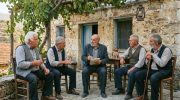
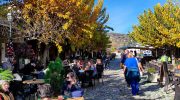
Traditional Cyprus courtyards with stone arches represent the architectural heart of village homes where families conducted daily life away from public view. The avli, as courtyards are called in Greek, functioned as outdoor living rooms enclosed by thick limestone walls exceeding half a meter in depth. Between rooms inside the house, graceful stone archways created a sense of flow and strength while thick wooden beams supported roofs covered with clay tiles.
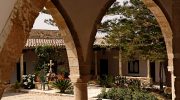
The architecture prioritized both community connection through shared walls with adjacent family compounds and climate adaptation through thermal mass that kept interiors cool in summer and warm in winter. The iliakos, a covered porch created by extending the roof 2 to 3 meters forward on wooden beams or stone arches, served as the main social space where families received guests and conducted handicrafts.
High stone walls and tightly locked gates hid houses from passing strangers, creating privacy that defined traditional Cyprus domestic architecture where facades and gardens remained invisible to uninvited observers.
The Avli as the Heart of Home
The central courtyard served multiple essential functions that made it indispensable to Cyprus village life. Families cooked, worked, ate together, and processed agricultural products in these open-air spaces that provided natural light and ventilation unavailable in small interior rooms. Women dried fruits and vegetables on flat rooftops accessible from courtyards, creating preserved foods for winter consumption. Olives were crushed in small stone presses to extract oil, while grapes were processed into wine and traditional sweets including palouzes pudding and soutzoukos candied walnuts.
Textile production occurred primarily in courtyards where daylight aided detailed handwork. Women spun wool from family sheep into thread using drop spindles, then wove fabric on outdoor looms positioned to capture maximum natural light. The labor-intensive process required years to produce sufficient textiles for family needs, making courtyard workspace essential to household economy. These productive activities transformed the avli from simple empty space into active work zones that generated income and subsistence goods.

Courtyard plantings included practical species like grape vines trained over wooden frameworks to create shaded areas, fig trees providing fruit and filtered sunlight, and aromatic herbs used in cooking and folk medicine. Some families maintained small vegetable gardens and kept chickens or goats for eggs, milk, and meat. This integration of agriculture into domestic space blurred boundaries between home and farm that characterize preindustrial societies where production and consumption occurred within unified household economies.
Stone Arches Between Living Spaces
Interior archways connecting rooms demonstrated both structural necessity and aesthetic sophistication. Stone arches distributed roof weight to load-bearing walls without requiring intermediate columns that would obstruct interior movement. The graceful curves created visual flow between spaces while maintaining functional separation that allowed different activities to occur simultaneously in adjacent rooms. The dikhoro or double room arrangement featured two parallel spaces separated by arches, creating the main living quarters where families gathered for meals and daily activities.
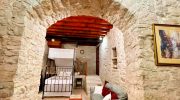
The construction technique required skilled masonry where individual stones were shaped to fit together in self-supporting curved formations. Builders created temporary wooden frameworks called centering that held arch stones in position during construction until the final keystone locked everything in place. Once complete, the wooden supports were removed, leaving freestanding arches that could support tremendous weight. This ancient building technology descended from Roman engineering through Byzantine traditions maintained in Cyprus despite successive foreign occupations.
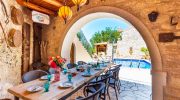
Arches allowed buildings to adapt to steep terrain common in mountain villages. Structures terraced into hillsides at multiple levels used arched openings to connect rooms at different elevations, creating complex three-dimensional arrangements impossible with flat ceiling construction. The ground floor of a house accessible from one street level might align with the second floor accessible from a higher street, with arched passages allowing movement between these spaces.
Decorative carved details on arch keystones and capitals demonstrated family wealth and stonemason skill. Wealthier households commissioned elaborate carvings featuring geometric patterns, floral motifs, or religious symbols that announced social status to visitors. These decorative elements transformed utilitarian structural components into aesthetic statements that elevated ordinary village houses toward architectural significance.
The Iliakos Covered Porch
The iliakos formed the primary social interface between private family life and public interaction with visitors. The roof extension created by projecting the doman 2 to 3 meters forward on wooden beams or stone arches produced semi-open space protected from sun and rain. This transitional zone between enclosed rooms and open courtyard allowed outdoor living essential in Cyprus climate where interior spaces became uncomfortably warm during summer months.
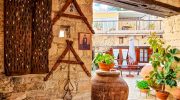
One end of the iliakos typically contained the mairko, a dedicated area for cooking and washing dishes that kept smoke and food odors away from sleeping quarters. The open-air kitchen configuration provided ventilation that prevented smoke accumulation while isolating fire hazards from the main structure. Women prepared meals using charcoal braziers or small wood-burning stoves, with the iliakos protecting them from direct sun while allowing heat dissipation impossible in enclosed kitchens.
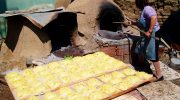
The social function was paramount, as hosts received guests in the iliakos while offering coffee and traditional sweets. Neighbors gathered for handicraft work while discussing village news, creating female social networks parallel to male coffee shop culture. The semi-public nature meant visitors could be entertained without entering private family spaces, maintaining cultural norms that kept domestic interiors concealed from male outsiders. This architectural solution balanced hospitality requirements against privacy values that structured traditional Cyprus society.
Furniture in the iliakos remained minimal, typically including low wooden chairs from Fini village and woven reed mats for sitting. The emphasis on outdoor living meant families invested less in interior furnishings than comparable European households, directing resources instead toward productive agricultural tools and textile equipment. The simplicity reflected broader Mediterranean patterns where climate encouraged outdoor activities and social interaction occurred in shared spaces rather than private parlors.
Building Materials and Construction Methods
Local limestone provided primary construction material, quarried from hillsides near villages and shaped into rectangular blocks. The thick walls, typically 50 to 80 centimeters, provided thermal mass that absorbed heat during the day and released it gradually at night, moderating temperature swings without mechanical systems. The natural stone kept interiors cool in intense summer heat and warm during mild winter cold, creating passive climate control that modern air conditioning has made unnecessary but at substantial energy cost.
Stone floors or hard packed earth characterized older homes, with patterned tiles gradually replacing these traditional surfaces as industrial production made manufactured materials affordable. The progression from earth to stone to tile documented economic development and changing aesthetic preferences, though some families deliberately maintained traditional floors as markers of authenticity and connection to village heritage.

Wooden beams supporting roofs came from Cyprus pine forests before conservation regulations limited harvesting. The timber aged naturally, developing characteristic gray patinas. Roof construction used these beams covered with clay tiles manufactured in local kilns from Cypriot clay deposits. The tiles overlapped in rows channeling rainwater toward gutters, protecting walls from moisture damage that would compromise structural integrity.
The construction knowledge passed through family workshops where fathers taught sons masonry, carpentry, and other building trades. This informal apprenticeship system maintained craft traditions across generations without formal education or certification. The accumulated wisdom about local stone properties, appropriate timber species, and proper construction sequences created vernacular architecture perfectly adapted to Cyprus conditions through centuries of trial and refinement.
Contemporary Preservation and Adaptive Reuse
Many traditional courtyard houses now operate as boutique accommodations offering authentic village experiences. The Melissothea Stone Suites retain original character while providing modern comfort, with thick walls, cool courtyards, and antique furniture complementing contemporary bathrooms, kitchens, and climate control invisible from public streets. This adaptive reuse demonstrates how historical architecture can serve luxury tourism while maintaining cultural authenticity.
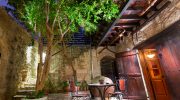
Government restoration programs offer financial incentives for projects following traditional building methods and materials. The regulations require maintaining stone exteriors, wooden architectural elements, and overall village character while permitting interior modernization. The balance between preservation and contemporary function allows traditional structures to remain viable rather than becoming uninhabitable museum pieces.
The challenges include adapting layouts designed for extended families to nuclear household needs, integrating modern plumbing and electrical systems invisible from exteriors, and providing adequate storage for accumulated possessions beyond what farming families once owned. Successful renovations respect original spatial organization while creatively inserting necessary modern amenities in ways that minimize visual and structural impact on historic fabric.