Explore Cyprus with Our Interactive Map

Explore our top stories and discover ideas worth your time.

Whispers from the Sunlit Slopes

Whispers from the Sunlit Slopes

Imagine strolling across a rocky hillside in Cyprus under a clear blue sky, where a shrubby plant releases a warm, woody aroma that hints at ancient potions and savory island dishes. This is sage, a resilient herb that dots the wild landscapes of Cyprus, offering simple wisdom from nature’s own apothecary to those who pause to notice. A Fragrant Shrub in the Mint Family Sage belongs to the genus Salvia in the vast mint family (Lamiaceae), a group of plants known for their square stems and aromatic leaves rich in essential oils. In Cyprus, several wild species grace the landscape, thriving in dry, rocky slopes and maquis vegetation from sea level to the high Troodos peaks. Echoes of Ancient Healers The name Salvia comes from the Latin “salvare” – to save or heal – reflecting its long history as a medicinal plant. In Cyprus, sage has been gathered since prehistoric times. Ancient Greek physicians like Dioscorides praised its wound-healing powers, while it was used in rituals for protection and purification. Over centuries, it became deeply rooted in island folklore as a symbol of longevity and wisdom. Woolly Leaves and Starry Blooms Wild sage in Cyprus typically grows as a low to medium shrub with fuzzy, silvery-green leaves that feel velvety to the touch. When crushed, they release a bold, earthy-camphor…

Read more
Stone Houses of Cyprus Villages

Stone Houses of Cyprus Villages

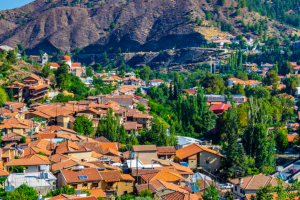
Traditional stone houses represent the architectural heritage of Cyprus villages, built from local limestone and designed to withstand the Mediterranean climate for centuries. These structures feature thick walls exceeding half a meter, stone arches, flat or low-pitched clay tile roofs, and internal courtyards that served as the center of family life. The houses evolved from simple single-room dwellings called makrinari to more complex two-story structures with distinct functional spaces including the dikhoro living room and iliakos covered porch where social life unfolded. Construction utilized materials quarried nearby including limestone, sandstone, shell rock, granite, and volcanic diabase, creating buildings that naturally insulated inhabitants from summer heat and winter cold. Many traditional houses now receive UNESCO cultural heritage protection and government restoration grants. The revival of these stone structures through careful renovation has created unique accommodation options that allow visitors to experience authentic village life while supporting rural communities threatened by urban migration and modernization. The Ancient Roots of Stone Construction Cyprus's stone building tradition extends back 9,000 years to the Neolithic settlement of Choirokoitia, where circular houses constructed from mudbrick and stone with flat roofs housed early farming communities from 7000 to 5200 BC. These prehistoric dwellers created sophisticated layouts with fortification walls and controlled village access, demonstrating organized social structures that prioritized collective security and planned development. The round house…

Read more
Cyprus National Day – October 1 Celebrations

Cyprus National Day – October 1 Celebrations

Cyprus Independence Day on October 1 commemorates the island's liberation from British colonial rule in 1960, marking the birth of the Republic of Cyprus as a sovereign nation. Although independence officially occurred on August 16, 1960, celebrations were moved to October 1 to avoid the summer heat and accommodate the tourist season. The day honors the four-year struggle by EOKA fighters between 1955 and 1959 who fought for freedom and unification with Greece (Enosis) through guerrilla warfare against British forces. The national holiday features military parades in Nicosia showcasing units from the National Guard, Greek forces stationed in Cyprus, police, and fire services. The President lays wreaths at the statue of Archbishop Makarios III, Cyprus's first president, and delivers speeches reflecting on independence achievements and ongoing national challenges. Despite 65 years of sovereignty, the celebrations carry complex emotions given the island's division and Turkish occupation of the north since 1974. The Path to Independence and British Rule Britain acquired Cyprus in 1878 when the Ottoman Empire leased the island following the Russo-Turkish War. The strategic Mediterranean location made Cyprus valuable for protecting British interests in the region and securing routes to India. When World War I began in 1914, Britain formally annexed Cyprus, transforming the lease arrangement into direct colonial possession. The British ruled for 82 years, establishing administrative systems,…

Read more