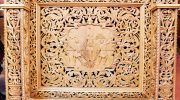
Woodcarving for Ecclesiastical Use in ancient and medieval Cyprus involved highly detailed work on icon screens, pulpits, and church furnishings, where technical mastery met spiritual symbolism to create sacred objects. Craftsmen used local woods like cypress or olive to carve intricate designs that conveyed theological meanings, from crosses for salvation to vines for eternal life. This tradition not only enhanced worship spaces but also preserved cultural narratives, making it a vital part of the island’s religious heritage.
- A Sacred Craft of Wood and Faith
- The Historical Roots of Ecclesiastical Woodcarving
- Designs That Blend Symbolism and Mastery
- Notable Details That Captivate
- Unraveling Deeper Layers of Meaning – Shaping Religion in Cyprus
- Woodcarving for Ecclesiastical Use in Cyprus Today
- Opportunities for Exploration
- A Carved Legacy of Devotion
A Sacred Craft of Wood and Faith
Woodcarving for ecclesiastical purposes in Cyprus represents a profound intersection of artistry and spirituality, where everyday materials were transformed into symbols of divine presence. Focused on elements like iconostases (screens separating nave from sanctuary), pulpits for sermons, and furnishings such as thrones or candelabra, this craft emphasized intricate details that conveyed theological concepts. Using woods abundant on the island, artisans created works that enhanced the liturgical environment, making churches feel alive with meaning. The practice’s roots in Byzantine traditions evolved through centuries, blending local symbolism with influences from the East and West, resulting in pieces that served both functional and inspirational roles in worship.
The Historical Roots of Ecclesiastical Woodcarving
The tradition of woodcarving in Cyprus dates to the early Christian era, with evidence from 4th-century AD sites like the Basilica of Saint Epiphanios in Salamis, where excavated fragments show carved wooden altars with cross motifs. By the Byzantine period (4th-12th centuries), woodcarving flourished in monasteries, influenced by Constantinople’s imperial styles. Excavations at Kykkos Monastery, founded in 1080 AD, have uncovered 11th-century icon screen pieces with vine patterns symbolizing Christ’s blood, as analyzed in reports by the Department of Antiquities.
The Comnenian revival (1081-1185 AD) brought more elaborate designs, with pulpits featuring apostolic figures, as seen in remnants from Machairas Monastery digs in the 1970s. Lusignan rule (1192-1489) introduced Gothic elements, like pointed arches on screens, but Cypriot carvers adapted them to Orthodox symbolism, adding local flora like olive branches for peace. Venetian period (1489-1571) saw Renaissance influences, with humanistic details on furnishings, while Ottoman rule (1571-1878) restricted grandeur but preserved carving in hidden chapels, as evidenced by 17th-century pieces from Asinou with protective symbols.
British colonial rule (1878-1960) documented the craft in ethnographic studies, like those by R. Gunnis in 1936, noting regional variations: Troodos carvings more rustic, coastal ones ornate from trade. Post-independence in 1960, it became a heritage symbol, with the 1974 division affecting wood supplies but sustaining in southern workshops. UNESCO’s heritage efforts recognize its continuity, with the Cyprus Woodcarvers Association training artisans since the 1980s.
Archaeological finds from Paphos (4th century AD) include carved panels with grapevines, linking to Eucharistic symbolism, while surveys in Troodos reveal 12th-century tools like chisels, showing specialized guilds.
Designs That Blend Symbolism and Mastery
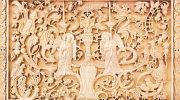
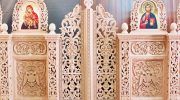
Cypriot woodcarving used local cypress for durability and olive for symbolism (eternal peace), carved with tools like gouges and mallets for precision. Iconostases, tall screens with tiers of icons, featured carved frames with vines for life or pelicans for sacrifice, as in 15th-century examples from Pedoulas. Pulpits, elevated for visibility, had panels with evangelist symbols – lion for Mark, eagle for John – enhancing sermons.
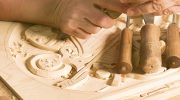
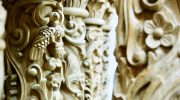
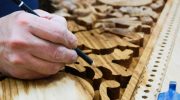
Furnishings like bishop thrones included thrones with armrests carved as lions for strength, while candelabra had twisted stems symbolizing the Tree of Life. Techniques involved relief carving for depth, with gold leaf on high points for luminescence in candlelight. Patterns drew from nature: pomegranates for fertility, fish for Christ, creating a symbolic language. Regional variants: southern carvings more floral from Venetian influence, northern geometric from Ottoman simplicity. Quality depended on wood seasoning – dried for years to prevent cracking – and artisan skill, often family-taught.
Notable Details That Captivate
A quirky legend claims a Kykkos carver’s pulpit “spoke” scriptures during services, its acoustics from hollowed wood. One motif, “Byzantine eagle,” symbolized double-headed empire, carved on thrones for protection. During Ottoman times, carvers hid crosses in vine patterns to defy bans, a find in 1980s restorations. Famous artisan Michalis from Pedoulas in the 19th century carved for the Sultan, blending styles. And in contests at festivals, carvers compete in speed-detailing, with prizes for symbolism.
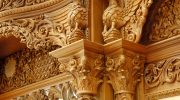
Restorations reveal gold leaf from Venetian trade, used for halos. A 12th-century panel from Asinou shows fish symbols, linking to early Christian codes.
Unraveling Deeper Layers of Meaning – Shaping Religion in Cyprus
The carving’s symbolism extends to theology: vines echo John 15’s “I am the vine,” representing union with Christ. In rituals, icon screens separated holy from profane, their carvings guiding prayer. Socially, it elevated artisans – often monks – to respected roles, with guilds in Nicosia from the 14th century organizing commissions. Economically, it supported monasteries through donations for furnishings.
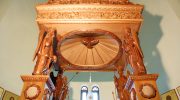
Cultural depth: motifs like lions symbolize guardianship, influenced by Near Eastern art traded via Phoenicians. In Ottoman era, carving became “resistance art,” with hidden saints defying icon bans. Ethnoart studies at the University of Cyprus analyze designs for math patterns, linking to ancient geometry.
Influences from Arab woodwork added arabesques, Venetian carving intricate reliefs, but Cypriots kept symbolic focus.
Woodcarving for Ecclesiastical Use in Cyprus Today
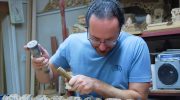
In contemporary Cyprus, ecclesiastical woodcarving thrives as a symbol of spiritual craftsmanship, with workshops in villages like Omodos producing icon screens for global Orthodox churches. Amid de facto division since 1974, it fosters unity, with joint projects across lines restoring furnishings. Climate change affects wood sources, prompting sustainable forestry initiatives. Artists fuse it with modern design, like carving in contemporary icons for galleries. In a globalized world, UNESCO’s heritage status spurs tourism, with sales supporting monastic economies.
Opportunities for Exploration
Cultural centers like the Byzantine Museum in Nicosia display carved pieces, open daily for €4. Festivals like the Troodos Religious Festival in July feature live carving, free to attend with workshops. Guided tours through the Cyprus Tourism Organization cost €15-20, visiting monasteries like Kykkos for sessions. Spring or fall avoids heat, pairing with hikes where carving echoes in chapels. Many venues offer online videos for remote access.
A Carved Legacy of Devotion
Woodcarving for Ecclesiastical Use matters as a guardian of spiritual symbolism and mastery, where detailed screens and furnishings preserve ancient meanings in churches. This wasn’t just craft; it’s a link to historical roots, blending history with skill in every cut. Knowing it enriches appreciation for Cyprus as an artisanal crossroads. Engagement with its motif or carving evokes renewed wonder at cultural endurance. In a modern age, it affirms handmade’s power to connect past and present.