Explore Cyprus with Our Interactive Map

Explore our top stories and discover ideas worth your time.

Cyprus Narrative Wall Paintings

Cyprus Narrative Wall Paintings

Narrative Storytelling Through Sequential Imagery in Cypriot Art involved the use of connected visual elements to convey myths, rituals, or sacred events within limited spaces such as walls or floors. This technique transformed individual scenes into cohesive narratives, engaging viewers with tales of deities, heroes, and everyday experiences without relying on text. Comparable to early forms of sequential illustration, it encouraged exploration of deeper layers through progressive imagery. A Method for Conveying Complex Narratives in Compact Forms Cypriot art employed sequential imagery to construct dynamic stories despite spatial constraints. Rather than isolated depictions, series of linked scenes unfolded myths, such as divine births from the sea, or rituals celebrating fertility and harvests. This approach allowed intricate concepts to fit into confined areas, like domestic floors or vessel surfaces, fostering reflection on cultural and spiritual themes. Origins on the Island This narrative style emerged in the Bronze Age around 2000 BC, amid Cyprus's role as a trade nexus incorporating elements from Greece, the Near East, and Egypt. Early pottery featured basic sequences illustrating hunts or dance rituals. The Iron Age after 1050 BC introduced Greek mythological influences, with friezes on temple walls depicting events like Aphrodite's emergence in ordered panels. Roman periods from 58 BC advanced the form through elaborate mosaics in villas, where floors served as narrative canvases for legends.…

Read more
Cyprus Omens Divination Traditions

Cyprus Omens Divination Traditions

Cyprus maintains vibrant divination and superstition traditions that blend ancient Greek practices with Christian Orthodox beliefs and Ottoman influences. The most iconic practice remains kafemanteia or coffee fortune telling, where patterns left by Cyprus coffee grounds reveal past and future events. These traditions persist across both Greek and Turkish Cypriot communities, demonstrating how folklore unites the divided island. Both young and old Cypriots observe omens and follow superstitious rituals, some from habit taught since childhood, others with genuine belief. The practices serve social and psychological functions, providing comfort during uncertainty while creating bonds through shared cultural knowledge passed between generations, typically from grandmother to granddaughter. The ancient art of reading coffee cups After drinking thick Cyprus coffee, the drinker places the saucer over the cup, makes a wish, and flips the entire assembly upside down. The cup rests on the saucer for several minutes while grounds settle and create patterns on the cup's interior. A designated reader, often an older woman called kafetzou, interprets shapes formed by the residue. The top half of the cup typically shows the future while the bottom half reveals the past. Some readers claim the left side indicates bad news while the right side brings good tidings. White designs formed by empty spaces represent positive developments, while dark patterns created by concentrated grounds signal challenges.…

Read more
Sanctuary of Apollo Hylates

Sanctuary of Apollo Hylates

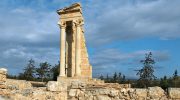
The Sanctuary of Apollo Hylates was one of the most important religious centres in ancient Cyprus, set within the wooded landscape near Kourion. Dedicated to Apollo in his role as protector of forests and nature, it combined Greek religious traditions with older local beliefs and attracted pilgrims for centuries. The sanctuary reveals how religion, nature, and daily life were closely connected in the ancient world. A Sacred Place in the Forest The Sanctuary of Apollo Hylates lies west of ancient Kourion, surrounded by gentle hills and woodland. Unlike urban temples built into city centres, this sanctuary was deliberately placed in nature, reflecting the character of the god worshipped there. Apollo Hylates was not the sun god or musician known from classical myths, but a guardian of forests, wild landscapes, and natural balance. The setting itself was part of the sacred experience, where worshippers felt close to both the god and the land. Roots Older Than the Greeks The origins of the sanctuary reach back to the Late Bronze Age. Before Greek settlers arrived, local communities already worshipped a nature deity connected to trees and the wilderness. When Greek culture spread to Cyprus, this local god was identified with Apollo. Rather than replacing older beliefs, Greek religion absorbed them. The result was Apollo Hylates, a uniquely Cypriot form of the god…

Read more