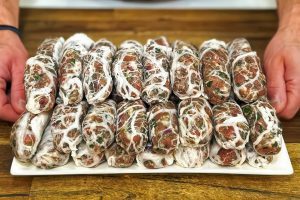
Sheftalia looks like a sausage, but it behaves very differently. There is no casing to snap, no neat uniformity, and no attempt to imitate anything else in the Mediterranean. Instead, minced meat, herbs, and onion are wrapped loosely in caul fat and cooked slowly over charcoal, producing something softer, juicier, and unmistakably Cypriot.
This is a dish shaped by village logic rather than factory precision. Its endurance comes from how well it fits the island’s rhythms of cooking, gathering, and shared meals. To understand sheftalia is to understand how Cyprus turns necessity into identity.
Built Around Fire, Not Convenience
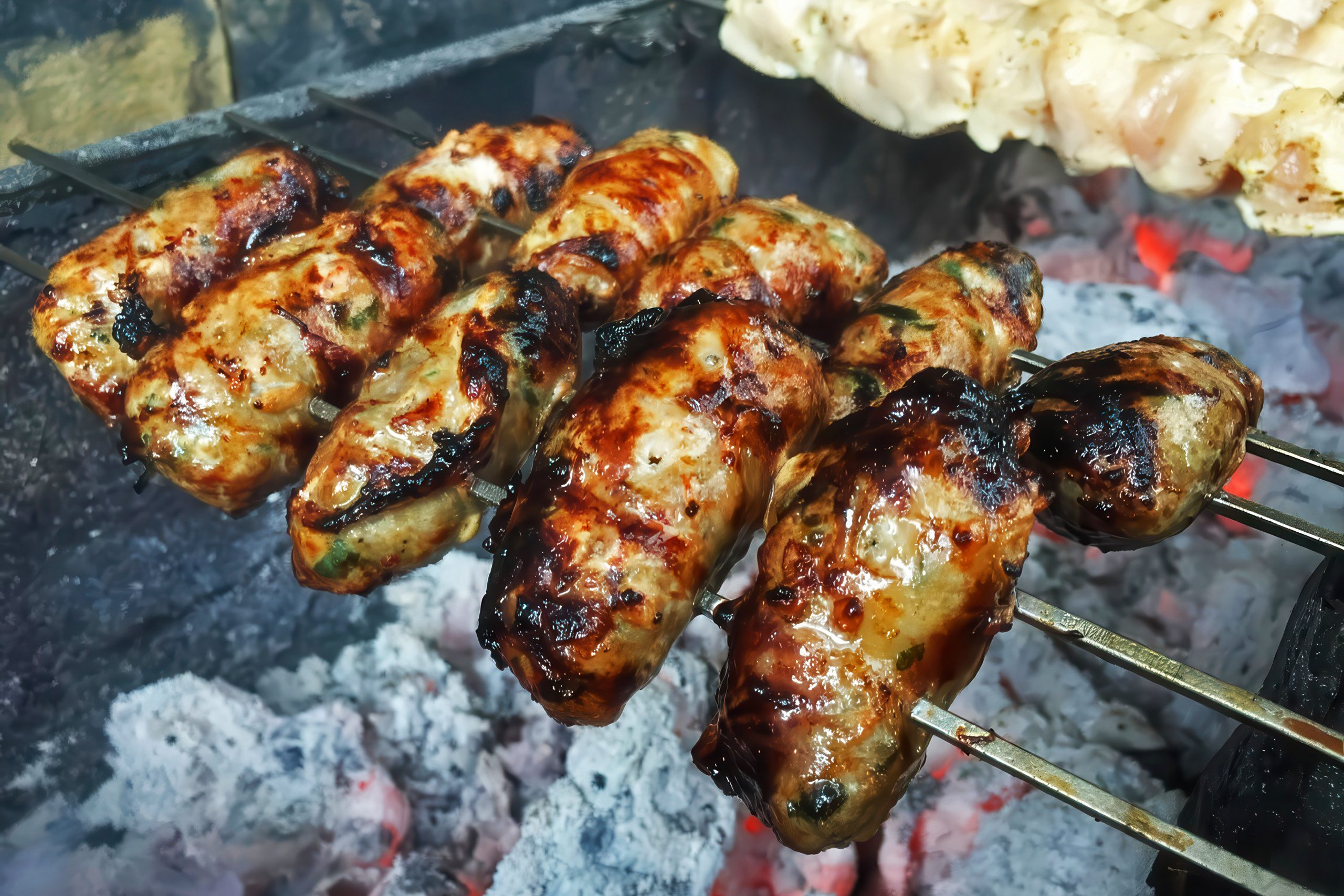
Sheftalia is inseparable from the grill. It is not cured, dried, or stored. It is mixed, wrapped, and cooked fresh, usually over charcoal rather than gas. This choice matters. As the caul fat melts, it bastes the meat from the outside, dripping onto the coals and sending smoke back into the sausage.
The cooking process is interactive and attentive, requiring turning, patience, and an understanding of heat. Unlike conventional sausages, which rely on tight casings and internal pressure, sheftalia remains deliberately loose. The meat steams gently inside its fatty wrap while the exterior browns. The result is not crispness, but succulence, a texture designed for slow eating rather than fast handling.
Why Caul Fat Changes Everything
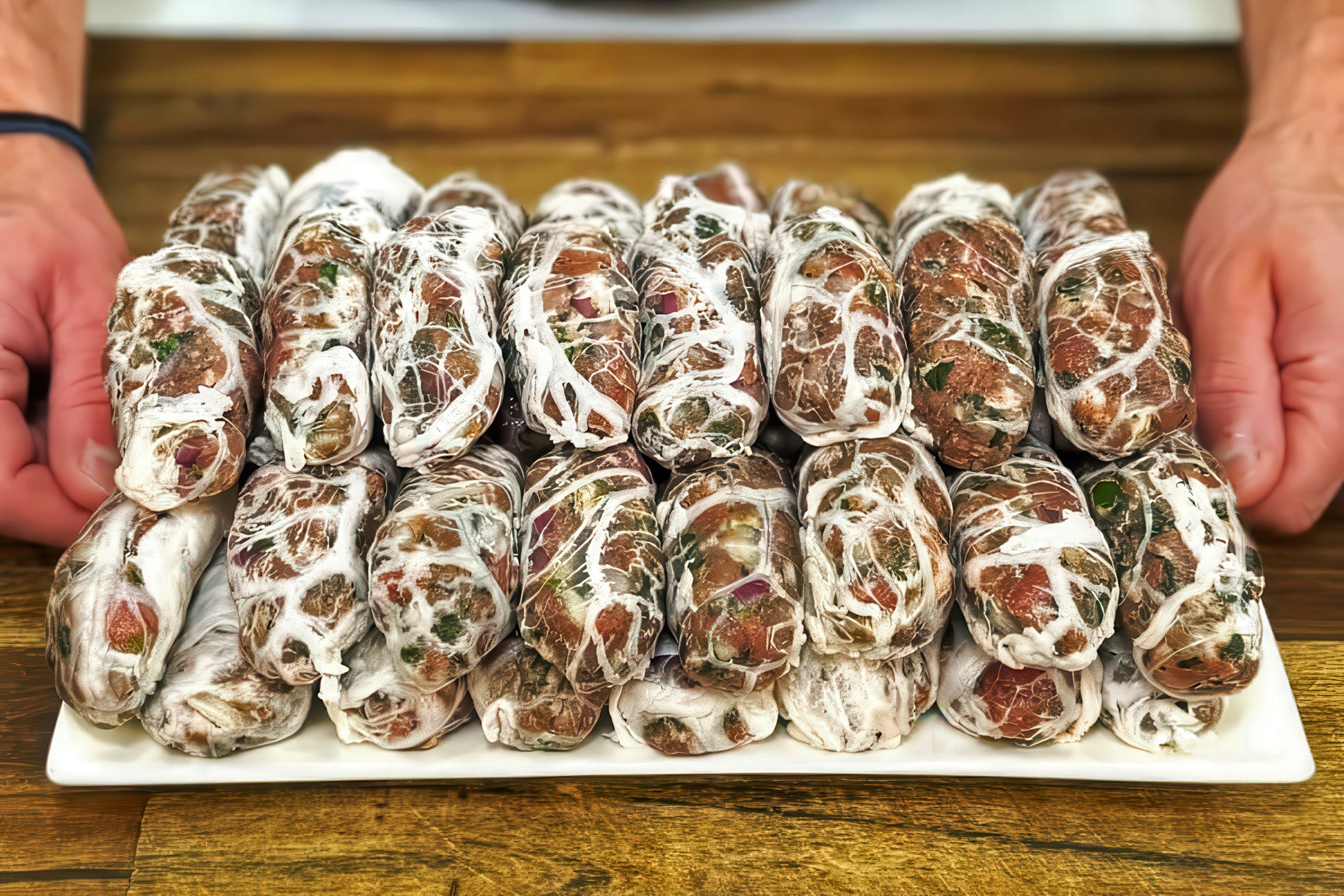
The defining feature of sheftalia is caul fat, known locally as panna. This thin, web-like membrane surrounds the stomach of the animal and was once a standard part of village butchery. In Cyprus, it became a solution to a practical problem: how to grill soft, onion-rich minced meat without it falling apart.
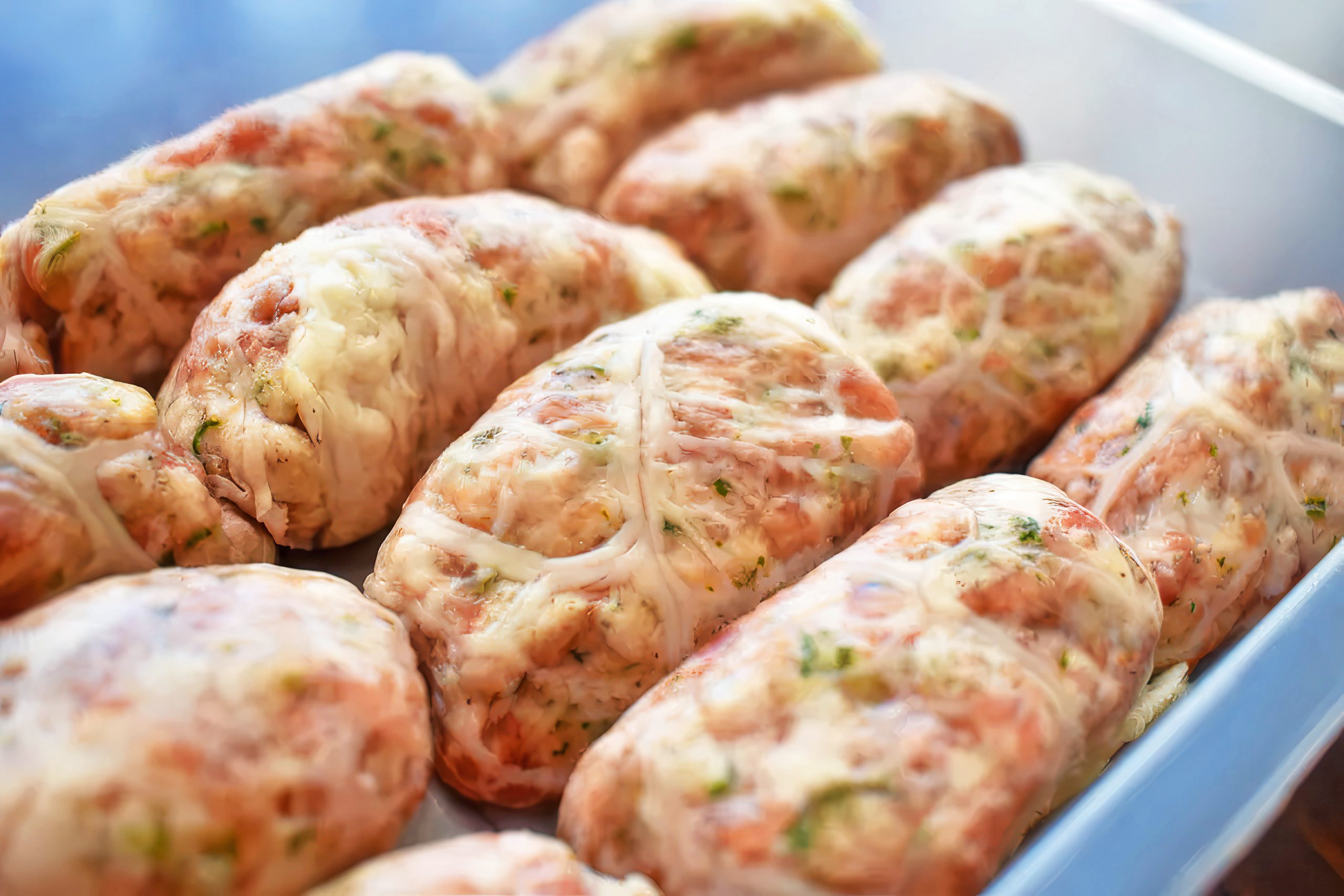
Caul fat solved this elegantly. It holds the mixture together, seals in moisture, and melts gradually as the meat cooks. Nothing else performs all three functions at once. The flavour it adds is subtle but essential, creating richness without heaviness.
This is why sheftalia cannot be industrialised easily. Remove the caul fat, and the dish loses its purpose, both structurally and culturally.
A Recipe Written by Resourcefulness
Sheftalia was never a luxury food. It emerged from a way of cooking where nothing was wasted. Meat trimmings, herbs from the garden, onions to add bulk and sweetness, and caul fat that would otherwise be discarded all came together in one preparation.
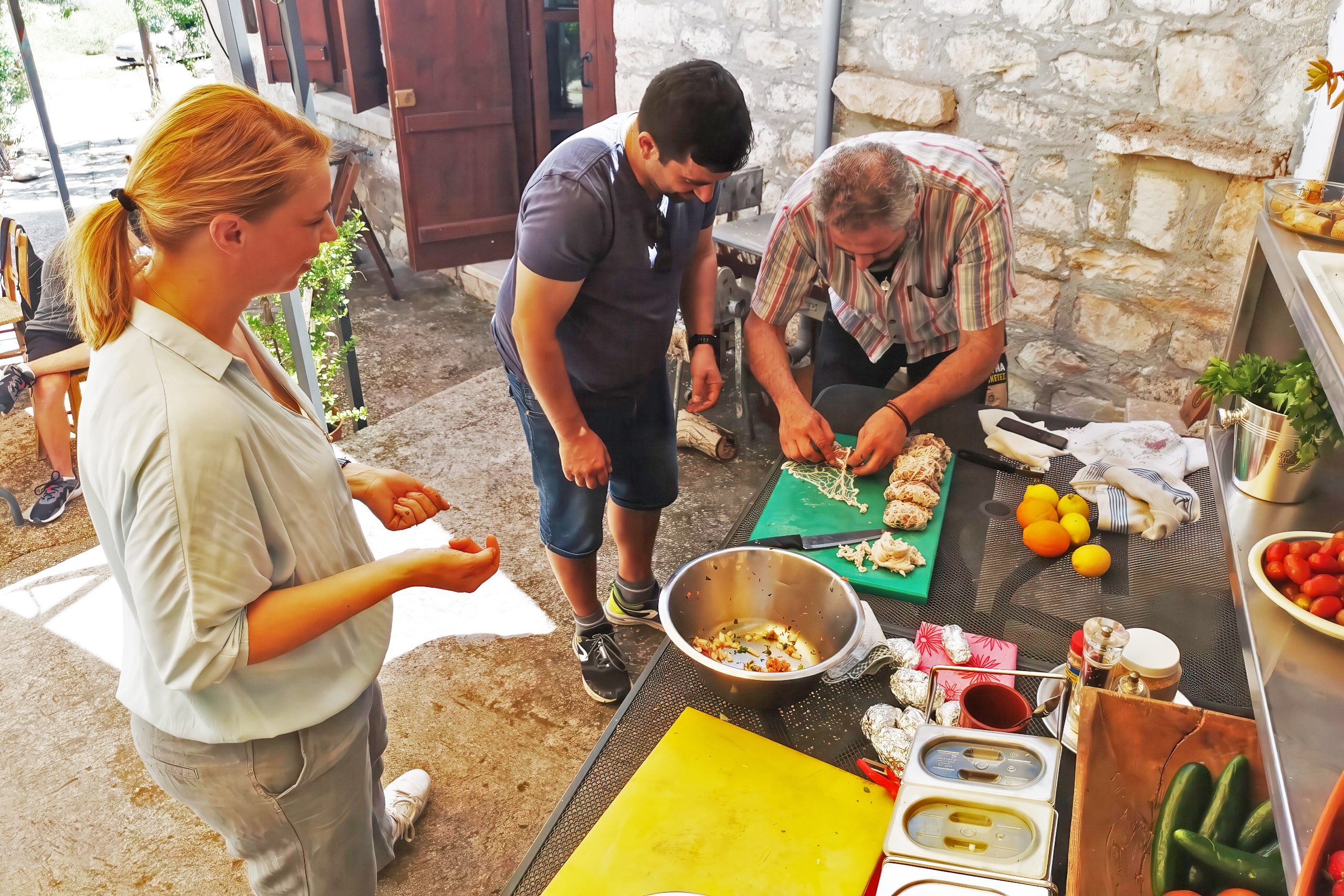
This resourcefulness shaped the flavour profile. Parsley is used generously, not as decoration but as substance. Onions are not background notes, but a structural ingredient that keeps the meat moist. Cinnamon appears not as sweetness, but as warmth, tying the herbs and meat together.
The result is a sausage that tastes balanced rather than aggressive. There is no spice dominance, no sharpness, and no smoke without freshness. The dish works because restraint is built into its logic.
A Dish That Belongs to Everyone
Sheftalia exists comfortably across communities in Cyprus. Greek Cypriots and Turkish Cypriots prepare nearly identical versions, known as sheftalia or şeftali kebabı. The ingredients, technique, and cooking method remain the same. Only the name and, sometimes, the meat vary, with Turkish Cypriots often favouring lamb or beef.
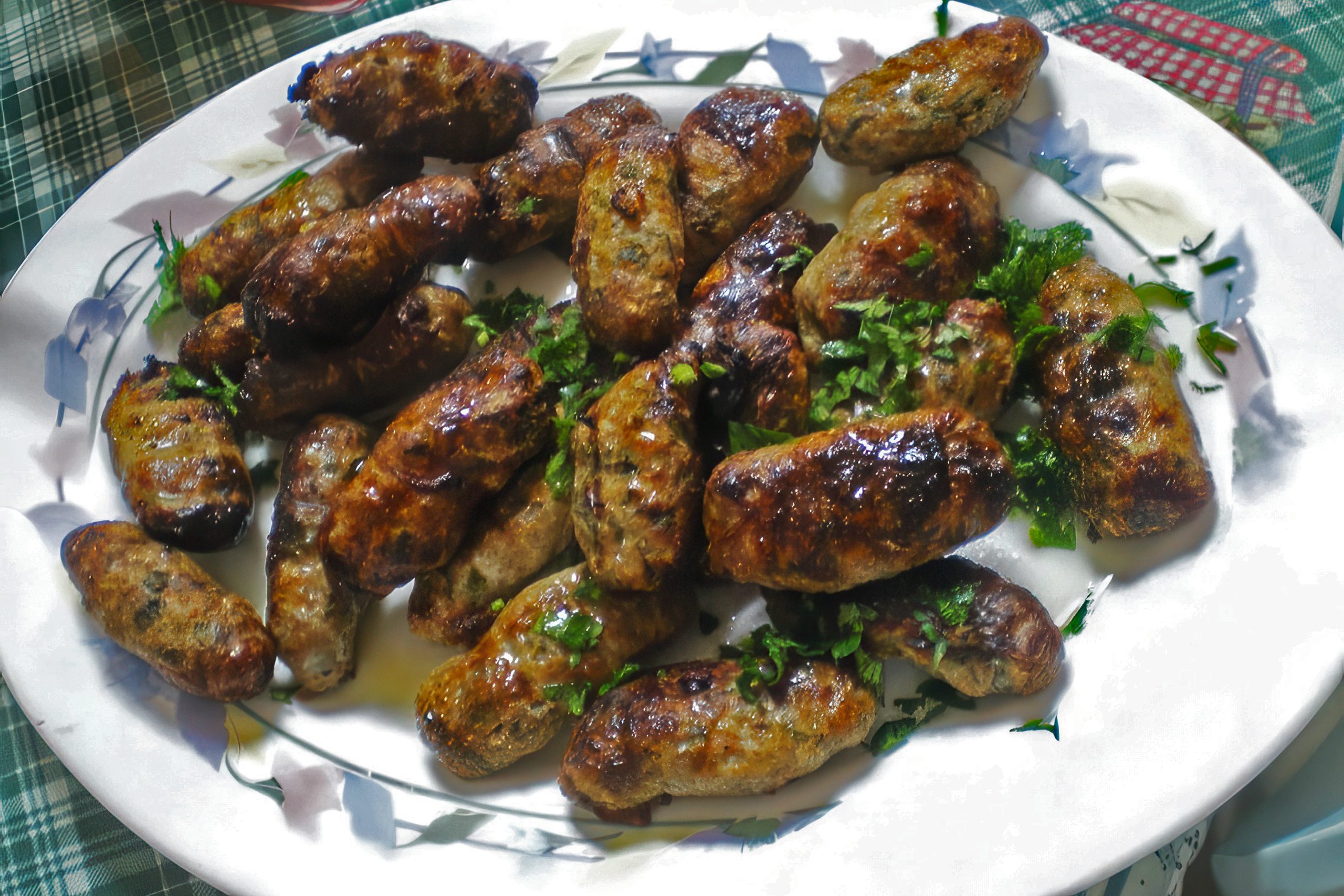
This shared presence is significant. In a country marked by division, sheftalia continues quietly, served in village yards (Kakopetria Village, Sotira Village), tavernas, and roadside grills on both sides of the island. It does not announce itself as a symbol. It simply persists, preserving connections that politics often cannot.
Where Sheftalia Lives Best
Sheftalia is rarely eaten alone. It belongs beside other grilled meats, especially souvla, as part of a larger table. At weddings, Easter gatherings, and family celebrations, it appears in generous quantities, threaded onto skewers and turned patiently over the fire.
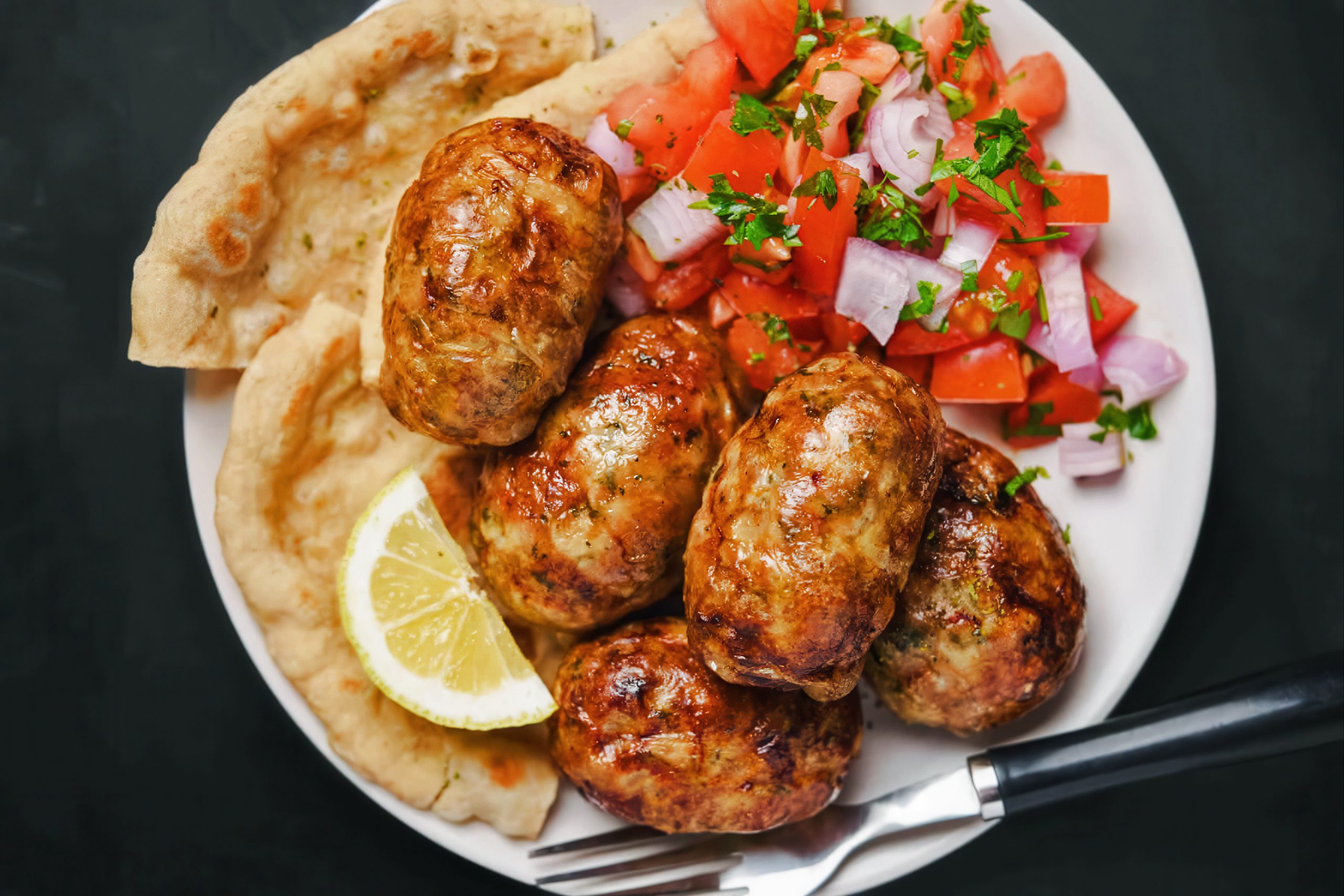
It also thrives as street food. Wrapped in a fluffy Cypriot pita with tomatoes, onions, parsley, and a squeeze of lemon, it becomes portable and satisfying without losing its character. This flexibility explains its survival. Sheftalia adapts to the setting without changing identity.
The Importance of Lemon and Restraint
Like many Cypriot dishes built on fat and fire, sheftalia relies on acidity to stay balanced. Lemon is not optional. A squeeze just before eating cuts through the richness and sharpens the herbs.
Equally important is restraint. Over-seasoning ruins sheftalia. Too much garlic, too many spices, or aggressive marinades disrupt the delicate balance created by parsley, onion, meat, and smoke. The dish works because it stops at the right moment, allowing its ingredients to speak without competition.
Why Sheftalia Still Matters
Sheftalia endures because it reflects how Cyprus cooks when no one is watching. It is not designed to impress outsiders or follow trends. It exists because it solves practical problems while creating pleasure.
Wrapped by hand, cooked over fire, and eaten together, sheftalia carries the values of village life into the present. It rewards patience, attention, and simplicity. In a world increasingly defined by shortcuts, it remains stubbornly manual.
That is why shish kebab is more than a sausage. It is Cyprus, held together just tightly enough and cooked slowly until it makes sense.