Explore Cyprus with Our Interactive Map

Explore our top stories and discover ideas worth your time.

Greek Independence Day Cyprus

Greek Independence Day Cyprus

March 25 stands as a major public holiday in Cyprus, commemorating Greek Independence Day alongside the religious Feast of the Annunciation. The day celebrates the beginning of the Greek War of Independence in 1821 when Greeks rose against nearly 400 years of Ottoman rule. cyprusmail-com For Cyprus, this holiday holds special significance beyond historical solidarity, representing the deep cultural, linguistic, and religious bonds between Greek Cypriots and mainland Greece. The celebration is particularly important for Greek Cypriots, who see parallels between Greece's struggle for freedom and their own fight for independence from British rule that succeeded in 1960. The Historical Background of the Revolution Greece had been under Ottoman control since the mid-15th century when Constantinople fell in 1453. For nearly four centuries, Greeks maintained their cultural identity through language, Orthodox Christianity, and collective memory of their ancient heritage. The revolution was officially declared by Bishop Germanos of Patras on March 25, 1821, at the Agia Lavra Monastery near Kalavryta. The date was specifically chosen to coincide with the Feast of the Annunciation, blending the struggle for political freedom with religious significance. The revolutionary slogan "Eleftheria i Thanatos," meaning "Freedom or Death," became the rallying cry. This powerful phrase represented the determination of Greeks who pledged they would rather die than continue living under subjugation. The banner of revolution became…

Read more
The Cyprus Cyclamen

The Cyprus Cyclamen

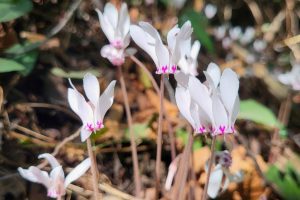
The Cyprus Cyclamen (Cyclamen cyprium) is far more than a delicate wildflower; it is a symbol of the island’s natural beauty and the resilience of its people. Formally designated as the national flower of Cyprus, this endemic treasure thrives in the cool, rocky shadows of the island's mountain ranges. seedscape.net The Mediterranean Rhythm: Growth in Winter In the unique climate of Cyprus, the seasons of life are reversed compared to northern latitudes. For the Cyprus Cyclamen, the scorching, dry summer is a period of "estivation" (summer dormancy), where it hides underground as a tuber to survive the heat. As the autumn rains arrive in September and October, the plant awakens. It uses the mild, wet winter to bloom and grow its biomass, taking advantage of the moisture before the landscape dries out again in May. Botanical Features and Identification While Cyprus is home to three cyclamen species, C. cyprium is the only one that is truly endemic—found nowhere else in the world. Key Characteristics • The Flower: Small, white to pale pink petals that sweep upward and twist at the tips. Each petal features a distinct magenta M-shaped mark at its base.• The Fragrance: It is famous for its intense, sweet lily-like scent that fills the winter air.• The Leaves: Heart-shaped with toothed edges. They are dark green with silver-grey…

Read more
Sweet Whispers from the Cypriot Countryside

Sweet Whispers from the Cypriot Countryside

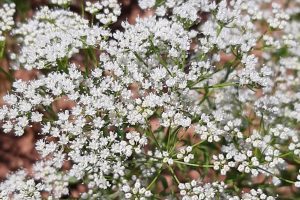
On warm spring mornings across Cyprus, a subtle licorice-like fragrance drifts through sunlit fields and village gardens. This comes from a graceful little herb known as Anise, or Pimpinella anisum. Though modest in size, it has woven itself into the island’s traditions for flavour, comfort, and quiet beauty inviting us to look closer at one of the Mediterranean’s most aromatic treasures. commons.wikimedia.org Discovering the Gentle Anise Herb Anise is a charming annual plant belonging to the Apiaceae family the vast “umbellifer” clan that also includes carrots, parsley, fennel, and dill. In broader terms, these plants are famous for their umbrella-shaped flower clusters and distinctive scents. Here in Cyprus, our species stands out as a delicate member of this group, offering sweet seeds that have been prized since ancient times. Whether you call it aniseed or simply the “sweet one,” it is an easy-to-love herb that feels right at home under our Mediterranean sun. Echoes from Ancient Mediterranean Shores Anise has deep roots in the eastern Mediterranean, with Cyprus proudly included in its native range. People have cultivated it for over 4,000 years – first in ancient Egypt, then across Greece and Rome. The Greek name ἄνηθον (ánēthon) even echoes in its story, though it originally pointed to dill. Modern name for Anise is Γλυκάνισο. commons.wikimedia.org In Cyprus, historical records and…

Read more