Religious Processions with Musical Accompaniment in Cyprus

4 minutes read See on map

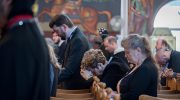
In Cyprus, religious processions are not confined to church interiors. On major feast days, faith moves outward, carried through streets, village lanes, and open squares by chanting voices, ringing bells, and slow communal steps. These processions turn ordinary space into sacred ground, if only for an evening. They are not performances staged for an audience, but living traditions that reveal how religion, sound, and community remain tightly bound in Cypriot life.

thisisathens-org

What makes them unforgettable is often the sound. Not a concert sound, not a soundtrack added for effect, but the steady human voice, the measured toll of bells, the hush that falls over a neighbourhood when an icon approaches. In Cyprus, sacred music is not something you only listen to. It is something you walk with.

When Worship Leaves the Church Walls

In the Orthodox tradition of Cyprus, a procession is a deliberate act. It represents the Church stepping beyond its sanctuary to bless the world outside. Icons, crosses, and relics are carried through public space to remind participants that faith is not separate from daily life.
commons-wikimedia-org

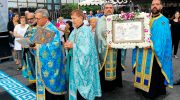
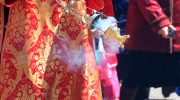
The structure is recognisable across the island. Clergy lead. Chanters follow. The community moves together behind them. Candles flicker in the evening air. Incense drifts slowly, sometimes catching in the folds of stone alleys and lingering under balconies. The pace is unhurried, and that slowness is part of the meaning. A procession is not meant to rush past you. It is meant to draw you in, step by step.
greekboston-com

Rather than spectacle, the emphasis is on presence. These moments are about being seen together, not about being watched. In a world that often feels fragmented, the procession becomes a moving picture of unity. People who may not share much in daily life share time, sound, and direction here.

Sound as the Heart of the Experience

Music is central to Cypriot processions, but not in the way many visitors expect. Instruments are largely absent from the liturgy itself. Instead, the human voice carries the ritual.
ich-unesco-org

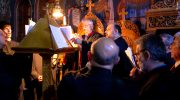
Byzantine chant dominates the soundscape. Sung in Greek, the chants are monophonic and steady, designed to support reflection rather than excite emotion. A lead chanter guides the melody, while others sustain a continuous note beneath it, creating a calm but powerful sonic foundation.

The effect is subtle and strong at the same time. The chant does not push itself forward. It holds the space. It steadies the crowd. It gives the procession a shared breath. In that sense, the music is not decoration. It is guidance. The pace of the chanting controls the pace of the procession, making sound and movement inseparable.

Bells, Wood, and the Language of Ritual Sound

While voices dominate, other sounds mark key moments.

pixy-org

Church bells signal joy or mourning depending on the day. On Good Friday, bells toll slowly and deliberately. At Easter midnight, they erupt in celebration. The contrast is immediate, and even if you do not understand the words being sung, you understand the message carried by the rhythm.
commons-wikimedia-org

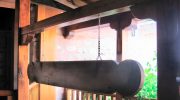
In some monasteries and villages, an older instrument still plays a role: the simantron, a wooden or metal board struck rhythmically to call the faithful together. It has a raw, direct tone. It feels ancient because it is. And it has a practical beauty because it was never meant to be pretty. It was meant to be heard.

These sounds do not decorate the procession. They announce it. Long before people see the icons approaching, they hear them coming.

Easter: The Emotional Centre of the Year

No time of year captures the power of Cypriot processions more clearly than Easter.
en-wikipedia-org

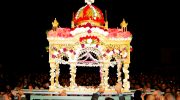
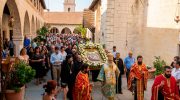
On Good Friday, the Epitafios procession commemorates the burial of Christ. A flower-covered bier is carried slowly through the community as mournful hymns fill the night air. Streets fall quiet. People step outside their homes to stand in silence as the procession passes. Even those who are not regular churchgoers often appear at their gates or on the pavement, as if drawn out by memory rather than obligation.
artemiscynthia-com

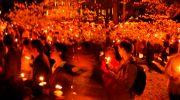
Two days later, the mood reverses completely. At midnight on Holy Saturday, the Resurrection is announced. The chant changes. Bells ring joyfully. Candlelight spreads outward as people carry the flame home. The contrast between these moments defines the emotional rhythm of the Cypriot year. It is grief and hope expressed not only through theology, but through sound, light, and the shared motion of a crowd.
Discover more about the fascinating edges of Cyprus

Cypriot Religious Songs Poetry

Cypriot Religious Songs Poetry

Religious themes have shaped Cypriot songs and poetry for over two thousand years. These musical and poetic expressions emerged from the island's deep Orthodox Christian roots, blending ancient Byzantine traditions with local Cypriot character. stock.adobe-com From solemn church hymns to joyful seasonal carols, religious content touches nearly every aspect of traditional Cypriot music. The themes range from celebrations of Christ's birth to lamentations of the Virgin Mary, from praise of local saints to prayers for protection. kiprinform-com These songs and poems serve multiple purposes beyond worship. They preserve historical memory, teach religious values, mark the passage of seasons, and strengthen community bonds. The religious content appears in formal church settings but also echoes through village streets during festivals and celebrations. Byzantine Roots and Medieval Flowering Cyprus became a center for religious music composition during the Byzantine period. The island's geographic position between Constantinople and the Holy Land made it a natural meeting point for musical traditions from both regions. commons-wikimedia-org Byzantine musical manuscripts from the 14th and 15th centuries show that Cypriot cantors maintained strong connections to Constantinople while developing their own distinctive styles. Three members of the Asan family from Cyprus gained recognition for their hymn writing, with their works preserved in manuscripts at Athens and other major collections. commons-wikimedia-org Saint Neophytos the Recluse stands as one of Cyprus's…

Read more
Cyprus Religious Life: Family in Rhythm

Cyprus Religious Life: Family in Rhythm

Religious family celebrations in Cyprus structure the year, linking church life to home routines through repeated gatherings, shared food, and public ritual. Easter, Christmas, Name Days, and village panigyria work as social glue because they bring generations into the same spaces, reinforce kinship roles, and keep hospitality active rather than symbolic. This article explains how the calendar shapes family behaviour, what key celebrations look like in practice, and why these rituals still provide continuity in modern Cypriot life. tastingtable-com A Calendar That Shapes Everyday Life The rhythm of Cypriot family life follows the Orthodox Christian calendar, which blends fixed feast days like Christmas with movable celebrations centred on Easter. This structure does not simply schedule holidays. It divides the year into periods of preparation, restraint, and release, giving time a recurring, almost circular quality. Religious-and-Festive-Family-Celebrations Families move together through fasting seasons and feast days, knowing what comes next and preparing for it collectively. Food, church attendance, and domestic routines all shift in response. In this way, religious time does not interrupt ordinary life. It gives it form. The Family as the First Sacred Space In Cyprus, faith is rarely practised alone. The family operates as a small extension of the church, where belief is learned through observation rather than instruction. Children absorb ritual by watching grandparents light candles, prepare fasting…

Read more
Village Saints of Cyprus – Local Veneration Traditions

Village Saints of Cyprus – Local Veneration Traditions

Cyprus holds deep Orthodox Christian roots that stretch back to the first century when Apostles Barnabas and Paul brought Christianity to the island. The Church of Cyprus lists approximately 60 local saints, far more than most islands of comparable size. These saints range from the island's patron Apostle Barnabas to humble hermits who carved caves from mountainsides. Agioslazaros-org Each Cypriot village maintains special devotion to at least one patron saint whose feast day becomes the community's most important annual celebration. This local veneration creates a living connection between ancient faith and contemporary village identity, expressed through festivals called panigyria that blend solemn liturgy with communal celebration. Historical Background Christianity arrived in Cyprus around 46 AD when Barnabas and Mark visited the island. Barnabas, a native Cypriot from Salamis, became the first bishop of Cyprus and established the island's early Christian community. In 478, his grave was discovered beneath a carob tree with a copy of Matthew's Gospel resting on his relics. This discovery confirmed Cyprus's autocephalous status, granting the Church of Cyprus independence from the Patriarch of Antioch. The three privileges awarded by Byzantine Emperor Zeno included the right to sign documents in red ink, wear purple robes, and carry an imperial scepter instead of a pastoral staff. stmichaelfe-com Saint Spyridon represents another foundational Cypriot saint who later gained fame…

Read more