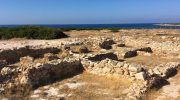
A Crossroads That Accumulated
Cyprus is best understood as a layered island, where newcomers rarely erased what came before, and daily life absorbed languages, customs, and beliefs over centuries of close contact. Positioned between Europe, the Levant, and Anatolia, it became a crossroads early through trade, then accumulated Roman, Byzantine, Arab, Latin, Venetian, Ottoman, and British influences without turning into any single one of them. This article traces how those layers formed, where coexistence was practical rather than ideal, and why "Cypriot" identity still carries many histories at once. Ten Thousand Years of Settlement Human settlement in Cyprus stretches back more than ten thousand years. Long before empires arrived, early communities established farming villages and ritual spaces that tied life closely to land and seasons. These foundations mattered because when later cultures arrived, they did not start from nothing. As Cyprus entered the Bronze Age, copper transformed the island into a hub of Mediterranean trade. This was not just an economic shift. It brought constant contact with Egypt, the Levant, and the Aegean, embedding Cyprus into international networks very early in its history. From that point on, isolation was no longer possible. The island’s identity was shaped by exchange. Greeks and Phoenicians Intertwined Greek-speaking settlers arrived in large numbers during the late Bronze Age, establishing language, myths, and social structures that would endure for…
Read more