Explore Cyprus with Our Interactive Map

Explore our top stories and discover ideas worth your time.

Panigyria Cyprus Villages

Panigyria Cyprus Villages

Across Cyprus, every village has at least one night each year when the roads feel a little busier, the air smells faintly of smoke and grilled meat, and familiar voices reappear as if they never left. The panigyri, the traditional village festival, is that moment: a lived ritual shaped by faith, agriculture, and the island’s instinct for togetherness, turning quiet communities into crowded, luminous meeting places where memory and belonging become tangible again. A Gathering of Everyone The word panigyri carries its meaning in its roots. It comes from the ancient Greek panēguris, built from pan (“all”) and agora (“gathering” or “marketplace”), and it points to an older world where people came together for religious, political, and cultural life in the same shared space. In Cyprus, that idea endured through centuries of change and settled into the calendar as the central annual pulse of village life. Today, a panigyri usually marks a patron saint’s feast day or aligns with a seasonal moment tied to harvest and local rhythm, which is why it often feels both sacred and grounded, elevated and practical at the same time. It blends devotion with celebration, turning the village square into a social arena where residents, visitors, and returning diaspora find each other again, sometimes after years, sometimes after a single season away. What makes the…

Read more
Cyprus Folk Dances and Festivals

Cyprus Folk Dances and Festivals

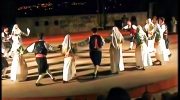
Cyprus folk dances represent living traditions that connect modern Cypriots to Byzantine heritage through choreographed movements, traditional costumes, and communal participation. These dances appear at weddings, religious festivals, harvest celebrations, and family gatherings, serving social functions beyond entertainment by reinforcing community bonds, facilitating courtship under supervision, and displaying cultural identity. The basic repertoire includes syrtos and kartzilaumas, performed as paired confrontational dances or circle formations, alongside specialty performances like tatsia where dancers balance wine-filled glasses on sieves, and drepani, the sickle dance demonstrating agricultural skills. Men and women traditionally danced separately, with social conventions restricting female dancing primarily to weddings while men performed at coffee shops, threshing floors, and festivals. The movements emphasize improvisation within communal constraints, with dancers competing to display skill while adhering to strict local standards that discourage excess or showiness that would violate collective norms. The Kartzilaumas Confrontational Tradition Kartzilaumas, the fundamental Cypriot dance from approximately 1910 through the 1970s, consists of six parts performed by confronted pairs of dancers, either two men or two women. The name derives from the Turkish word karşılama meaning greeting, reflecting the face-to-face positioning where dancers mirror and respond to each other's movements. The suite progresses through first, second, third, fourth, fifth or balos stages, with each part featuring slight variations in steps, tempo, and intensity. Between the third and…

Read more
Larnaca Museum

Larnaca Museum

The Larnaca District Archaeological Museum houses discoveries from one of Cyprus's most important ancient port cities. The museum was inaugurated in 1969 and underwent major renovation in 2022, emerging with two new wings organized thematically. The collection showcases finds from the ancient city kingdom of Kition and major Neolithic settlements including Choirokoitia and Tenta Kalavasos. Located just 100 meters from the Kition Bamboula archaeological site, the museum serves as an essential introduction to understanding Larnaca's 11,000 year history as a coastal trading center. The exhibits span from 8000 BC through the Roman period, demonstrating how Larnaca participated in Mediterranean wide trade networks while developing distinct local culture. Entry is free, making the museum accessible to all visitors regardless of budget. Bronze Age Kition Ruled Copper Trade Kition emerged as one of Cyprus's most powerful city kingdoms during the Bronze Age due to its control of copper resources and strategic harbor. The city exported copper throughout the Mediterranean, establishing commercial ties with Egypt, the Levant, Mycenaean Greece, and Anatolia. Archaeological evidence shows that Kition maintained extensive trade connections, importing luxury goods in exchange for Cyprus's prized copper. The museum displays pottery, tools, and weapons that demonstrate sophisticated Bronze Age metalworking techniques. A faience scepter bearing the cartouche of Pharaoh Horemheb proves direct contact with Egypt's New Kingdom. Mycenaean pottery including jugs,…

Read more