Explore Cyprus with Our Interactive Map

Explore our top stories and discover ideas worth your time.

Trooditissa Monastery

Trooditissa Monastery

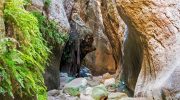
Trooditissa Monastery is a historic monastic site located on the southern slopes of the Troodos Mountains at an altitude of around 1,300 meters. It lies near the village of Platres and is surrounded by dense pine forests. The monastery is officially known as Panagia Trooditissa, a name that reflects its geographical setting within the Troodos mountain range. Historical references place the origins of the monastery around the late 10th century, shortly after the Byzantine iconoclasm period. While the present buildings are later reconstructions, the site is recognized for its long-standing monastic presence and its role in the religious and cultural landscape of Cyprus. Historical Background During the 8th and 9th centuries, the Byzantine Empire experienced a period in which religious imagery was officially restricted and many icons were removed or destroyed. In this broader historical context, some monks and religious communities migrated to remote regions such as Cyprus, where local monastic life continued with less direct imperial enforcement. According to traditional accounts, a monk associated with this period brought a religious icon from Constantinople and initially settled at a monastic site near Limassol, later associated with the Monastery of Saint Nicholas. After spending many years there, he is described in local tradition as moving toward a more isolated monastic lifestyle in the Troodos Mountains, eventually establishing a hermitage in a…

Read more
Cyprus Birthplace Mediterranean Copper Trade

Cyprus Birthplace Mediterranean Copper Trade

Long before Cyprus became known for beaches or crossroads of empires, it was known for something far more fundamental. Copper. Drawn from its mountains and carried across open water, this metal placed the island at the center of the ancient Mediterranean world. Cyprus did not merely export a resource. It supplied the material that powered the Bronze Age and, in doing so, helped shape the earliest long-distance trade networks ever formed at sea. This is not a story of passive geography or accidental wealth. It is the story of how an island learned to move its resources outward, turning stone into influence and distance into connection. An Island Defined by What Lay Beneath Copper was the first metal to change how societies lived. It allowed stronger tools, more effective weapons, and eventually the creation of bronze, the alloy that defined an entire era. Control of copper meant control of technology, agriculture, and military power. Cyprus stood apart because of scale. Its copper deposits, concentrated in the Troodos Mountains, were among the richest and most accessible in the ancient world. Mining was not scattered or marginal. It was continuous, extensive, and organized. The island’s association with copper became so strong that the Latin word cuprum ultimately derived from Cyprus. While the name of the island itself likely predates the metal trade,…

Read more
The Gymnasium of Salamis

The Gymnasium of Salamis

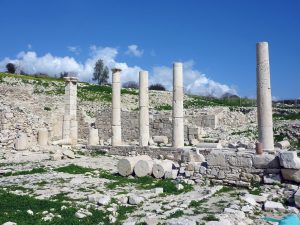
The ancient city of Salamis on Cyprus holds some of the Mediterranean's most remarkable Roman architecture. Among its treasures, the Gymnasium stands out as a testament to how Romans blended physical training, social interaction, and luxury bathing into a single sprawling complex. Located on the eastern coast near modern Famagusta, this site offers visitors a direct connection to daily life in Roman Cyprus. The Gymnasium traces its roots to the Hellenistic period, when Greek colonists first established athletic training facilities in Salamis. However, the structure visible today belongs to the 2nd century AD, specifically during the reigns of emperors Trajan and Hadrian. The transformation came after a devastating Jewish revolt in 116 AD that left much of Salamis in ruins. Rather than simply repairing the damage, Roman engineers rebuilt the Gymnasium on a grander scale. The new complex featured a colonnaded palaestra, a large open courtyard surrounded by covered walkways on all four sides. This provided athletes with shaded areas for training and spectators with comfortable viewing spots. The Romans added sophisticated bathing facilities that transformed the Gymnasium from a simple training ground into a complete social center. An inscription found in the pavement credits Trajan with constructing the roof over one of the swimming pools, while multiple honorific decrees mention Hadrian as a benefactor and savior of the city.…

Read more