Explore Cyprus with Our Interactive Map

Explore our top stories and discover ideas worth your time.

Kamares Ware: Cyprus Joins Bronze Trade

Kamares Ware: Cyprus Joins Bronze Trade

Kamares ware is luxury pottery made in Minoan Crete that reached Cyprus nearly 4,000 years ago, proving the island was already tied into long-distance Mediterranean exchange. Thin “eggshell” vessels and high-control firing techniques turned these cups and jugs into prestige objects, appearing mainly in elite burials and high-status contexts rather than everyday homes. This article explains how Kamares travelled through Cypriot ports, what it signalled about copper-era trade, and how imported styles helped reshape local ceramic traditions over time. Aegean Luxury Arrives in Cyprus During the early second millennium BCE, Cyprus was not an isolated island on the edge of history. Its copper resources made it valuable to societies that lacked metal of their own, especially Minoan Crete. At the same time, improvements in shipbuilding and navigation allowed traders to move goods across open sea routes with increasing confidence. Kamares ware belongs to this moment of expansion. Produced in Crete during the Middle Minoan period, these vessels reached Cyprus through maritime exchange, arriving mainly at coastal centres that were already developing into hubs of trade and redistribution. Early Routes Across Open Water Kamares ware was never intended for ordinary households. The vessels are thin, light, and carefully finished, often decorated with white, red, and orange motifs on a dark background. Many examples are so delicate that they are described as…

Read more
Painted Churches In the Troodos Region

Painted Churches In the Troodos Region

Ten small medieval churches scattered across the Troodos Mountains preserve some of the finest surviving examples of wall painting traditions in the Eastern Mediterranean. These UNESCO World Heritage sites document around 500 years of artistic development through richly decorated interior fresco cycles. Nine of the ten structures are located in the Nicosia District, while one, Timios Stavros in Pelendri, is situated in the Limassol District. The buildings date from the 11th to the 16th centuries and reflect a combination of high-quality metropolitan artistic styles and strong local artistic identity. These structures range from small rural chapels to larger monastic complexes such as Agios Ioannis Lampadistis. Their external simplicity contrasts sharply with their richly decorated interiors, where walls are covered with detailed narrative scenes and symbolic compositions. Historical Background Cyprus became part of the Byzantine administrative system in 965 AD when imperial forces re-established control over the island after a period of Arab raids. For the following centuries, the island functioned as a strategic frontier province in the Eastern Mediterranean. Urban centers such as Nicosia, Famagusta, Limassol, and Kyrenia expanded significantly during this period, supported by trade, agriculture, and artisanal production. During this relatively stable phase, wealthy patrons and local communities funded the construction and decoration of churches in the Troodos Mountains. The region’s isolated geography played a major role in…

Read more
Cypriot Festivals Traditions

Cypriot Festivals Traditions

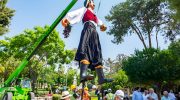
Across Cyprus, tradition does not survive in museums alone. It lives in streets closed for parades, village squares filled with music, and festivals where children dance the same steps their grandparents once learned. From large urban celebrations in Limassol and Nicosia to small rural gatherings in the Troodos Mountains, festivals remain the island’s most effective way of passing folk culture from one generation to the next. These events are not staged nostalgia. They are active systems of cultural transmission, where music, dance, costume, and storytelling are learned by participation rather than explanation. Why Festivals Matter More Than Performances A concert can be watched. A festival must be joined. Cypriot festivals work because they blur the line between performer and audience. Children rehearse for months with local dance groups. Teenagers volunteer as organisers. Elders sing, comment, correct, and remember. Culture is not presented as something finished, but something ongoing. This is why festivals succeed where formal instruction often fails. They create emotional memory alongside skill. Limassol: Where Tradition Meets the Crowd Limassol has long been known as Cyprus's most celebratory city. Its festivals combine rural tradition with urban scale, keeping folk culture visible even as the city modernises. The Limassol Carnival: Satire, Song, and Continuity The Limassol Carnival is one of the island's oldest surviving festive traditions. Rooted in pre-Lenten customs,…

Read more