Explore Cyprus with Our Interactive Map

Explore our top stories and discover ideas worth your time.

Modern Naval Heritage & Maritime Identity

Modern Naval Heritage & Maritime Identity

Cyprus has never treated the sea as a boundary. For centuries, its coastline functioned as a working edge where trade, defense, administration, and daily life met. In the modern period, this relationship was shaped most clearly by two naval powers: the Ottoman Empire and the British Empire. Their presence did not simply leave behind forts and harbors. It reshaped how the island was governed, how its ports functioned, and how Cypriots understood their place within the wider Mediterranean world. This article explores how Ottoman and British naval priorities transformed Cyprus from a regional outpost into a strategic maritime asset, and why that legacy still defines the island’s identity today. An Island Positioned to Be Watched Cyprus sits at a crossroads of the eastern Mediterranean, close enough to Anatolia, the Levant, and Egypt to matter to every power operating in the region. This geography made neutrality impossible. Control of Cyprus meant visibility over key sea lanes, access to sheltered anchorages, and influence across multiple trading and military routes. Rather than isolating the island, the sea connected it outward. Cyprus became valuable not for its interior alone, but for how its coastline could support movement, surveillance, and supply. This strategic reality explains why naval priorities repeatedly shaped the island’s administration. What “Modern Naval Heritage” Really Means When discussing naval heritage in Cyprus,…

Read more
Antikristos Ballos Cypriot Dances

Antikristos Ballos Cypriot Dances

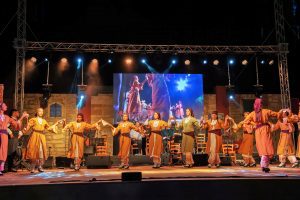
Along the Cypriotшнрлрло coast, some of the island’s most elegant traditions unfold not in grand halls but in village squares, wedding courtyards, and seaside promenades. Antikristos and Ballos are couple dances shaped by restraint rather than spectacle, where movement becomes a quiet dialogue between two people standing face to face. This article explores where these dances come from, how they are performed, why they developed along the coast, and how they continue to live on in modern Cyprus. Where Elegance Meets the Sea Cyprus has many folk dances, but coastal communities developed a style distinct from the energetic, high-leaping dances of the Troodos Mountains. In fishing towns and port cities, dance became more measured and composed, shaped by maritime trade, social etiquette, and exposure to outside influences. Antikristos and Ballos emerged in this environment. They are not group dances built around communal circles, but intimate pairings that reward control, posture, and timing. Rather than filling space, the dancers contain it. Dancing Face to Face The name Antikristos literally means “opposite” or “face to face,” describing the defining formation of the dance. Two dancers stand a few feet apart, mirroring and responding to each other without touching. Eye contact, balance, and rhythmic precision create the connection. In everyday language, many Cypriots also refer to the dance as Karsilamas, a broader Eastern…

Read more
Agoi Saranda Cave Church

Agoi Saranda Cave Church

The Agioi Saranta Cave Church stands as a sacred monument within the rugged landscape of Protaras. This sanctuary occupies a natural limestone cavern on Fanou Hill and overlooks the Mediterranean Sea. It represents a rare fusion of geological formation and ecclesiastical architecture. The name translates to the Holy Forty and honors the Forty Martyrs of Sebaste. These Roman soldiers died in the year 320 AD because they refused to renounce their Christian faith. Local tradition links the forty stalactites on the cave ceiling to these forty individuals. Visitors find the entrance marked by a simple white wall and a distinct blue door. A stone dome sits atop the hill to provide a skylight for the interior space. This site offers a peaceful atmosphere for meditation away from the busy tourist centers of Cyprus. Historical Origins and Dedication The roots of the Agioi Saranta Cave Church date back to the early Christian period though some sources suggest more formal establishment in the sixteenth century. Christian monks likely utilized this space as a secluded retreat to avoid persecution or distraction. It serves as a testament to the endurance of the Orthodox faith throughout different eras of Cypriot history. The dedication to the Forty Martyrs of Sebaste provides a deep theological connection to the site. These martyrs belonged to the Legio XII Fulminata…

Read more