President Nicos Christodoulidis announced in January 2025 that dozens of infrastructure projects totaling more than 1.3 billion euros will proceed this year. The largest investments target congestion relief and regional connectivity rather than simple road expansion. This marks a shift from the road-building priorities that dominated previous decades.
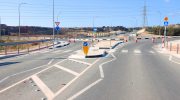
The Nicosia ring road’s next phase receives 120 million euros to complete the capital’s circular motorway system. The Akaki-Astromeritis motorway equipment project adds 107 million euros for advanced traffic management. Limassol’s congestion relief programme earns the single largest allocation at 250 million euros, reflecting the coastal city’s severe traffic problems.
The second phase of the Saittas motorway gets 65 million euros to continue mountain road improvements. Larnaca port and marina modernization receives 30 million euros to upgrade maritime infrastructure. The Paphos to Polis Chrysochous motorway, at 330 million euros, represents the government’s most expensive single road project currently under construction.
- European Investment Bank Supports Development
- Ten Major Projects Reshape the Road Network
- Paphos-Polis Highway Faces Extended Timeline
- Sustainable Mobility Plans Replace Car-Only Thinking
- Electric Vehicle Infrastructure Expands Across Cyprus
- Cycling and Pedestrian Networks Grow in Cities
- Traffic Management Technology Reduces Congestion
- Targets for 2030 Show Ambitious Goals
- Challenges in Implementation and Funding
- Long-Term Vision Requires Sustained Commitment
European Investment Bank Supports Development
The European Investment Bank approved 100 million euros in December 2024 for Cyprus road infrastructure, the first tranche of a broader 200 million euro package. A second 100 million euro installment was scheduled for signing in 2025. These funds will cover 50% of planned renovations and extensions scheduled for completion by 2029.
This marks the fourth Cypriot road infrastructure project financed by the EIB. Total EIB support for Cyprus road networks since 1998 now exceeds 570 million euros. The most recent previous financing provided 112 million euros in 2021 for projects in Nicosia, Limassol, and Paphos plus the Vasilikos Energy Centre Road.
EIB Vice-President Kyriacos Kakouris stated the investment aims to facilitate mobility, improve safety, and enhance resilience to climate change. All EIB-financed projects align with the Paris Climate Agreement, supporting Cyprus’s transition to greener infrastructure. The Bank commits 1 trillion euros toward climate and environmental sustainability investments by 2030 across all projects.
Ten Major Projects Reshape the Road Network
Construction of the Astromeritis-Evrycho highway started in October 2022 with completion scheduled for October 2025. The project provides crucial mountain region connectivity. Road improvements in Deryneia and Sotira support eastern district development, while the Sotiras-Deryneias-Vasilikos Energy Center road network, completed in October 2023, serves the industrial zone and Vasilikos Port.

Major Nicosia urban projects include roads with total length of 6.2 kilometers that connect the west with the east side of the capital. These sections, considered of great traffic and urban planning importance, will integrate with other projects including the Nicosia Ring Road. Planned works include four traffic lanes, a bridge over the Kalogeros river bed, and three roundabouts.
Implementation began in February 2023 with completion estimated for October 2025. The 15.6 million euro project expects to radically address traffic problems in greater Nicosia. Better connectivity reduces travel times and provides alternative routes when accidents or construction block primary corridors.
Paphos-Polis Highway Faces Extended Timeline
The Paphos-Polis Chrysochous highway represents Cyprus’s most complex current road project. Transport Minister Alexis Vafeades announced in January 2025 that the full four-lane highway will be complete by either 2030 or 2032, with total costs estimated at 330 million euros. The government cancelled a contract with Greek construction company Intrakat after work halted, forcing a restart.

The project includes two main tunnels near Kallepia and Stroumpi totaling 3.5 kilometers in combined length. Seven viaducts with combined length exceeding 2 kilometers will span deep valleys. The longest viaduct will cross near Tsada where steep terrain makes ground-level routes impractical. Construction will generate approximately 8 million cubic meters of excavation spoil requiring disposal.
Sustainable Mobility Plans Replace Car-Only Thinking
Cyprus committed to reducing CO2 emissions by 24% until 2030 compared to 2005 levels. Reaching this target requires public transport mode shares of 20%, a dramatic increase from the current 1.8% to 3% across different cities. The transport sector accounts for 49% of Cyprus’s greenhouse gas emissions and 52% of national final energy consumption.

The Ministry of Transport, Communications and Works launched Sustainable Urban Mobility Plans for all major urban areas. These comprehensive strategies organize urban life to benefit all city residents through balanced development of all transportation modes. Priorities include public health, reducing climate change effects, cutting noise and air pollution.
Limassol and Larnaca formally launched their SUMP projects in October 2024, funded under the EU’s Recovery and Resilience Plan. The initiatives will reduce traffic congestion, improve public transport infrastructure, and promote walking, cycling, and cleaner transportation modes. Over 62 kilometers of improved transport corridors will include dedicated bus lanes and bike paths.
The projects include construction of three central bus stations, one in Larnaca and two in Limassol, plus four park-and-ride stations. An additional 5 million euros enhances accessibility for people with disabilities, cyclists, and pedestrians. Larnaca’s plan runs 16 months until January 2027, delivering new cycling lanes, redesigned bus corridors, improved pavements, safer junctions, and upgraded traffic systems.
Electric Vehicle Infrastructure Expands Across Cyprus
The government targets increasing electric vehicle share to 8% by 2030 through subsidy schemes for electric vehicles and charging stations now in their third consecutive year. As of 2025, Cyprus has 210 public charging points with Limassol leading at 67 stations, followed by Nicosia with 46, Famagusta with 43, Paphos with 37, and Larnaca with 23.

Ten new 100kW fast-charging stations were scheduled to go live by the end of 2025. New regulations for 2025 mandate that commercial buildings with 20 or more parking spaces must install at least one EV charger. Private sector participation expanded with supermarkets, shopping centers, and fuel stations adding charging points.
The Electrification 1,000 grant program ran in two phases with a 2.5 million euro budget, covering 45% of charging station installation costs. This public-private partnership approach distributes infrastructure investment across government and business sectors. However, rural areas still show significant charging gaps compared to urban centers, contributing to range anxiety among potential EV buyers.
Cycling and Pedestrian Networks Grow in Cities
Nicosia inaugurated the second phase of cycling infrastructure connecting the Universities with the city center. Construction and improvement of bus stations nationwide received 10 million euro funding. Construction of bus lanes on planned tram axes in Nicosia adds 5 million euros for public transport priority.

Each city’s SUMP tailors strategies to specific local characteristics. Nicosia faces daily traffic congestion requiring dedicated bus lanes, traffic light priority for public transport, and expansion of cycling networks connecting residential areas with employment centers. The plan aims to shift 20% of peak-time car trips to alternative transportation modes.
Limassol must balance mobility for residents, workers, and visitors in a rapidly growing city. Key proposals include traffic calming interventions and speed reductions across the city. Transformation of the seafront avenue and historic center into calm-traffic zones creates pedestrian-friendly areas. A cycling and pedestrian network links neighborhoods, schools, and cultural spots.
Traffic Management Technology Reduces Congestion
Cyprus implements traffic monitoring, incident recording and management, congestion prevention, road safety enhancement, and freight movement planning including transportation of hazardous goods. A telematics system for public buses has operated since 2014 to improve service quality through real-time location tracking.

Traffic management centers planned for each district will coordinate responses to accidents, construction, and special events. Companies with over 50 employees will need to submit mobility plans showing how they reduce single-occupancy vehicle commutes. Staggered working hours aim to spread peak demand across longer time windows.
Variable message signs on motorways display traffic warnings, weather conditions, and travel time estimates. These electronic signs adapt to current conditions, providing information that static signs cannot deliver. The government discussed implementing dynamic speed limits that adjust based on traffic flow, weather, and accident risks.
Targets for 2030 Show Ambitious Goals
The government aims to reach 10% public transport mode share by 2030 in major cities, requiring sustained effort to implement complementary measures across all transport modes. With current shares at only 3% in Nicosia and even lower elsewhere, this represents more than tripling public transport usage within five years.

Projections without major changes show the transportation situation will deteriorate by 2030. Continued population growth, economic development, and car-oriented land use patterns will increase congestion and emissions. Change requires a complete paradigm shift starting with local politicians, public administrators, and public servants changing priorities in transport development.
Cyprus committed under EU agreements to specific climate targets requiring transportation sector transformation. The Fit for 55 package aims to reduce greenhouse gas emissions by at least 55% by 2030. With transport responsible for nearly half of Cyprus’s emissions, achieving national climate goals demands fundamental changes in how people travel.
Challenges in Implementation and Funding
The construction sector faces labor shortages despite having overqualified workers in some positions. About 7.5% of construction firms reported labor shortages in 2019, the highest rate among all economic sectors. This mismatch between available skills and industry needs slows project timelines and increases costs.
Late payments create problems for contractors. Approximately 13.2% of small and medium enterprises in Cyprus reported regular late payment issues in 2020. These financial pressures contributed to difficulties on major works like the Paphos-Polis motorway where the original contractor abandoned the project.
The construction industry experienced a 5.4% decline in enterprises in 2020 compared to 2019, partly due to COVID-19 impacts. However, the volume index of production in civil engineering increased 5.1% between 2015 and 2020, showing resilience despite challenges. Recovery from the pandemic slowdown continues as major projects resume.
Long-Term Vision Requires Sustained Commitment
Cyprus’s road development strategies extend beyond 2030 with some projects like the complete Paphos-Polis motorway not finishing until 2032. The sustainable mobility transformation requires decades of consistent policy, funding, and public support. Short-term political cycles make sustained commitment challenging.
Success depends on coordination across multiple government departments, municipalities, district authorities, and private sector partners. The Public Works Department manages motorways and major roads, municipalities handle urban streets, and district authorities oversee rural routes. This fragmented responsibility requires strong central coordination.

European funding provides crucial support but also imposes requirements for environmental protection, climate alignment, and transparency. Projects must demonstrate contribution to EU-wide goals including carbon neutrality by 2050. This international framework helps maintain focus on sustainability even when domestic pressures push toward car-oriented solutions.
The transformation from car-dependent island to balanced multimodal transportation system represents one of Cyprus’s largest infrastructure challenges. With the highest per capita motorway length in the EU and among the highest car ownership rates globally, changing established patterns requires comprehensive strategies combining road improvements, public transport expansion, active mobility infrastructure, electric vehicle adoption, and behavioral change initiatives working together over multiple decades.