Explore Cyprus with Our Interactive Map

Explore our top stories and discover ideas worth your time.

Leventis Gallery Cyprus Art Heritage

Leventis Gallery Cyprus Art Heritage

The Leventis Gallery is an art gallery in Nicosia, Cyprus. Opened in 2014, it houses a collection of over 800 paintings from Cypriot, Greek, and European artists. The institution operates under the A. G. Leventis Foundation and represents the fulfillment of a vision conceived more than fifty years earlier. The building sits a few steps from Nicosia's old city center and was designed by Feilden Clegg Bradley Studios through an international architectural competition launched by RIBA Competitions. The architects created a modern cultural center embodying the personality of the family collection while contributing to urban regeneration. The building was conceived as a monolithic stone sculpture cut away to create courtyards, terraces, and roof gardens. The gallery features minimized energy use, enhanced insulation, airtightness, and extensive use of natural daylighting. The institution currently holds three distinct collections: the Paris Collection of European art, the Greek Collection from the 19th and 20th centuries, and the Cyprus Collection of modern Cypriot art. Historical Background Anastasios G. Leventis was born in Cyprus in December 1902, in the Cypriot mountain village of Lemythou. His father was a minister of the Greek Orthodox Church and worked as a schoolmaster. After World War I, Leventis went to Marseilles, where he worked and studied commerce in Bordeaux. At the age of 16, he traveled to France to look…

Read more
The Mediterranean Monk Seal Of Cyprus

The Mediterranean Monk Seal Of Cyprus

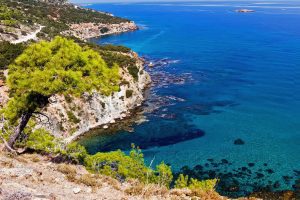
Imagine standing on a rocky ledge along the wild Akamas coast, gazing out at the turquoise water below, when a large, dark shape quietly surfaces – blinking at you with wide, soulful eyes before silently slipping back beneath the waves. That is the Mediterranean Monk Seal, and if you are lucky enough to witness this, you are looking at one of the rarest mammals on Earth. What makes this moment even more extraordinary in Cyprus is that, not so long ago, most scientists believed this animal was completely gone from the island's waters forever. What Exactly Is a Monk Seal? Seals belong to a group of marine mammals called pinnipeds – a Latin word meaning "fin-footed" – a family that includes seals, sea lions, and walruses. These are air-breathing animals that evolved from land-dwelling ancestors and gradually returned to the sea, becoming masterful swimmers while still needing land or rocky shores to rest and give birth. The Mediterranean Monk Seal (Monachus monachus) is the only seal species native to the Mediterranean Sea and is the sole surviving member of its genus, Monachus. Its closest relatives, the Caribbean monk seal and the Hawaiian monk seal, belong to a closely related genus. The Caribbean monk seal, tragically, went extinct in the mid-20th century, making the Mediterranean species a living thread of an…

Read more
Cyprus Mythological Locations

Cyprus Mythological Locations

Cyprus isn't just an island of beaches and ancient ruins - it's the legendary birthplace of Aphrodite, the goddess of love and beauty. For thousands of years, pilgrims, poets, and lovers have traveled here seeking the divine magic said to linger in its shores, and the myths born on this island have shaped Western culture in ways that still resonate today. An Island Steeped in Divine Legend Cyprus holds a unique place in Greek mythology as the earthly home of Aphrodite. According to legend, the goddess emerged from the sea foam near Cyprus's shores, making the island sacred ground. The connection runs so deep that Aphrodite herself was often called "Kypria" - the Cyprian goddess - a title that linked her identity inseparably to this Mediterranean island. Beyond Aphrodite, Cyprus is woven into myths involving tragic love, divine kings, and miraculous transformations. These stories explained the island's remarkable fertility, legendary copper wealth, and status as a crossroads of cultures. Today, these myths remain alive in the landscape itself. From Ancient Cults to Eternal Legends Long before classical Greek myths were written down, Cyprus was home to fertility cults dating back to Neolithic times. When Mycenaean Greeks arrived around the 12th century BC, they built temples and gradually merged local worship traditions with their own pantheon, creating a unique Cypriot version…

Read more