Explore Cyprus with Our Interactive Map

Explore our top stories and discover ideas worth your time.

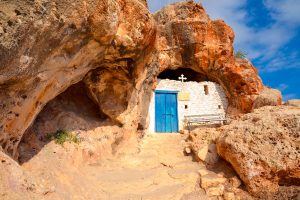
Saint Neophytos Cave Monastery

Saint Neophytos Cave Monastery

Saint Neophytos Monastery is one of the most historically significant monastic sites in Cyprus. Located on a hillside near the village of Tala, the monastery is closely connected to the life and writings of Neophytos, a medieval Cypriot monk, writer, and chronicler who spent much of his life in isolation inside a rock-cut cave. Born in 1134 in the mountain village of Kato Drys near Lefkara, Neophytos came from a farming family and was one of eight children. He later became known for his extensive writings on politics, society, natural disasters, and life in medieval Cyprus. Although he chose a secluded lifestyle, his manuscripts became some of the most valuable historical sources from the Byzantine and early Frankish periods on the island. Historical Background Neophytos grew up in modest conditions and reportedly learned to read and write only after entering monastic life. Historical accounts state that when his family arranged a marriage for him, he left home and joined the Monastery of Saint John Chrysostomos in northern Cyprus. There, he worked as an assistant sacristan while continuing his studies. Despite living in a monastery, Neophytos preferred isolation and repeatedly sought permission to live as a hermit. In 1158, he traveled to Jerusalem and visited monasteries and historical sites in the region before returning to Cyprus. After attempting to travel to…

Read more
Serpent Myths of Cyprus

Serpent Myths of Cyprus

Serpent myths have coiled through Cypriot culture since ancient times, positioning snakes as both feared adversaries and sacred protectors. In Greek antiquity, Cyprus earned the names Ophiousa and Ophiodea, meaning snake land, due to its abundance of serpents, particularly venomous vipers that thrived in the Mediterranean climate. These creatures occupied a complex position in Cypriot consciousness, associated with ancient Aphrodite worship, Christian monastery legends, and modern sea monster sightings. The most famous serpent story involves Saint Helena bringing 1,000 cats to combat a snake plague during monastery construction in 327 AD, a tradition maintained at the Holy Monastery of Saint Nicholas of the Cats to this day. The Ayia Napa Sea Monster, a modern cryptid sighted around Cape Greco, connects contemporary folklore to ancient myths of Scylla and other serpentine guardians. These serpent narratives reveal how Cypriots transformed dangerous natural phenomena into spiritual protectors and cultural symbols across millennia. Ancient Cyprus as the Snake Land Classical writers including Strabo and Pliny the Elder identified Cyprus as a land dominated by serpents. The island's warm climate and rocky terrain provided ideal habitat for the Cypriot blunt-nose viper, a venomous snake endemic to the region. These vipers posed genuine danger to farmers, shepherds, and travelers moving through countryside areas. The prevalence of snakes shaped agricultural practices, settlement patterns, and folk beliefs about…

Read more
Royal Tombs of Tamassos In Cyprus

Royal Tombs of Tamassos In Cyprus

Southwest of Nicosia, near the modern village of Politiko, stand two monumental burial chambers that tell the story of ancient Cyprus's wealthiest inland kingdom. The Royal Tombs of Tamassos represent the height of 6th century BCE Cypriot architecture and demonstrate the immense prosperity that copper mining brought to this ancient city-kingdom. These tombs, carved from limestone blocks and built to resemble wooden houses, remain among the most impressive examples of pre-Hellenistic burial architecture on the island. The Royal Tombs of Tamassos are two monumental burial chambers constructed in the mid-6th century BCE. They belonged to the local rulers or elite aristocrats of the ancient city-kingdom of Tamassos, one of the ten major kingdoms of ancient Cyprus. The tombs were built using massive ashlar blocks of limestone and feature architectural details that imitate wooden construction techniques, including carved representations of roof beams and door locks. Historical Background Tamassos was strategically positioned near rich copper deposits in the northeastern foothills of the Troodos Mountains. The area had been inhabited since the Chalcolithic Age (around 3900 BCE), but population growth accelerated dramatically during the Late Bronze Age when copper mining intensified. By the 8th century BCE, Tamassos had developed into a major city-kingdom. The kingdom is mentioned in the Assyrian Prism of Esarhaddon from around 673-672 BCE, where it appears as "Tamesi." The…

Read more