Explore Cyprus with Our Interactive Map

Explore our top stories and discover ideas worth your time.

Kakopetria Historic Village Byzantine Churches

Kakopetria Historic Village Byzantine Churches

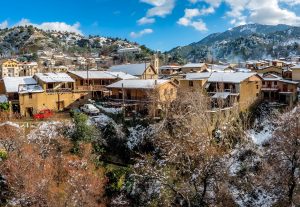
Kakopetria is a mountain village in the Troodos range that combines well-preserved traditional architecture with important medieval heritage sites. Located about fifty-five kilometers from both Nicosia and Limassol at an altitude of 667 meters, the village offers a clear example of rural Cypriot life shaped by its natural environment and long historical continuity. Two rivers, the Kargotis and the Garillis, flow through the settlement and merge to form the Klarios River, which continues toward Morphou Bay. This constant water supply has played a central role in the village’s development, supporting fertile greenery, dense vegetation, and year-round cultivation. Plane trees, orchards, pine forests, and cultivated gardens create a landscape that stands out in comparison to much of the island’s drier terrain. The higher elevation also provides cooler temperatures and a more temperate climate throughout the year. The village is divided into two distinct sections. Old Kakopetria, known locally as Palia Kakopetria, sits between the two rivers and preserves its traditional identity through narrow stone streets and two-story stone houses with wooden balconies. New Kakopetria extends toward the eastern valley and includes more modern residential development. The older section has been granted protected heritage status, ensuring the preservation of its 18th and 19th-century architectural character. Historical Development Archaeological findings from excavations in the surrounding area indicate human presence dating back to the…

Read more
Cyprus Material Symbolism Traditions

Cyprus Material Symbolism Traditions

Material Symbolism (Stone, Bronze, Gold, Glass) in ancient Cypriot art reflected deliberate choices where each substance carried layers of spiritual, social, and economic significance. Stone embodied enduring strength drawn from the island's landscape, bronze represented transformation and resilience, gold signified divine favor and elite status, and glass evoked wonder through its luminous qualities. This intentional selection transformed artifacts into carriers of meaning, highlighting how materials conveyed broader cultural values in a society shaped by trade, ritual, and belief. Materials as Carriers of Cultural Meaning Ancient Cypriot art utilized materials not merely for their practical properties but as elements infused with symbolism. Stone, bronze, gold, and glass each evoked specific associations, drawn from the island's natural resources and imported influences. Stone's durability suggested permanence and connection to the earth, bronze's forged nature symbolized human mastery over elements, gold's rarity and luster implied celestial or royal authority, and glass's translucence hinted at ethereal mystery. These choices formed a visual language that intertwined spiritual beliefs with social hierarchies and economic realities, evident across artifacts from domestic items to temple offerings. Historical Development of Material Use The symbolic role of materials in Cypriot art emerged in prehistoric periods, around 8000 BC during the Neolithic era, when local stones and clays were shaped into basic figurines. By the Bronze Age, beginning approximately 2500 BC, the…

Read more
Salamis to Paphos Historic Routes

Salamis to Paphos Historic Routes

The story of Cyprus roads spans over 3,000 years, from Bronze Age trade routes to Roman highways and modern infrastructure. This network transformed the island from scattered settlements into a connected civilization, linking major cities and remote villages while facilitating trade across the Mediterranean. The earliest roads in Cyprus date back to the Bronze Age, when the island served as a crucial trading hub between the Aegean, Egypt, and the Levant. Cyprus became the principal intermediary station for Mycenaean Greece in accessing Middle Eastern markets, largely due to its copper resources in the Troodos Mountains. By the end of the Hellenistic period, the road network encircled the entire island. During the Late Bronze Age between 1400 and 1150 BCE, trade with Minoan Crete and Mycenaean Greece increased dramatically. Archaeological evidence shows that Mycenaean pottery exports to Cyprus surged to over 3,500 vases across nearly two centuries. These goods traveled along established land routes that connected coastal ports to interior settlements. Historical Context The Romans transformed Cyprus's road infrastructure after annexing the island in 58 BCE. The first Roman roads were funded directly by the Emperor, though by the Severan dynasty the island had grown wealthy enough to finance its own construction. Roads converged on Salamis, the main economic center, with minor roads radiating outward to connect the surrounding agricultural areas…

Read more